A T-shirt is a universal wardrobe item used for everyday wear, sports, and evening outings. Despite the fact that this item is presented in a huge assortment in stores, many people prefer handmade products. Before sewing a T-shirt, you need to study the rules for choosing a material, the nuances of preparing knitted fabric. You should also learn how to correctly take measurements, build a pattern, and cut out.
Selection of materials and tools
Elastic fabrics are used to sew T-shirts and vests. The material for the product should be comfortable, practical, and pleasant to the touch. Loose-fitting or tight-fitting T-shirts are best made from knitwear. This fabric may differ in composition, but the properties remain the same. Knitted fabric has the following qualities:
- softness;
- hygiene;
- ease of care;
- hygroscopicity;
- comfort to wear.
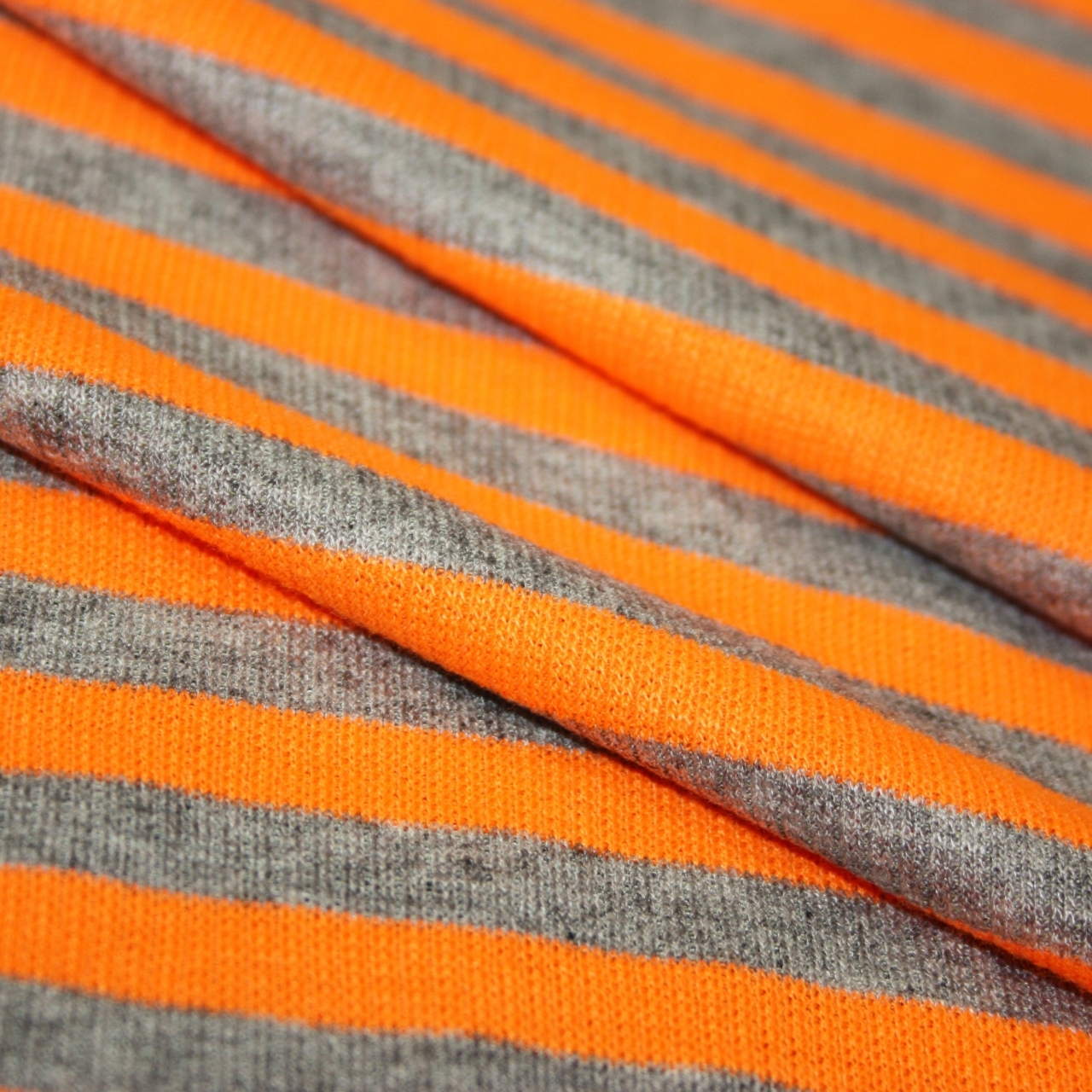
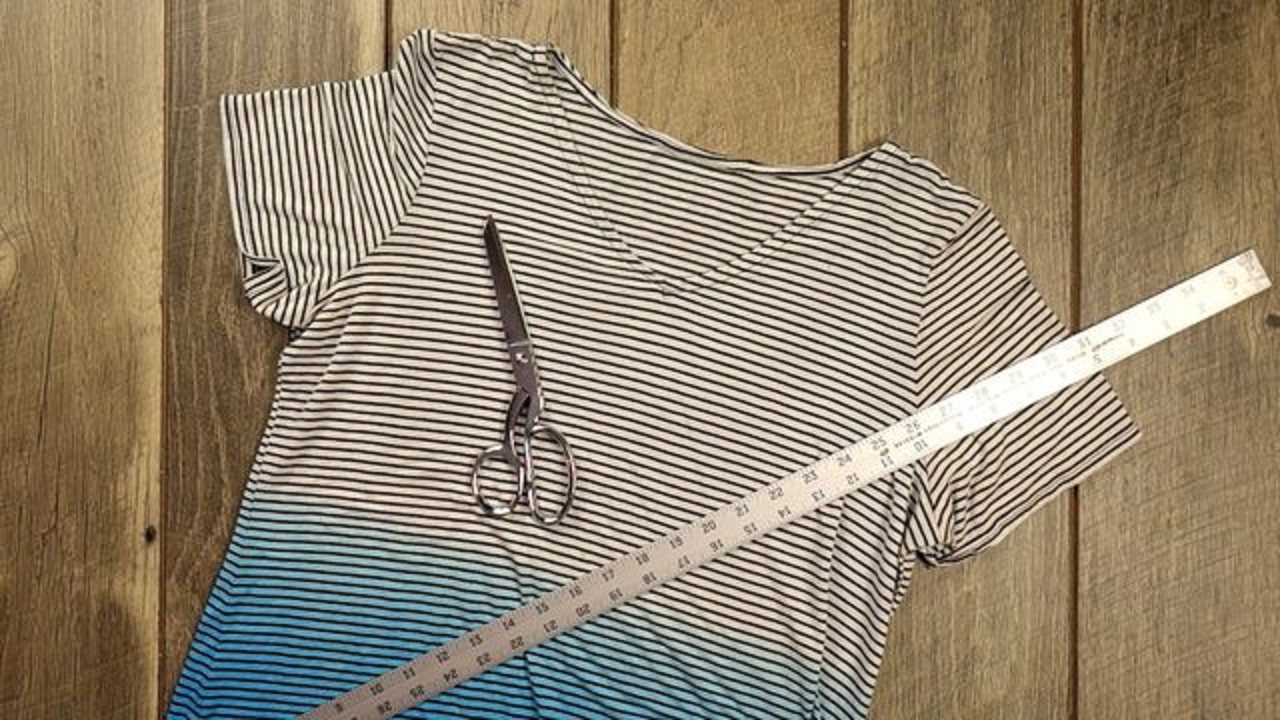
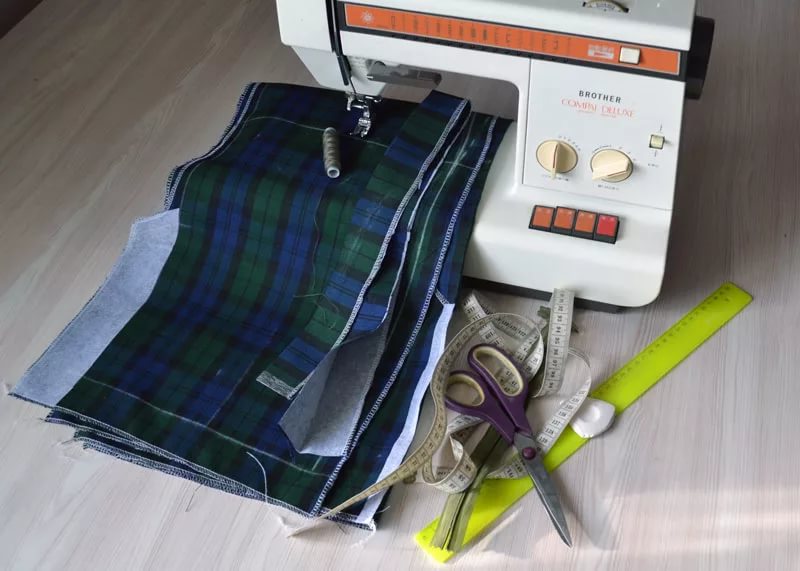
It is knitwear that is most often used by novice tailors to sew T-shirts. It is convenient to cut and easy to process on a sewing machine. Before sewing a T-shirt from knitwear with your own hands, you should prepare the tools:
- chalk or a piece of soap;
- ruler, measuring tape;
- eye pins;
- threads for sewing machines and hand basting;
- scissors;
- sewing machine;
- a simple pencil for transferring the pattern;
- sewing machine needles.
Since elastic knitwear is used in the work, a certain type of machine needles is selected. For this, it is better to use a tool marked stretch. Such needles are suitable for synthetic knitwear and fabrics with a high lycra content. If cotton fabric or wool knitwear is used for work, it is necessary to purchase a needle marked jersey.
The nuances of preparing knitwear for sewing
Before cutting the knitted fabric, it is prepared. Depending on the type of material - interlock, jersey, footer, terry knitwear or elastic, the shrinkage of the fabric is taken into account. Before cutting, cotton fabric is washed and ironed. Natural fabric is washed only by hand, and if it contains synthetic fibers, you can safely load the fabric into the washing machine. To ensure that the T-shirt pattern fits the fabric base well, after washing, the knitwear is ironed at medium power, and the steaming function is allowed.
A few more nuances of preparation for sewing:
- Before sewing, it is important to adjust the stitch: select the length of the stitches;
- the thread tension should not be too strong, it is better to choose medium parameters;
- Proper sewing with your own hands requires the selection of the needle thickness - it is determined based on the thickness of the fabric.
For beginners who use thin knitted fabric, you should choose a needle marked H-HS, size 1-3. For medium-density fabric - with the marking H-SUK, size 3-5. Thick knitwear is best sewn with a tool marked JH-SUK, size 7-10 and a wide eye.

How to take measurements
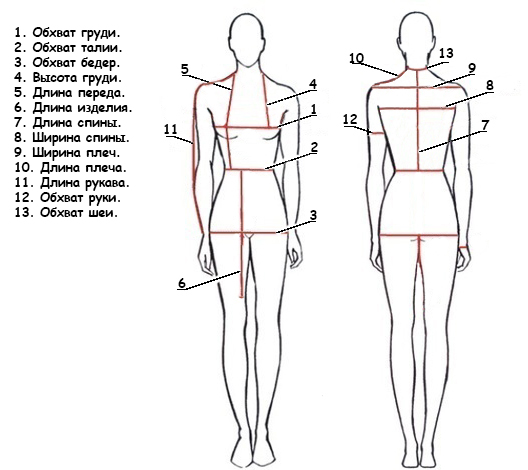
To make a T-shirt pattern, you need to take measurements correctly. The person being measured should stand up straight and not strain. The figure may be wearing thin clothing that does not add excessive volume. The measurements for women and men are the same:
- Neck circumference - a measuring tape is placed above the seventh cervical vertebra and wrapped around the neck in the area of the jugular notch.
- Chest circumference - the tape runs horizontally around the torso through the protruding points of the chest.
- Waist circumference – place the measuring tape around the torso at the waist line.
- Hip circumference - the measuring element must be laid along the protruding buttock points; the indicators are necessary in order to construct a pattern for a long T-shirt.
- Shoulder width – the distance from the beginning of the shoulder to the sleeve insertion line is measured.
- Shoulder girth – measurements are taken with the arm hanging freely.
- Wrist circumference – the tape is placed around the wrist.
- Sleeve length – selected at the request of the person being measured, the distance from the end of the shoulder seam is measured.
- Length of the product along the back – measurements are taken from the base of the neck.
Before taking the readings, the waist line is tied horizontally with a thin tape; in sewing this is called a “setting belt”.
Construction of the pattern and cutting
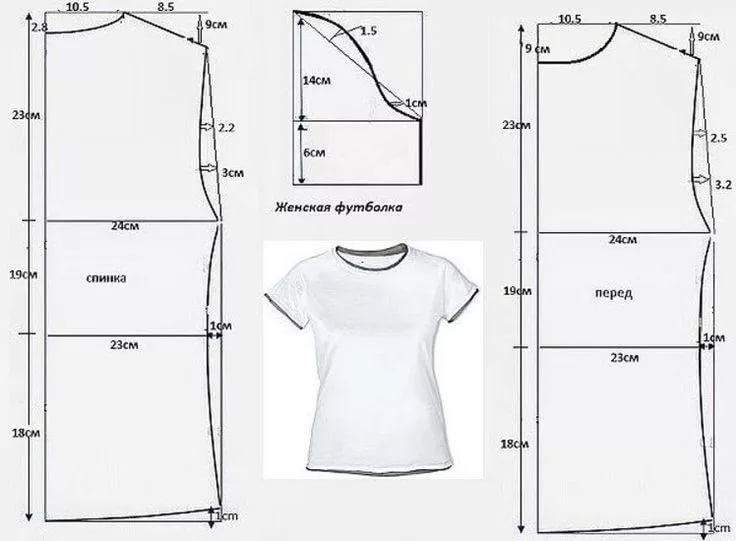
In order for the pattern of a T-shirt or T-shirt to accurately convey the measurements obtained, a number of rules for the basic construction of the drawing are followed. For work, use millimeter paper - it initially has markings, so it will be easier to draw. All obtained measurements, except for the length, are divided in half. The pattern is drawn in half the size. Principles of model construction:
- draw a right angle, and mark the length of the product downwards from it;
- to the right, put aside half of the chest circumference;
- draw the chest height down with a straight line – this will be the armhole depth;
- measure half the width of the back on it;
- calculate the armhole: divide the chest circumference by two and add 3-4 cm;
- draw perpendiculars from the obtained points;
- divide the armhole area in half and draw a line down;
- measure 18-20 cm from the waist, marking the hip area;
- draw a neckline: divide the neck circumference by 3 and add 0.5 cm;
- construct a sleeve: draw the length of the sleeve down, and mark its width to the right.
The pattern of a women's T-shirt differs from a children's or men's model in its more form-fitting silhouette. When cutting out a product for men, the waist area is made looser, and when drawing a pattern for a child, it is necessary to take measurements with a reserve. If it was decided to build a diagram based on a cut old T-shirt, allowances for seams that are already on the product are taken into account.
Sewing stages taking into account the model
It is not difficult to sew a T-shirt with your own hands. Step-by-step instructions will help beginner needlewomen make a product for a man, woman or child. Before sewing, you should prepare the necessary materials and tools.
Women's with dropped sleeves
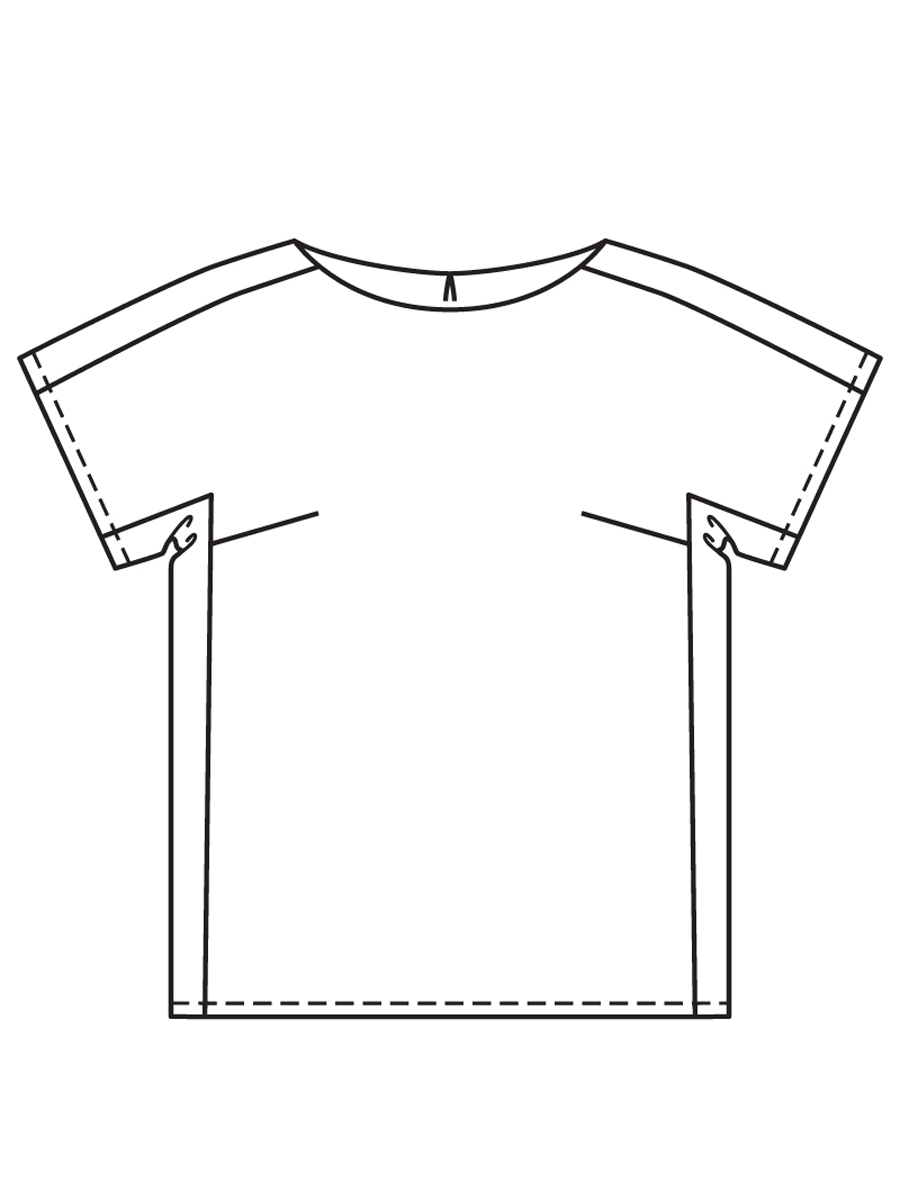
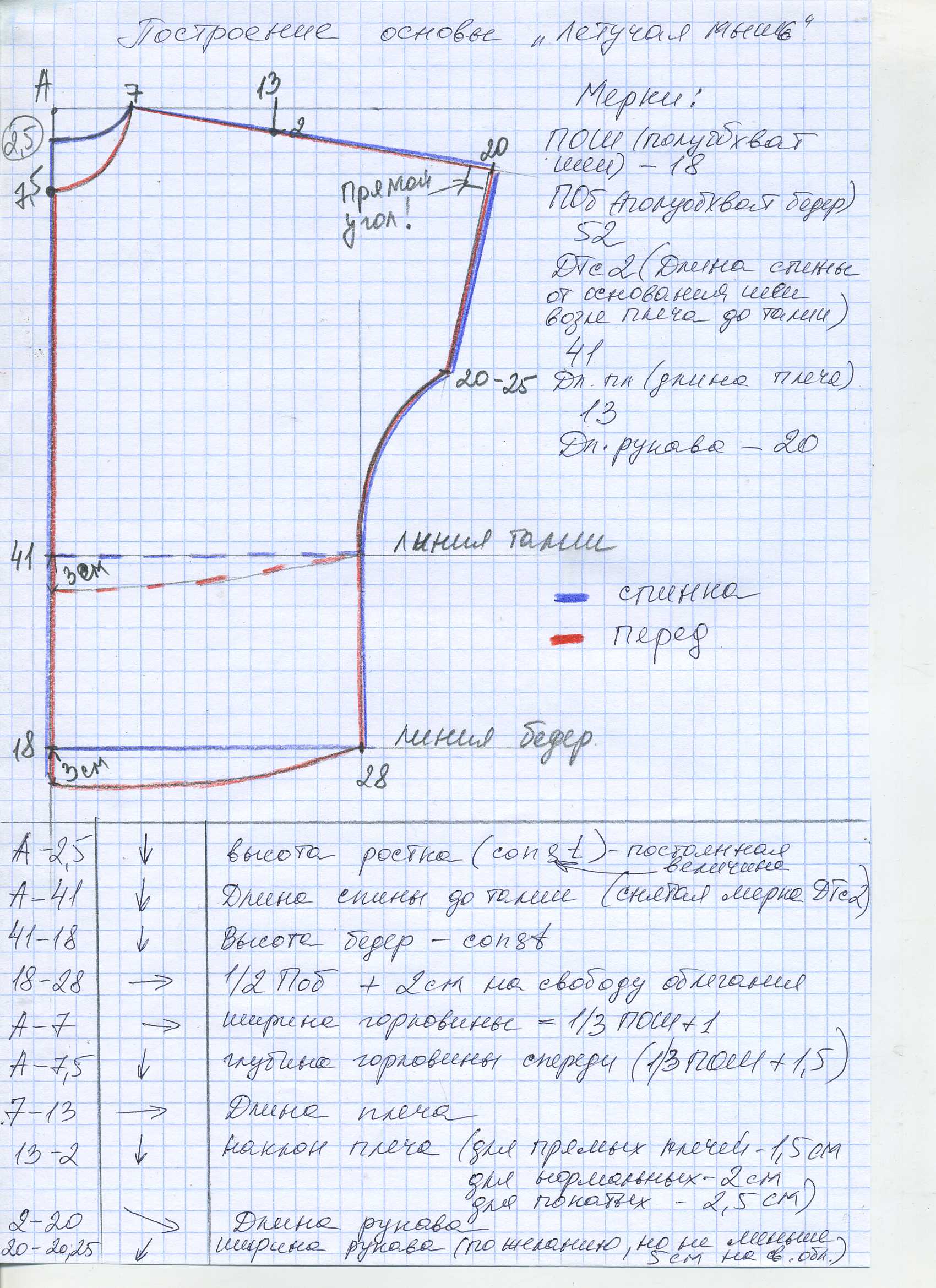
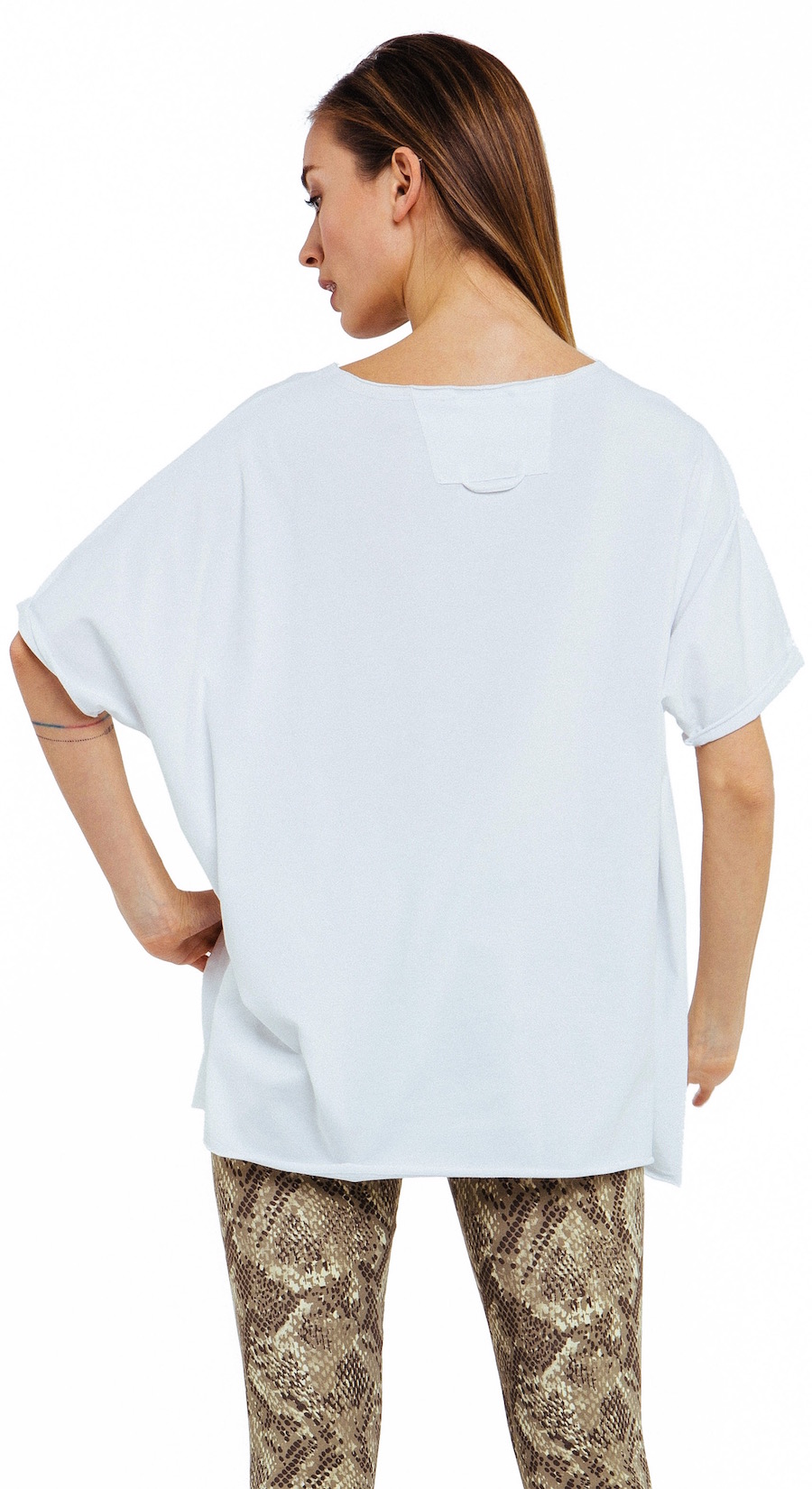
The pattern of a T-shirt with a dropped shoulder is made on the basis of the basic model with some changes. To do this, it is necessary to increase the length of the shoulder seam: place the cut out parts of the front and back on tracing paper, connect the shoulder seam with a smooth line to the armhole. Then we perform step-by-step actions:
- Sew the shoulder seams: fold the back and front parts of the garment and sew them together on a sewing machine, leaving 1.5 cm from the edge.
- We process the neck of the T-shirt, the easiest way to do this is with a piping made of the same fabric. Calculate the formula for the length of the piping - multiply the width of the neck by 0.8.
- Iron the piping along the neckline.
- We sew the side seams on the machine.
- Iron the side seams.
- We fold the sleeves and sew them on the machine.
- We fold the bottom of the T-shirt and sew it on the machine with a straight line.
Don't forget to pre-process all edges on an overlocker; if you don't have one, use a special overlock stitch on a machine. We try on a women's T-shirt, check that it matches what we want and, if necessary, correct any flaws.
Stylish men's for beginners
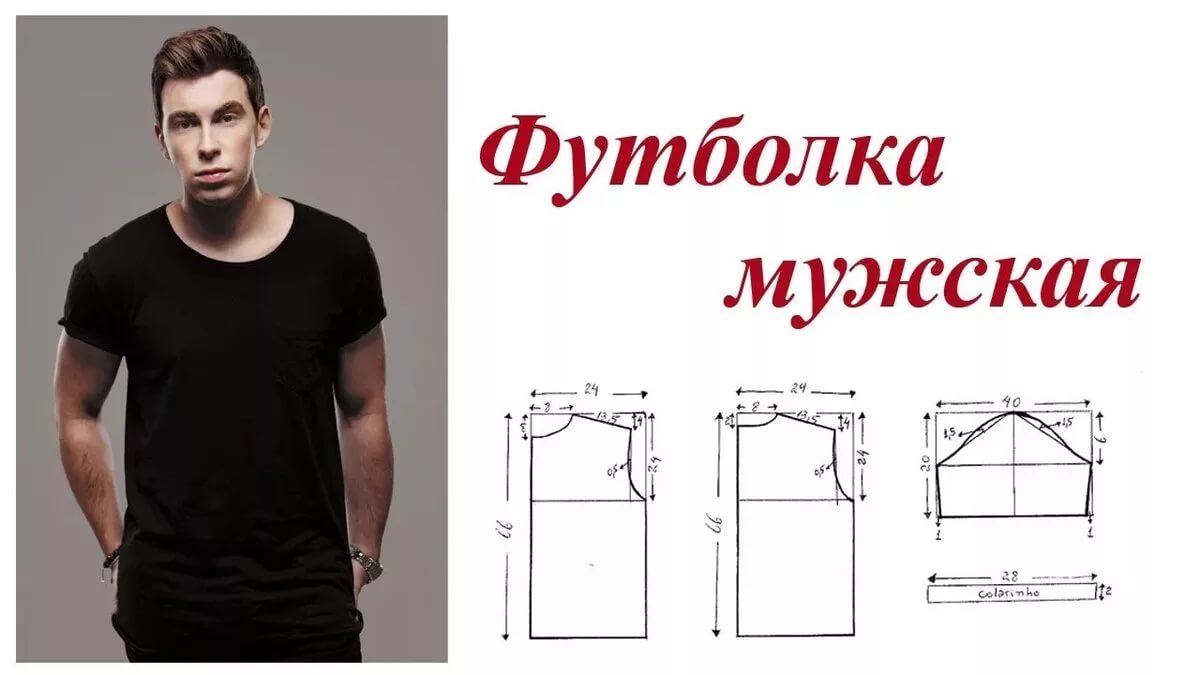
Before cutting and sewing a men's T-shirt, you should decide on the fabric. You can use jersey, it makes comfortable and practical products. Next, follow the step-by-step algorithm:
- We cut out the pattern pieces, adding 1 cm for seams on each side.
- Add 6 cm to the bottom of the sleeves.
- Sew the front and back at the shoulder seams.
- We straighten the front and back and sew the sleeves into the armholes. Although the patterns are simple, we pin the pieces together before sewing.
- Fold the front and back along the shoulder seams, stitch the side seams and the bottom of the sleeves.
- For the neckline trim we use a rib knit fabric.
- To close the seam on the neck, sew on another strip of ribbing.
- We process the lower edge of the T-shirt using an overlock machine.
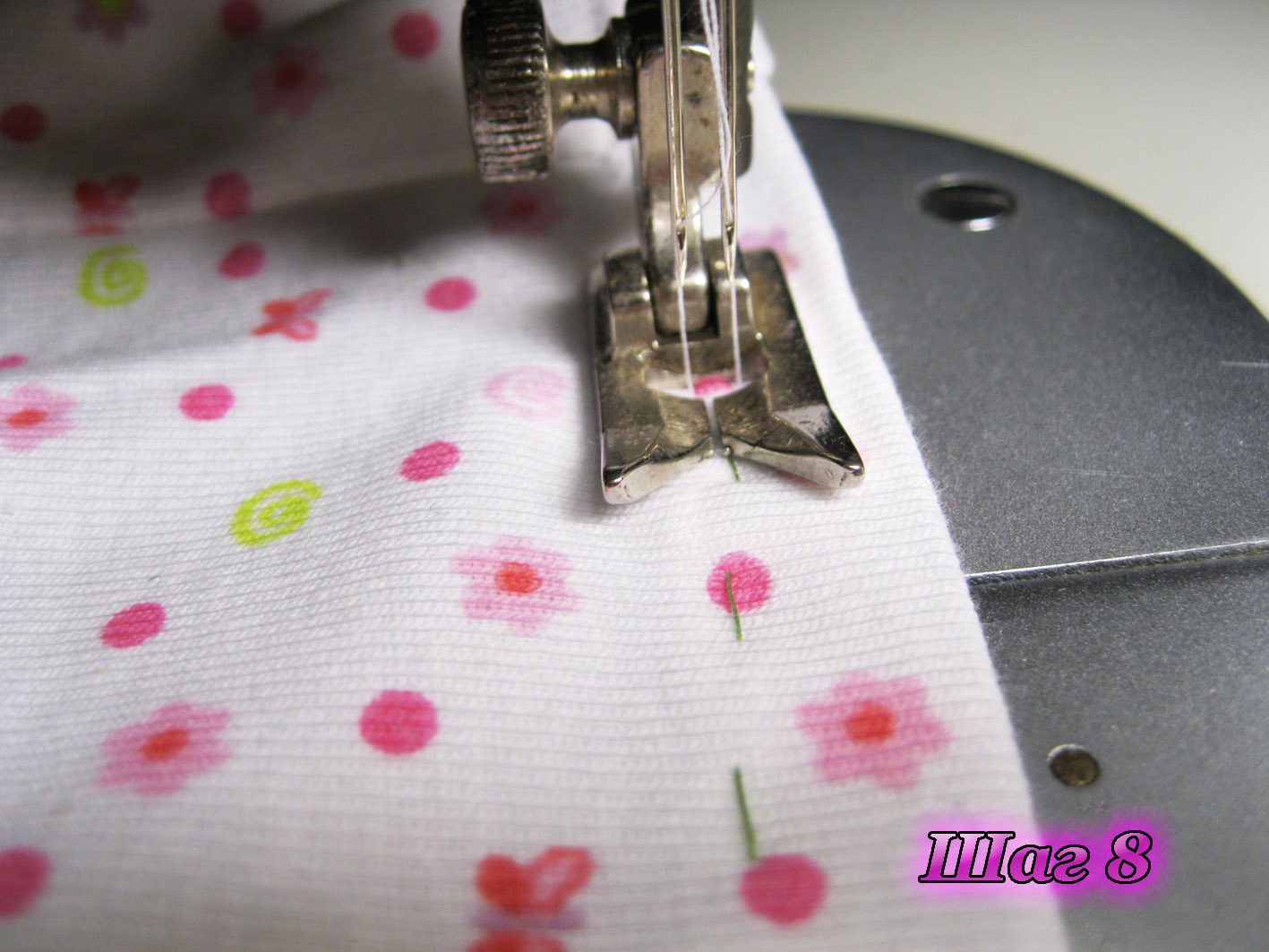
- Bend the edge of the lower cut and hem it. It is advisable to use a double needle for knitwear when bending the edge.
You can use the same algorithm to sew a men's T-shirt with a one-piece sleeve.
Children's T-shirt
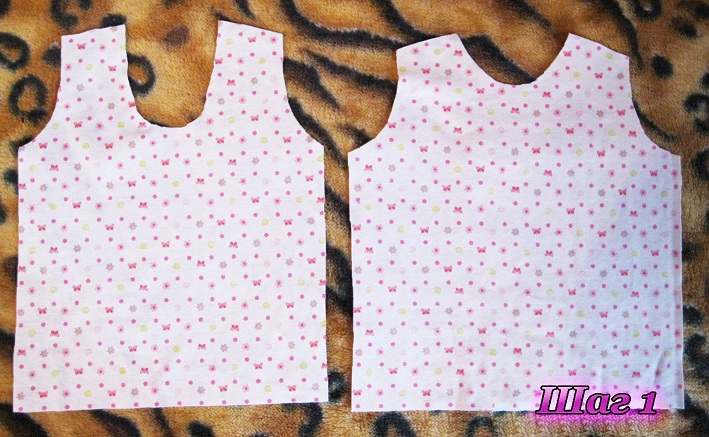
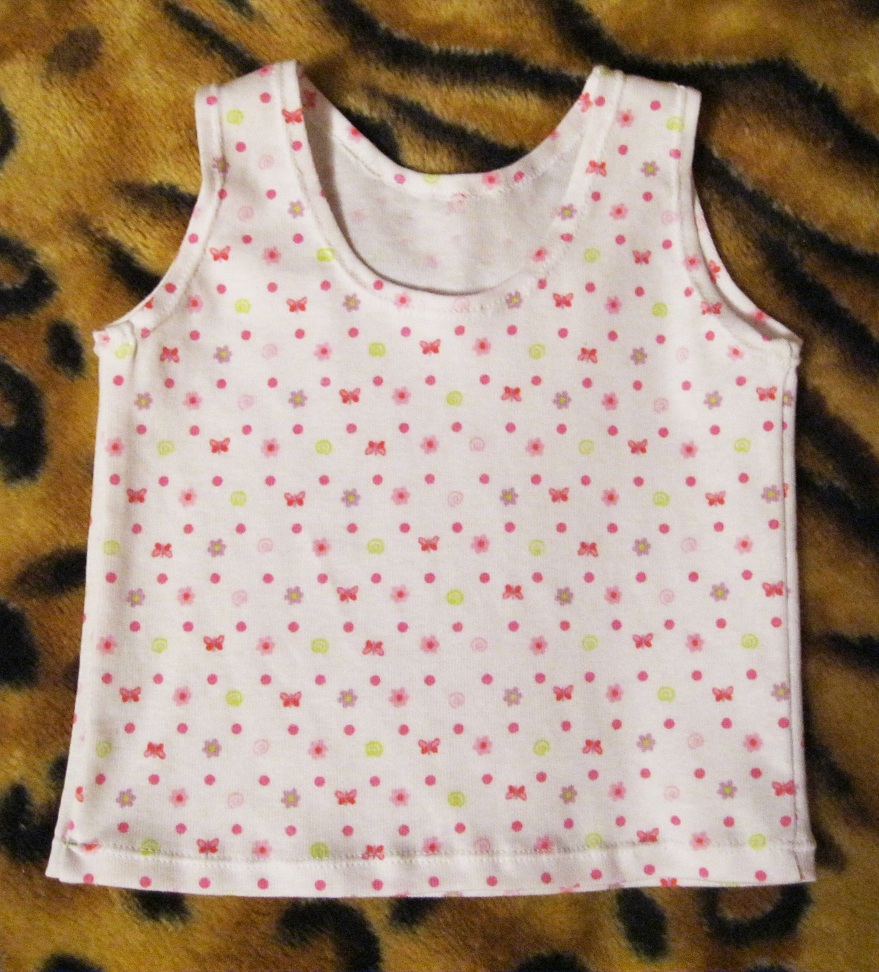
T-shirts are often made without sleeves. Children feel free and comfortable in them. If you decide to sew a product with short sleeves, you need to take shoulder measurements. Before work, set the knitted stitch on the machine, it looks like a zigzag. Its optimal length is 1.6 cm, width - 1 cm. Let's start assembling the model:
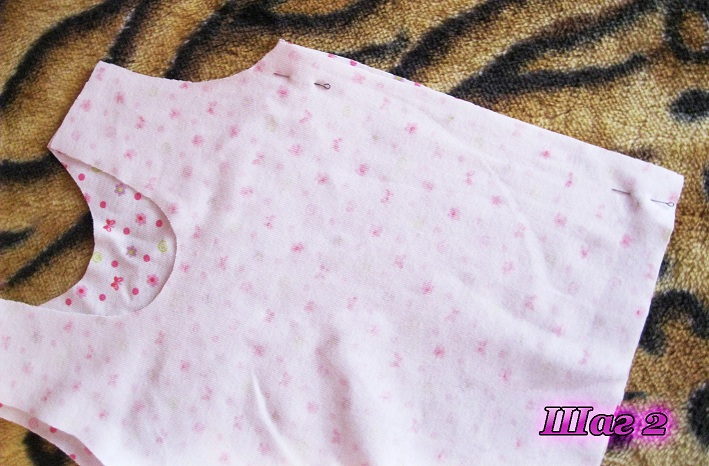
- We fix the shoulder seams with pins.
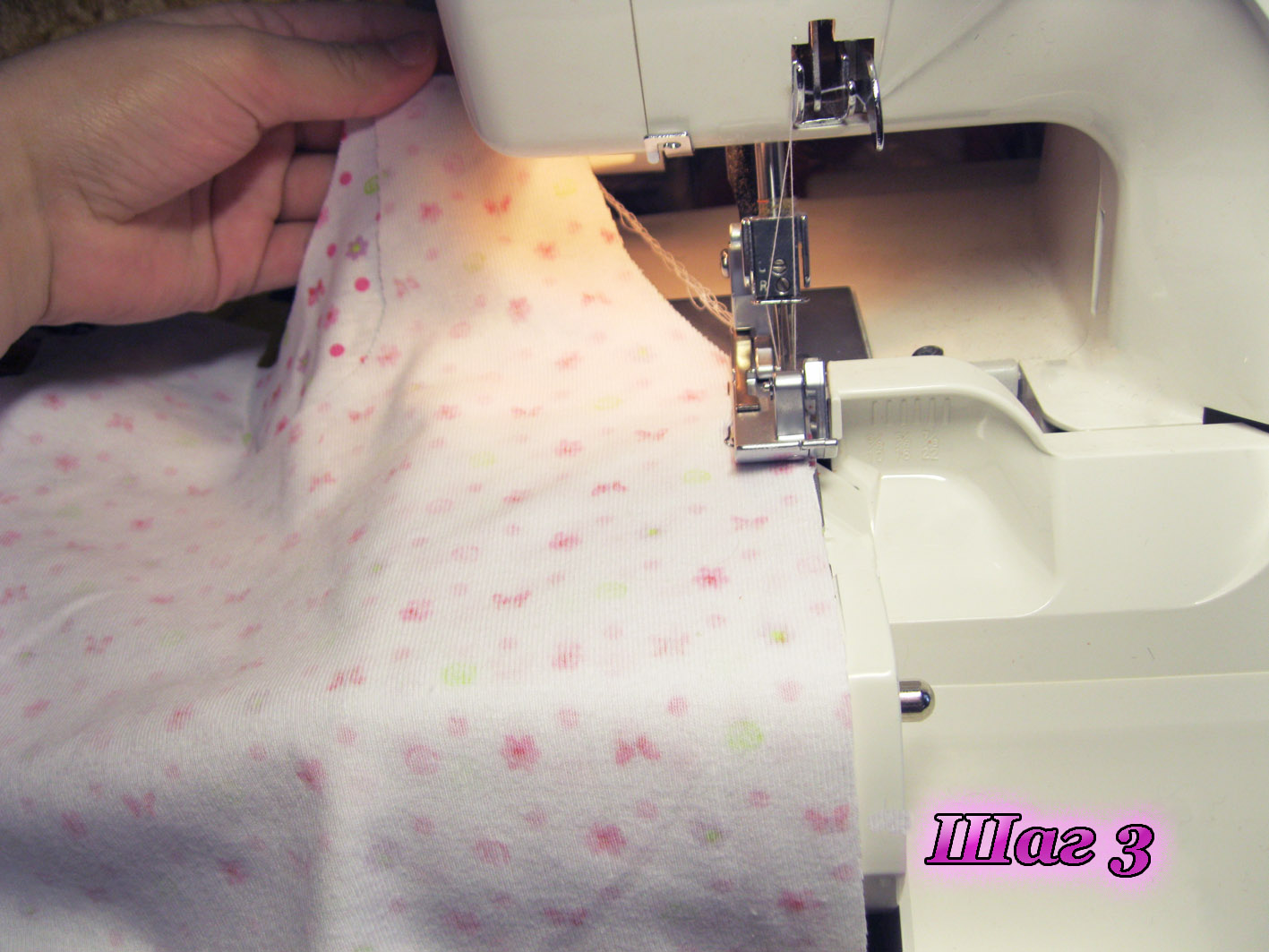
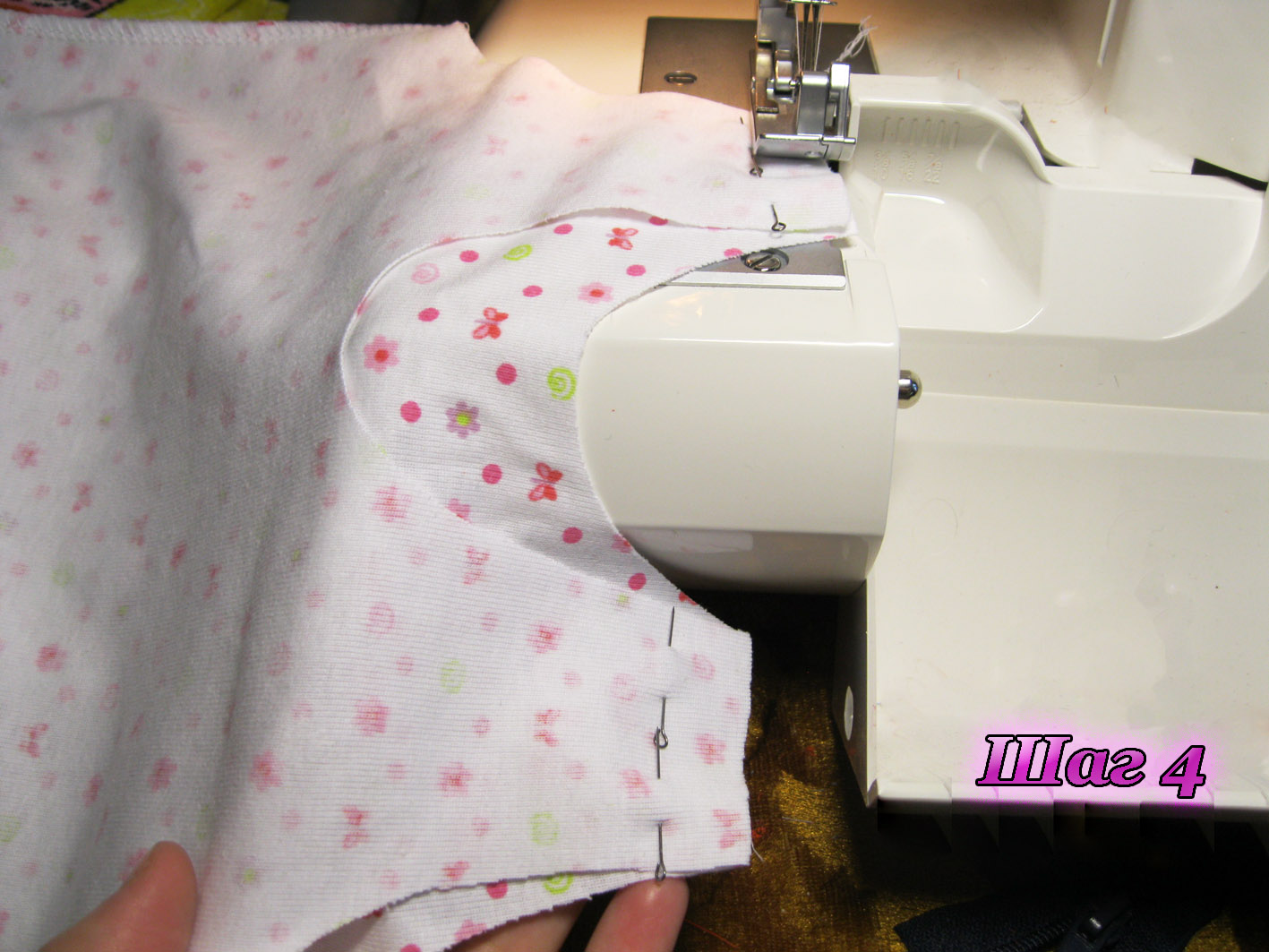
- We sew the parts together using a sewing machine.
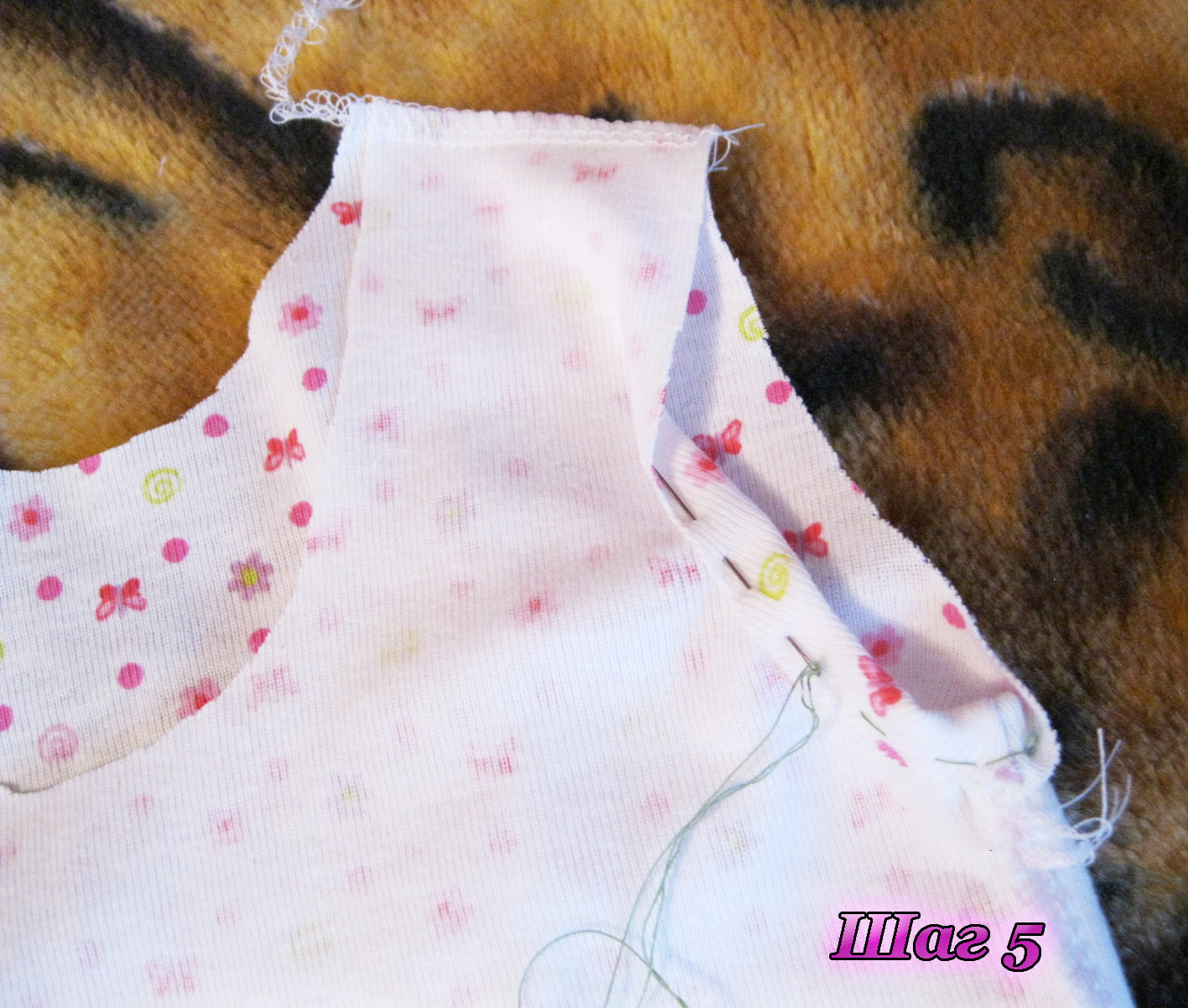
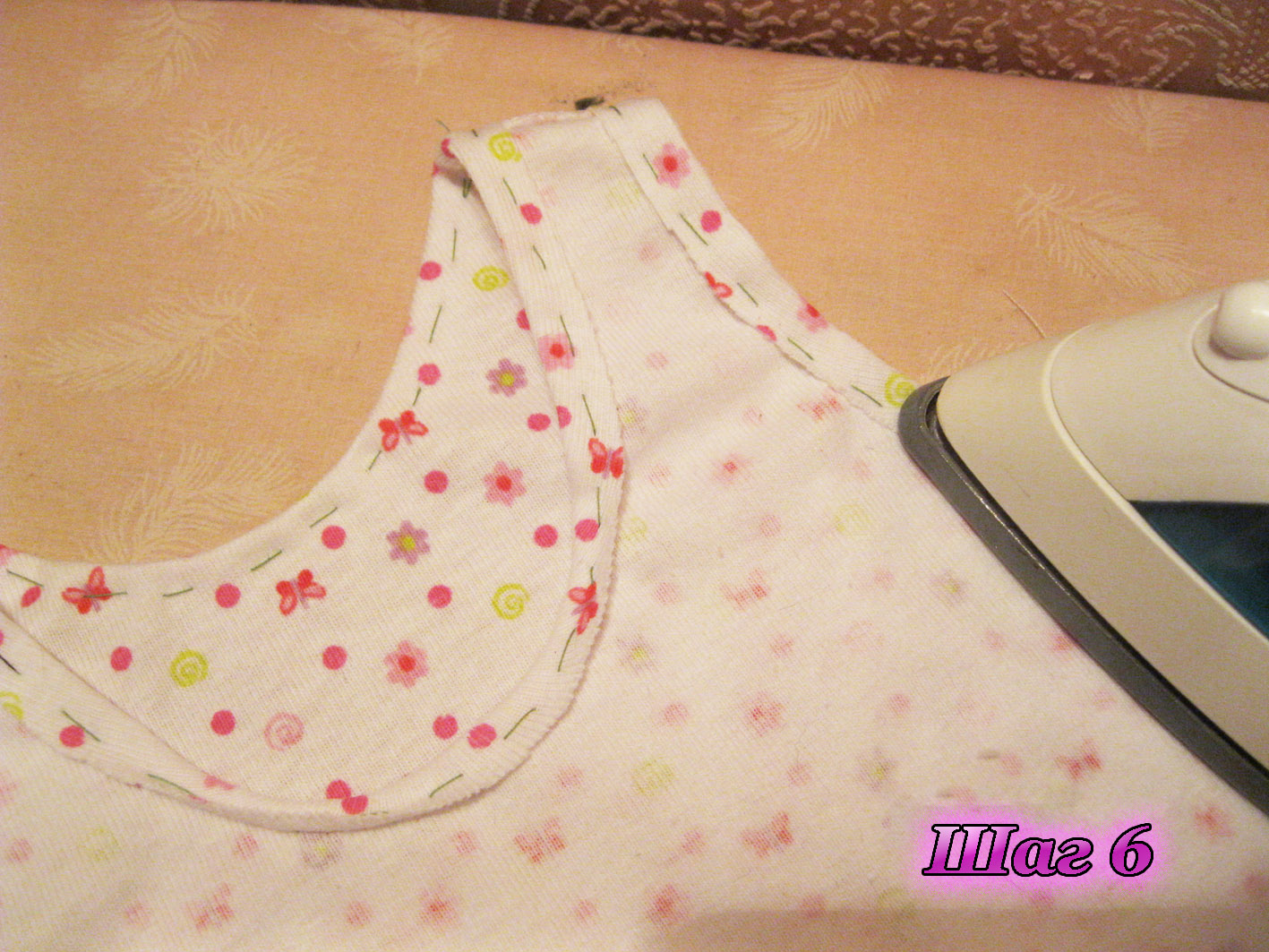
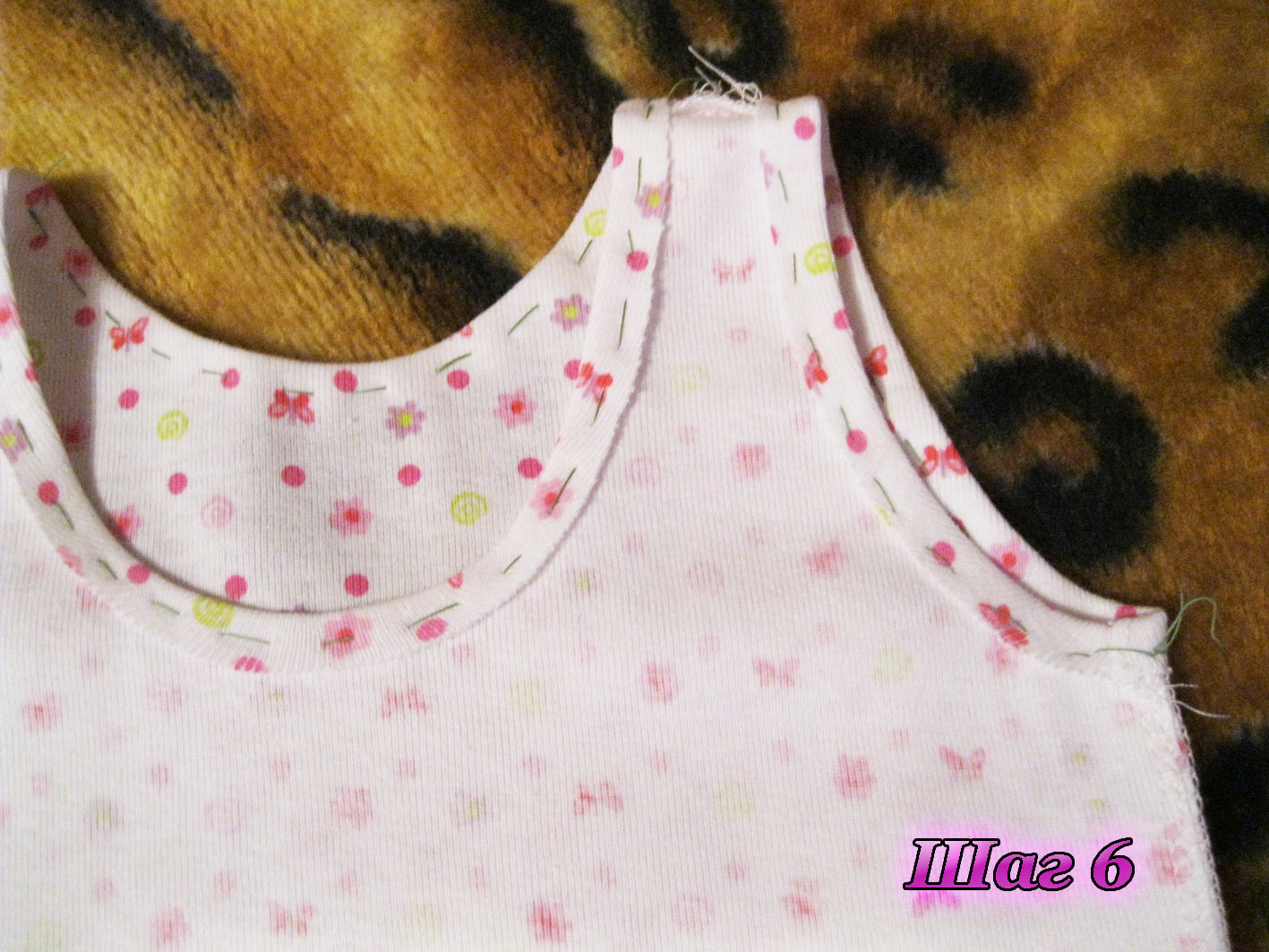
- We process the neckline with piping.
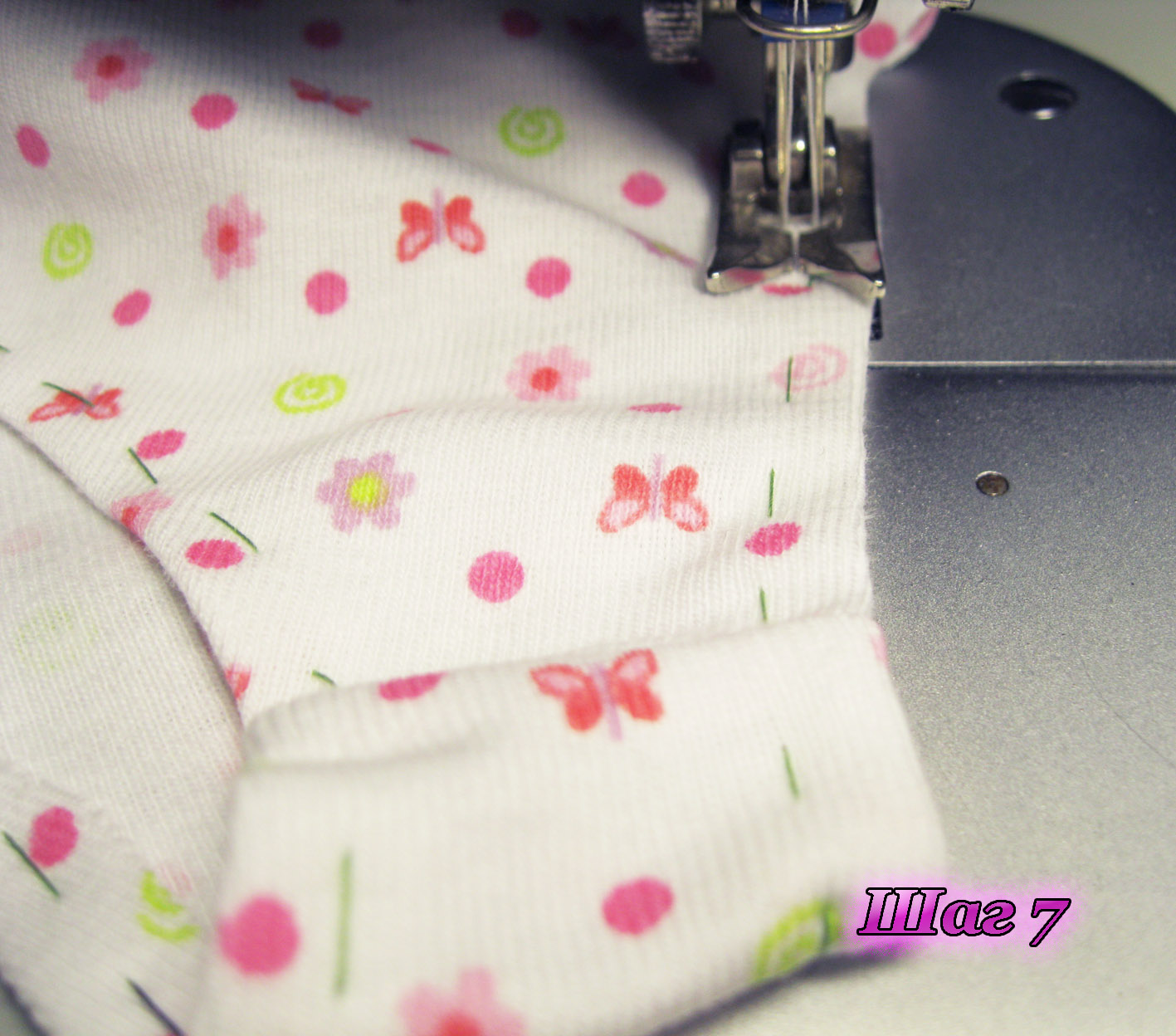
- We trim the armholes with piping.
- Sew the side seams.
- Fold the edge by 2 cm and sew on the machine.
You can make the piping yourself. To do this, use a knitted material that matches the color of the main fabric. Cut a long strip 5 cm wide from it and sew it to the neck of the T-shirt.
Decor options
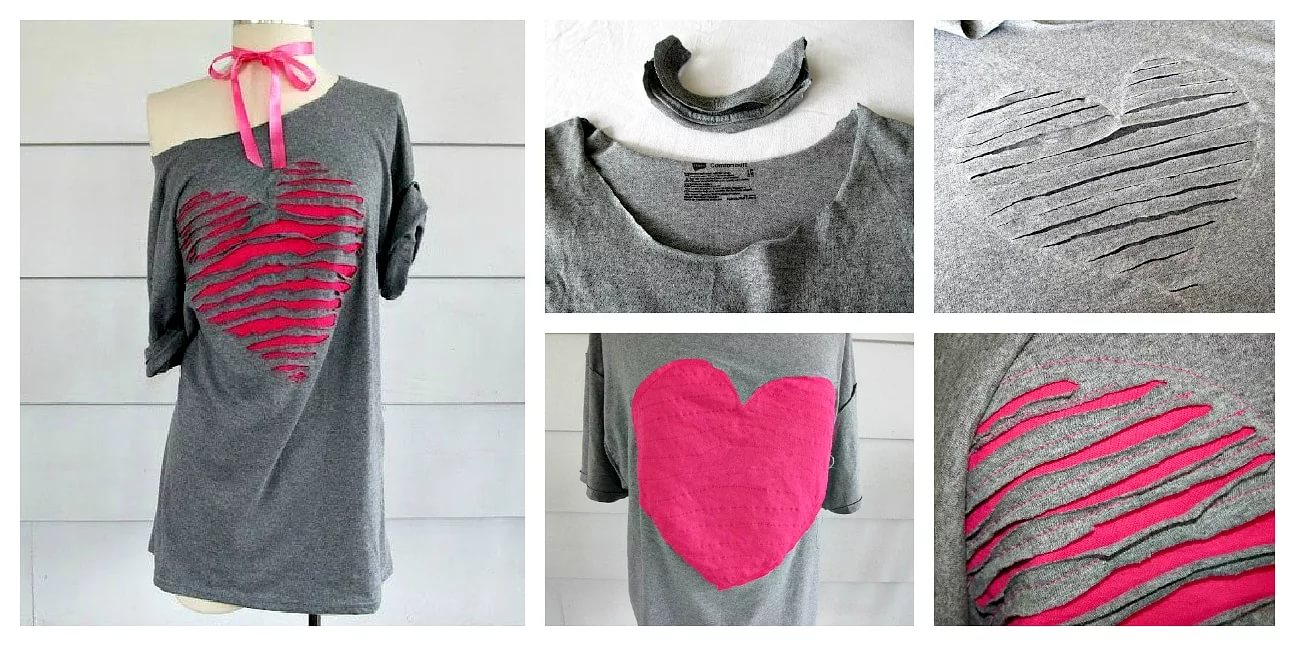
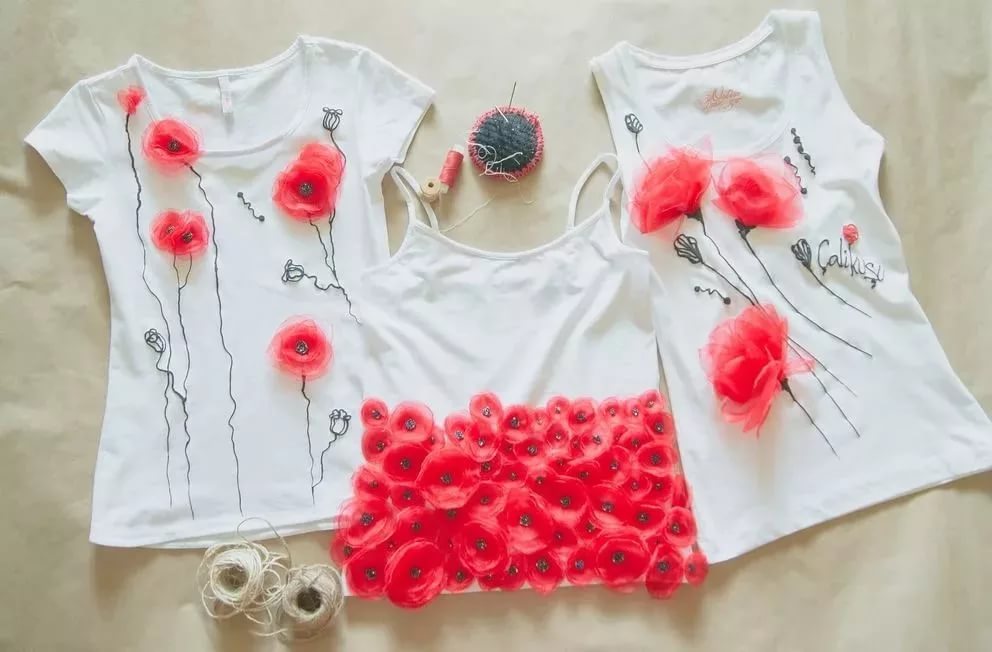
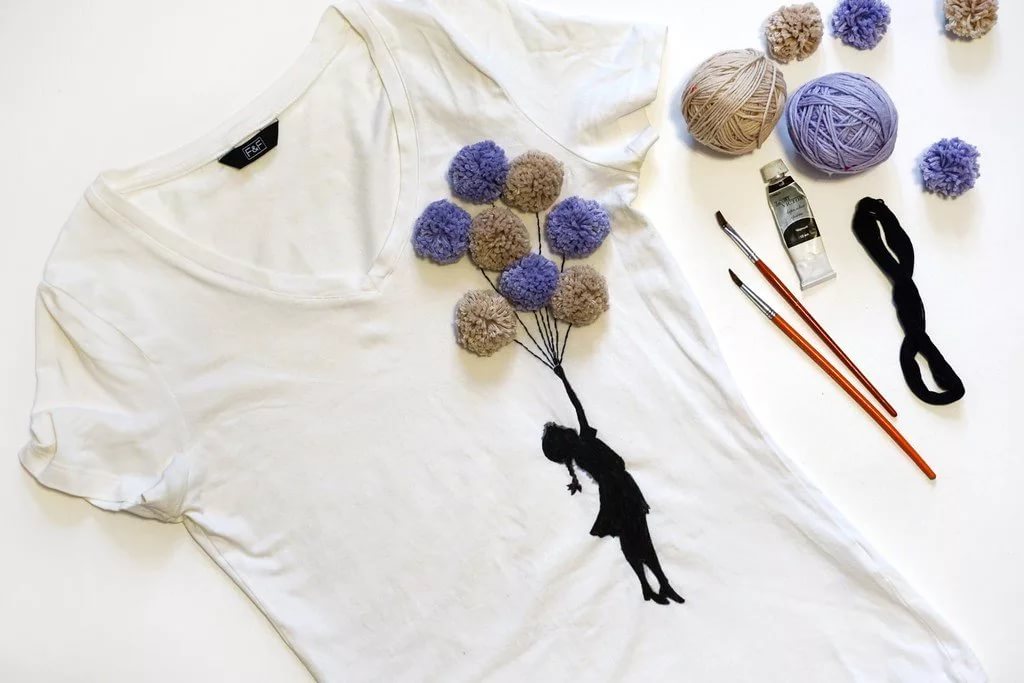
Regardless of the cut of the T-shirt, it can be decorated to your taste. Original decorations will make the item unique and stylish. The following methods are most often used:
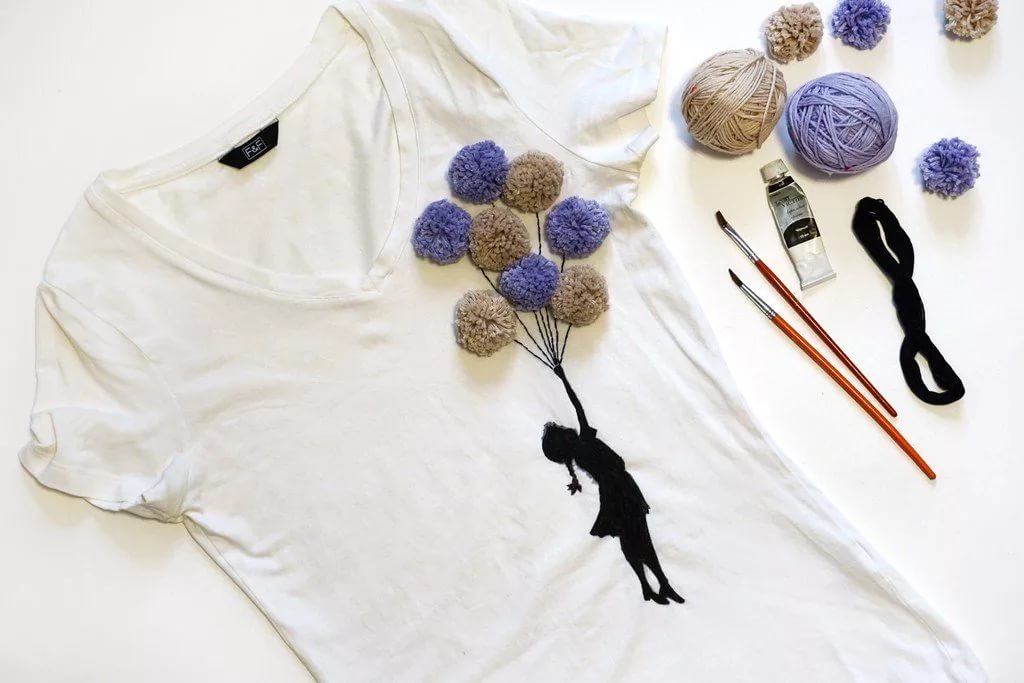
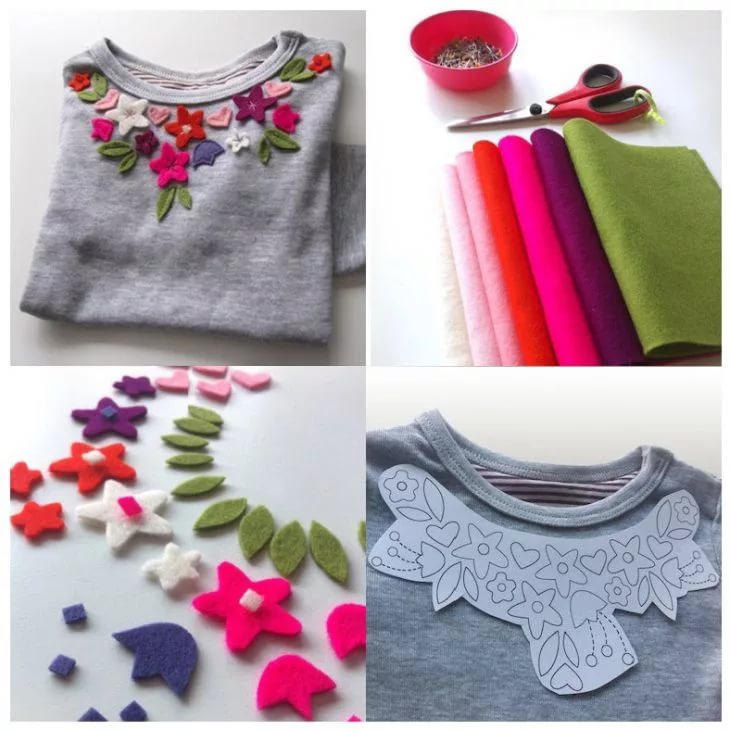
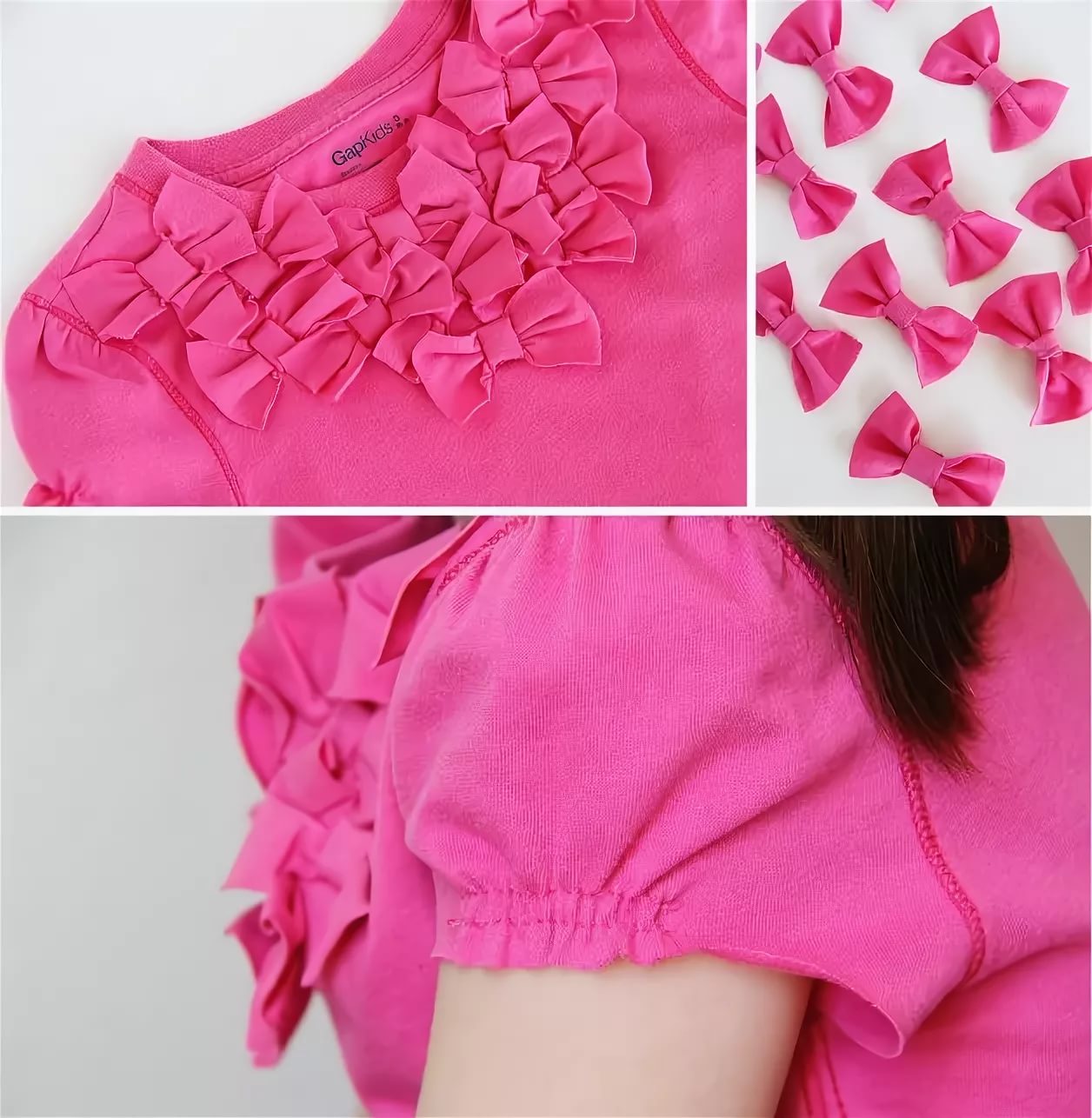
- Women's products are decorated with flowers made from ribbons, imitating cuts, felt decorations are applied, beads and rhinestones are used.
- Men's T-shirts with one-piece sleeves or tank tops are decorated with rivets, thermal printing with inscriptions, and stylish pockets are sewn on.
- Children's T-shirts are decorated with appliques, ribbons, embroidery, beads, and light-up figures.
Decorative elements for children under three years old should be securely fastened. It is better not to use beads, stones and other voluminous decorations. The child can tear them off and swallow them. The best way to decorate is embroidery or fabric applique.
It is not difficult to sew a T-shirt with your own hands. To do this, it is enough to follow the recommendations provided, as well as properly prepare the knitted material and needles for the sewing machine. You can decorate the product at your discretion, using bright or strict elements.
Video