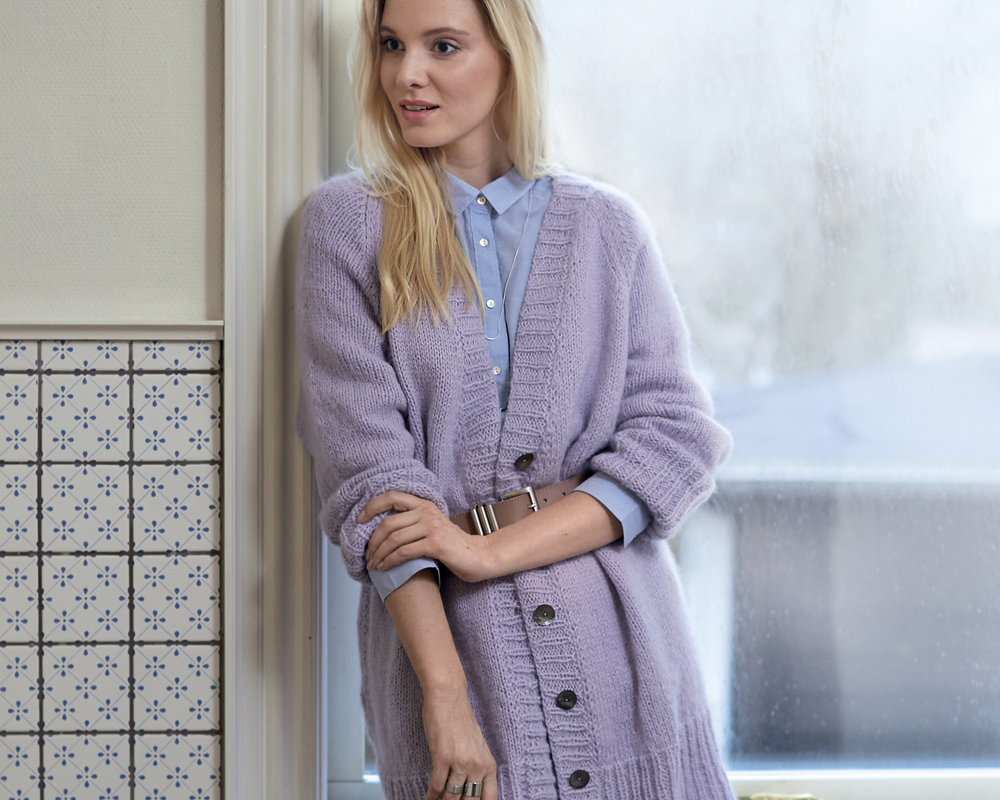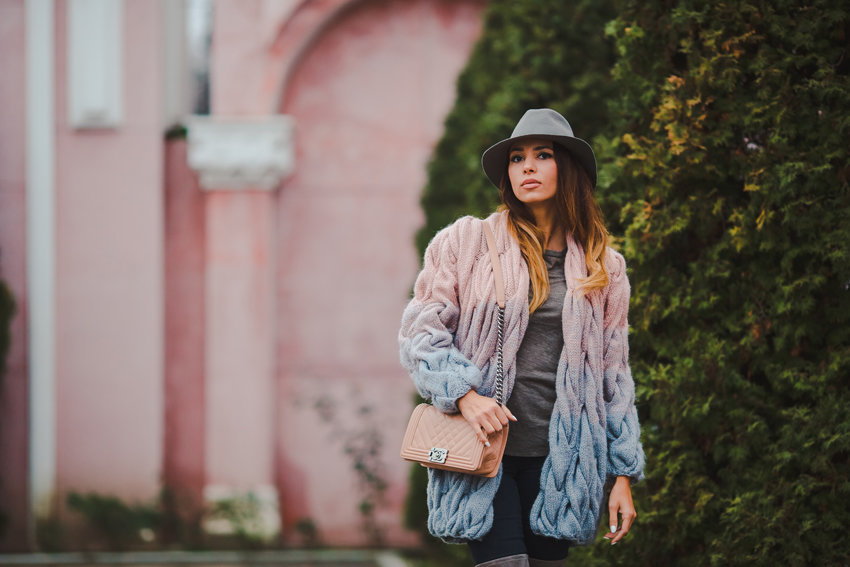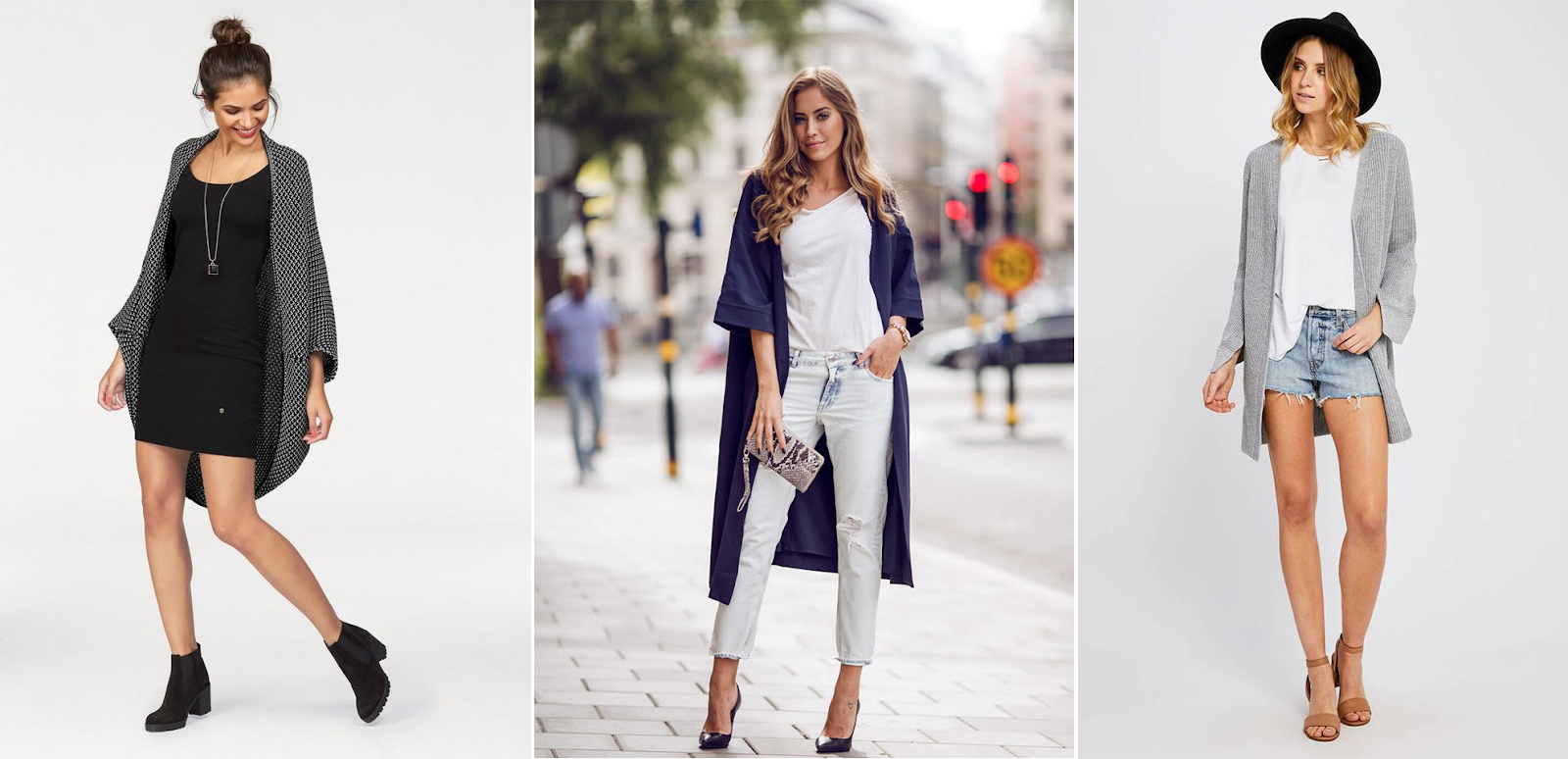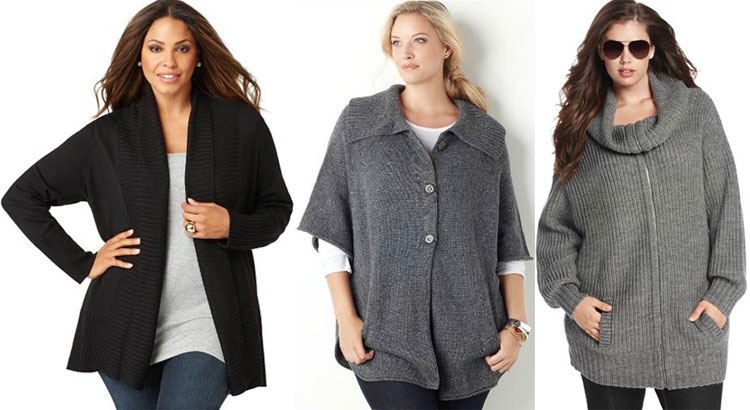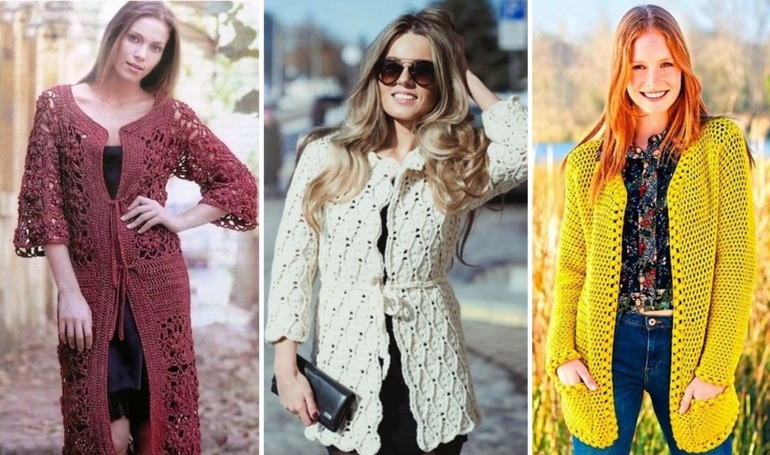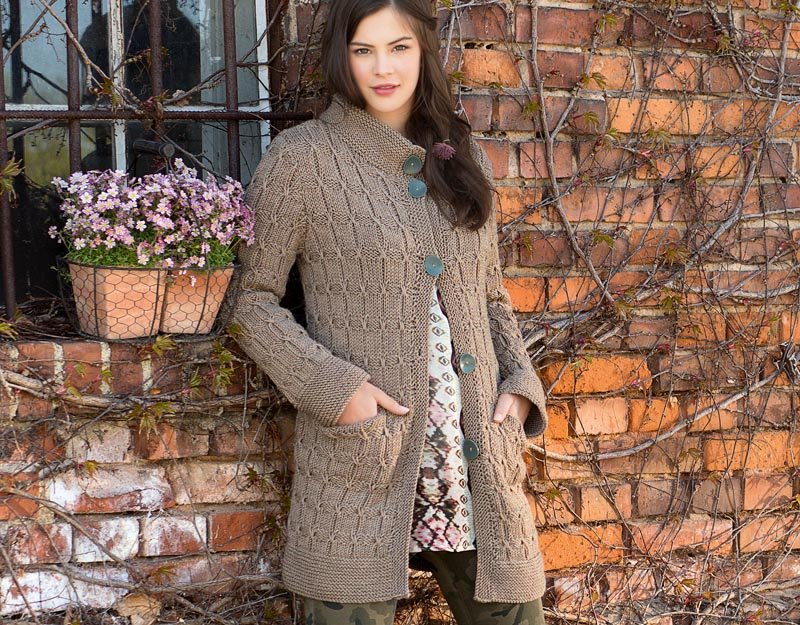
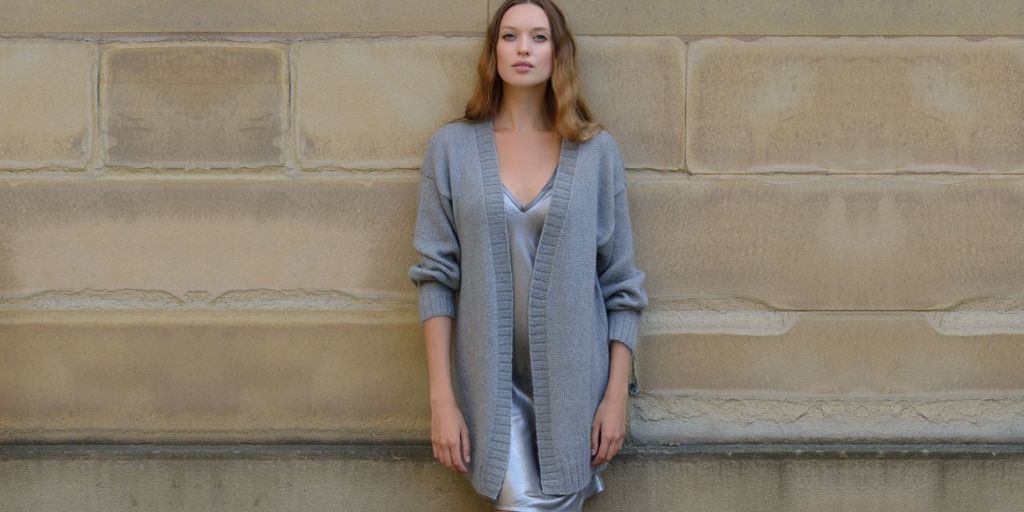
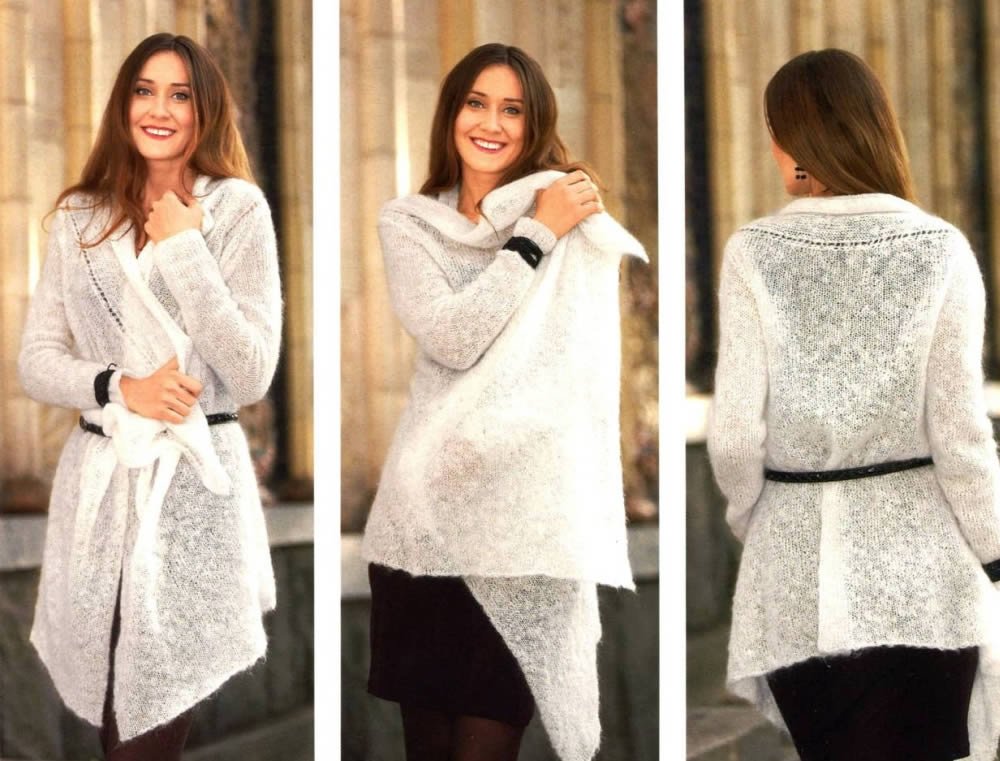
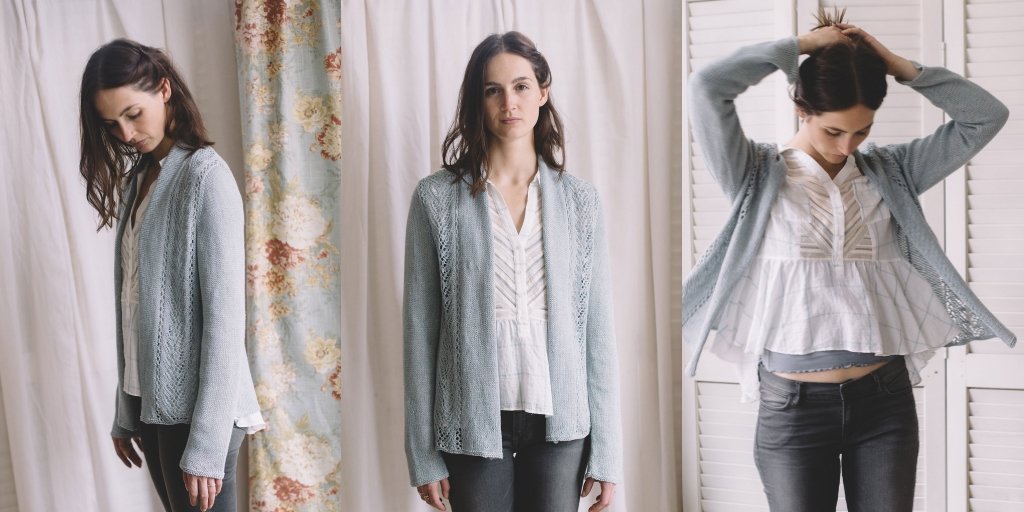
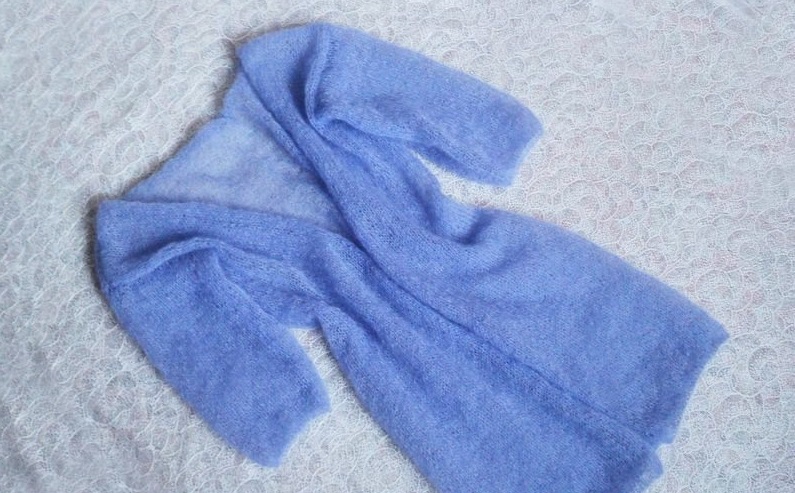
Knitted items are always popular, because they are comfortable, warm and original. A cozy sweater or cardigan will protect you from frost in winter and warm you up on a cool summer evening. There are many styles and design options for the product. And if you knit a mohair cardigan yourself, you will get a practical and at the same time beautiful thing. Unlike a regular sweater, it may not have buttons or a collar. The length of the product is selected at the discretion of the needlewoman. Depending on the chosen model, the thickness of the yarn, the pattern, you will get either a light summer blouse or a warm jacket that can replace a coat.
The nuances of knitting from mohair
Mohair is one of the most popular types of yarn. It is a soft, fluffy thread made from the wool of Angora goats. Unlike other types of yarn, mohair has many advantages:
- pleasant to the touch;
- very weightless, but quite warm;
- easy to dye, does not fade or shed;
- mohair sweaters and cardigans do not deform and drape well;
- The yarn is hygroscopic, hypoallergenic, and resistant to dirt.
Thanks to these qualities, mohair is popular among knitters. It is used to make sweaters, pullovers, cardigans. Three types of yarn are most often used for knitting:
- Kid Mohair – very thin and delicate, it works well for creating openwork patterns;
- Goating Mohair – has a thicker thread, it is used for dense knitting;
- Adult Mohair is the densest, stiffest yarn, great for simple knitting of winter items, but the sweaters turn out quite thick.
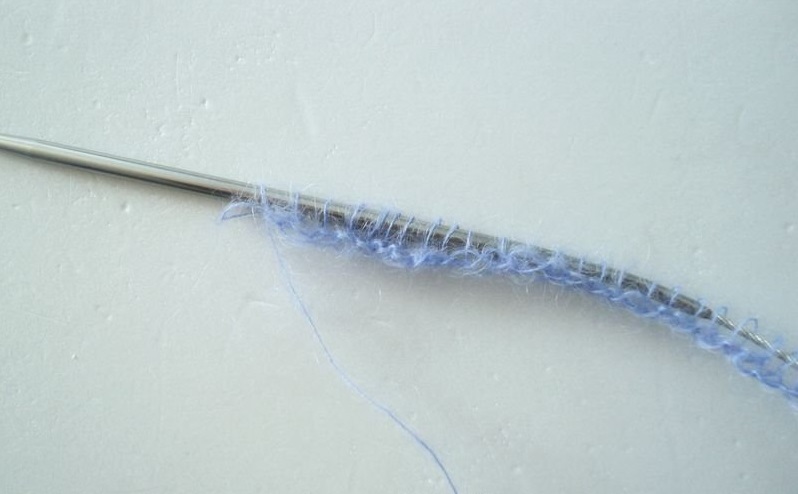
Mohair is most often used for knitting with needles, as this method preserves its fluffiness. Dense knitting leads to the pile rolling. To prevent it from being crushed, it is advisable to choose thicker needles than recommended for a particular thread - then you will get a beautiful airy pattern.
Mohair products cannot be unraveled and the thread reused. The yarn loses its attractiveness and the pile breaks.
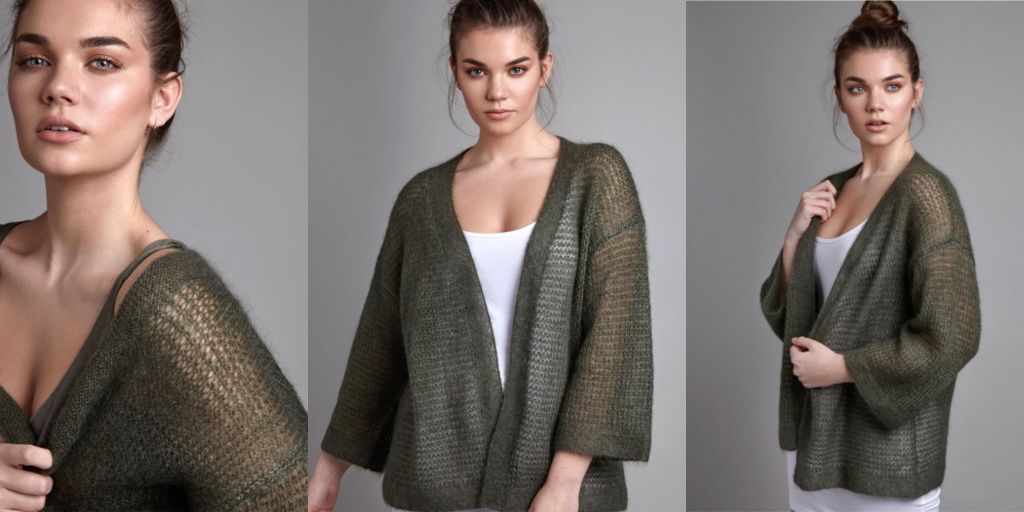
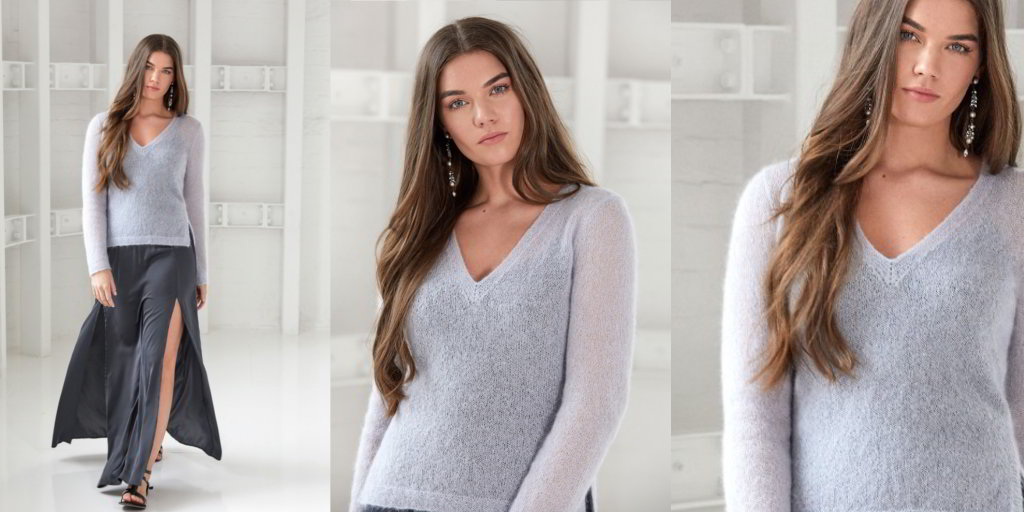
Various cardigans and pullovers are best knitted from thin mohair. Then they will be airy and light, but still warm. In summer, women try to wear knitted blouses from this yarn, as they warm on cool days, but the body does not sweat in them.
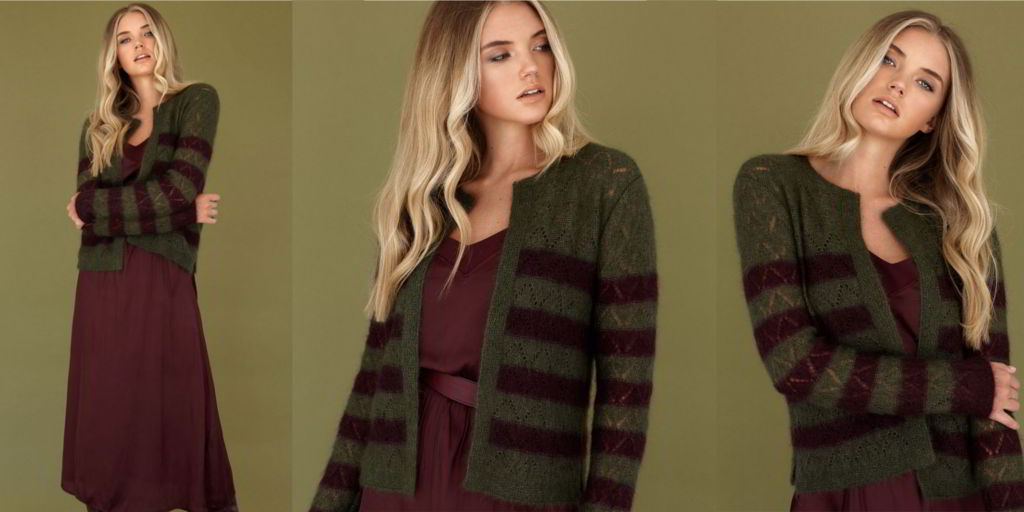
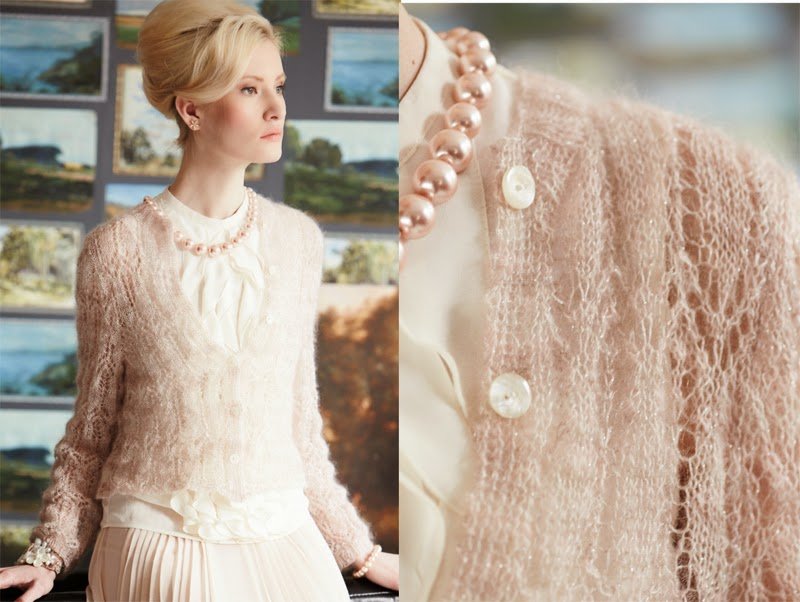
You can knit a beautiful and original thing from mohair, even if you choose a simple pattern. This is one of the positive features of mohair. A thin thread can be used to create openwork. Diamonds, trefoils, small leaves, lace, waves or a regular mesh are knitted well from it. Items with a denser pattern will hold their shape better, but the yarn may lose its advantages. Beginners should not experiment with them. Very dense knitting is not suitable for mohair.
Selecting a tool
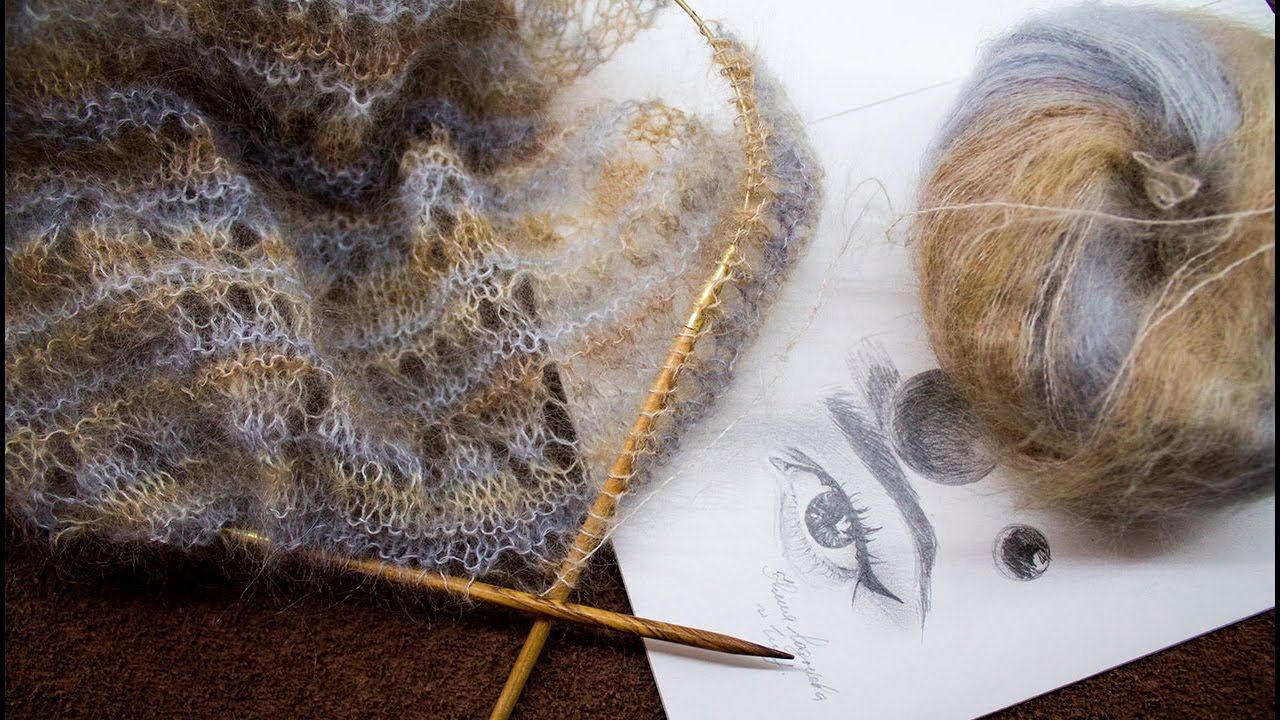
It is not difficult to learn how to knit a cardigan with knitting needles for women. The main thing is to choose the right pattern and tool for the job. The peculiarity of this yarn is that knitting with too thick knitting needles will lead to stretching and deformation of the finished product, and with thin ones it will not be possible to create an airy delicate pattern.
All yarn is now produced in skeins, on which the number of the ideal tool is indicated, indicating the thickness. But these tips are not applicable to all patterns - if you need a dense knitting, it is better to take needles thinner than recommended. If, on the contrary, you need an openwork fabric, then it is worth choosing thick tools.
Sometimes the number of the needles is not specified by the manufacturer. Experienced craftswomen can already determine by eye what tool they need. A beginner needlewoman can do it like this: take a piece of thread, fold it in half and twist it a little. The needle should be of the same diameter. If you need to knit an airy cardigan or jumper from mohair, it is better to take a tool 2-3 mm thicker.
In addition to the size, you need to pay attention to what the tool is made of. The most popular are metal or plastic. There are also wooden or bone ones, but they are more expensive. When choosing, you need to make sure that the surface of the spokes is smooth, without nicks, and the end should not be very sharp. Many people prefer products on wire - it is important that the connection is tight.
Aluminum knitting needles are lightweight, but they can stain light-colored yarn when knitting.
Measurements and preparation
Mohair cardigans are made with both tight knitting and openwork. The pattern you like should be tried on regular yarn so that knitting with needles does not cause problems later. In order to calculate the amount of threads that will be needed for the work, it is worth making a sample measuring 10 x 10 cm. This is necessary to determine the required knitting density, understand whether the thickness of the needles is chosen correctly, and also calculate the yarn consumption.
When working with mohair, the thread should not be pulled too tightly, as this prevents the yarn from showing its advantages.
You can calculate the knitting density after the knitted sample has been washed and dried. For mohair, it is recommended to do this 2-3 times, since the yarn is natural and can shrink. The resulting sample must be pinned to a flat surface and measured with a ruler, excluding the edge loops. You need to count how many of them fit into 10 cm and divide by 10. This way you can determine how many loops you need to dial for the desired size.
You can achieve the same density as in the pattern description by changing the thickness of the needles or the tension of the thread.
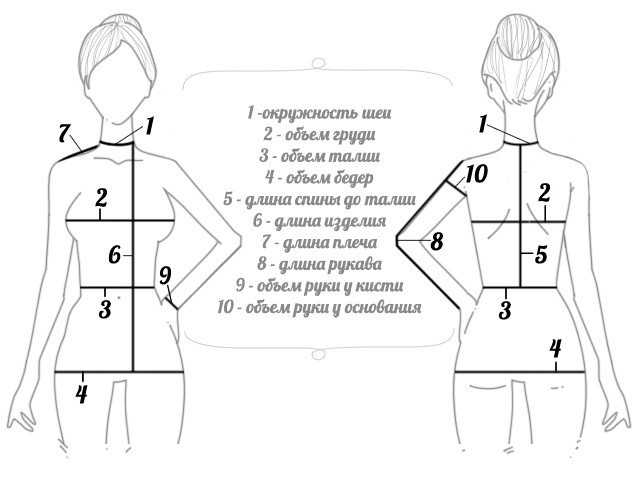
To knit a cardigan correctly, you need to determine the size of the product. To do this, you need to take measurements using a tape measure. It should fit with a slight tension, but not tightly. Any women's jumper, jacket or cardigan requires the same measurements:
- chest, waist, hips;
- length from shoulder to waist;
- shoulder width;
- wrist circumference.
In addition, it is necessary to determine the total length of the product and sleeve. An experienced craftswoman can independently construct a pattern based on the measurements taken. For beginners, it is important to know how to adapt it to their sizes. Usually, step-by-step guides with a description on the pattern indicate the sizes and the recommended knitting density. You just need to adjust the number of loops taking into account the difference in parameters.
Stages of work taking into account the model
To knit a mohair cardigan, you don't have to be a professional. You just need to understand the features of patterns and know the basic loops. Now you can easily find any pattern with diagrams and a description of knitting. If you follow the step-by-step instructions and carefully count the loops so as not to get lost, everything will work out.
Openwork
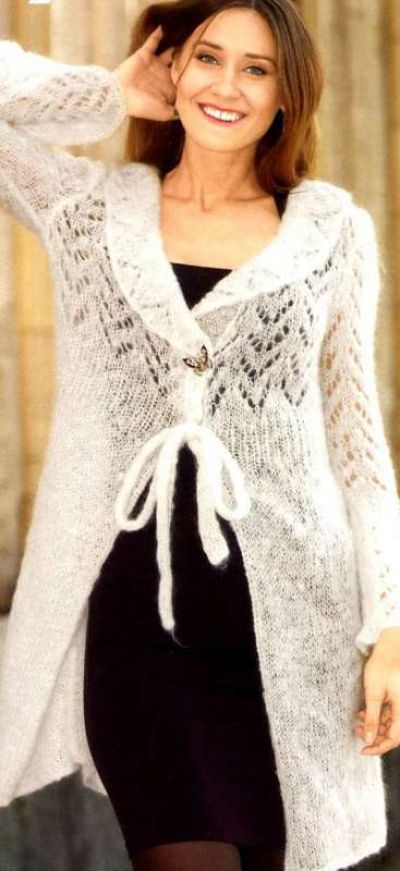
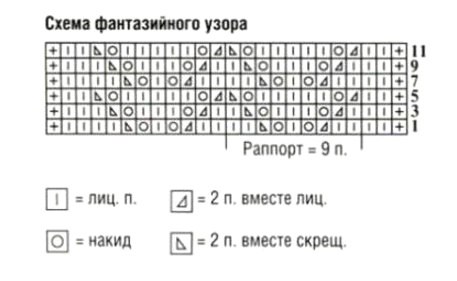
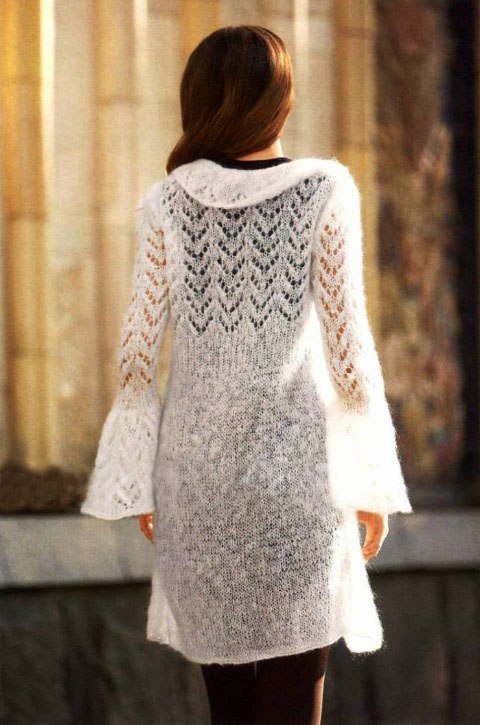
The openwork cardigan turns out feminine, thin and airy. For it, you can take Kid Mohair or Goating Mohair yarn. You will need 250-300 g of thread and knitting needles No. 4.5. Knit from the bottom, starting from the back. The pattern consists of three parts: the bottom is the front surface, then the "elastic band", and the top is the openwork.
Description of the knitting pattern:
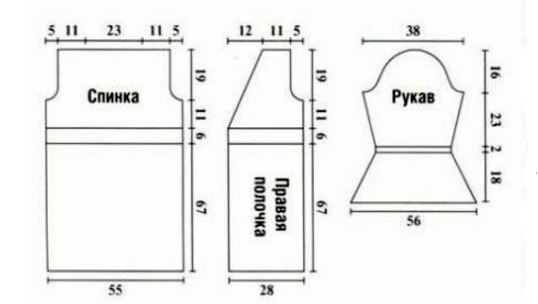
- For the back, cast on 68 stitches (hereinafter referred to as sts). Knit the first 100 rows (hereinafter referred to as r.) with the front surface. Then 12 rows with an elastic band and 2 rows with the front surface again. After that, knit the lace according to the pattern. On the 135th row, you need to make an armhole. To do this, close 4 sts along the edges. Do the same in each 2nd row - first 2, then 1 st. In total, by the 173rd row, 54 sts should remain.
- Knit the front in the same way, only cast on 35 sts. After starting to knit the openwork, you need to make a roll-out and an armhole. To do this, in row 115, close 1 st on the left, then in each 2nd row - 4 sts, in each 4th row - 9 sts. The armhole is made on row 135, the same as in the back.
- For the sleeve, cast on 70 sts, 2 rows with stocking stitch, the next 30 rows with openwork stitch. Then close 35 sts evenly, then knit 4 rows of "elastic", 2 rows with stocking stitch and 36 rows with openwork stitch. You need to widen the sleeve from the 39th row - first 1 st on each side, and after 6 rows 5 times on the loop. From the 77th row, an armhole is made. You need to close 4 sts on each side, then - every other row: 2 sts, 6 sts, 2 sts, 3 sts. 9 sts should remain.
- To assemble, first sew the side seams, shoulders and sleeves. The last elements need to be sewn in. On the roll-out, knit the collar: 10 rows of stocking stitch, from the 11th to the 17th row - openwork.
The cardigan can be tied with a separate belt, and a tie can be sewn on the elastic band level in the front. It is better to make it from the same yarn, 8 loops wide, knitted with the front surface.
Cobweb
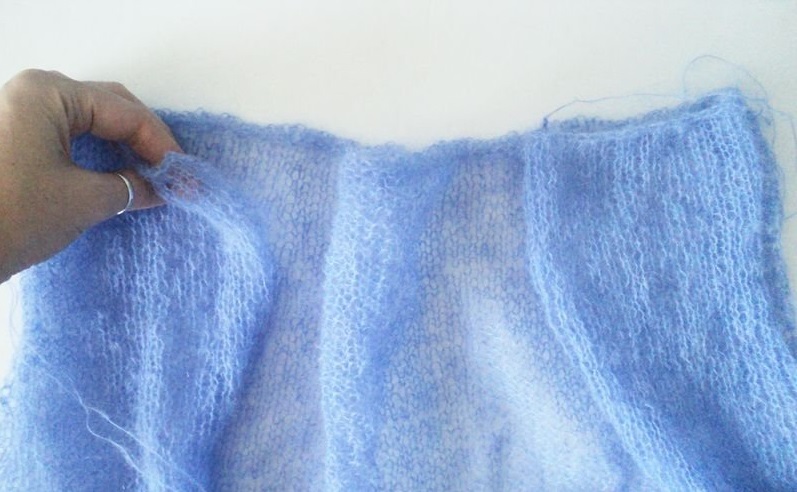
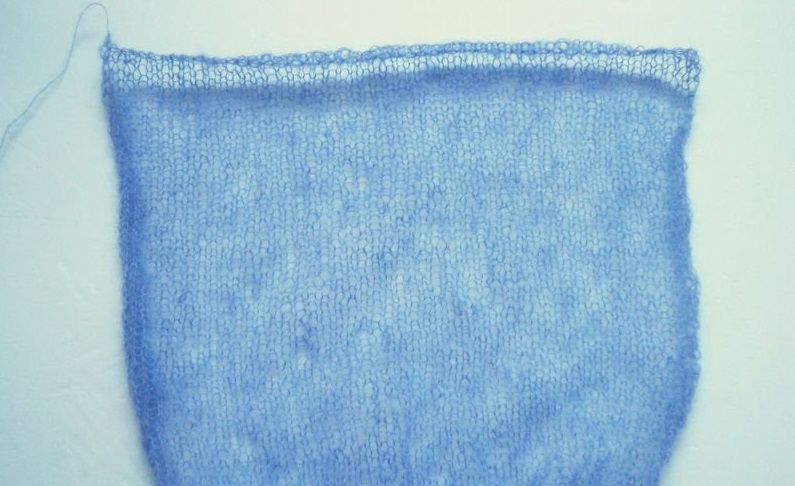
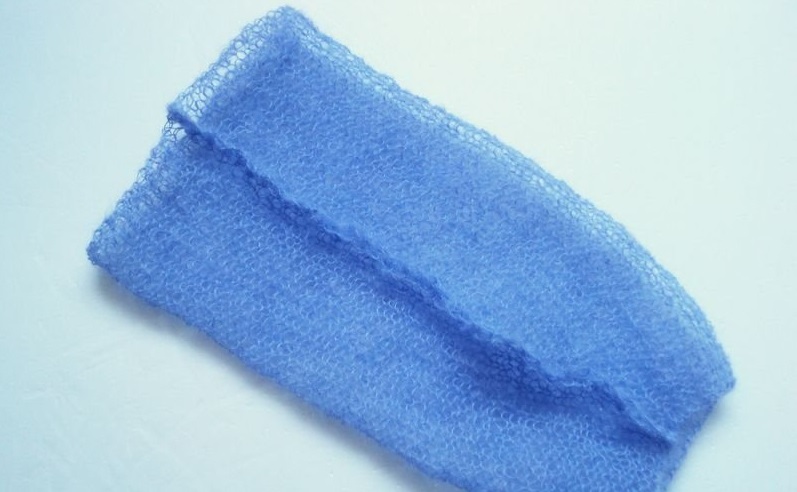
A very thin cardigan with a pattern resembling a net is in fashion now. To get such a pattern, you need to knit with a regular stockinette stitch, but with thick knitting needles. To create a simple style without ties, you will need to make a back, two shelves, two sleeves. Master class:
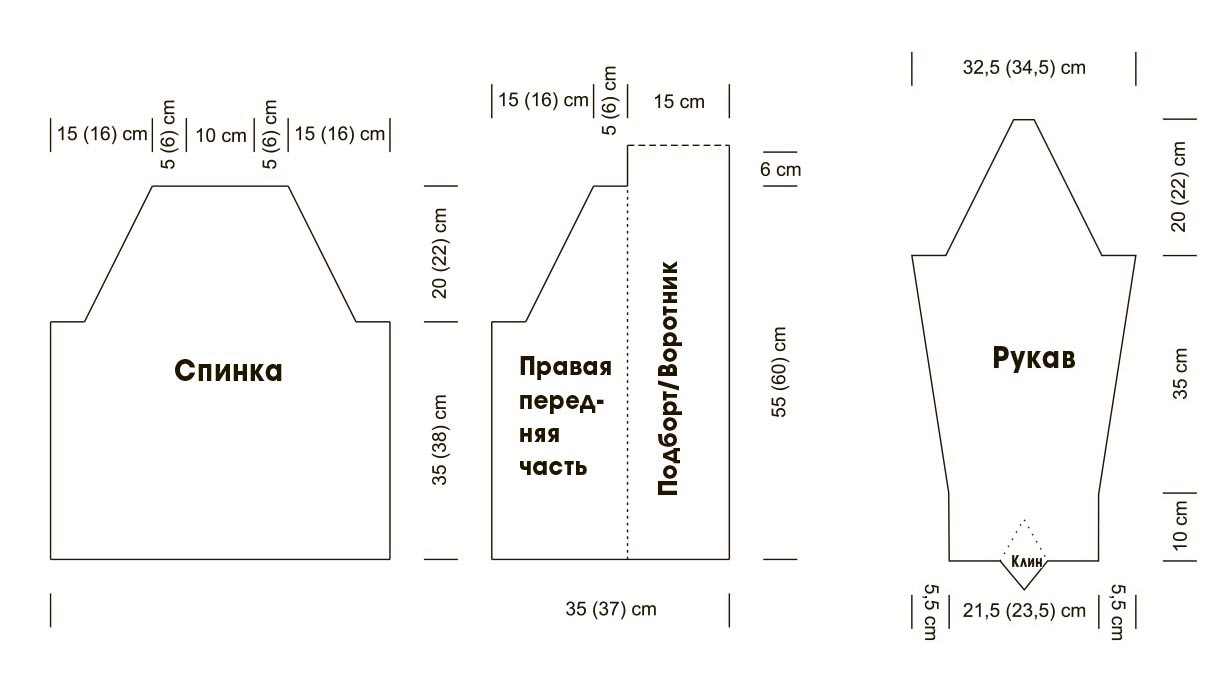
- For the back, cast on 100 stitches (hereinafter referred to as sts). Knit with the front surface, after 35 cm, make bevels for the armhole on both sides. First, close 2 rows (hereinafter referred to as r.) with 5 sts, then 1 st on each side.
- For the front piece, cast on 70 sts. It consists of the front piece and the turn-up collar. For the right front piece, knit 30 sts in purl stitch and 40 sts in knit stitch. After 35 cm, decrease 5 sts on the left side first, then 1 st. Having knitted to the shoulder, close 10 sts, leaving only 30 sts of the collar. Knit 6 cm and leave the sts on the circular knitting needle. Do the same for the second front piece in mirror image.
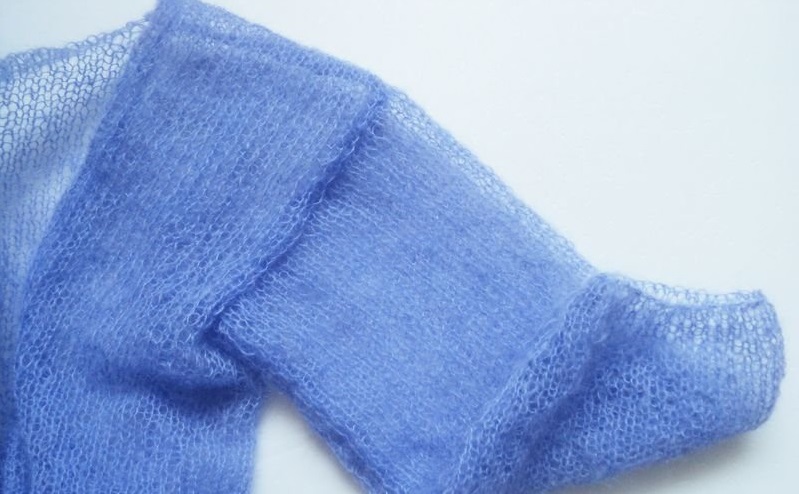
- For the sleeve, cast on 59 sts. After 10 cm, start making increases, every 3 cm, 1 st on both sides. After 45 cm, you need to make a raglan. In the first 2 rows, close 5 sts, then - 1 st on each side.
- When assembling, sew the sleeves, side and shoulder seams. Connect the set aside parts of the collar with a “loop” seam.
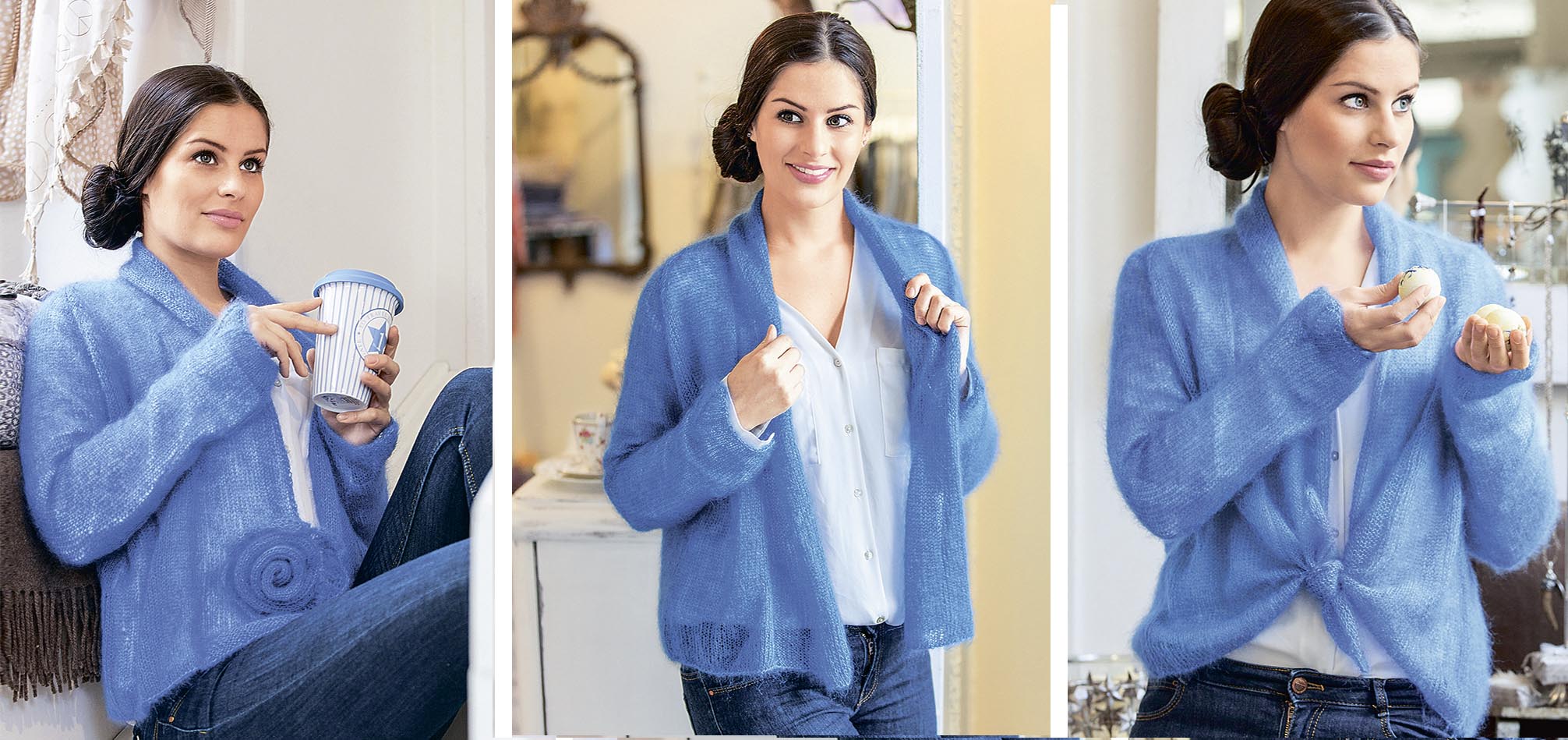
It is recommended to decorate the jacket with a knitted rose, a large button. Instead of a fastener, you can tie its ends in the front. The resulting product will suit both young girls and older women.
Easy for beginners
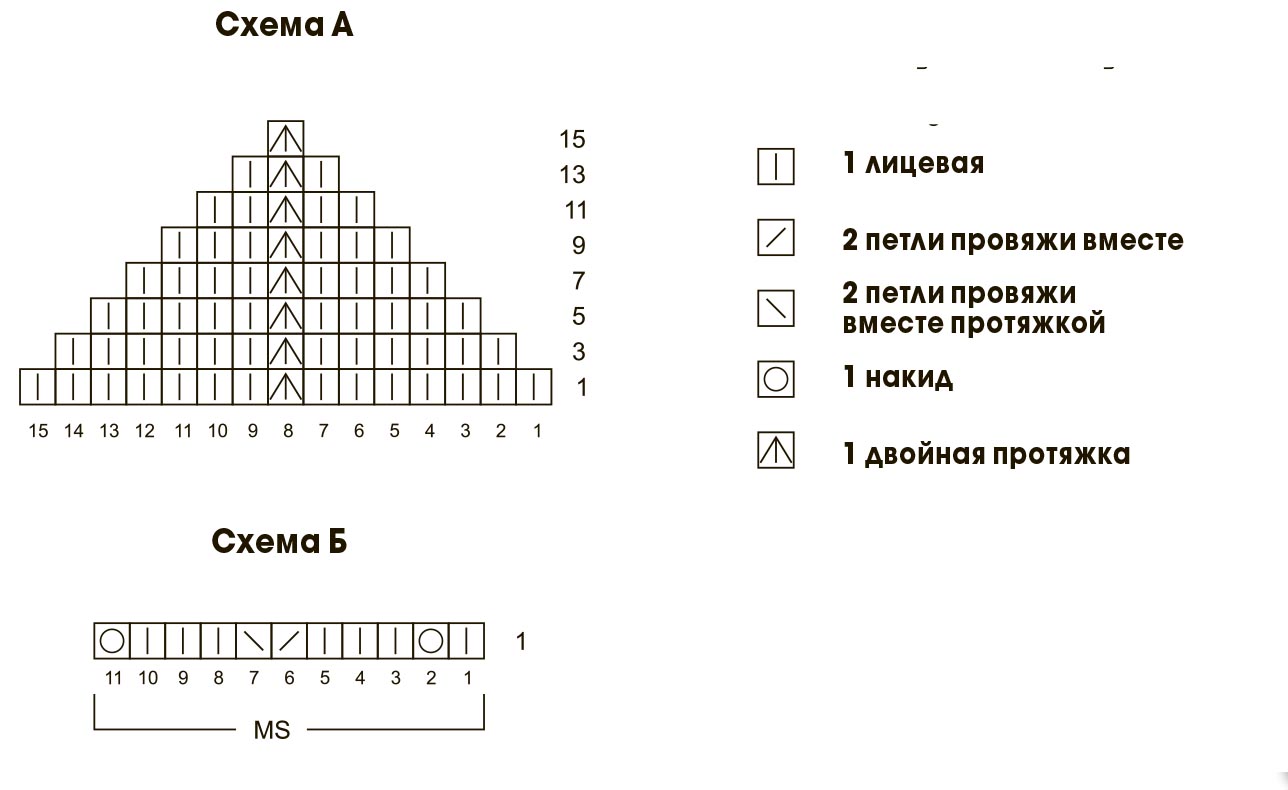
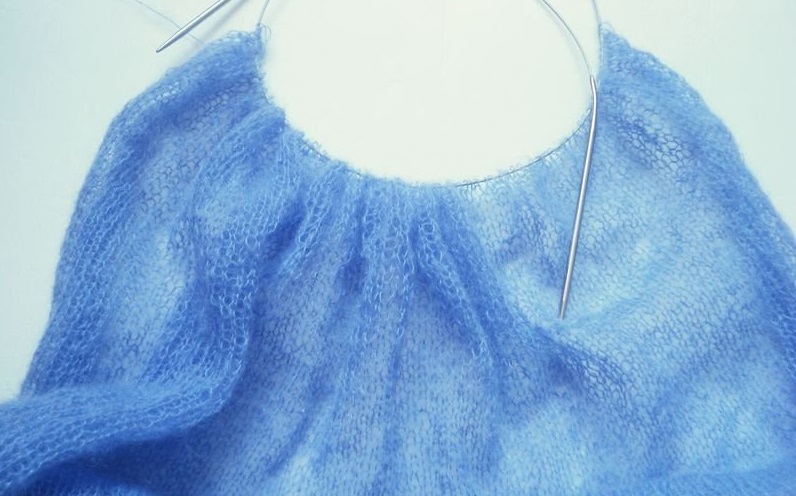
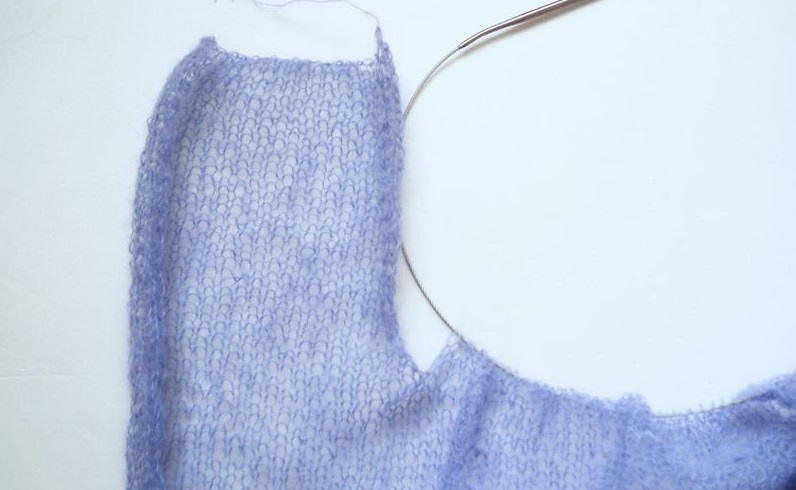
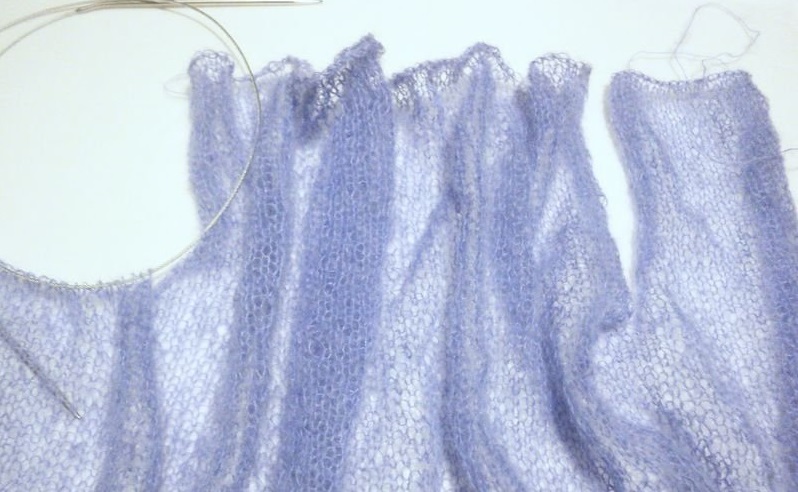
The simplest cardigan is knitted by alternating front and back loops every other row. It is better to take the thinnest thread, and knitting needles - No. 4, then the thing will turn out light and airy. The pattern and description of knitting will help to make increases and decreases of loops correctly. This is a straight style, it is created without side seams, the back and shelves are one piece. The calculation of loops is given for size 44. Step-by-step master class:
- Cast on 150 stitches (hereinafter referred to as sts) on circular knitting needles. First row – knit sts.
- Knit, alternating front and back rows, to the armhole.
- Now you need to divide into the back and shelves. For the back part you need 86 sts, for each shelf - 32 sts. You need to knit in turn, leaving the remaining loops on circular knitting needles.
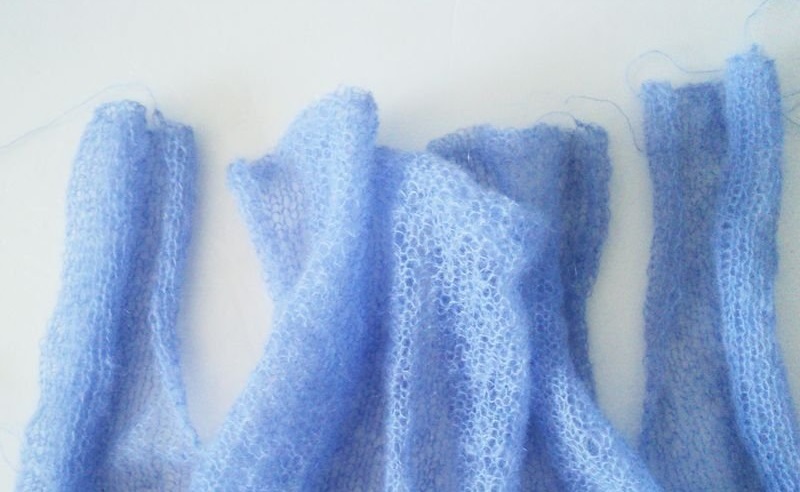
- Knit each piece 34 rows, close the loops. Fold the product, sew the shoulder seams.
- For the sleeve, cast on 42 sts. The knitting is the same, only in every 3 rows make increases of 1 row along the edges. So up to the 23rd row. After that, knit without increases another 47 rows or until the desired sleeve length.
- Sew the sleeves and attach them to the armhole.
- Decorate a mohair jacket with buttons or crochet it.
Other fashionable mohair products
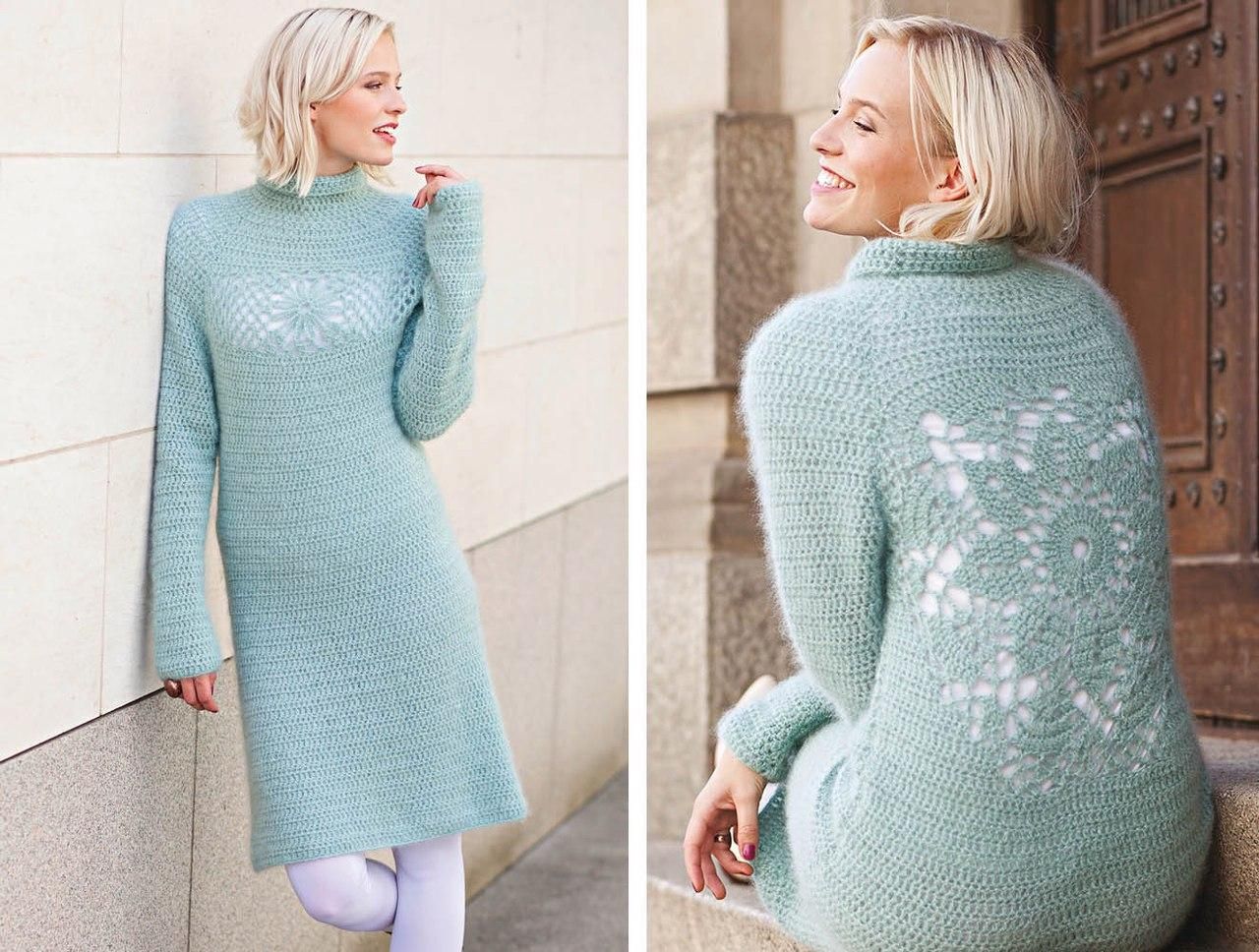
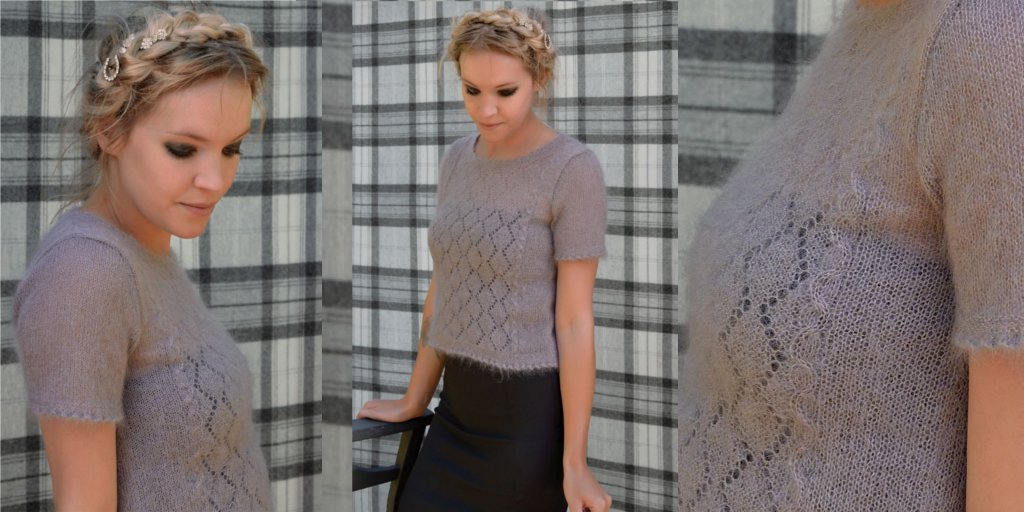
This yarn is often used by craftswomen to knit blouses and jumpers. Mohair sweaters are very warm and soft. The variety of models and styles of such products allows you to choose the right option for yourself:
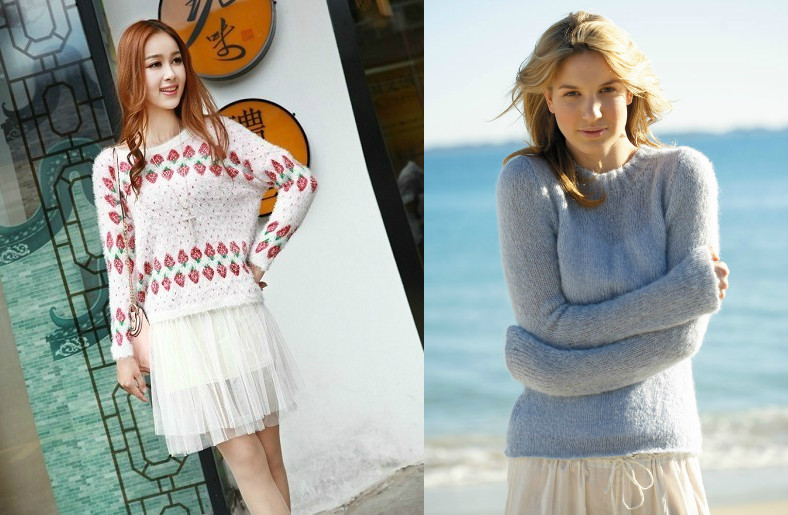
- The openwork mohair pullover looks feminine. It will keep you warm in cool weather and help create an individual look.
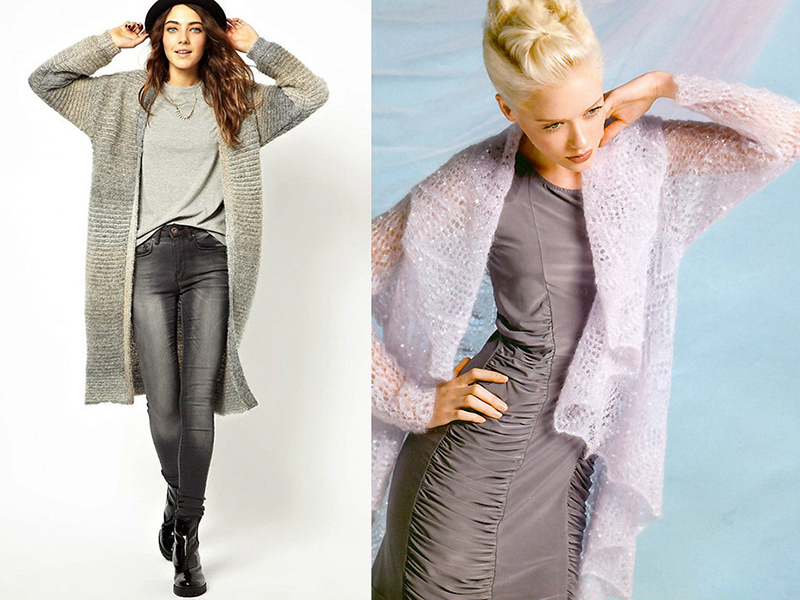
- A voluminous mohair jacket is knitted from thicker yarn, and is warm and soft. The denser the threads and pattern, the more such a thing resembles a coat.
- A thin mohair sweater is knitted from Kid Mohair yarn. It is more suitable for slim girls.
- Batwing sweaters will help hide figure flaws.
- A simple turtleneck sweater will work for a formal look, but you'll want to choose a neutral color and a thicker pattern.
- A chunky knit mohair sweater is perfect for a casual style. It is voluminous and roomy.
Sweaters, jumpers and other models that are put on over the head can be knitted in different ways. The most common is when the back, front and sleeves are made separately, then sewn together. Only after this is the collar made.
A jumper with raglan sleeves is suitable for a sporty style, since this style does not interfere with freely raising your arms. The batwing sweater can be knitted in two pieces, with the front and back being made together with the sleeves. It is also possible to make this model in one piece with a neck opening in the middle.
Various cardigans and sweaters made of mohair are easy to knit. If you choose the right thread thickness, model and pattern, you will get a beautiful wardrobe item. It will help not only to warm up in cool weather, but also to create a feminine original image.
Video