Every nationality has its own culture, customs, traditional clothing, which, although not worn in everyday life, is familiar to every representative of its people. The Russian sarafan deserves special attention, as it is not only one of the main symbols of Rus', but also serves as a beautiful and bright wardrobe item with its own history. Currently, such ethnic outfits are in demand for various events, holidays, parties. If necessary, a folk sarafan can be sewn independently.
What is it
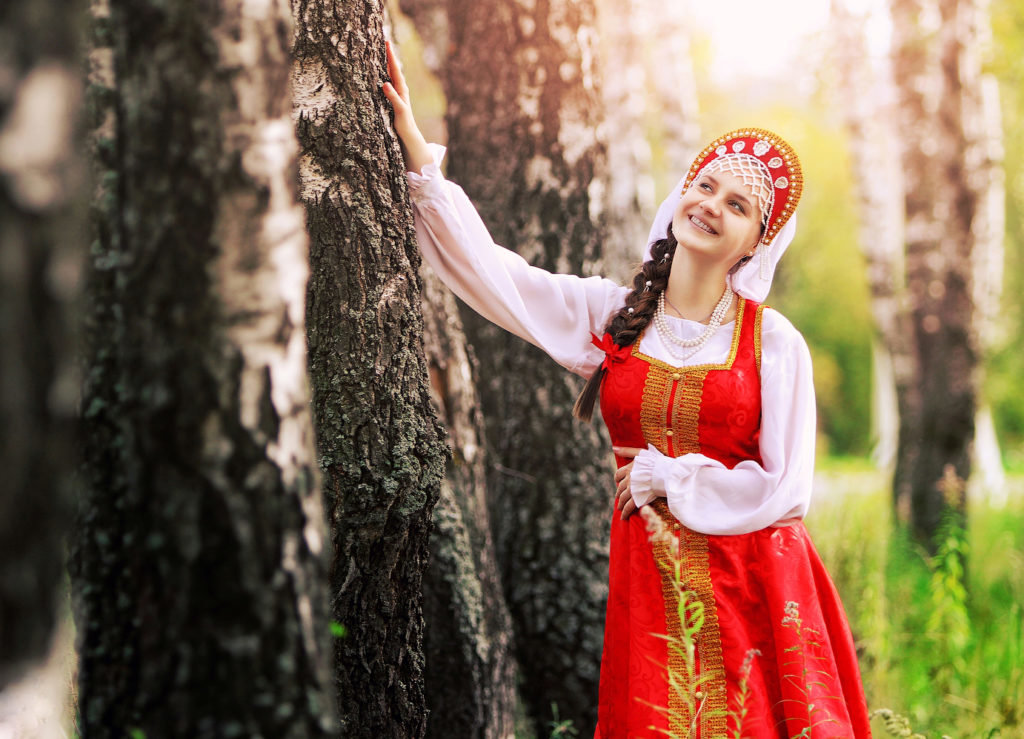
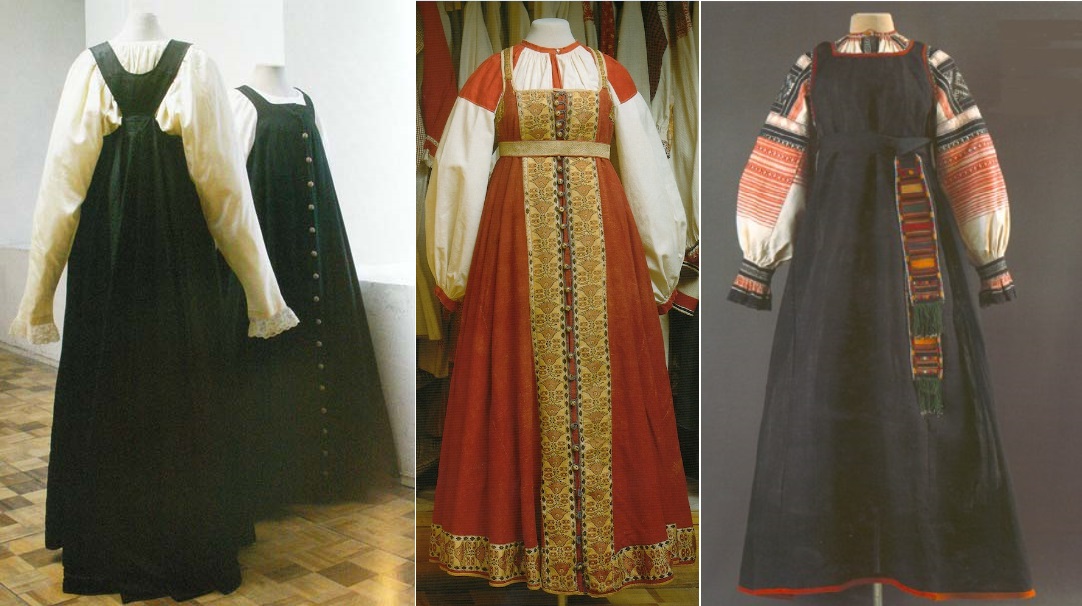
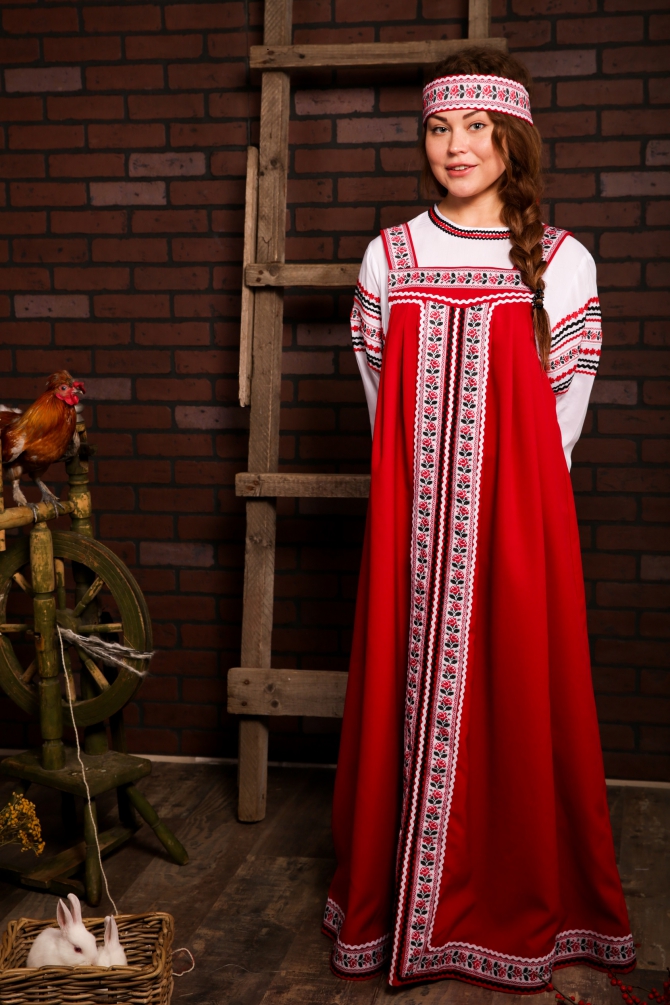
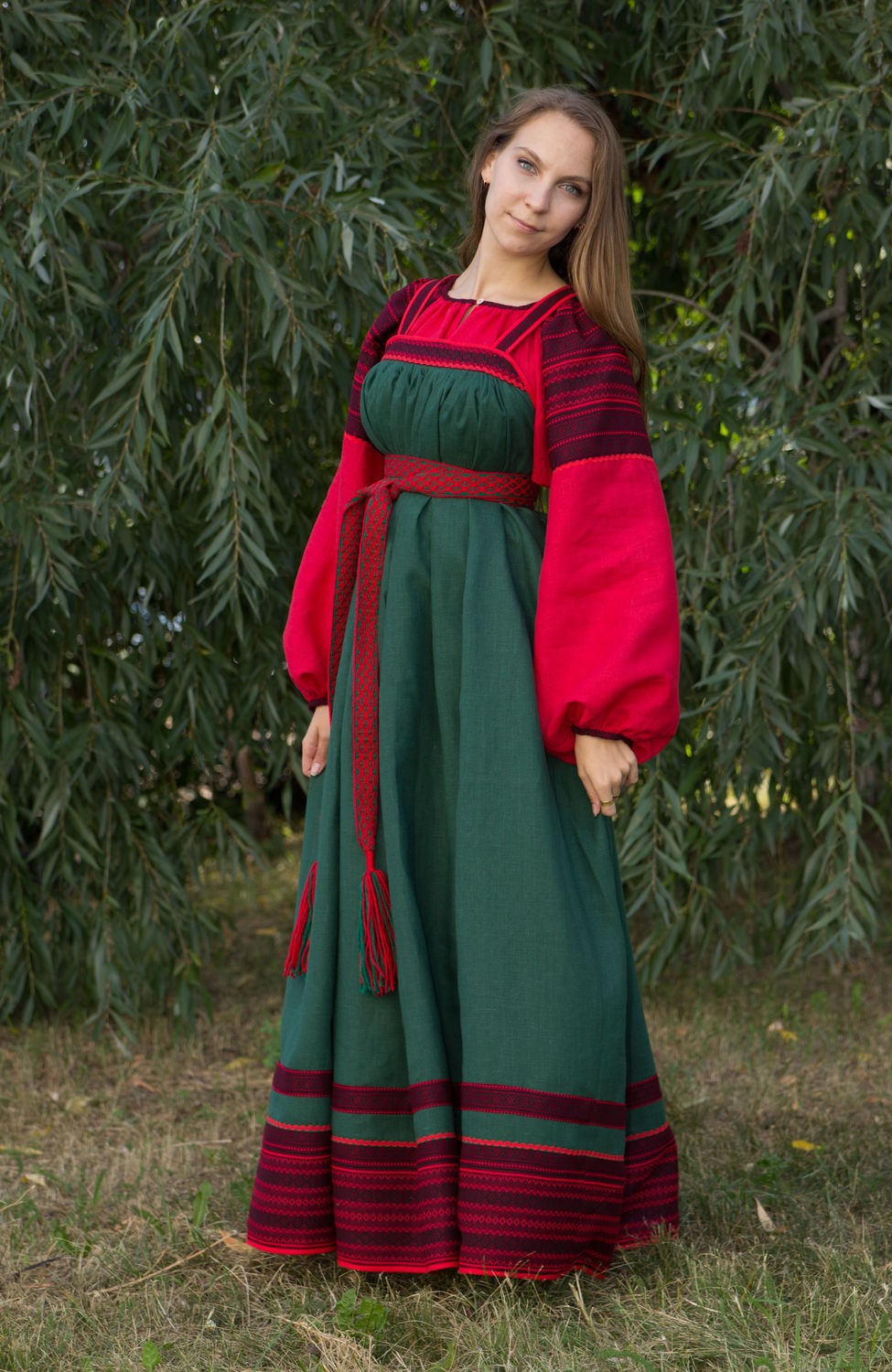
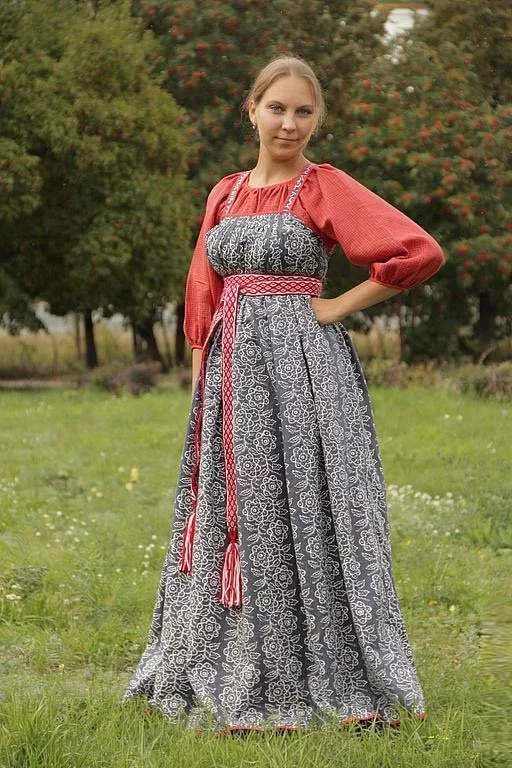
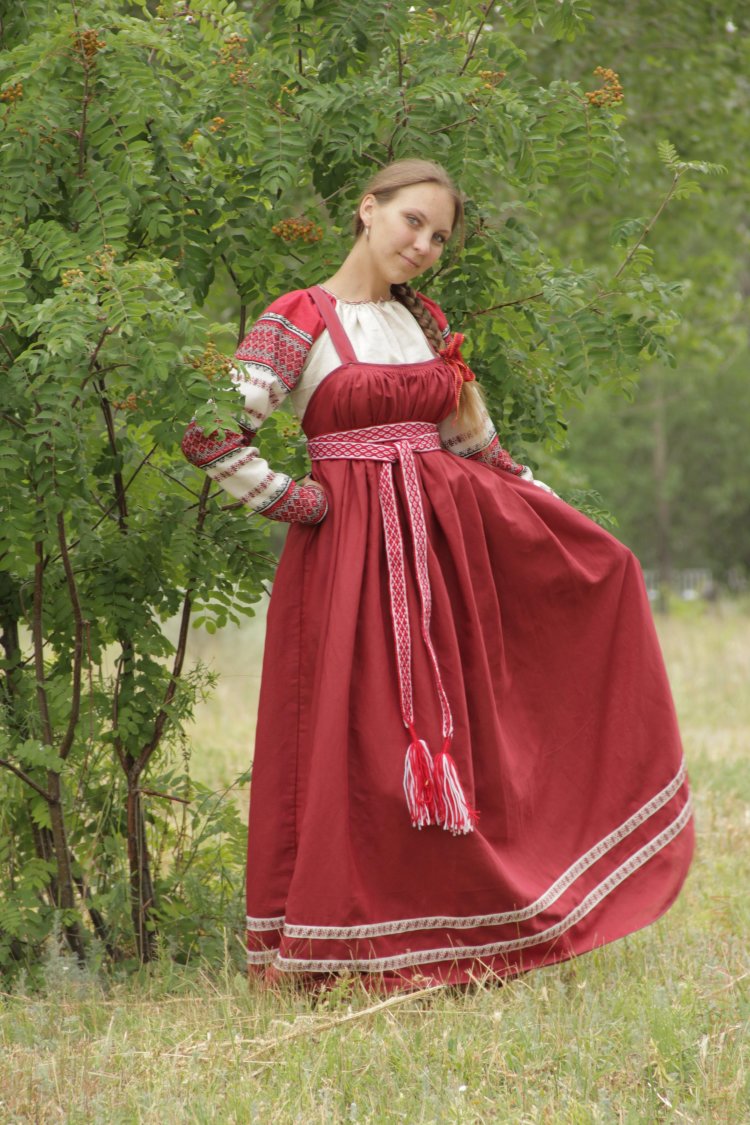
Russian folk costumes have always been distinguished by their multi-layered nature, luxurious ornaments and bright colors, which is also typical for the women's sarafan. Several features present in this wardrobe item can be highlighted:
- flared or straight silhouette, the waistline is not emphasized;
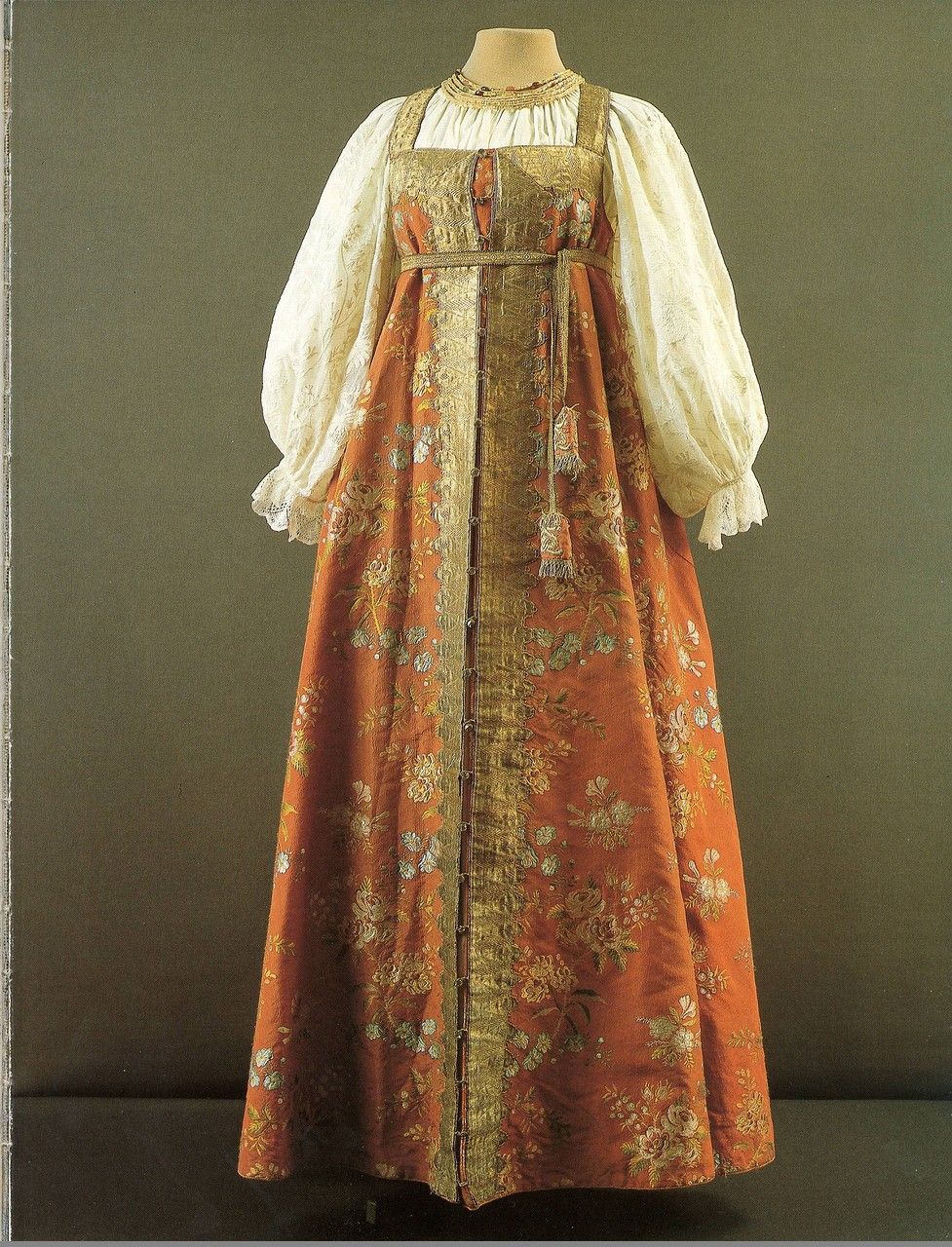
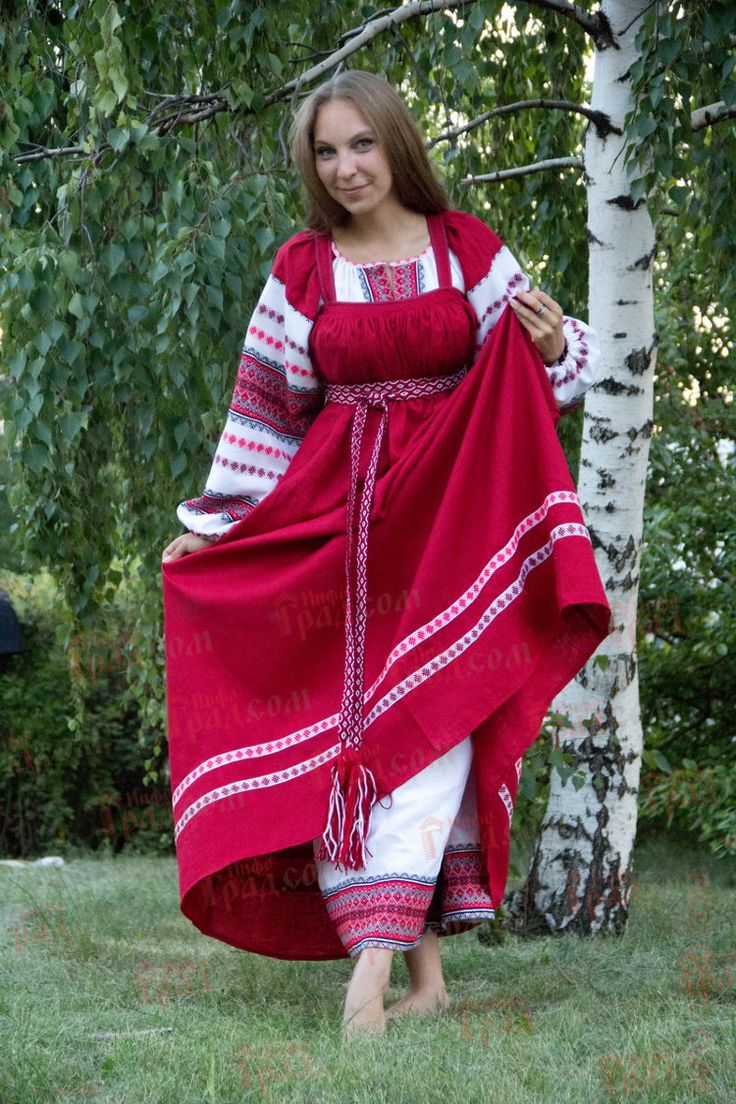
- the hems of sarafans, the chest, as well as the sleeves and collars of shirts are decorated with embroidery, stones, buttons, and ornaments, some of which had a specific meaning;
- multi-layered national dress, the image included a long shirt, embroidered belts or aprons could also be tied, and caftans could be worn;
- The girl's legs were never exposed, the suit had to cover them right up to the shoes, the shirt always had long sleeves.
Russian folk clothes were distinguished by bright colors, they could be blue, yellow, brown, but the most popular color was red, which was translated from the Old Russian language as "beautiful". Peasants also loved white, symbolizing purity. Shirts and aprons were sewn from bleached canvas.
Before sewing Russian sarafans, the fabrics were given the desired shade using natural dyes obtained from plants and vegetables.
Some details of the Russian-style sarafan varied depending on the region of residence, and the age, social and marital status of its owner could also be determined by the clothes. The richer the girl, the more luxurious the decorations on the outfit were; gold or silver threads could be used for embroidery. The women's costume was often complemented by a kokoshnik, decorated in the same style as the rest of the wardrobe. And to add volume to the lower part, additional skirts were worn under the sarafan.
Story
The history of the sarafan begins in the 14th century, at that time it was exclusively men's clothing, which had a long, narrow and open style. Only in the 17th century sarafans began to be intended only for women, and men began to wear long caftans and special sarafan-shirts.The sarafan first appeared in the Russian national wardrobe in the north of Russia and in the central provinces, and later gained popularity in Siberia. By the 19th century, this item of clothing had become an integral part of the lives of women in the southern part of the country.
The word "sarafan" comes from the Iranian "sarapa", which means dressed from head to toe. This explains the obligatory length of the garment, reaching to the ankles.
It is also known that in the 17th century in Rus', a sarafan was a female maid's (home) garment that was put on over the head. Later, it became not only an everyday garment, but festive outfits and sarafans for going out were made of expensive fabrics and richly decorated with various stones, which is why they could weigh several kilograms.
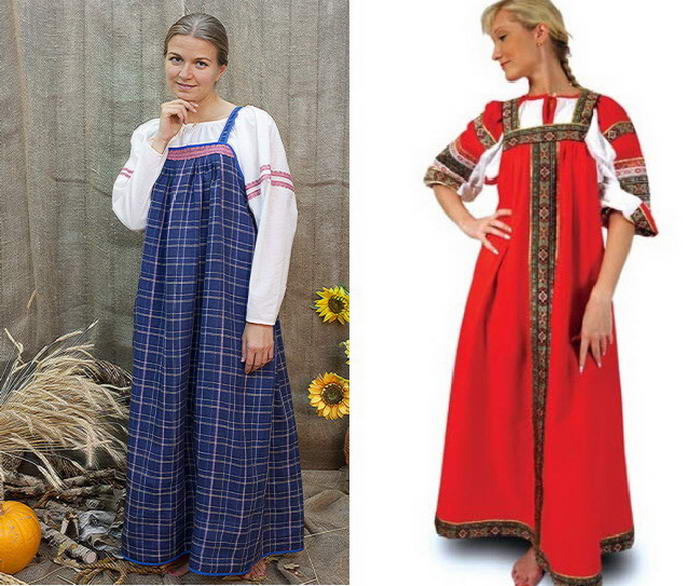
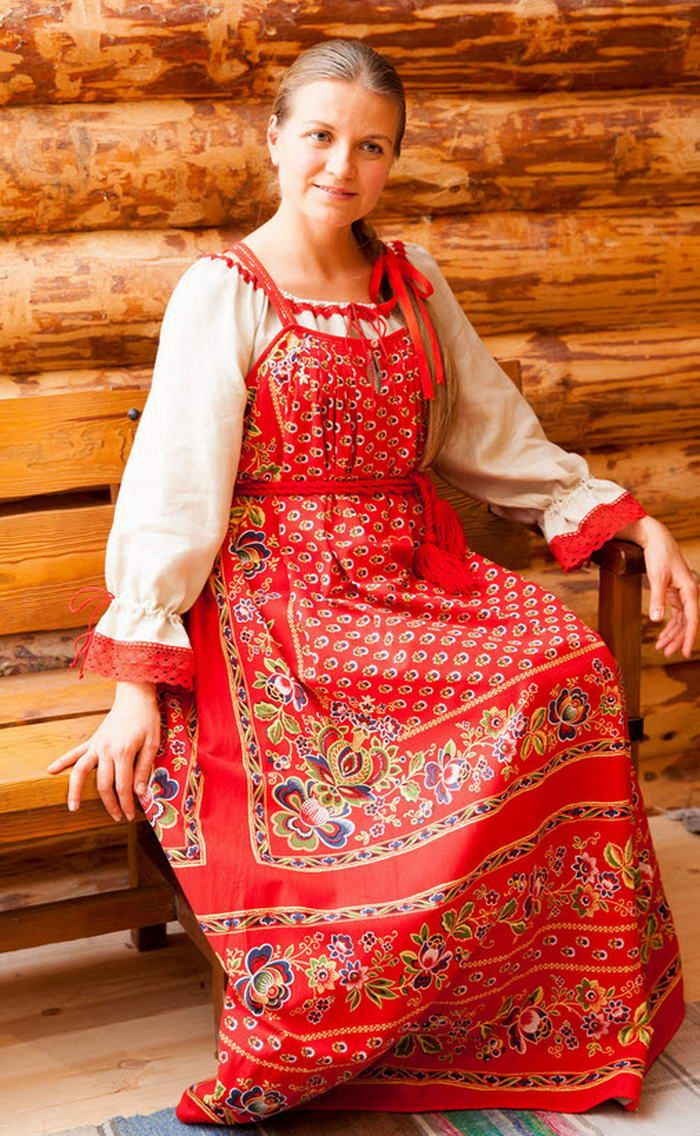
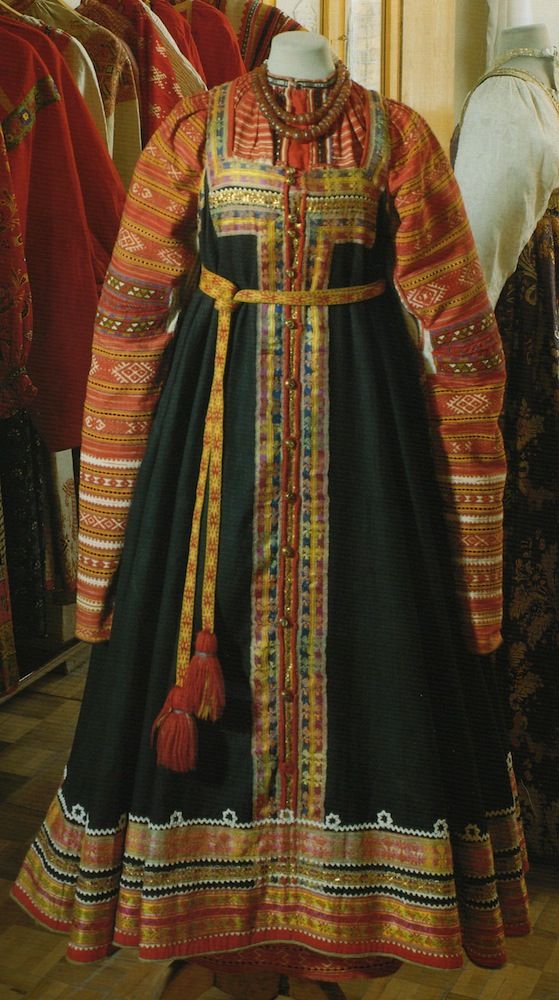
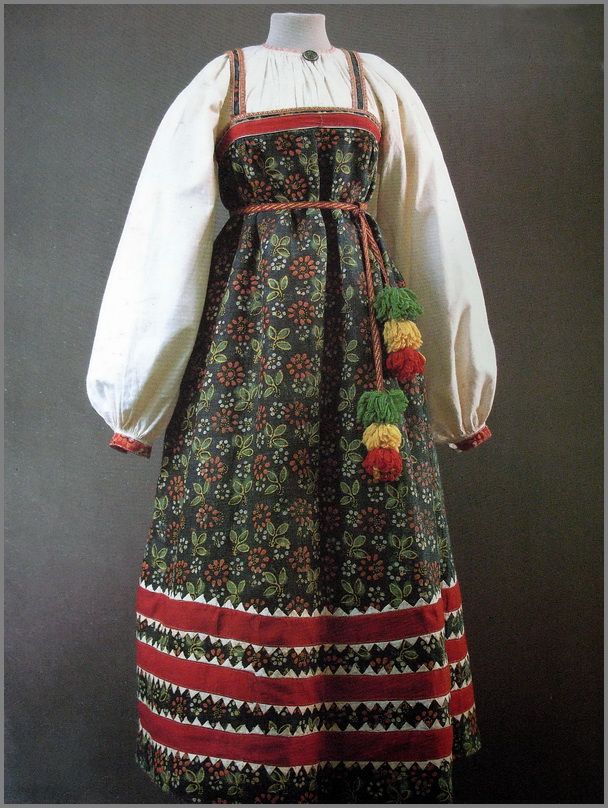
Varieties
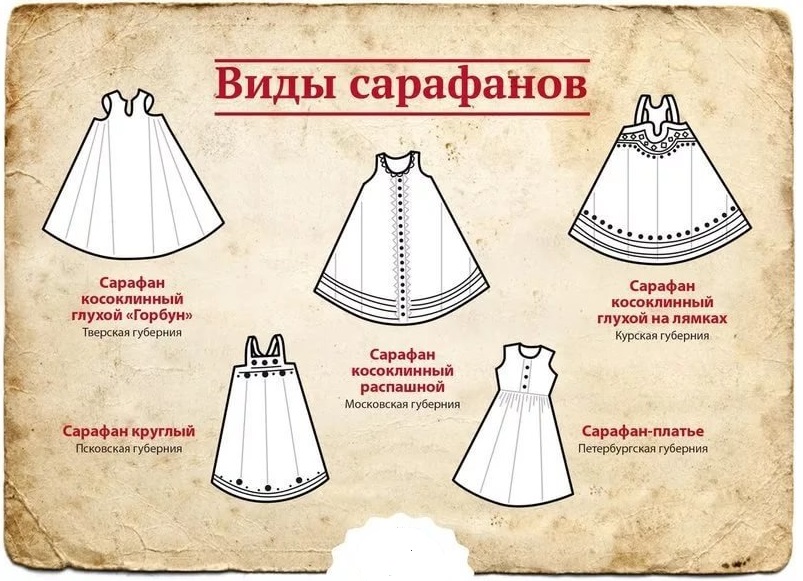
The Russian folk sarafan for a girl or an older woman has several varieties depending on the features of its style and tailoring:
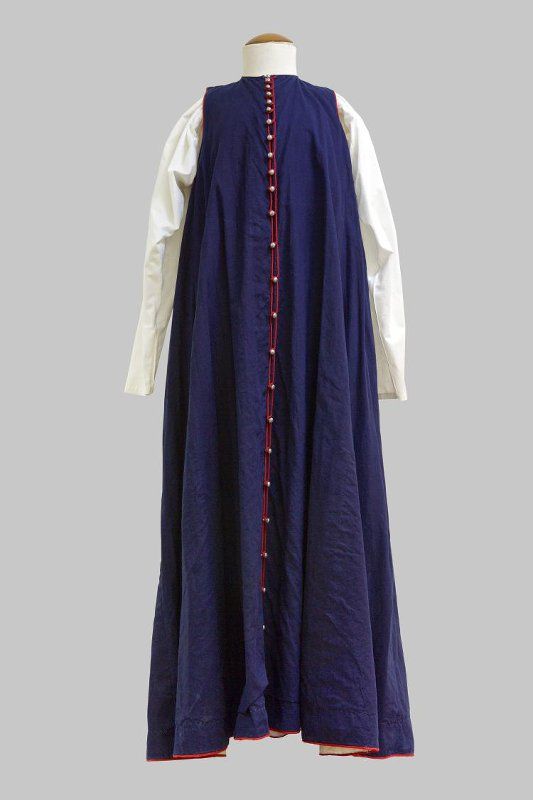
- Tunic-shaped or blind, without a middle seam - one of the first types of sarafan, sewn from one whole piece of cloth to which side inserts were attached. The neckline should be as high as possible, and in order for the head to pass through, a cut was made on it, which was then fastened with buttons or tied with ribbons. These products were sewn from coarse fabrics, such as canvas or broadcloth, and along the bottom of the hem and neckline they were decorated with appliques of painted canvas or embroidery in the form of stripes.
- The oblique-gore sarafan is a model consisting of one back, two front straight panels and two oblique wedges located on the sides. Such a sarafan could be fastened in the front with metal buttons or tied with a braid. These items were sewn from both homespun fabrics and more expensive factory-made fabrics, depending on the occasion and the status of the girl they were made for. The decorations could also be different; for everyday wear, textile ribbons were most often used, and for special occasions, sarafans were decorated with embroidery, lace, stones and silk braid.
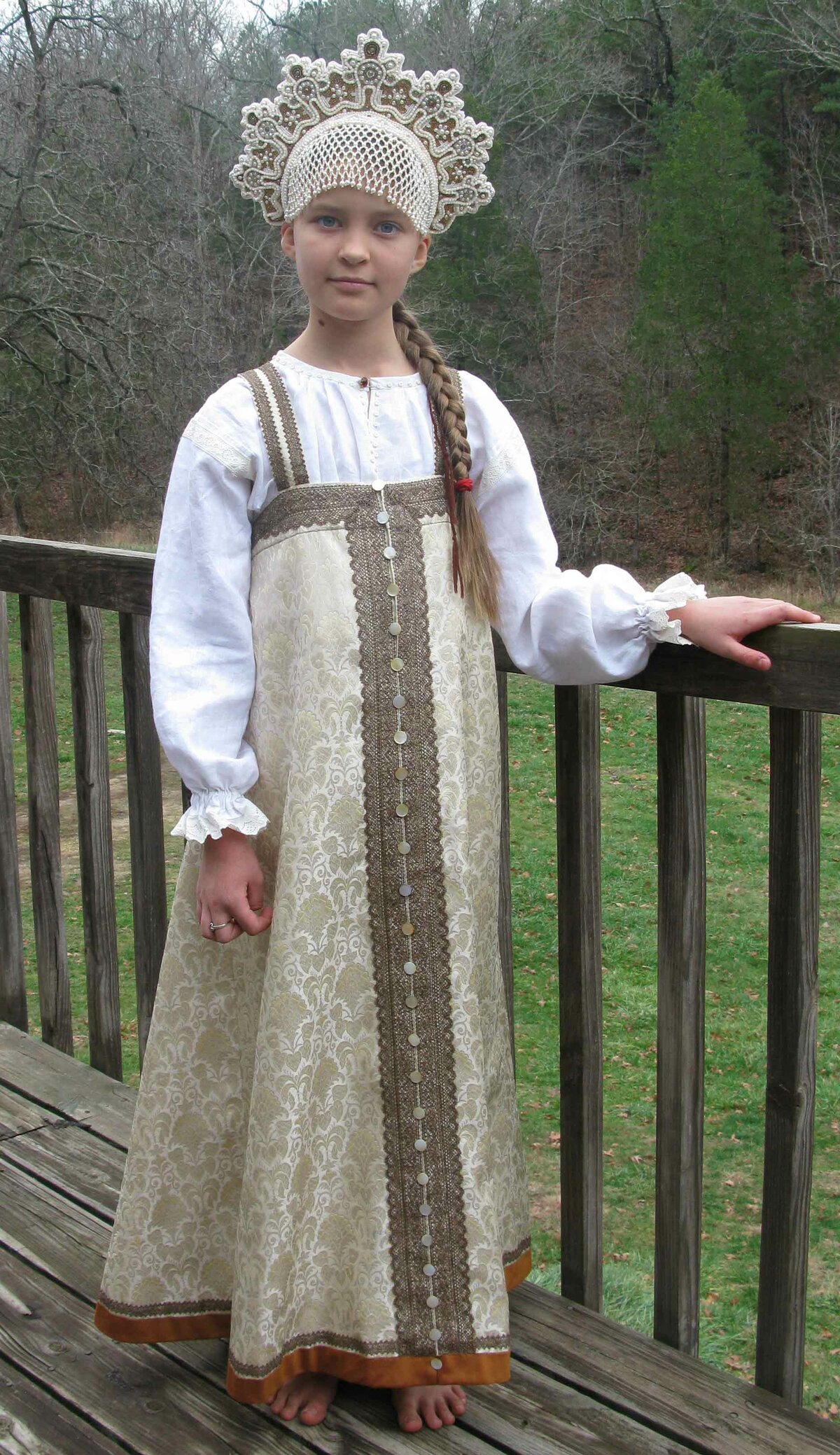
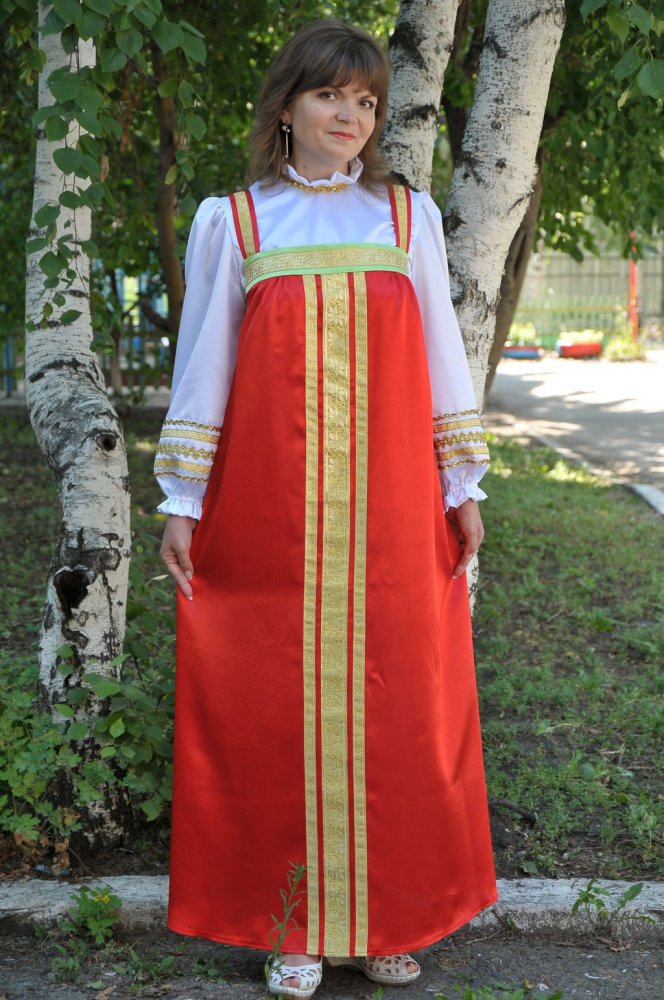
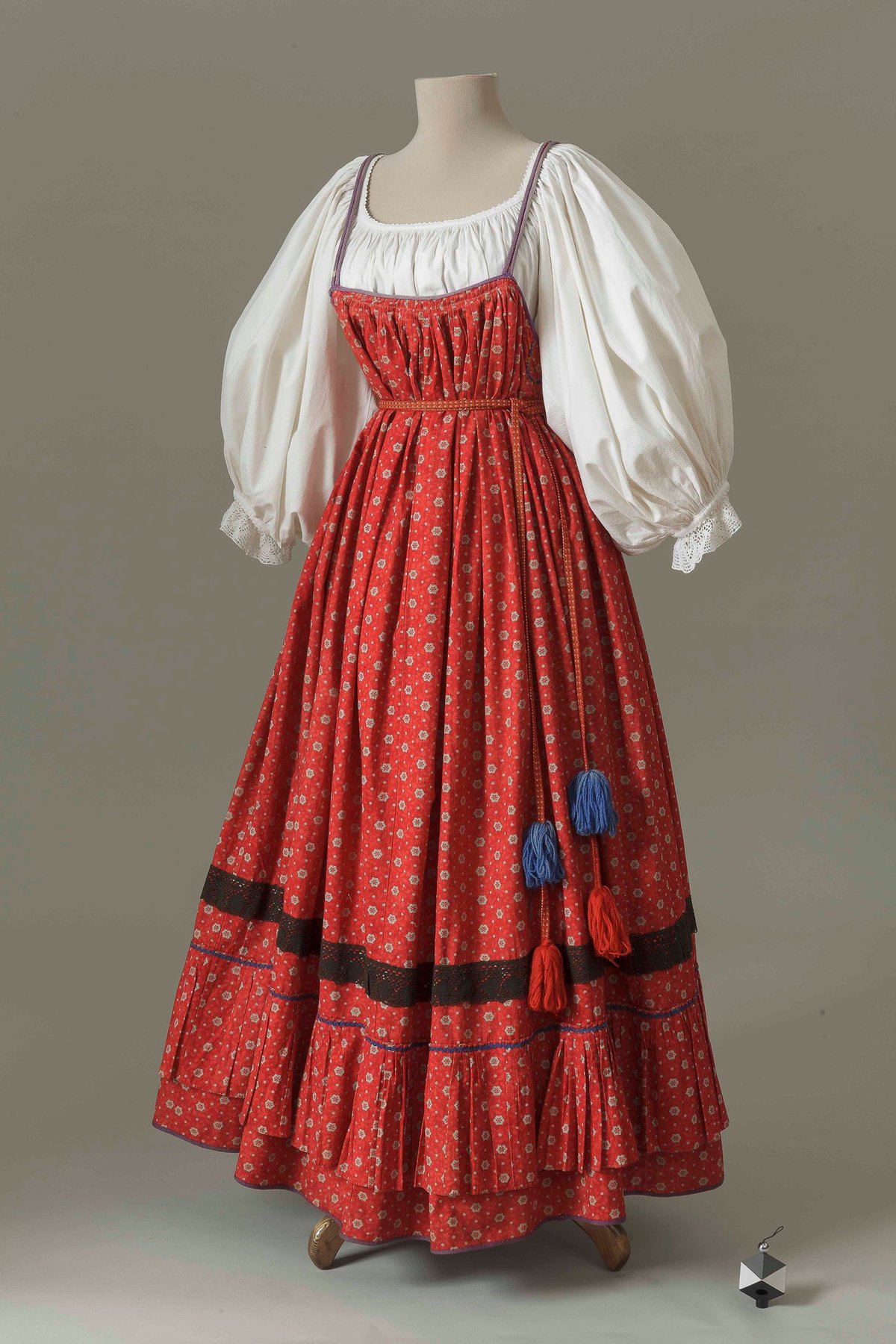
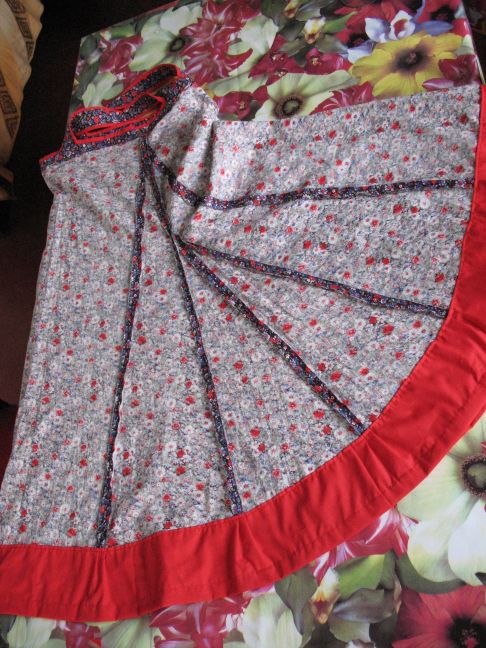
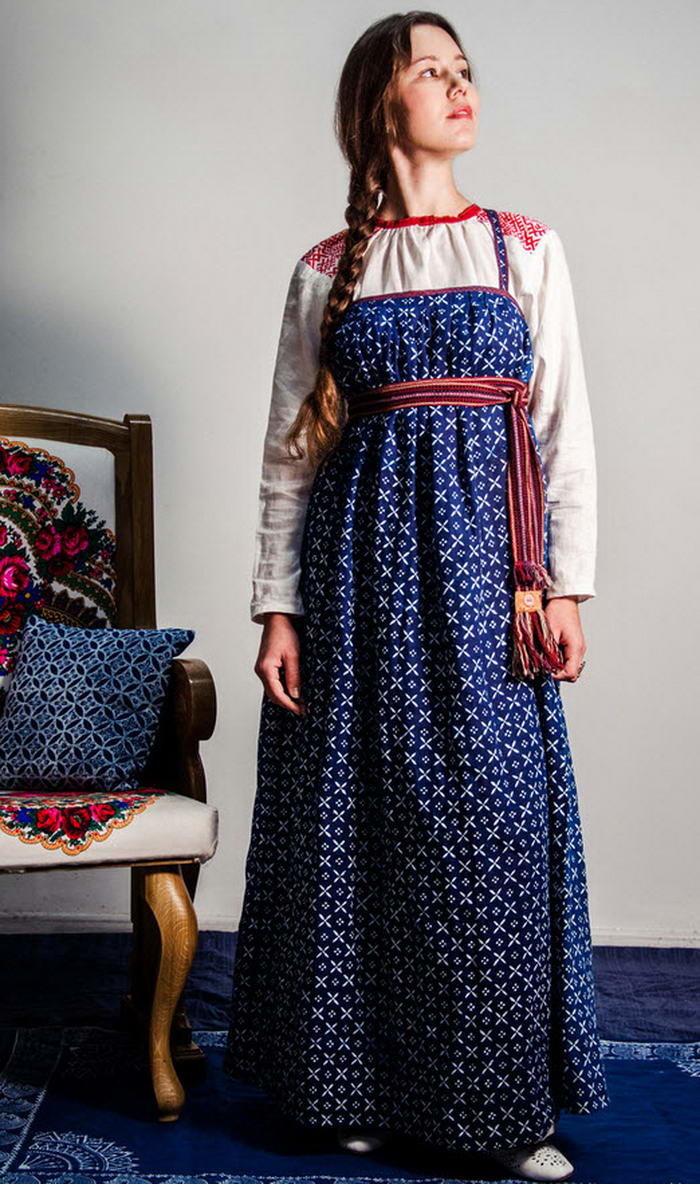
- Straight (round, Moscow) - one of the most popular types, also distinguished by the simplicity of sewing. Consists of two straight panels, front and back, which are gathered at the top in a small fold, after which straps are attached to it.
- Model with a bodice - such sarafans emphasized the figure, as they had a tight-fitting top part, turning into a voluminous skirt. The bodice could be made on a yoke or highlighted with a belt at the waist.
How to sew yourself
It is not difficult to make a sarafan with your own hands, it is enough to have basic sewing skills, follow the instructions step by step and correctly take all measurements to build a pattern. Before starting work, you should decide on the material and design. You can decorate the product using a ready-made pattern or yourself, using your imagination.
Oblique for girls
In sewing a Russian sarafan for a girl, simpler patterns are used. It is recommended to use cotton, wool or silk fabrics, you can also take additional material for the lining.
In addition to the main fabric, you need to prepare:
- straight fabric strips or ribbons 3.5 - 4 cm wide, they will be needed for lining the straps and the top;
- buttons "on a leg", about 20 pieces, depending on the length of the sundress;
- decorative cord of medium thickness for finishing fasteners.
Before you start sewing a sarafan for a girl with your own hands, you need to take measurements. First of all, measure the height from the armpit to the ankle - this is the optimal length for a children's model, if the sarafan is made lower, the child will get confused. The next measurement is the chest circumference, and to determine the width of the hem, this value must be multiplied by 2-3 times.
The pattern of a Russian sarafan for a child can be constructed according to the following scheme:
- On a large sheet of paper, draw a trapezoid, the height of which should be equal to the length of the garment, and the upper and lower parts should be equal to the chest volume and the width of the hem. For convenience, you can fold the paper in half and divide the last two values by 2.
- Add 1.5 cm around the perimeter for seam allowances.
- The resulting pattern must be cut out and applied to the pre-ironed fabric.
Once the pattern is ready, you can cut out two pieces, one of which will be the front part, and the other - the back. The resulting elements are sewn together, on one side you need to leave an indent for a zipper or buttons.
Once the main part of the sarafan is ready, you need to sew in a lock, attach straps, decorate the bottom of the hem and the top with decorative ribbons. Also, buttons and loops of cord are sewn along the entire length in front to imitate a fastener. After this, the Russian folk costume for a girl can be decorated with embroidery, beads, a belt or satin ribbons, if desired.
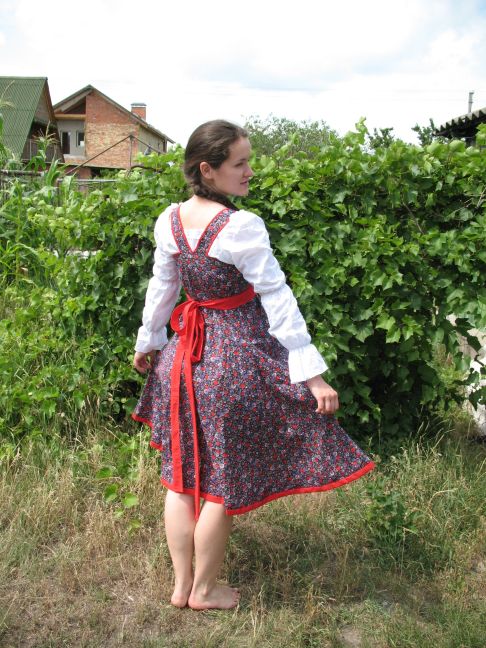
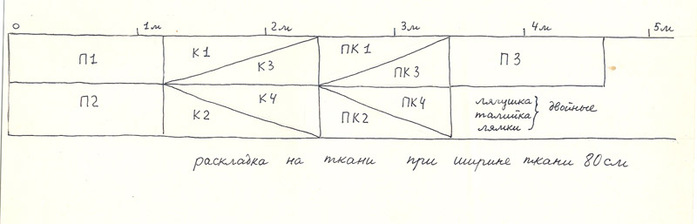
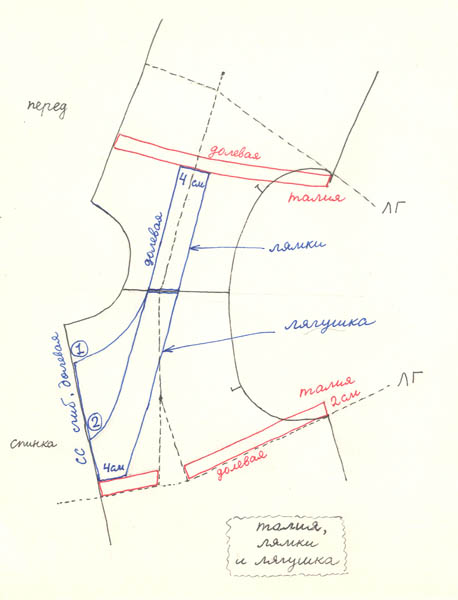
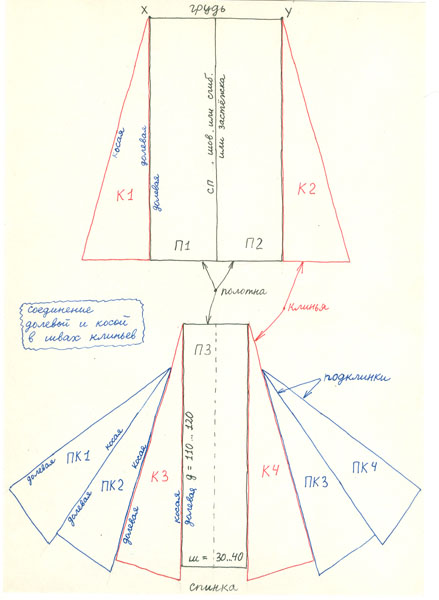
Straight female
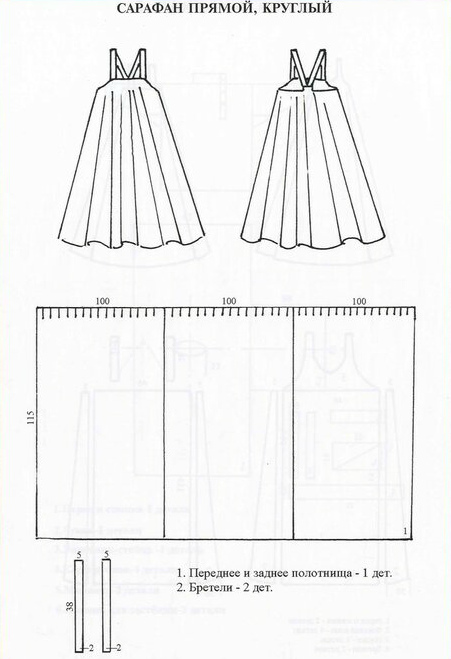
If you are worried about doing something wrong when sewing a large Russian sarafan, you can choose the Moscow (straight) model, which is made without a pattern. This is the best option for beginner needlewomen. In such a product, the size of the fabric will be determined by the desired width of the hem, the parameters of which should be larger than the chest circumference, as well as the length of the sarafan.
It is enough to cut a piece of fabric, one side of which will be equal to the height, and the second to the full width of the hem (the easiest way is to multiply the chest circumference by 2), and mark 1.5 cm for allowances.
After this, the fabric is sewn along the side line, and the top of the product is reduced using drapery. The width of the gathered upper part should be equal to the chest volume. The folds can be fixed with a seam, or they can be gathered with an elastic band. As soon as the edges are decorated, straps and hem trim are attached to the sundress. If necessary, the product is complemented with decorations.
Modern application
Nowadays, folk costumes have not lost their popularity, including the Russian women's sarafan. Its purpose can be different, most often such costumes are sewn for girls for folk dances, theatrical performances or performance of corresponding songs. Adult costumes can be found at themed events dedicated to introducing Russian culture and stage performances.
In addition, details of the national costume can be seen in the collections of modern designers. Ethnic ornaments are actively used, and styles of women's shirts and sarafans are borrowed. It is also popular to introduce details of the national costume into wedding looks, especially if some of the old traditions are preserved.
Don't forget your culture, studying it is a very exciting activity. Despite the fact that the traditions and foundations that were observed in ancient times have irrevocably gone into the past, they influence modern art, fashion and culture. The same can be said about the history of the Russian sarafan, the beauty of this wardrobe item deserves special attention and study, since some examples were truly works of art.
Video