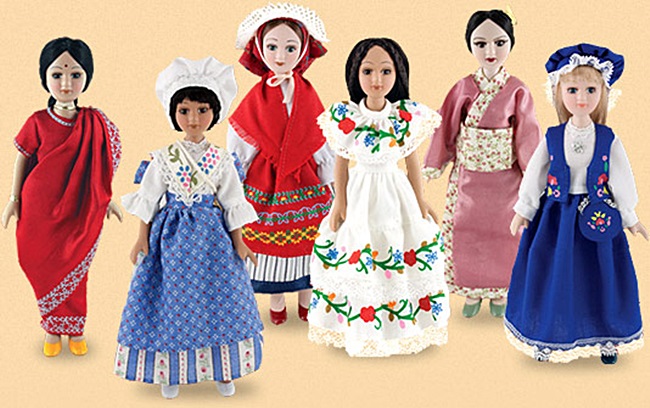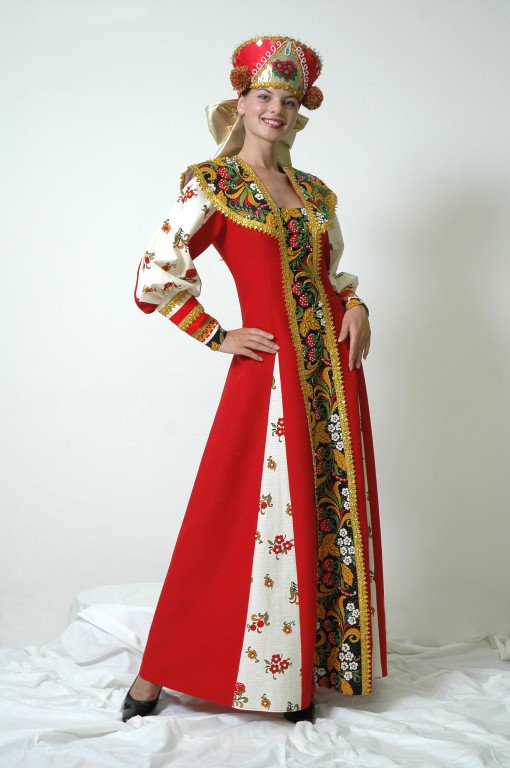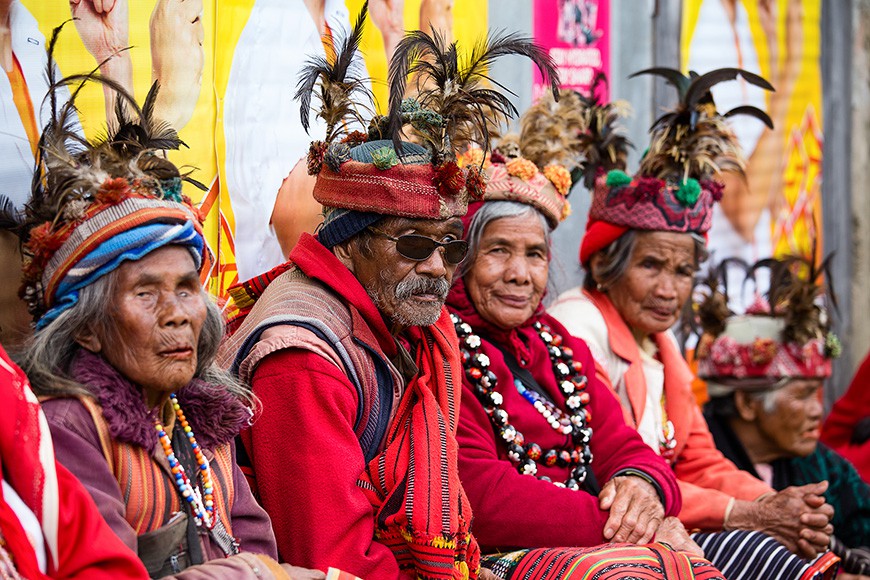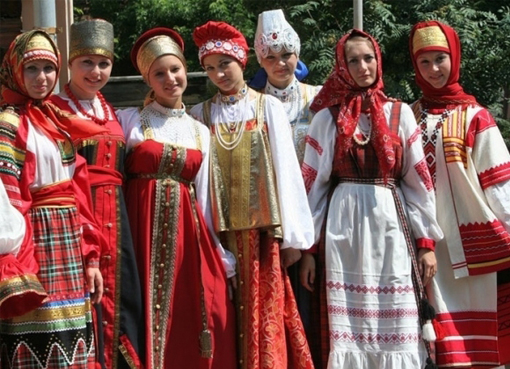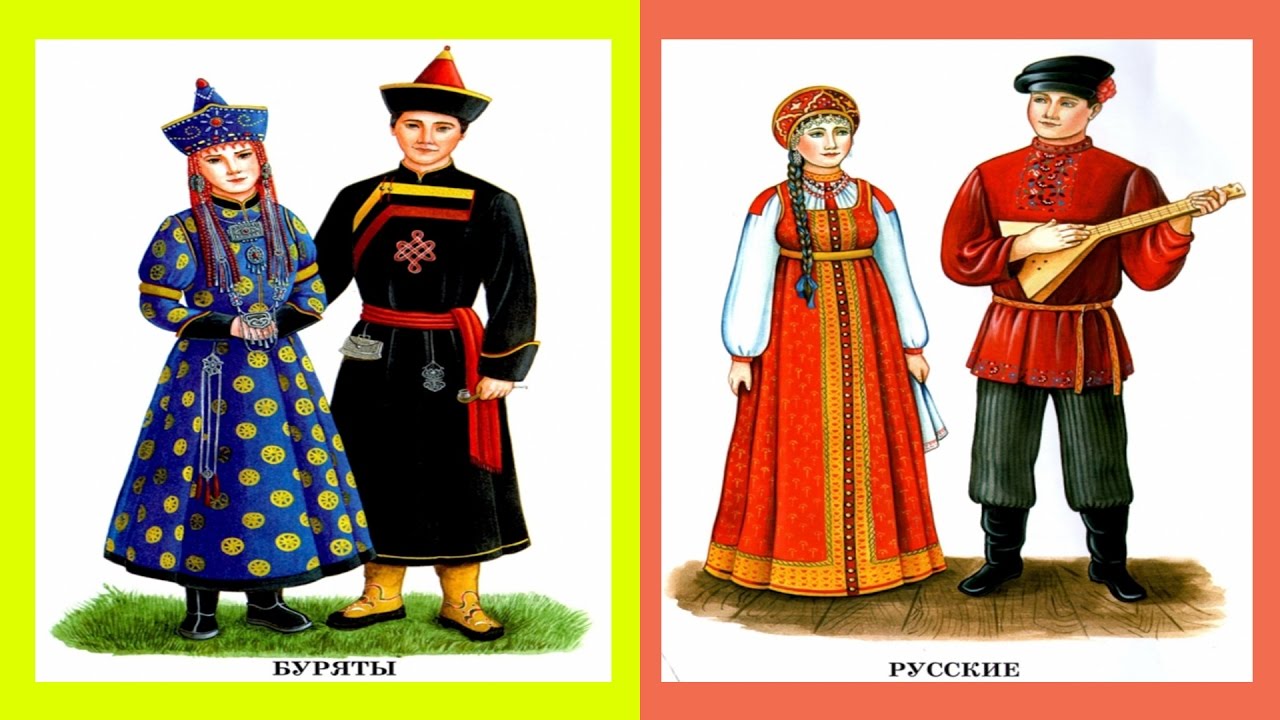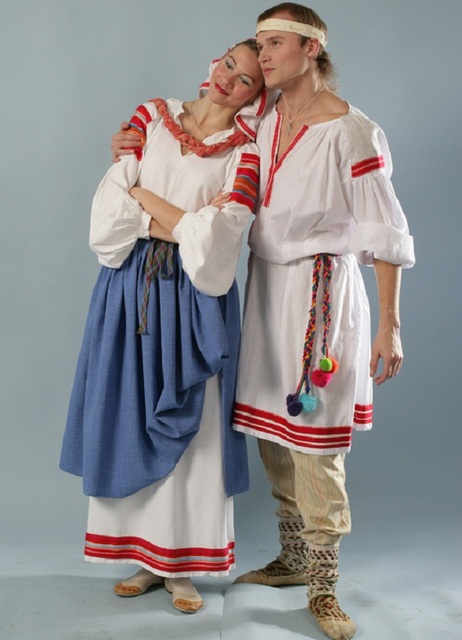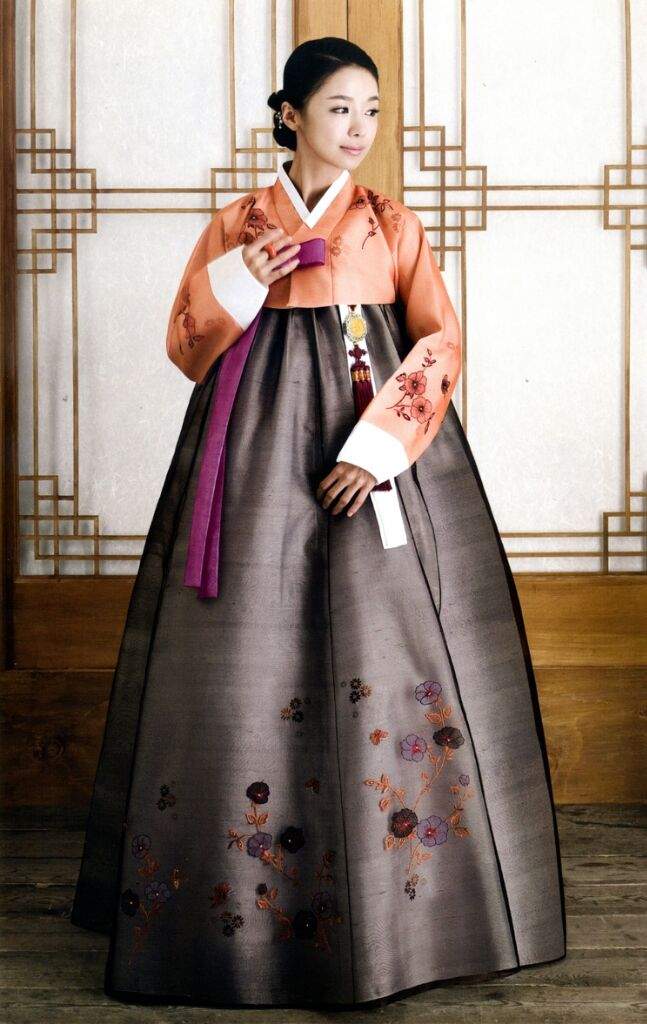
Traditions and life of different nationalities differ. This is influenced by a large number of factors: climate, location, history of development. Each nation is interesting in its own way, it has its own peculiarities in food, in everyday life and clothing. The article tells about what national clothing different nations have.
Peoples of Asia
Traditional clothing of the peoples of Asia is based on four elements: loose trousers and a shirt, a robe and a headdress. Each nation calls them differently, has a certain color, material, and the art of decoration is also different.
Tajik
Previously, Tajikistan was located at the crossroads of trade routes, so the local population had more opportunities to diversify their wardrobe. Depending on the ethnic group, only the details of the national clothing of Tajiks differed. Different regions had their own embroidery, color and decorations, the basis for all were:
- Kurta;
- Ezor;
- Chapan;
- Toki-kallapush;
- Jurab, choruk or mahsi.
Kurta is a cotton tunic-shaped shirt. It is cut in one piece and consists of one piece. The piece of fabric was folded in half so that the fold was on top, marking the shoulder line and the upper part of the sleeve. The neck was cut out in the middle of the fold, and the excess was cut off from the bottom to form the sleeves. The front and back parts were connected at the sleeves and sides, hemmed to the desired length.
Ezor was the name given to trousers that were wide at the top and narrowed towards the bottom. Kurta was worn over harem pants and belted with a kerchief (rumol), folded diagonally, which served as both a belt and a pocket at the same time. The belt could be used to determine the level of a young man's wealth: common people wore cotton kerchiefs with patterns, while the wealthy preferred velvet with gold embroidery and brocade.
A chapan (an open striped robe) was worn on top. In summer it was made of cotton fabric, in winter - of woolen fabric with a wadded lining. The collar of the chapan was decorated with embroidery or a traditional pattern. A skullcap (toki-kallapush) was worn on the head. It had different shapes - hemispherical (arakhchin), square (the most common option, especially among Tajik women), flat-bottomed. But an obligatory attribute of each was an ornament, most often floral. On the feet they put on jurab - high colored socks and soft boots (choruk). Residents of Tajikistan from the mountainous areas wore high boots (mahsi), into which they tucked trousers. Especially for horse lovers, mahsi with heels and a pointed toe were made.
The women's national costume differed little from the men's. The same trousers, a skullcap, but a bright kurta, much longer, with a large number of colorful patterns. A chapan was not necessary, because in the cold season, Tajik women stayed at home, but if necessary, they would wear several dresses and a robe at the same time. In some settlements, with the adoption of Islam, women wore a burqa - a cape that covered the face and figure from prying eyes. Others wore a thin, embroidered, bright scarf over the skullcap. Tajik women wore massive jewelry, mostly made of silver, forged or chased. These were earrings and beads, pendants and necklaces, as well as large brooches for headdresses.
Despite modern fashion, Tajik national clothing is still worn by rural residents on weekdays and holidays. At a wedding, a young Tajik must wear at least a chapan, even if combined with classic trousers.
Kyrgyz
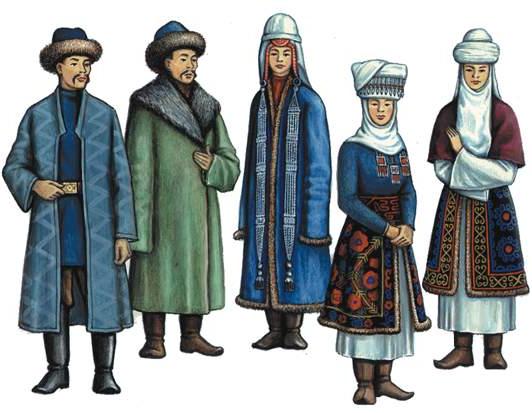
For more than seven hundred years, Kyrgyz national clothing has remained unchanged. The ancient Kyrgyz are a nomadic people who raised cattle. The country's climate is quite cool with plenty of wind, so clothing is insulated with cotton wool and animal skins.
Basic elements of men's clothing:
- Koinek - undershirt;
- Shym - wide underpants (leather or suede trousers - zhargak shim, kandagai, chalbar);
- Kementai is a thin robe made of felt (a quilted robe made of camel or sheep wool - chepken, ichik; a fur coat made of fox, arctic fox, wolf, lynx - ton);
- Topu - skullcap (felt hat - kalpak, fur hats - malakai, tebetei);
- Kemer, ilgich - belt, belt;
- Otuk, kepich, maasy, charyk - footwear, mainly boots made of various leathers.
Women's clothing was a little different:
- The longer koinek was decorated with embroidery, and an embroidered collar, enur, or jacques, was worn on top;
- Over the bloomers - shim, a swing skirt for married women - beldemchi was fastened, its bottom was trimmed with fur or embroidery;
- Along with the kementai, chepken, ichik and ton, women also had a vest - chyptama and a short-sleeved robe - kemsel;
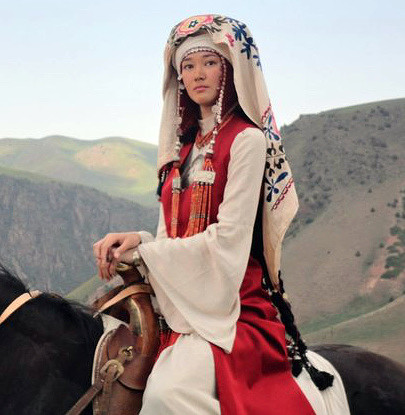
- A cap with a red braid, takiya, was put on the head, and then married Kyrgyz women would wrap a white turban, elechek, which was decorated with feathers and stones; the bride would wear a yiokule, a cone-shaped cap resembling a helmet, embroidered with colored threads;
- Shoes for women were not sewn; they bought colored (red or green) boots, sometimes complemented with embroidery;
- Chachpak - special strips of fabric, sewn in the shape of a tube, in which braids were hidden;
- Jewelry was most often made of silver, coral, and coins, mainly as protective amulets.
Nowadays, the national clothing of the Kyrgyz people is worn only on holidays and important events, for performing rituals.
Mongolian
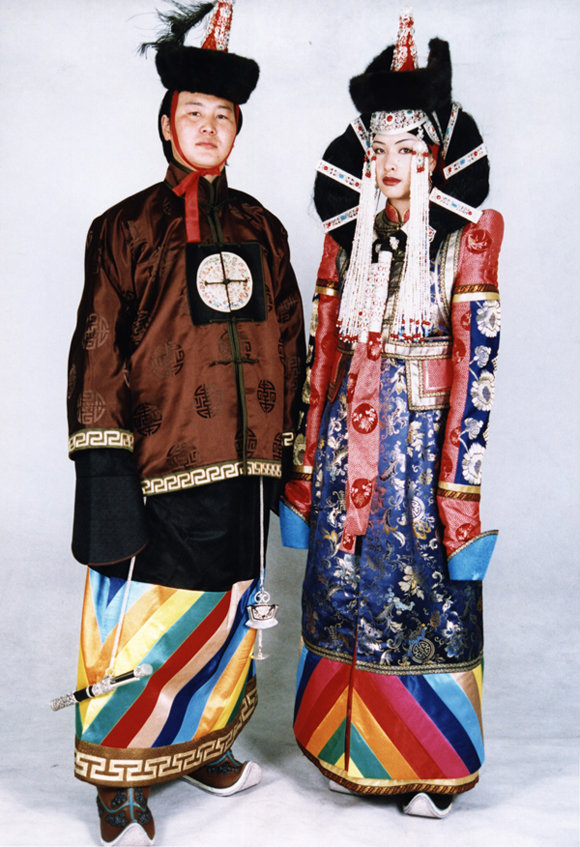
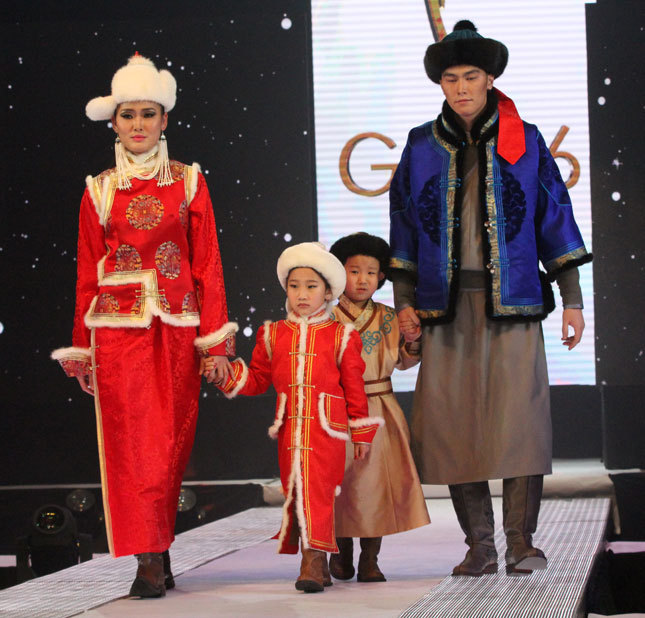
The main attribute of Mongolian national clothing was the Deel. It is a robe with high puffs on the shoulders and wide cuffs, which was belted with a sash - a piece of fabric up to five meters long. On holidays, they wore a hantadze on top - a wide vest made of silk or brocade, embroidered with patterns. Men wore a tsabun - a red cloak with side slits and yellow edging on the collar, shelves and sleeves. For footwear they wore gutuls - boots with pointed toes.
The headdress resembled a hemisphere with a peak on the top, the top of which was decorated with a ball, and ribbons were attached at the back. Mongol men shaved part of their heads, leaving a braid in the middle, women wore two braids, tucking the upper part into a special shirevger case or tying it in the form of an arc.
National clothing was sewn from:
- Sheep furs, skins of wild and domestic animals, leather, suede, which were pre-treated with fat, milk, and kneaded with a leather mill;
- Imported silk and wool;
- Cotton;
The color of the raw materials was given using natural dyes. The national clothing of the Mongols is associated with their way of life and the climatic conditions of the area. Cold winters and hot summers required both a summer deel without lining and a winter quilted one with cotton wool or fur insulation. Slits in cloaks are provided for the convenience of horse riding, peaks of headdresses and unusual hairstyles - to intimidate the enemy, an abundance of jewelry as talismans and amulets.
Uzbek
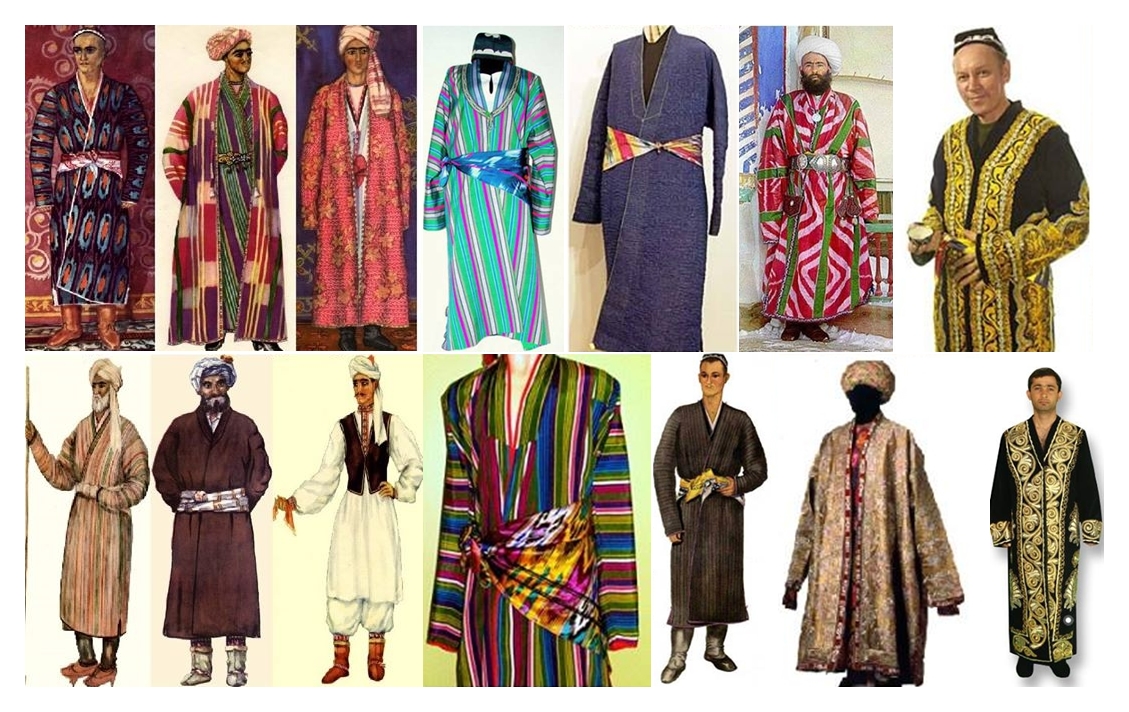
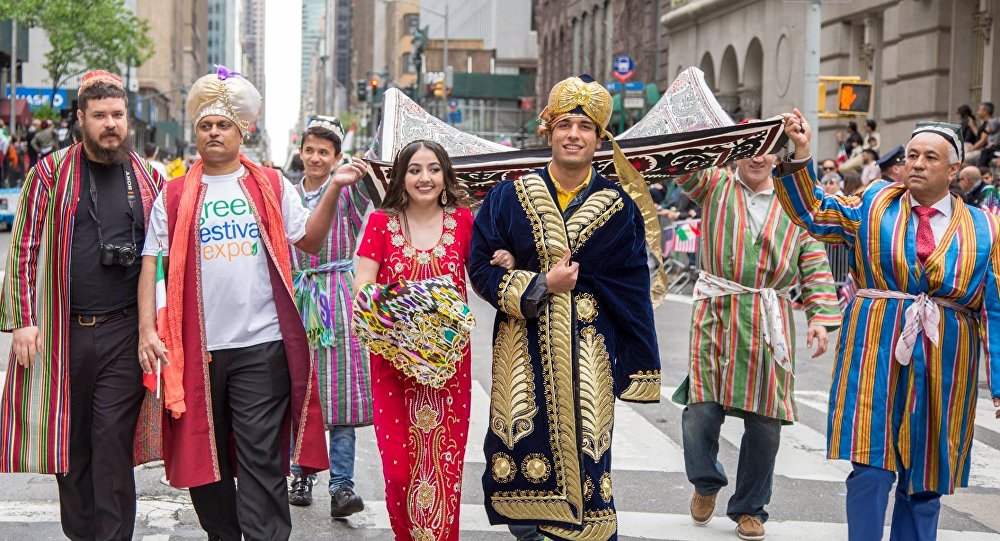
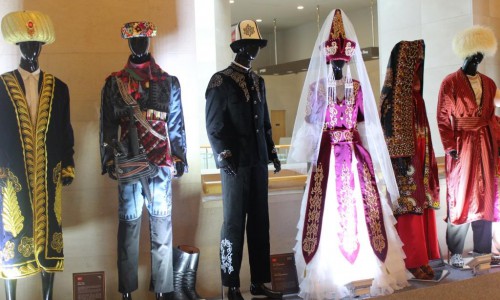
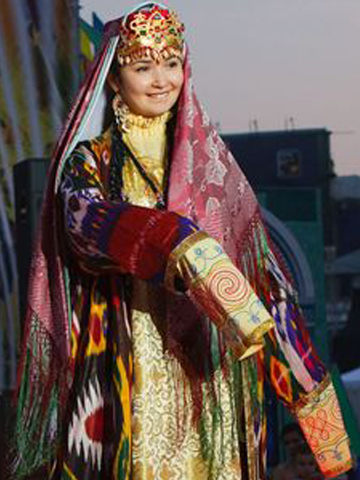
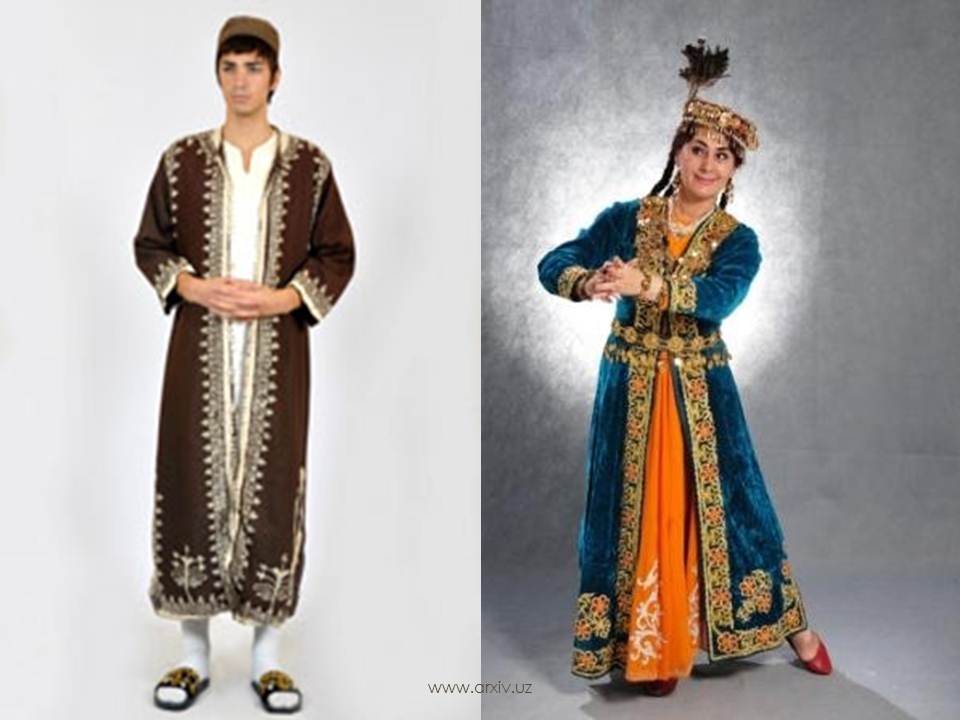
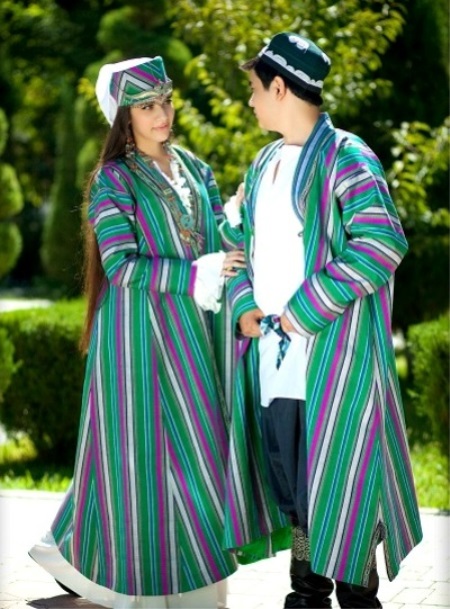
The national clothing of Uzbekistan is also based on Islam, where wide cuts of elements are welcomed to protect from prying eyes. A distinctive feature of Uzbek clothing from other Asian peoples was skillful embroidery with gold threads on silk or velvet, as well as the use of rich fabrics, such as corduroy. The main colors are all bright, black is excluded, it is believed that it can attract trouble. The same style was used for men, women and children, but there were significant differences.
The clothing of Uzbek men consisted of:
- A wide, closed shirt - kuylak or an open shirt - yakhtak, trimmed with braid along the collar, and tapered trousers - ishton, tied with a belt scarf, which were everyday underwear;
- Chapana is a vertical striped robe without buttons, with side slits down to the waist to make it more comfortable to sit on the floor;
- Headdress - duppy - square cap - skullcap with embroidery.
An Uzbek woman had the following wardrobe:
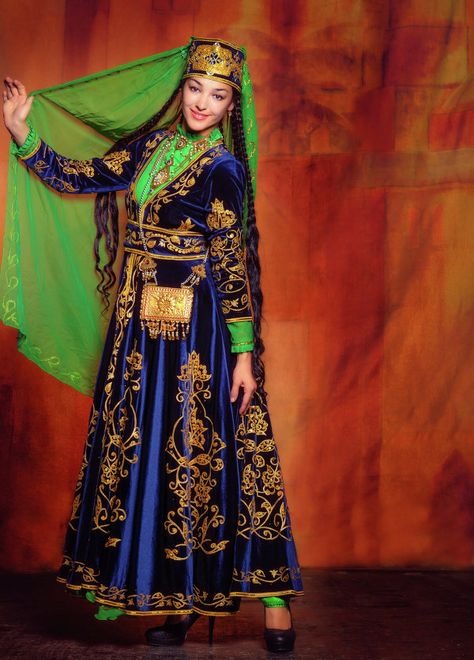
- The kuylak was sewn like a floor-length dress, with very long sleeves, and was worn with loose trousers - lozim, trimmed along the bottom with braid - dzhiyak;
- A long, loose robe, mursak, a fitted robe, rumcha, or a vest, nimcha, was worn over it;
- The Uzbek women had smaller duppies, but they were brightly colored; sometimes they covered their heads with scarves, one covering the forehead and the other tied on top;
- Jewelry as a talisman against the evil eye was a must for women and children.
Uzbek, Kazakh and Turkmen national clothing is rarely used in the modern world. Men in cities wear a skullcap only on important holidays, but in rural areas you can still see elderly Uzbeks in a chapan.
Vietnamese
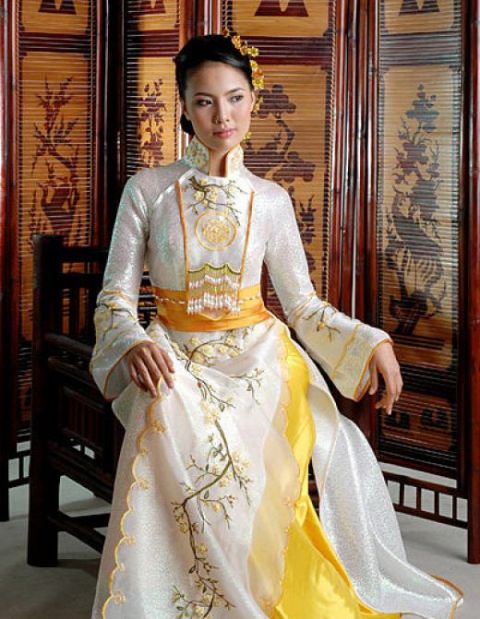
In Vietnam, all attention is given to women's clothing. Men are content with only white silk or cotton trousers and loose-fitting brown shirts, which together resemble pajamas - aobaba, aokan. They wrap their heads in a piece of cloth - khandong or put on a hat - nonla, a conical shape. On their feet they wear ordinary bamboo sandals. For important events they put on a long dress, the side seams of which are connected only to the waist, and a black or brown silk turban.
Flip-flops are a completely different matter, their wardrobe in terms of elements and colors is very diverse:
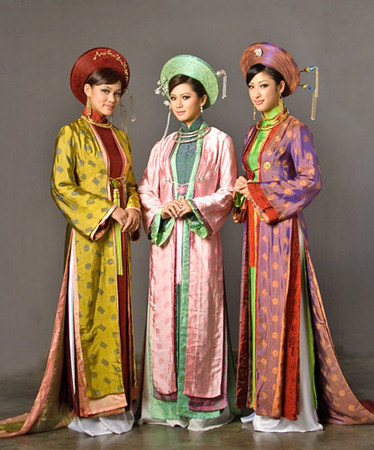
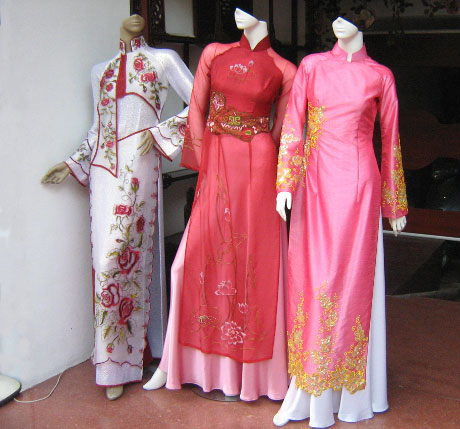
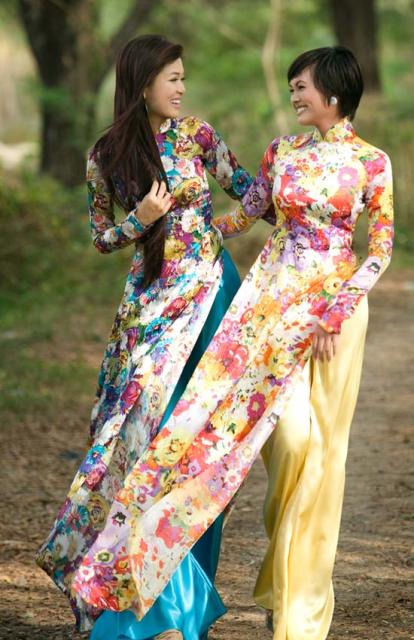
- Ao dai is a long tunic-like dress with slits above the waist, worn today, and tourists order ao dai for themselves as a souvenir from Vietnam;
- Quipao - a set of a fitted tunic and wide silk or satin trousers;
- Ao Tu Than is another national Vietnamese women's dress, consisting of four parts: the first is a light brown dress with four slits, the second is light yellow, the third is pink, the fourth is a special apron - yem, which is thrown over the shoulders; all parts were fastened together with buttons, and in the collar area there was a multi-layer;
- If a fifth panel was attached to the aotythan at the front and buttoned, the dress was called an aonguthan;
- From the scorching sun, Vietnamese women protected their heads with a conical straw hat, nonbaithó, on which they often wrote beautiful poems and messages.
For decoration, Vietnamese outfits were decorated with beads and coins. At present, the national costume has not lost its relevance, it has changed a little, but to this day remains the most comfortable and practical type of clothing for the local population.
- In Russia;
- In the Caucasus and Southern Russia.
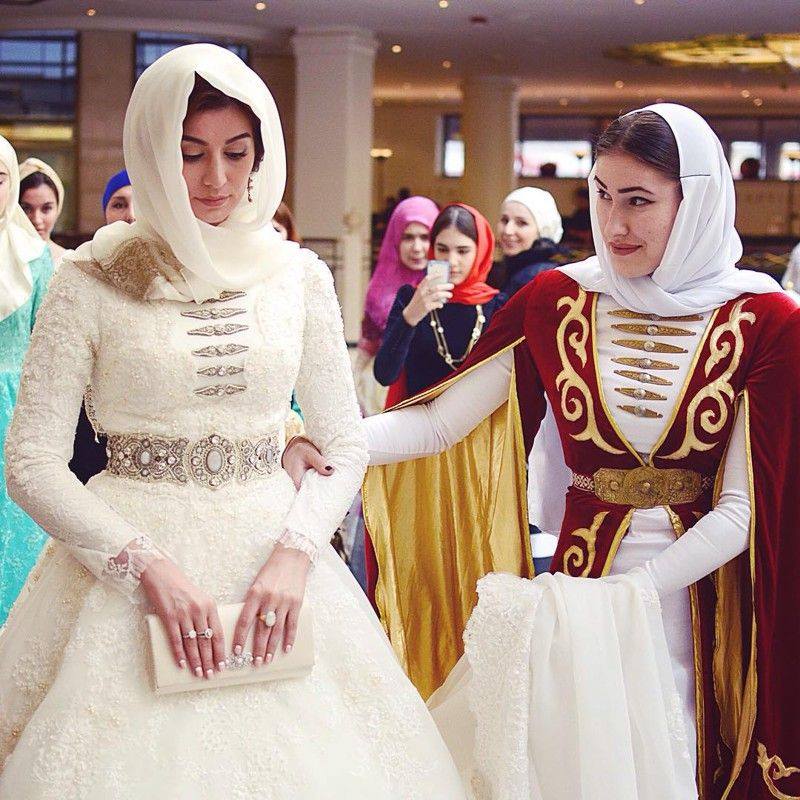
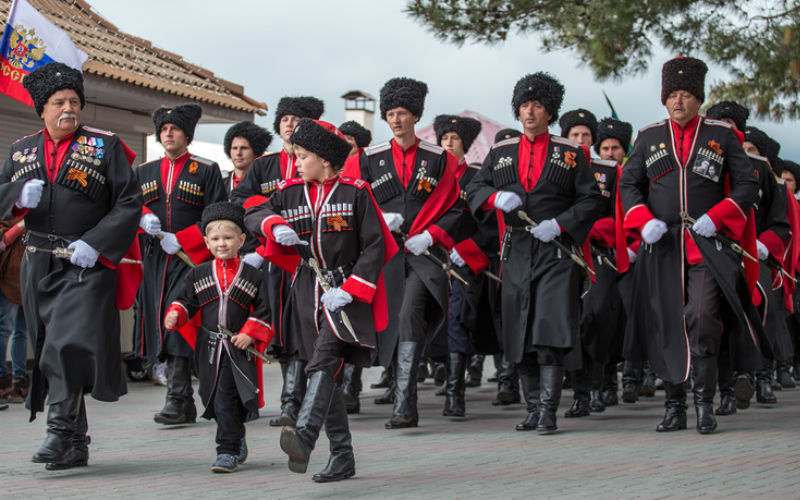
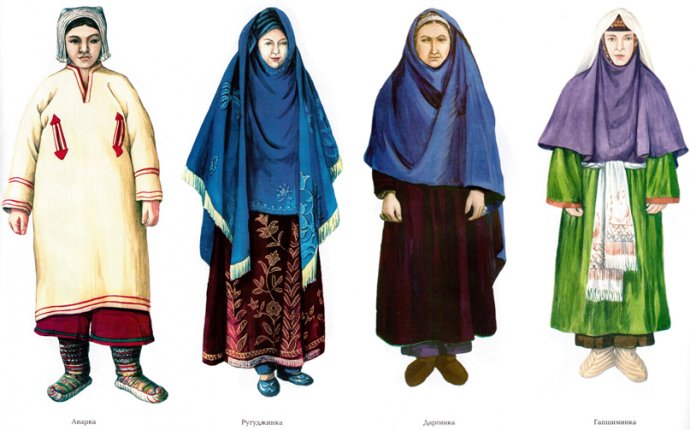
The mountainous terrain of the Caucasus is home to a people who are always ready to fight, this moment could not but affect the national clothing. It is comfortable, versatile, does not restrict movement, is an element of protection. The peculiarity of the Caucasian national clothing is not only the special cut of the caftan - fitted at the top and wide from the waist, allowing you to freely run and gallop on a horse, but also the presence of special chest pockets - gazyrs, used to carry gunpowder (one pocket - one shot). The belt also not only performed its direct duty, but was also adapted to fix a dagger. Nevertheless, the national clothing of the Dagestanis, Avars and other highlanders is very elegant and refined, despite its practicality. The population of the Caucasus and Southern Russia is diverse, each nation has its own characteristics.
- Dagestanis - a distinctive element of the wardrobe was the papakha - a large fur hat, a symbol of honor and dignity; the main colors of the clothing of the peoples of Dagestan are red, white and black, with gold ornaments; a Dagestan woman wore a tunic-like dress, from under which pants decorated with fringe or braid were visible. The head was covered with a scarf, chukhta or turban;
- The Avars are the most numerous people of the Caucasus; the clothing of the Avar men consisted of a loose shirt and trousers, with a cherkeska, beshmet or sheepskin coat worn on top. The Avar woman wore a strict closed dress and trousers, and on her head she wore a chokhto - an elongated cape with a smart forehead protector;
- Adyghe or Circassians - preferred to wear single-color clothes, combining no more than three colors at a time; an important element in the national clothing of the Adyghe was the Circassian coat - a kind of fitted caftan without a collar, with an open chest and wide sleeves; the Adyghe vest or cloak made of sheep wool - burka, was considered an integral part, protected from winds and rains, from the sun, and served as a pillow and blanket on campaigns;
- The Balkars and Kabardians wore a beshmet - a fitted caftan with a stand-up collar and straight trousers with an insert in the middle, a cherkesska and a papakha, similar to other inhabitants of the Caucasus. In cold weather, the national clothing of the Kabardians and Balkars was complemented by a kurpei fur coat, sewn like a cherkesska, but with a stand-up collar;
- Chechen clothing is filled with details and accessories, and it is in them that the peculiarities of life are reflected. In the women's wardrobe there are many different scarves that serve as headdresses or belts. In the men's wardrobe, an important element is considered to be a dagger, which in modern times has lost its direct function and is used as an indicator of status. Currently, Chechen national clothing is widely used by the bride and groom at weddings;
- Ossetian clothing is rich in a large number of various embroidery; locally produced fabric and exclusively female hands were used for sewing;
- Life in the Mongol Khanate left its mark, Kalmyk clothing reminds us of the heroic past of our ancestors - men wore caftans with slits on the sleeves, reminiscent of the Mongolian robe; headwear - fur hats or lamb earflaps were decorated with red tassels, for which the Kalmyks received the nickname red-tassel.
Severian
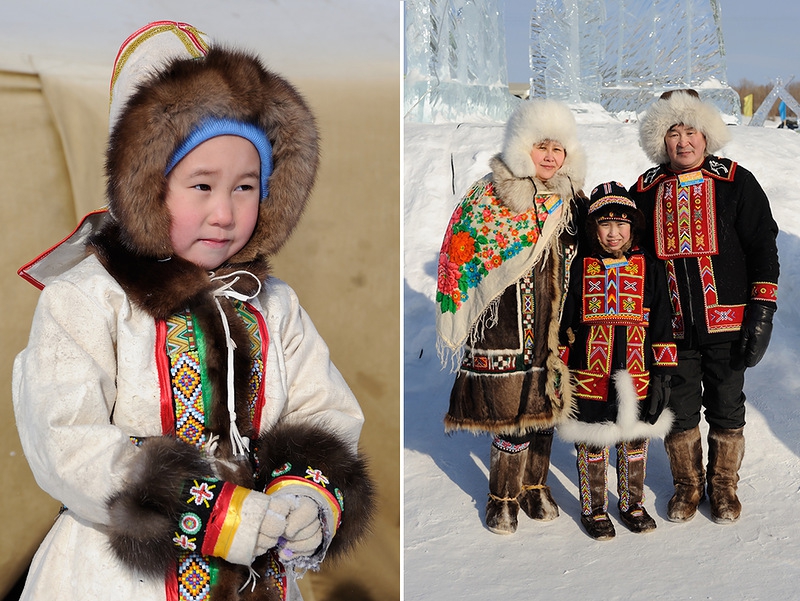
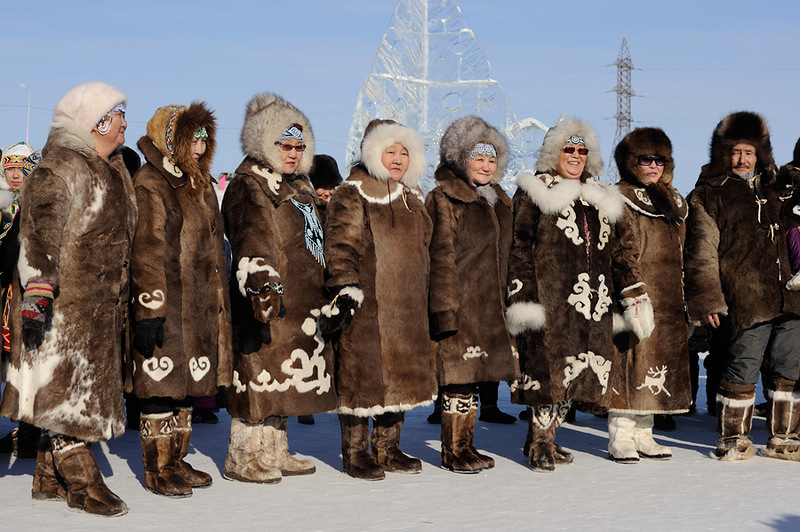
The main supplier of raw materials for the production of national clothing of the Evenks, Buryats, Karelians, residents of the Komi Republic and others were deer. The northerners sewed most of their wardrobe items from the skins of these animals, and they were not divided into male and female by cut.
e., there were open and closed (put on over the head on long trips), the difference was only in the amount of decoration. Women embroidered their sheepskin coats with beads, each nation had its own patterns.
The Nenets clothing consisted of a fur malitsa, the fair sex wore yagushkas, and on their feet - pimas and tobaks. The Evenki caftan had a special feature - a braid of goat wool was sewn along the shoulders so that raindrops could roll down it. Evenk footwear - mukluks are perfect for the taiga expanses, they are used by the Nenets, Buryats and other northern peoples. Mukluks are sewn from rovduga, cloth, leather, kamus (skin from a reindeer leg), they can be short or full-length, in winter they wear socks or knee-highs made of fur underneath.
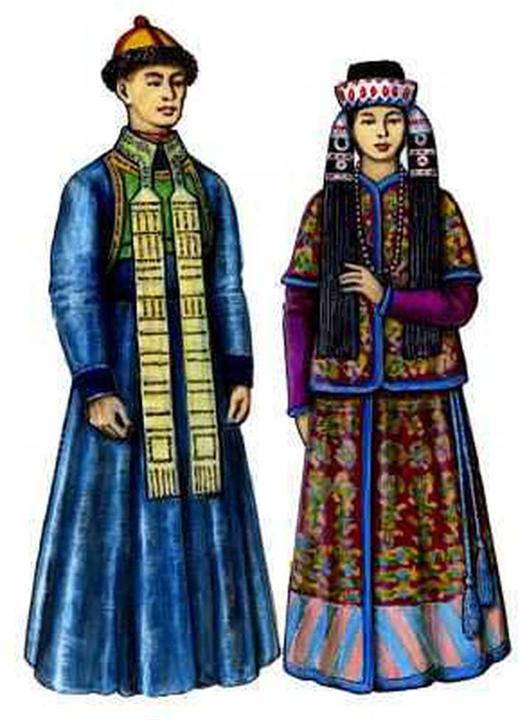
In the summer, northerners wore robes of various cuts. A distinctive feature of the Buryat summer suit was the raglan sleeve. They used bright colors, mostly unnatural, to be more noticeable in the natural landscape. Interestingly, all children under thirteen were shaved bald, they were left with a little hair on the top of their heads, which was braided. The national clothing of the Buryats began to differ from the moment the child reached the age of fifteen - girls could already be recognized by two braids on their temples. And at sixteen, a special decoration similar to horns - saazha was installed on their heads, this meant that the beauty was preparing for marriage.
Residents of Central Russia
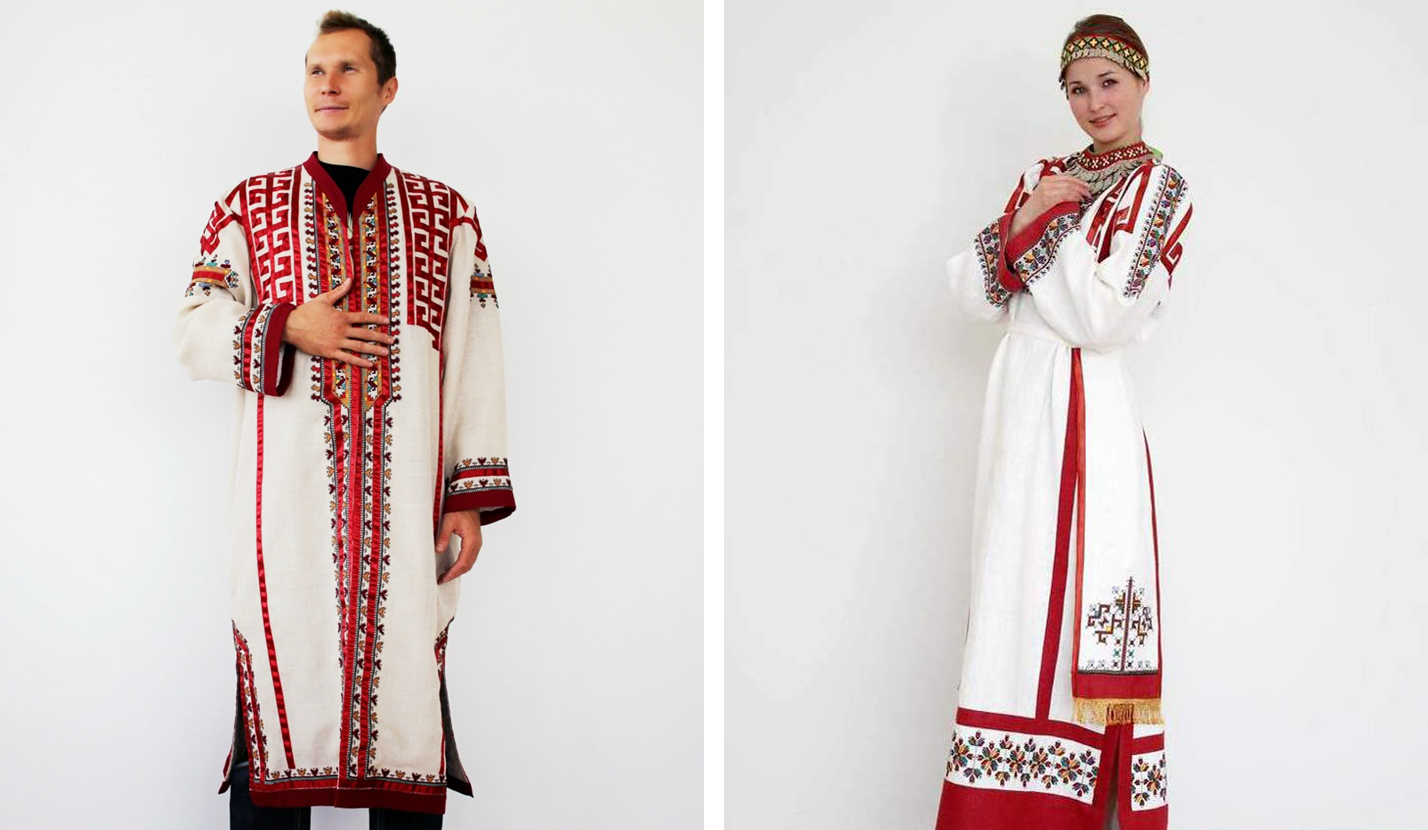
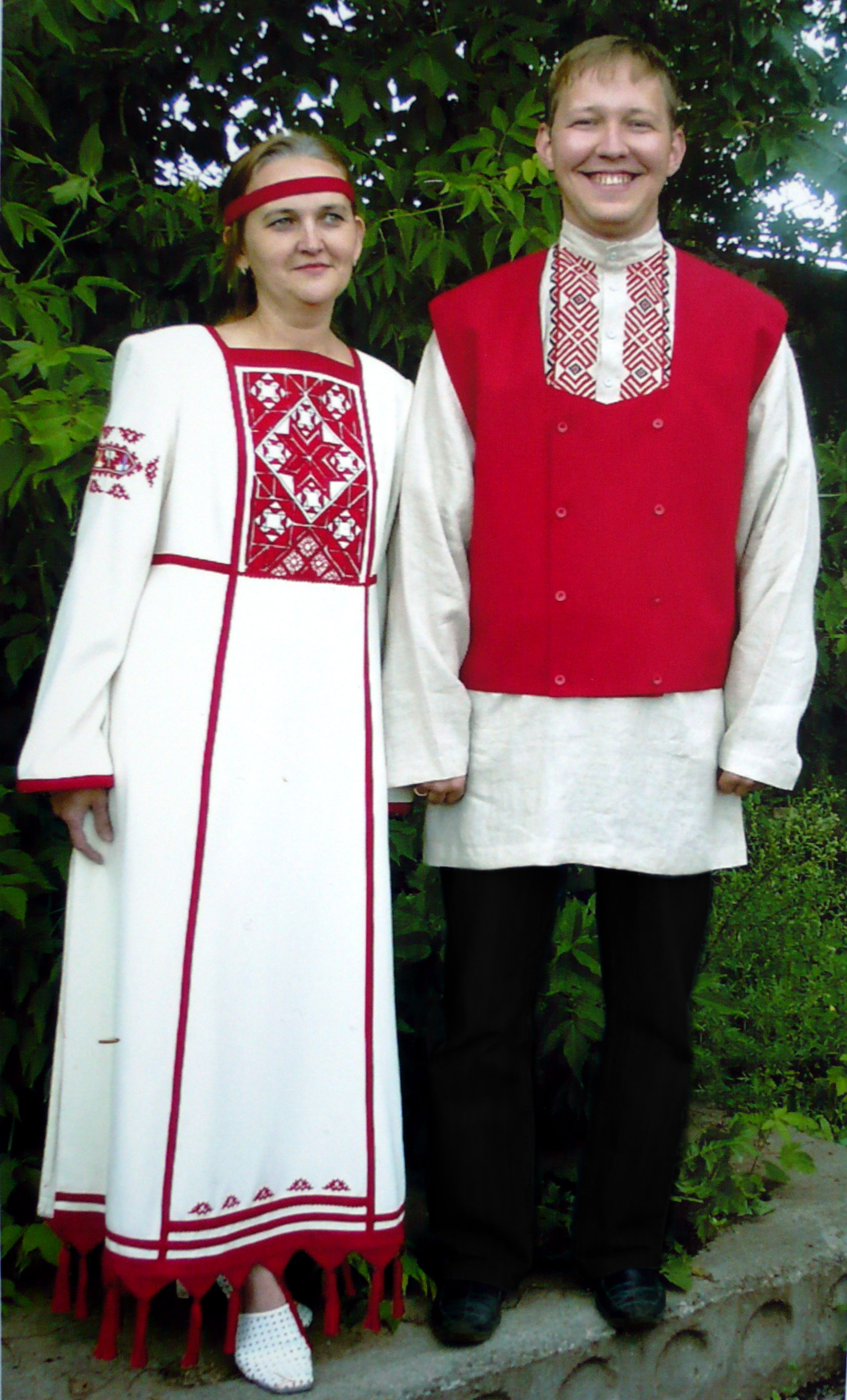
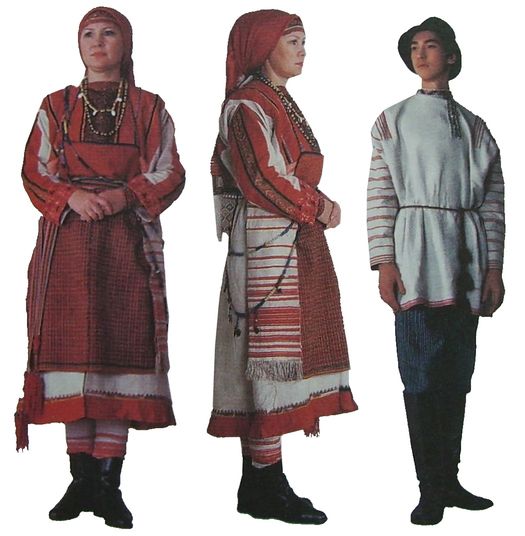
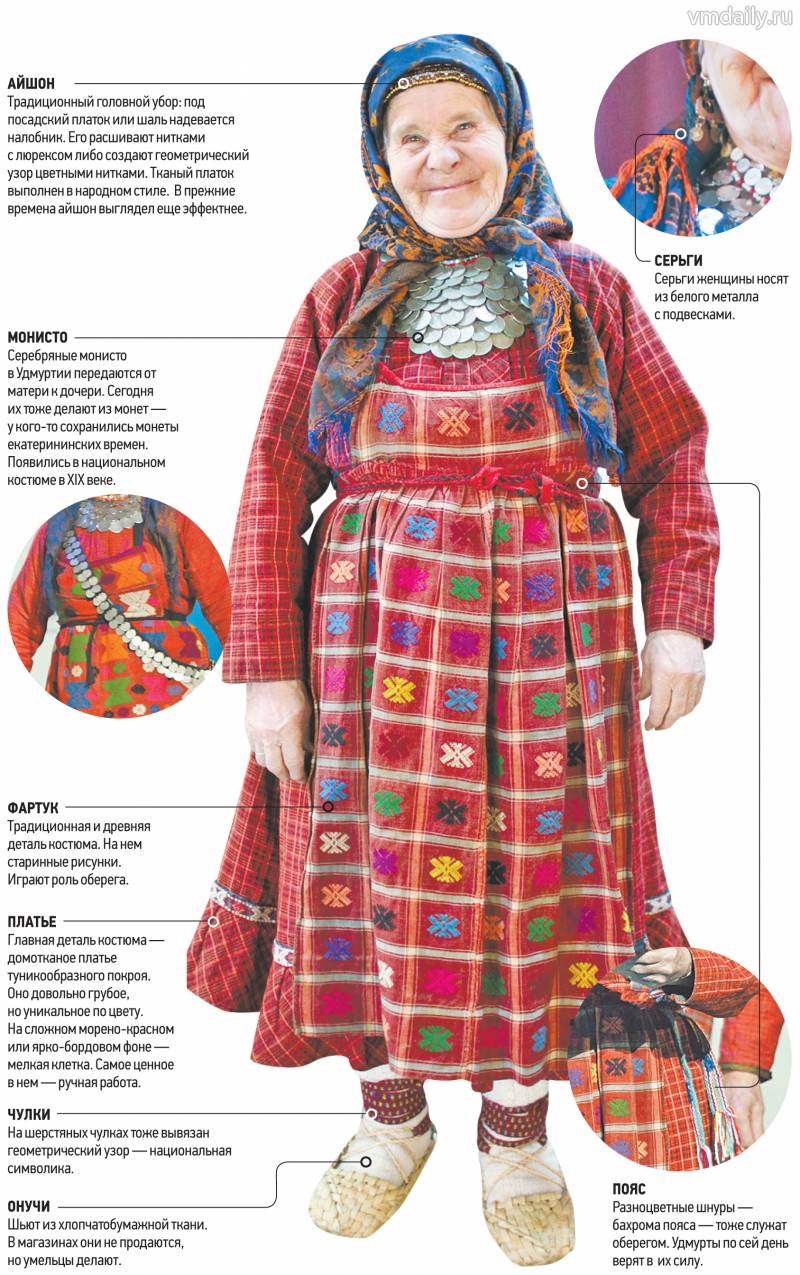
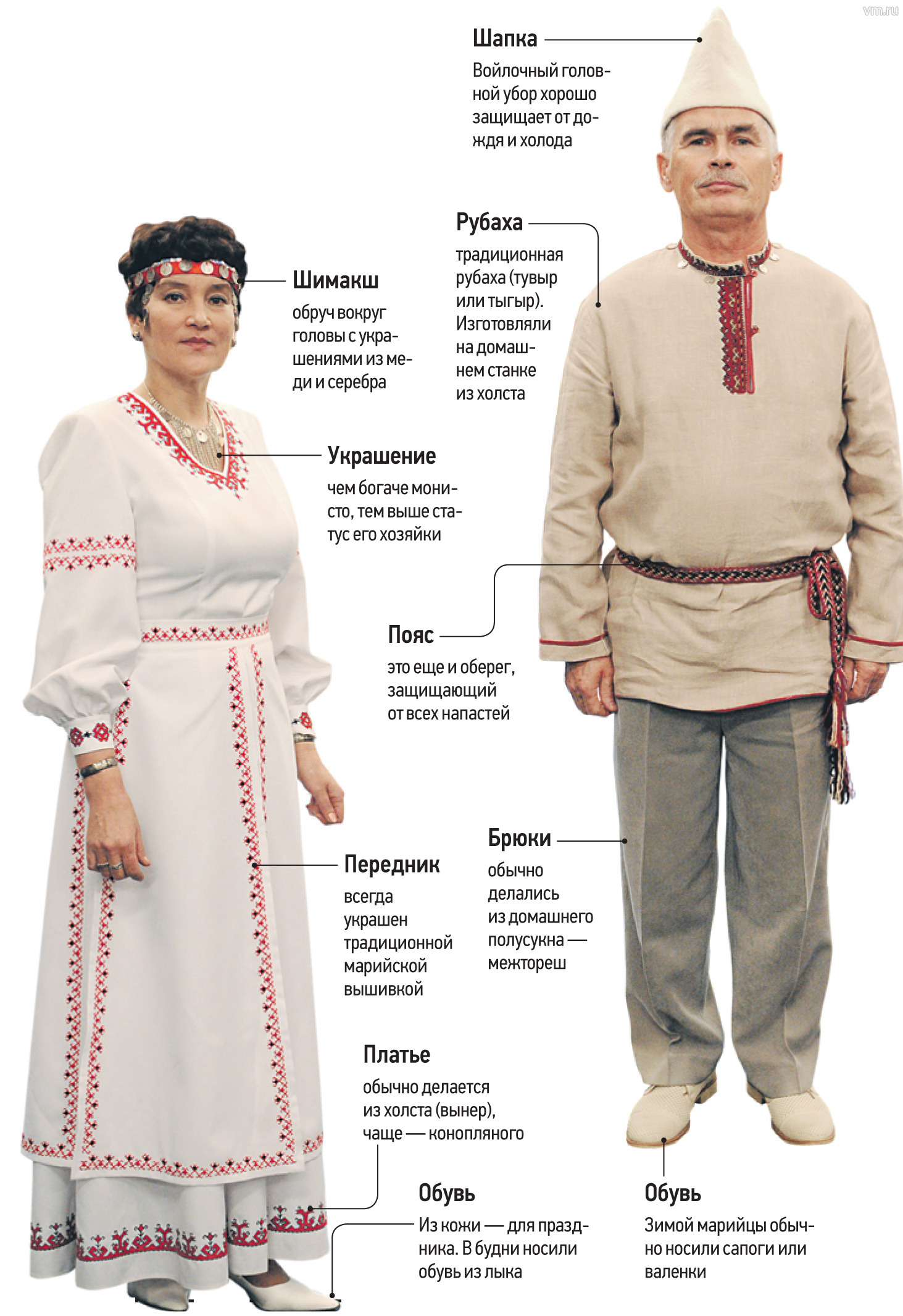
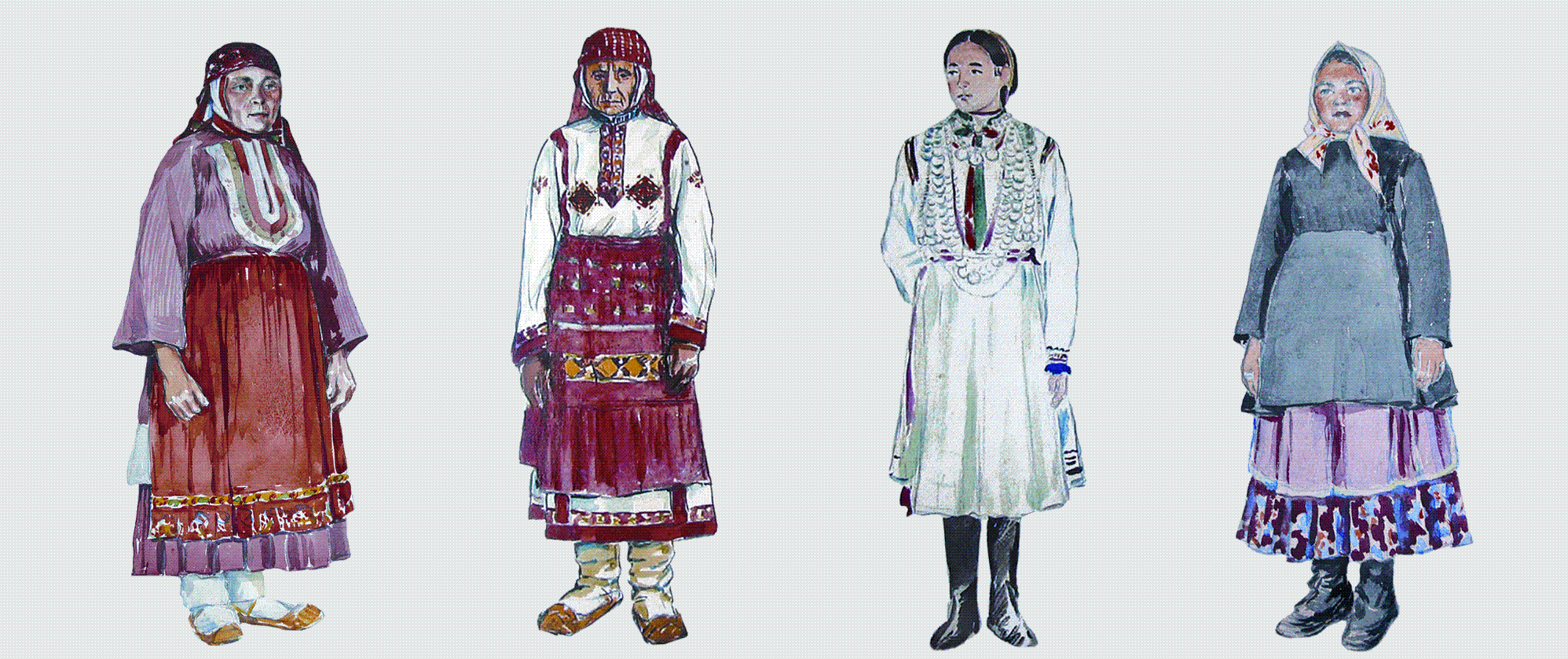
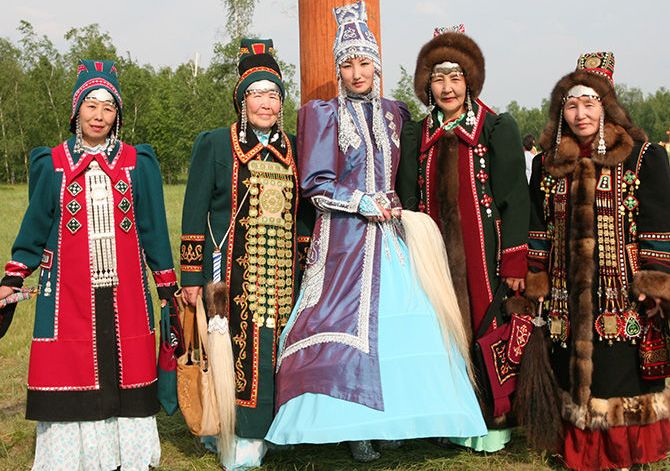
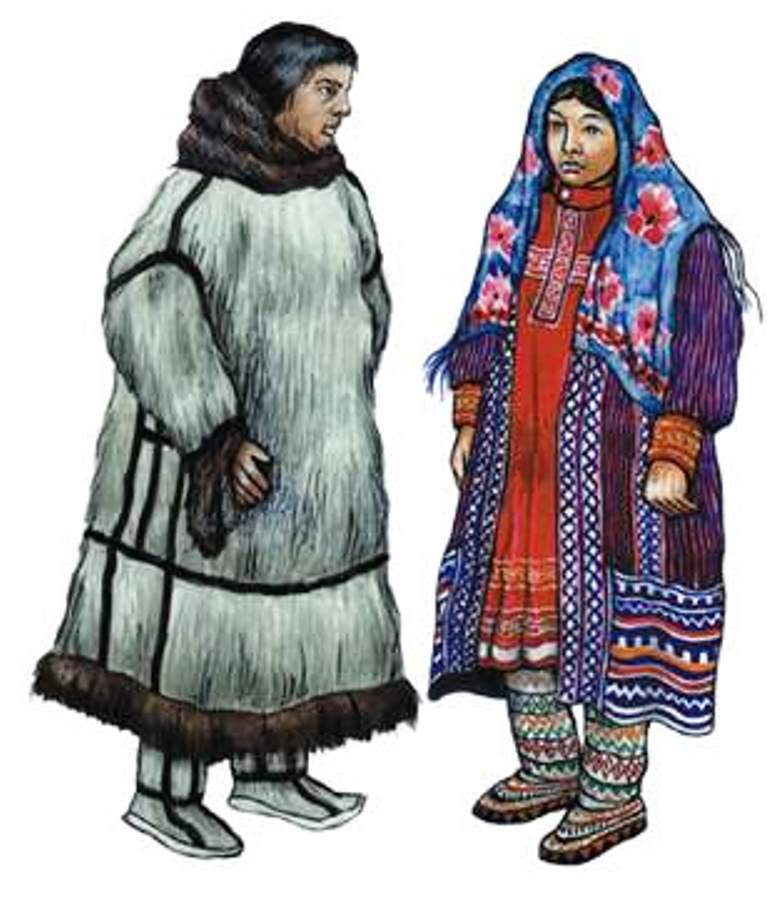
There are quite a few republics in Central Russia: Mordvin, Chuvash, Udmurt, Bashkir, Mari and others, where they wore similar, wide-cut, voluminous, warm clothes. Since the main business of these peoples was keeping cattle, their skins and fur were processed and the entire wardrobe was made. The peoples of Southern Siberia, as well as the Khanty, Mansi and Amur peoples, in addition to warm clothes, had light outfits: dresses, shirts, robes.
- The national Udmurt clothing was a robe - a shortderem, white, gray, ocher or red;
- Mordvin clothes were made of dark cloth. Bright colors were not used for shoes and headdresses either, only colored embroidery, as decoration, caught the eye;
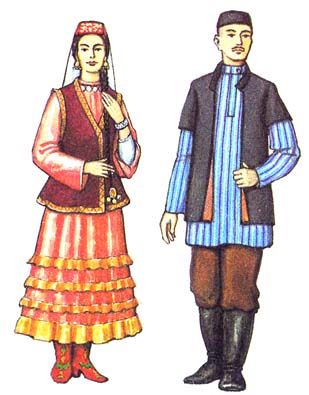
- The clothing of the Bashkirs consisted of a fitted suit with lined sleeves and a blind fastener - a kazakin, blue, red, black, green, brown or yellow. It was worn by residents of both sexes, as well as military personnel;
- Mari clothing is traditionally white, decorated with rich embroidery;
- The Chuvash people's clothing was white and red, which signified purity and life. A white Chuvash shirt with bright red braid was always worn on holidays;
- The permanent clothing of the Tuvans included: a robe - ton, a belt - kur, a headdress - bort, vests - kandaazyn, shegedek, khorekteesh, a jacket - khurme, pants - chuvur, shoes - idik, socks - uk, knee pads - deshki, a muff - chuldurgush and jewelry - kaastalga. The Tuvan people wore a long robe, quilted men's and women's coats, fur coats, sheepskin coats, robes that fastened on one side - ton, which were tied with a belt - kur;
- The clothing of the Khanty and Mansi was distinguished by the use of decorations made from small pieces of multi-colored fur, like a mosaic.
In Siberia and the Far East
The main occupations of the peoples of Siberia and the Far East were:
- Reindeer herding;
- Hunting;
- Fishing;
- Marine mammal hunting;
- Cattle breeding.
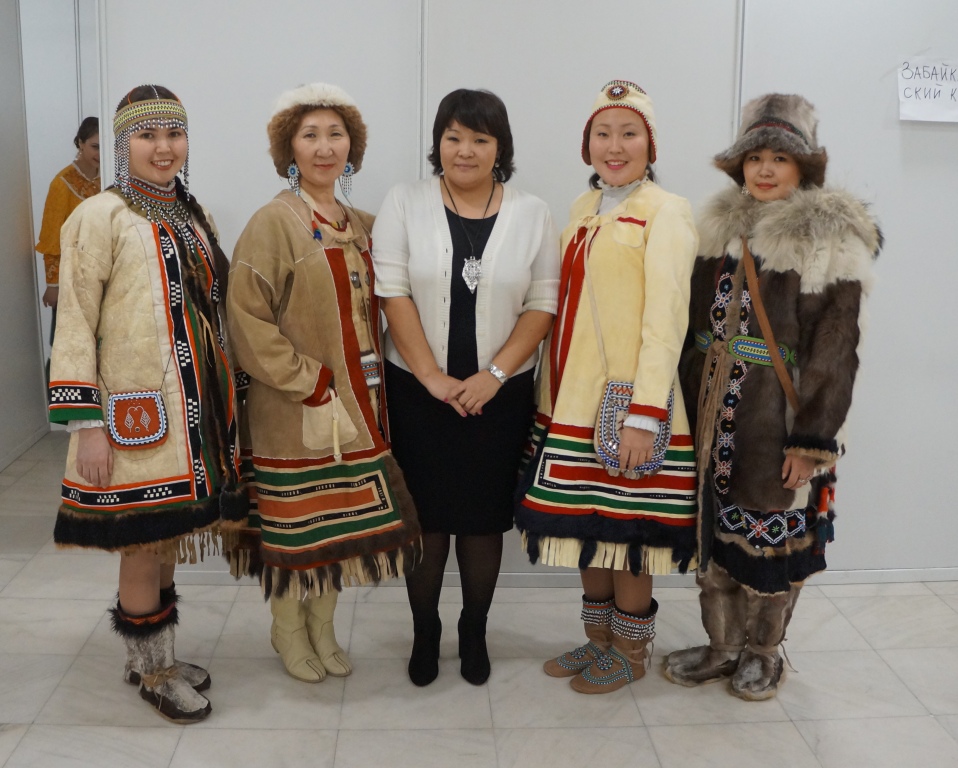
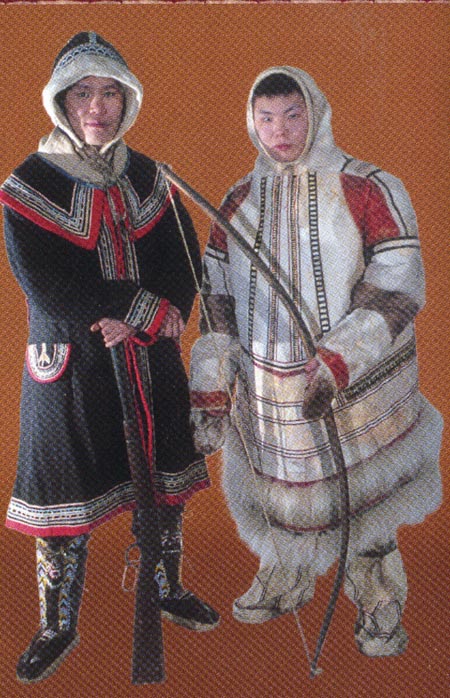
Therefore, the material for sewing clothes was the skins of game animals - deer, elk, seals, as well as sheepskin, skins of birds, fish, intestines of sea animals. Shoes and headdresses are still worn by many residents of this area.
According to their functional purpose, the national clothing of the Yakuts and other peoples of Siberia, including the Chukchi, was divided into:
- Everyday;
- Industrial;
- Road;
- Festive and ritual (wedding, funeral);
- Cult (shamanic, Buddhist cult ministers).
The wardrobe of the Yakut and Chukchi peoples was not divided by seasons, nor into underwear and coats, everything was uniform. In the warm season, they wore out the old, thinned winter wardrobe.
In Europe
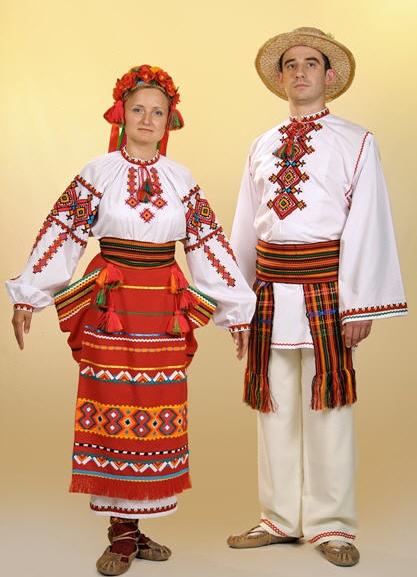
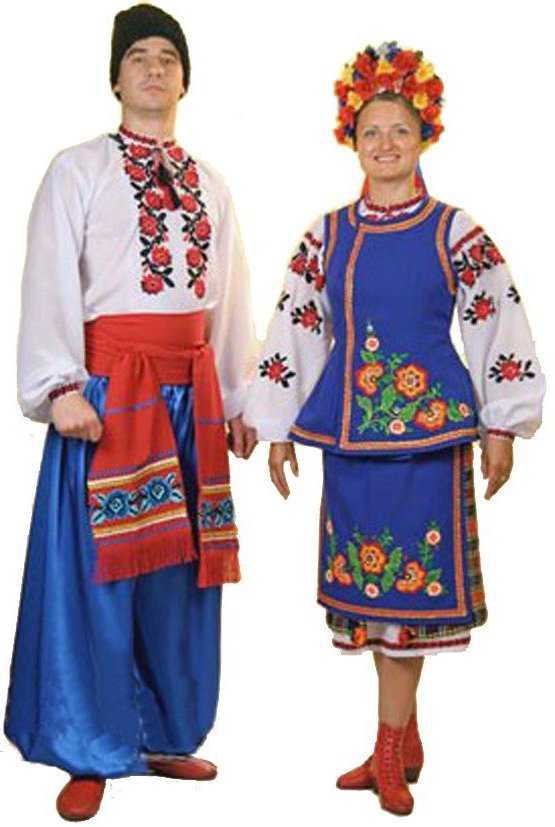
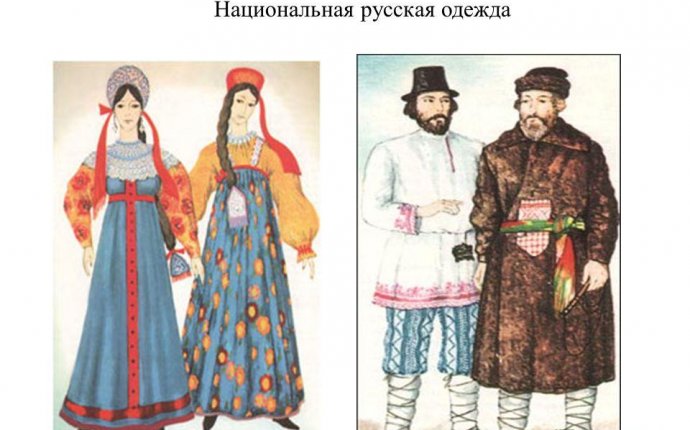
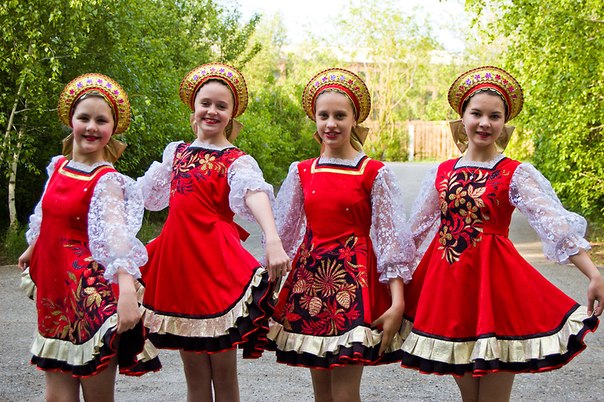
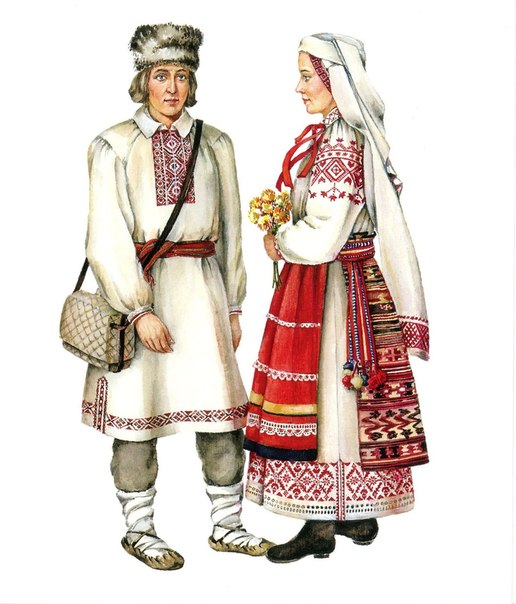
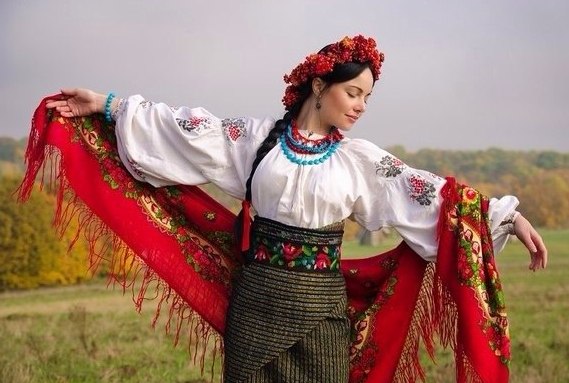
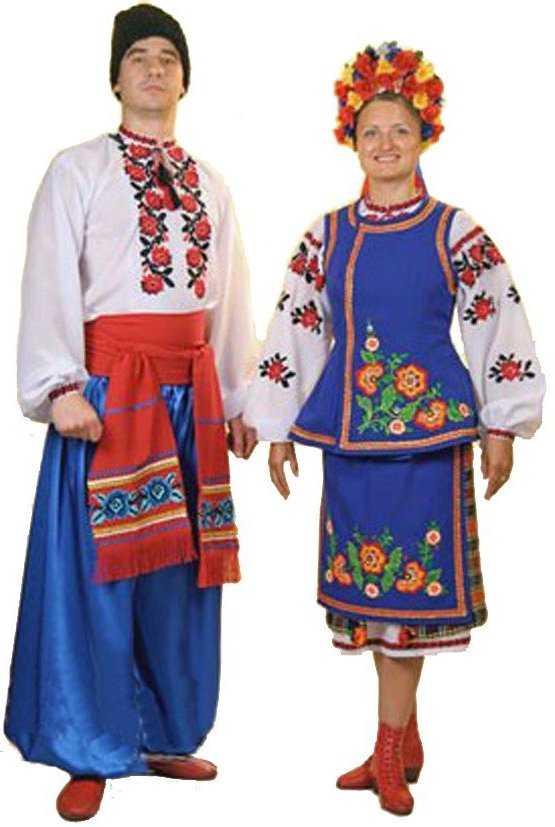
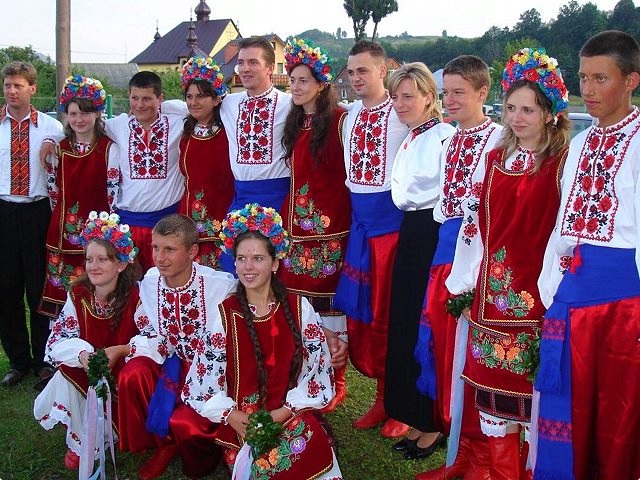
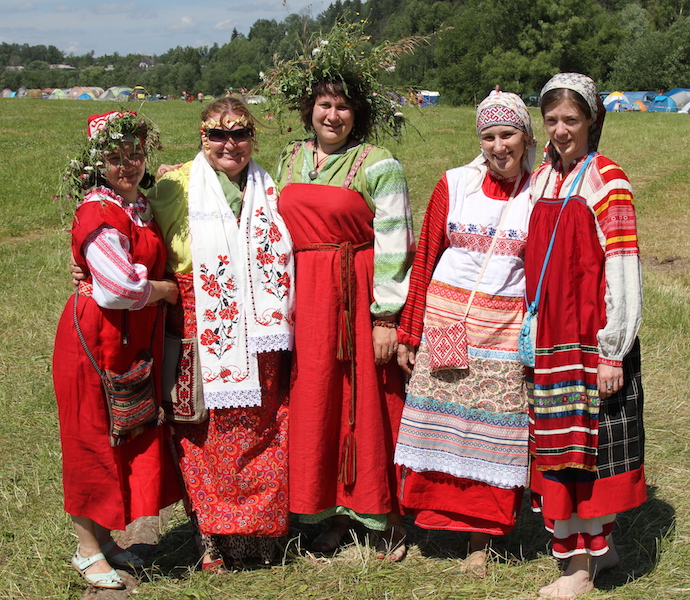
Ukrainian national clothing originated in Kievan Rus, and even then its basic elements were clearly visible. Men's clothing consisted of a white linen or cotton shirt, trimmed with a colored geometric pattern at the collar; red or blue woolen trousers, as well as a wide satin belt - a sash; in winter they wore a sheepskin coat. They wore red boots with low heels. Women's dresses were traditionally white, with a bright collar and cuffs, as well as hand embroidery along the bottom. Married ladies were required to wear a kerchief on their heads, a zhupan - a vest, and three types of outfits:
- Derga is a work garment gathered into lush folds at the back;
- A spare dress is a dress with laces, consisting of two halves - an elegant one in the front and a simple one in the back;
- Plakhta is a festive dress made of brocade or silk fabric; later, a checkered woolen one appeared.
Ukrainian women wore a long, colorful skirt - a poneva, and an apron with bright trim on top. The highlight of the traditional costume of the young Ukrainian woman was a lush flower wreath with long multi-colored ribbons at the back.
In the UK
In Great Britain there is no national costume as such, but there are elements that distinguish the British style from others.
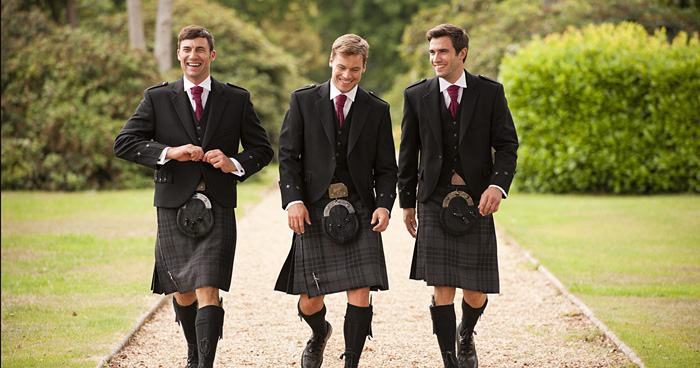
- In Scotland, for example, the most famous is the kilt - a woolen pleated skirt for men in a checkered pattern. A shirt, a vest and a tweed jacket were worn on top. A checkered beret with a pompom was worn on the head. The colors of the national clothing of the Scots indicated belonging to a certain clan. Each area had its own pattern of fabric for sewing a kilt. A Scottish woman's wardrobe included a checkered pleated woolen skirt below the knee, a white blouse and a tweed vest, in cold weather they threw on a large shawl or blanket;
- The native Irish could be recognized by their leine, a unique Irish shirt resembling a tunic in cut; checkered trousers, truss, and long cloaks fastened with a brooch;
- Welsh women wore a flannel skirt and apron, over which they wore a frock coat or a red shawl, and a headscarf or black hat.
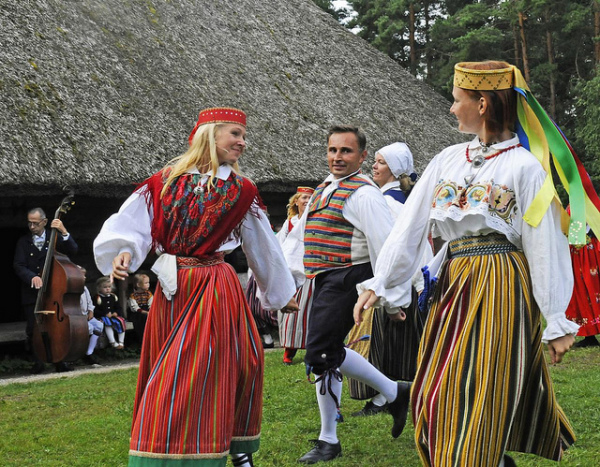
Estonian clothing was not particularly sophisticated: a simple shirt with wide sleeves was sewn from scrap fabric. Instead of a skirt, they wrapped themselves in a piece of thick fabric, which was secured with a belt. Men's attire was even simpler - a thick shirt, dark trousers, the fabric for which was made by each family themselves, and bast shoes on their feet.
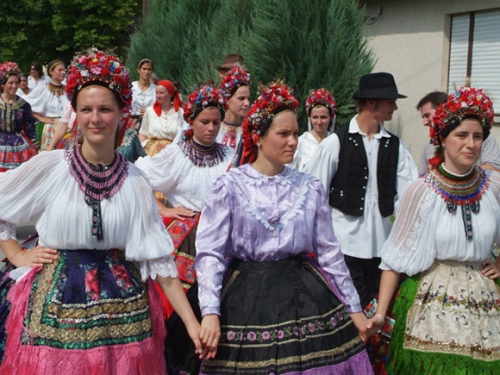
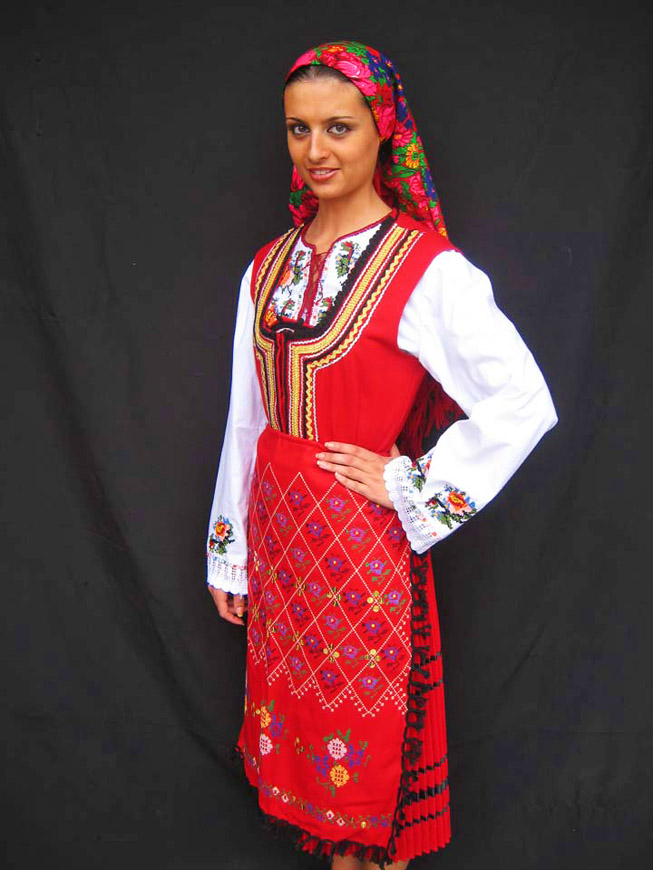
Bulgarian national clothes were made of homespun material, exclusively by women at a strictly specified time. Bulgarian women wore a woolen sarafan with a deep neckline and a trapezoid skirt - sukman. The headdress resembled a Russian kokoshnik, was decorated with painting, coins, beads, special metal strips. The rest of the outfit was decorated in the same way, so when walking, a peculiar rustling sound was emitted, this was a feature of the inhabitants of Bulgaria. Men's national dress was divided into two categories:
- Chernodreshna - dark, modest, sad;
- Belodreshna is bright, festive and cheerful.
It consisted of trousers trimmed with a colored strip of fabric, a belt or scarf, a shirt, a vest. All the details were elegantly finished.
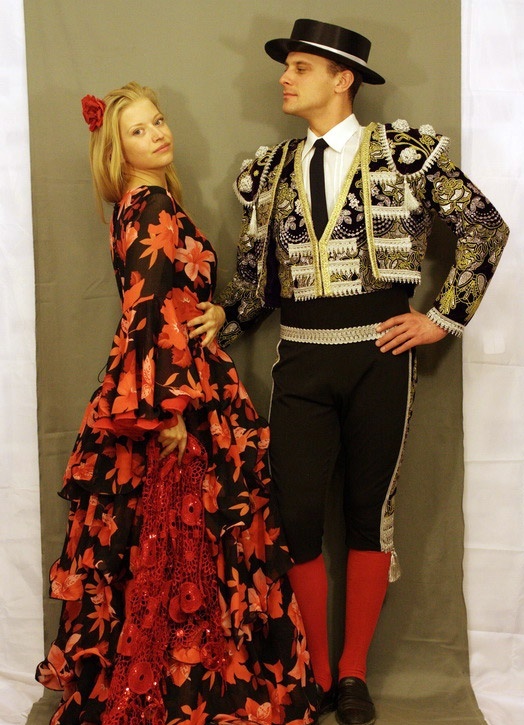
The Spanish national clothing of women is much brighter than that of men. It consisted of a bright, long, voluminous, multi-layered skirt with lace and frills, or a sarafan with a corset. On the head - a veil, which was held by a special hairpin - peineta. Often Spanish women used capes with a hood. The clothing of Spanish men was called a "short suit" and consisted of a small jacket, high-waisted trousers, a shirt, a colored belt and a wide-brimmed hat. Do not forget about the landmark of Spain - carida, or more precisely about the matadors. Their clothes were completely decorated with gold embroidery, a jacket and trousers of a fitted cut with shortened legs and sleeves, dark shoes and an interesting black hat.
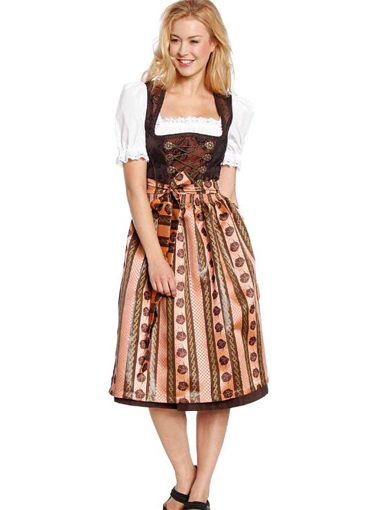
German clothing in ancient times was made of skins and fur. In the fifteenth century, wool and flax appeared. The quality of the Germans' costumes was an indication of their material wealth, type of activity, and area of residence. The basis of traditional women's clothing was:
- Blouse;
- Corset;
- Gathered skirt with petticoat;
- A lace apron with embroidery, the ties of which indicated the status of a woman (on the left side - unmarried, on the right - married, in the middle - widow).
Traditional men's suit: waistcoat, jacket, double-breasted frock coat or jacket, wide cropped trousers (under which light, usually blue stockings had to be worn) or leather trousers, some used suspenders, a tie. Hats with a feather were an integral part of the outfit. German clothing did not require special care, it was reliable and practical, which is typical for this people. The colors used were restrained - gray, white, brown. Shoes were closed, usually leather, due to the humid climate in the country.
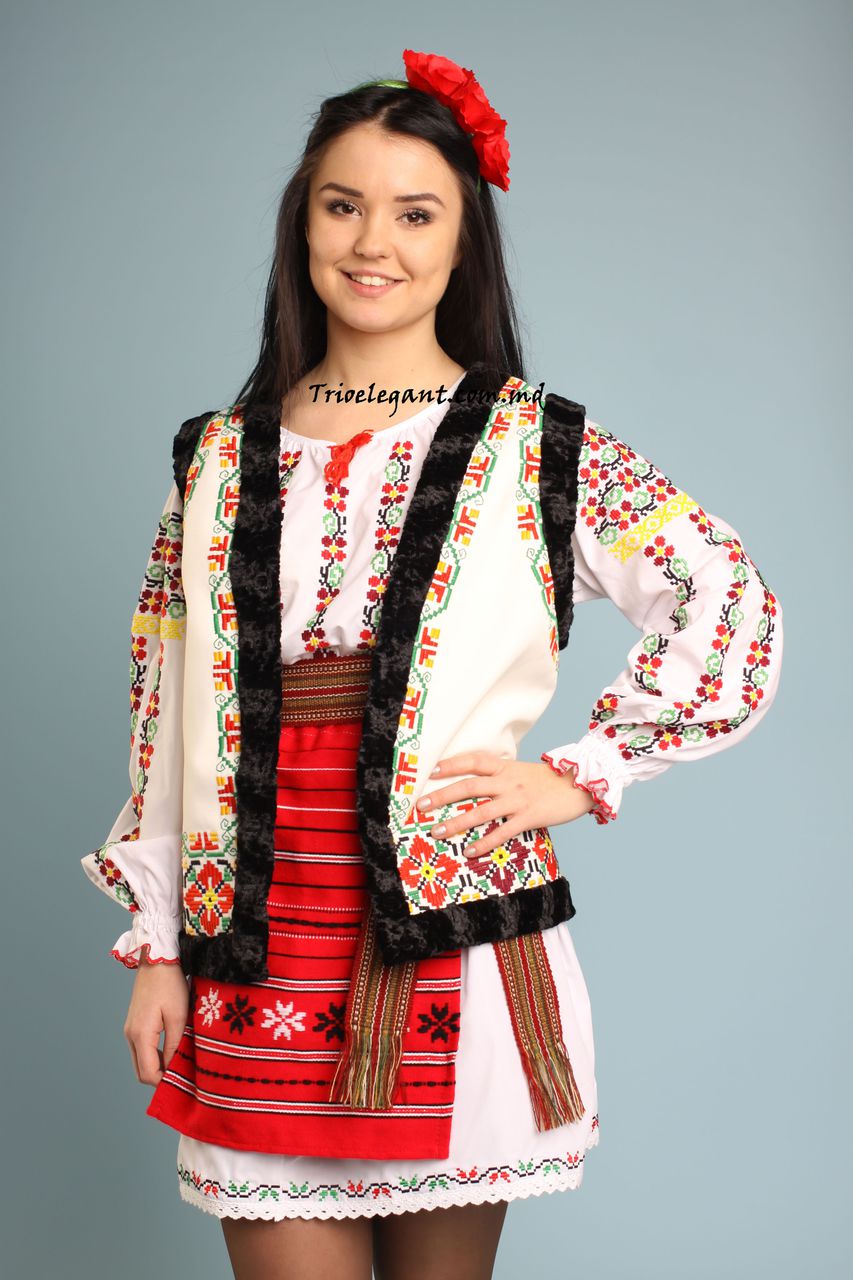
Moldavian national clothing is distinguished by its skillful embroidery of various ornaments with natural themes. There were many factories in the country that produced fabrics and sewed all the elements of the wardrobe. The main colors were black, red and white, a little blue and green. A Moldavian man wore a loose-fitting white shirt, linen trousers in the summer, woolen trousers in the winter, and a pointed headdress. On top of all this, they wore vests with leather inserts, light long raincoats, and fur coats. Moldavian women wore a beautiful light tunic with embroidered motifs, a woolen skirt - katrință, tied with a belt or scarf. Summer shoes were woven from natural materials, for the elderly and children, woolen booties were knitted or felted boots were made.
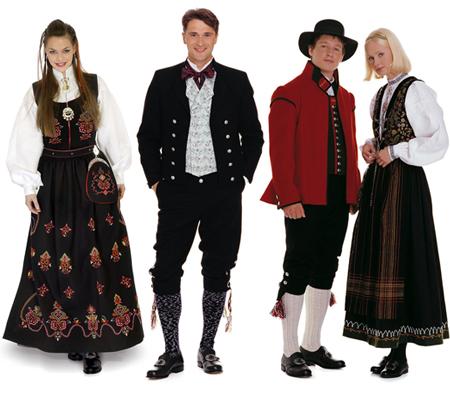
Norwegian traditional clothing is called bunad in many sources and is considered festive. Norwegians could be recognized by:
- Long trousers, the waistband of which resembled a corset;
- Vest with motifs and buttons on the front;
- Jackets;
- Thick wool knee-highs with a geometric pattern;
- A white, loose shirt with sleeves that gathered at the wrist.
Women combined blouses with skirts or sarafans, aprons, woolen vests or kerchiefs, capes or cloaks. The wardrobe of the fairer sex is more richly decorated and brighter.
African peoples
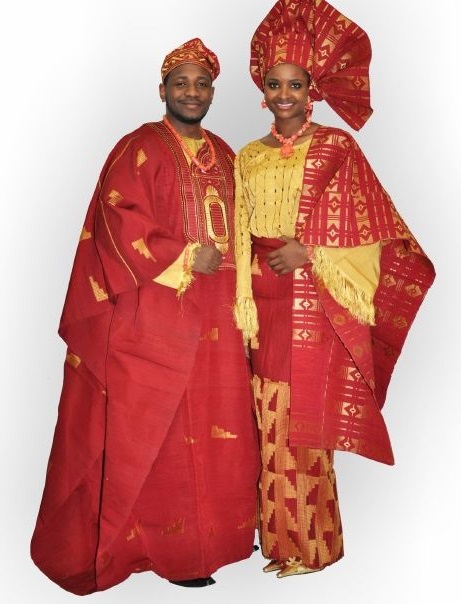
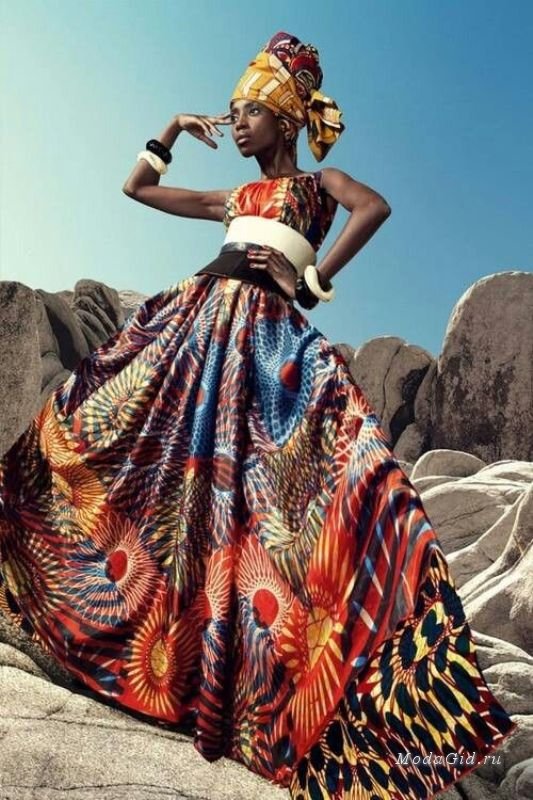
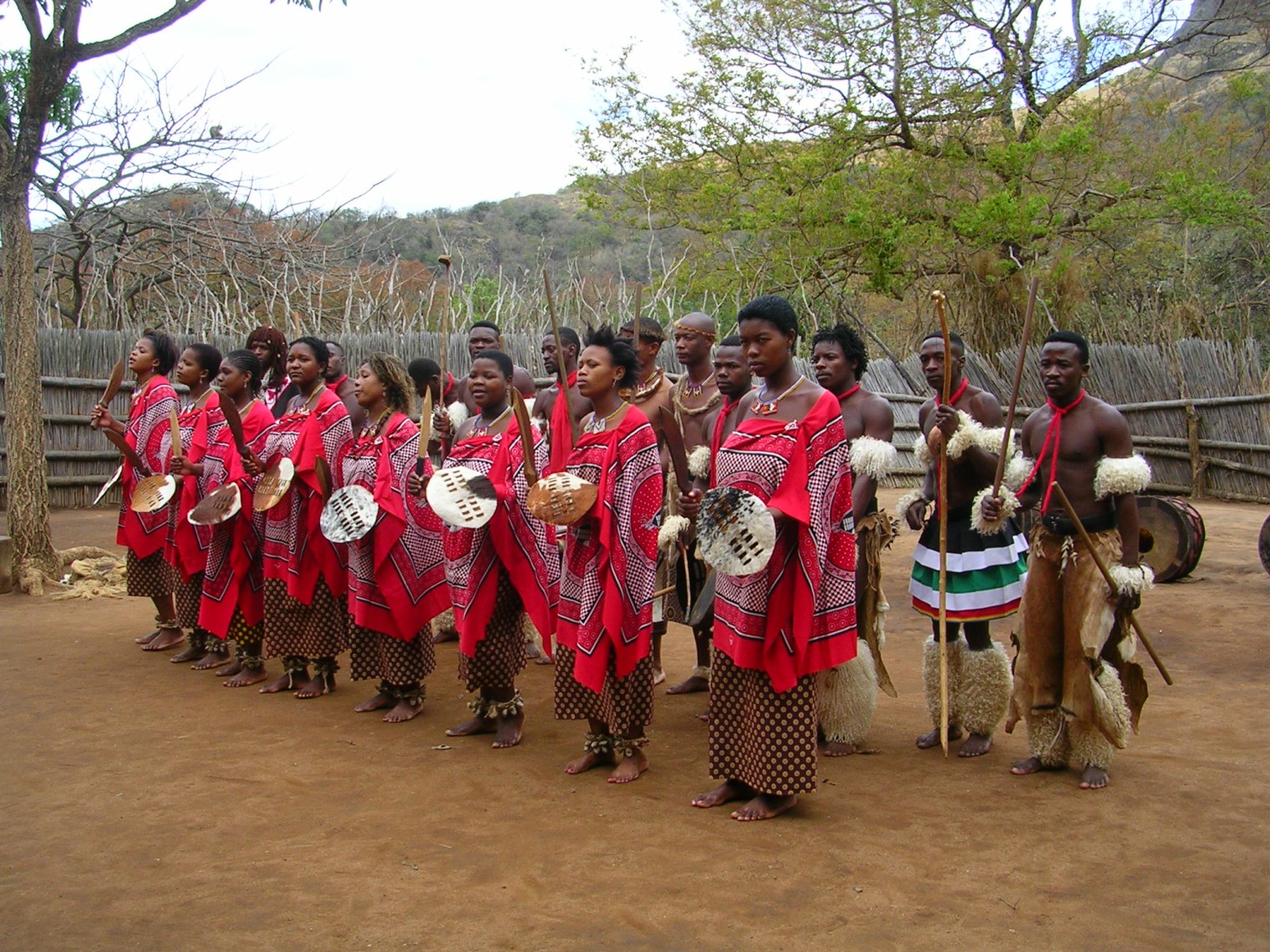
African national clothing is colorful, mostly natural, warm shades. A special feature of the men's wardrobe is a shortened tunic - dashiki or a long one - gran bubu, as well as wide trousers with ties. In the past, instead of regular clothing, they often used a piece of woven material, it was not sewn, but wrapped in several layers, tied in a knot on the shoulders, under the arm or at the waist. Raffia was used in the same way, the long fibers of which were wrapped around the body from the waist to the knees (men) or at chest level (women).
In South Africa, women still wear clothes made from unstitched pieces of fabric: one is fastened around the chest, the other around the hips, over the traditional loincloth. This is the "kente" of the Ashanti people, the "damba" of the Malagasy, and the "shamma" of the Amhara.
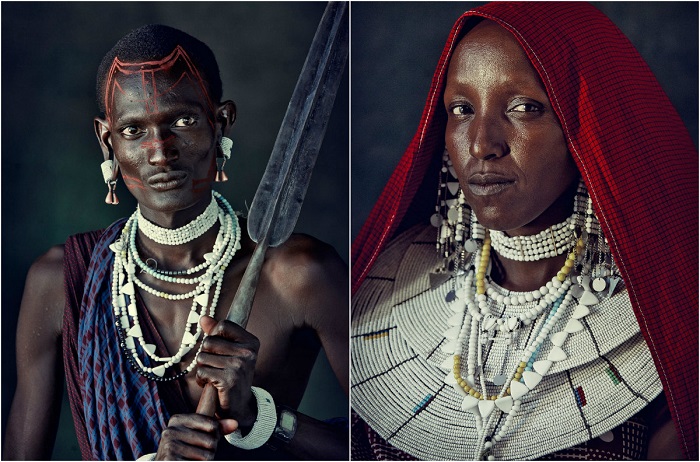
Traditional Moroccan clothing is considered to be a voluminous tunic with a hood - djellaba, a headdress - fez, or a kufi cap, allowing you to give the accessory various shapes. Native African women wear loose-fitting dresses, like a "bat", often revealing the shoulders. Jewelry is loved large, but flat, rounded in shape, often made of yellow metal. They complement the bones of small animals, teeth of predators, corals, shells, stones, bird feathers.
In America
- This country does not have its own rich history, all traditions were brought by other nations and mixed together. The same is true for national clothing;
- Brazil is famous for its carnivals and incredibly attractive costumes. The country's society is formed by many nationalities. Germans, Japanese, Italians, Chinese, Africans, Arabs and other peoples brought a piece of their culture, which could not but be reflected in the traditional clothing of the inhabitants of Brazil. Men wear wide shirts, not tucking them into trousers, silk turbans - torso, and wooden sandals - tamanko on their feet. The clothing of a Brazilian woman consists of many skirts, the lower ones are usually a little shorter, necessarily starched, the upper ones are bright and straight. On top they wear loose-fitting blouses - wadding, fastened on the shoulder with a brooch or a knot, decorated with a flower. Pano da costa is an element of the wardrobe for cool weather, it is a woolen coat in which it is customary to wrap oneself. On their heads, Brazilian women construct colorful turbans of various shapes, decorating them with feathers, beads, corals, and exotic fruit dummies. Brazilian clothing is bright, colorful, like a carnival, and suits bold, confident, extravagant personalities.
Mexico is a country with Latin American roots. Hot Mexicans in traditional costume are presented like this:
- A sombrero is a wide-brimmed straw hat with rounded edges;
- A poncho is a brightly colored cape trimmed with fringe. It is a square piece of fabric with a hole in the middle for the head;
- A moustache is a mandatory attribute that gives status;
- There is a cactus nearby, a guitar in the hands.
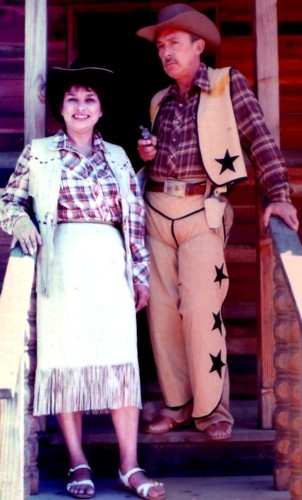
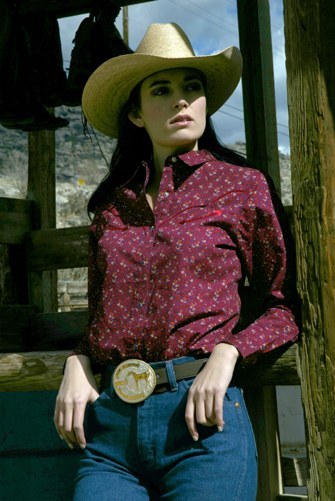
In fact, the national costume of a Mexican resident consists of a black jacket and trousers with a silver pattern - charro, a wide-brimmed hat of the same color and a red scarf in the form of a bow on the neck. Famous local mariachi musicians still perform in this traditional outfit. In ancient times, a black charro was worn for special events, and in a white one with silver trim, young guys usually met girls. Women's dresses surprise with their motley color and abundance of patterns. Long, twelve-wedge skirts, blouses or dresses are filled with floral embroidery, ornaments. A Mexican woman completes her look with bright red shoes and a scarf of the same color.
Canada is a rather cold country, it is not for nothing that most of the local population is fond of hockey, because there is winter there for eight months a year. The national costume of Canadian men consists of insulated, often white, or with a black and red pattern, gaiters and dark short pants resembling breeches, just below the knee, decorated with buttons on the side; a white shirt; a striped red and black vest; a jacket with a stand-up collar. On the head is a black hat, on the feet are closed shoes with a buckle. Women's clothing is also modest and strict: a dark ankle-length skirt; a long white apron trimmed with lace on top; a white long-sleeved shirt, over which a corset-like vest, usually red; thick tights or stockings, massive closed shoes. There are no decorations as such, there is trim on the edges of all clothing elements. The main colors in the wardrobe of the indigenous people of Canada are red, white, black.
In Australia
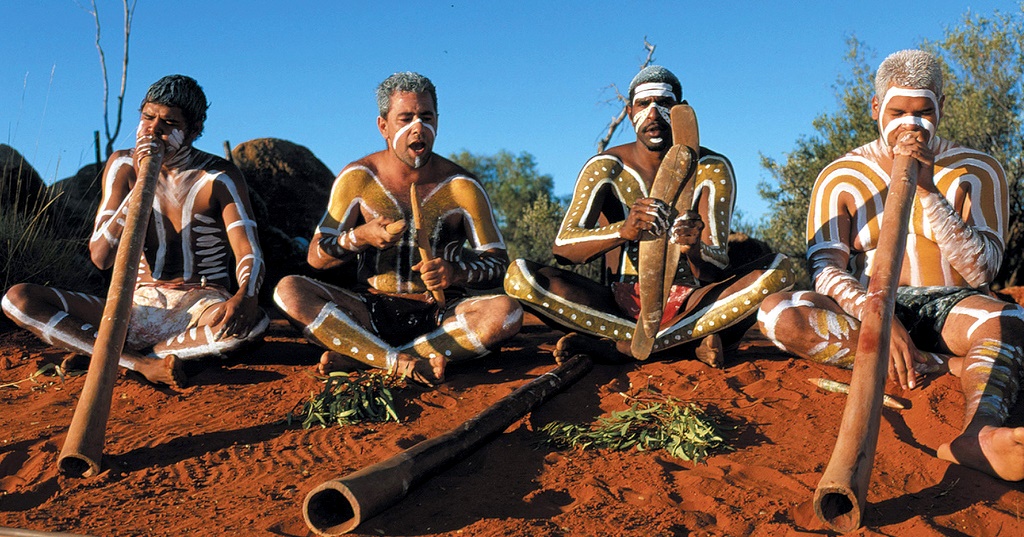
There are thousands of tribes on the continent, but despite this, the national clothing of Australia is simple and monotonous. Before the arrival of the first Europeans, Australians did not think about covering their naked bodies, they walked as they were and were not embarrassed by anything, it was natural. Men wore a loincloth made of human hair, with a shell between the legs. Women had a kind of apron, resembling a skirt, made of plant fibers. Tribes were distinguished by patterns on the body, some were dominated by white, others by red. This coloring served as a kind of national costume. Despite the minimalism in clothing, Australians love accessories, they happily wear coral or pearl beads, necklaces made of animal teeth, other trophies, earrings. And not only in the ears, but also in the nose. The head is tied with a piece of colored fabric or painted white. To avoid sunstroke, they try not to be in the open sun. In a country with such a climate, the local population wears a minimum amount of clothing.
Residents of the Middle East:
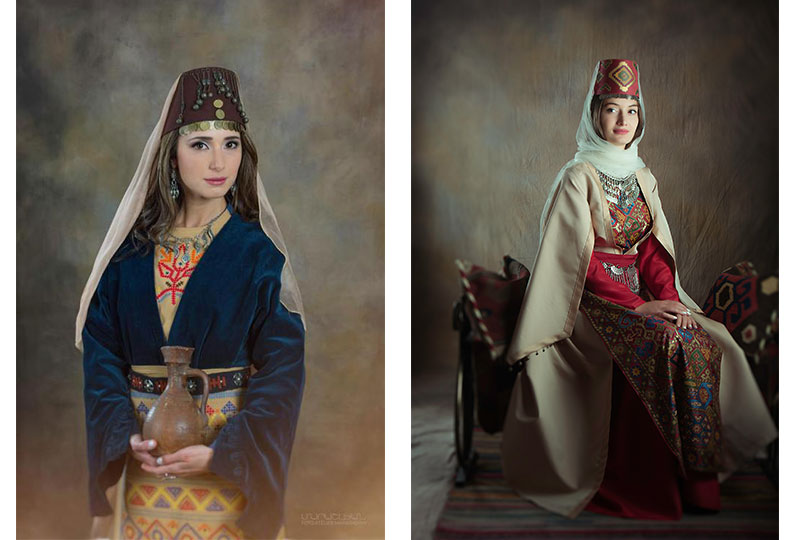
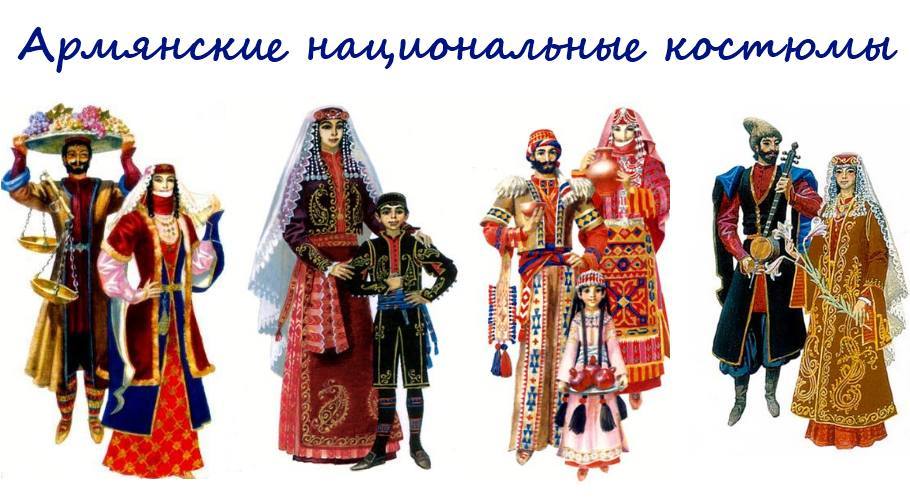
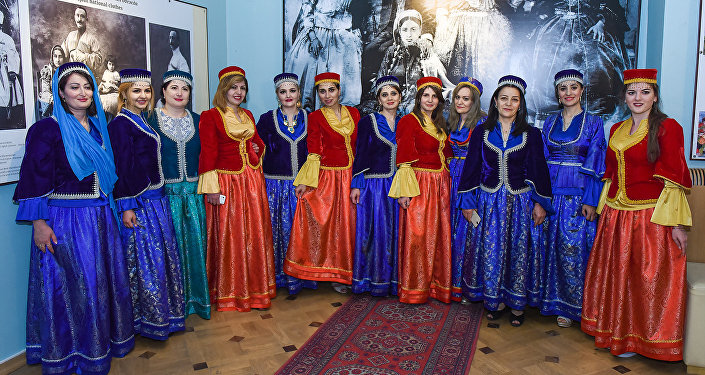
- Traditional Armenian clothing consists of a low-collared shirt and wide trousers gathered at the bottom with a ribbon. A long jacket, arkhalukh, or cherkeska, belted with a kerchief or scarf, is worn on top. The head is covered with capes secured with a rim (women) or fur hats (men). Leather boots with pointed toes are worn as footwear. All elements of clothing are decorated with embroidery or gold and silver ornaments;
- In Iran, they love multi-layered clothing, the basis is like everywhere else: harem pants and a tunic, for women a long one, resembling a dress, over which a coat is worn. In some areas, Iranian women were required to wear a chador in public - a black, sleeveless, semi-circular cape. Which was secured with an elastic band or held by hands;
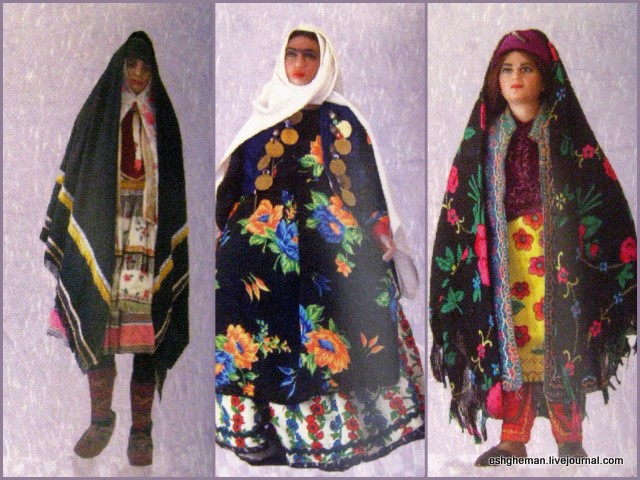
- Clothes for the Turks were made of muslin, silk, velvet, taffeta, brocade, decorated with ribbons, embroidery, where national motifs were widely used. In Turkey, before leaving the house, a woman put on a feraju and a chador over a shirt, trousers and a camisole - capes without fasteners, hiding the head and body from prying eyes, some important persons additionally hid their faces;
- The national clothing of the Azerbaijanis is also multi-layered, has all the components of the Caucasian wardrobe: wide trousers, a shirt, a papakha, a cherkeska with many decorations. For ladies, a chador and a rubend - a curtain covering the face - were additionally provided;
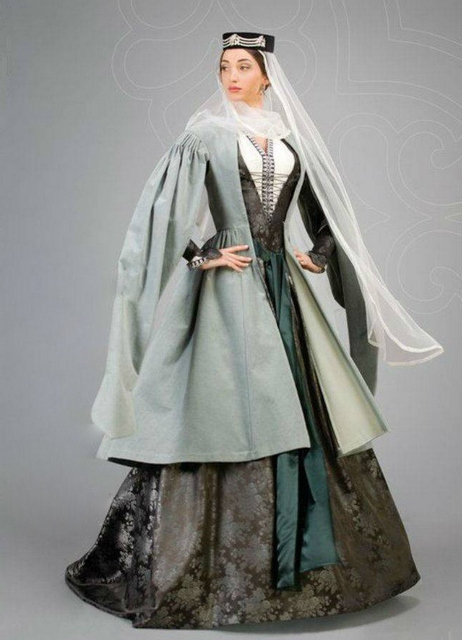
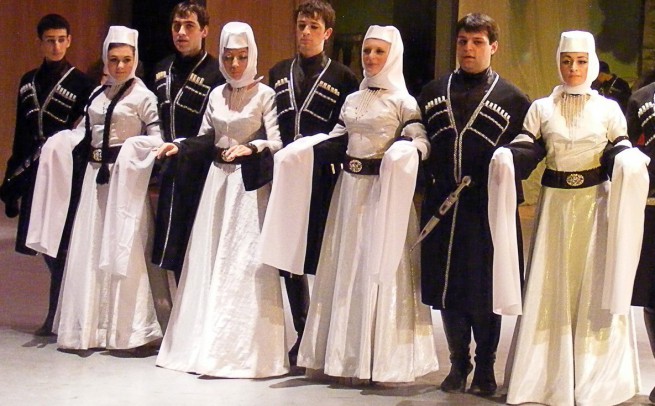
- Georgian national clothing for women consisted of a kartuli - a dress with a tight, richly decorated top and a very lush, long skirt, which was always worn with a velvet or silk belt; lechaki - a light veil, which was fixed with a kopi - a headband, and on top was worn a bagdadi - a dark scarf. Amber was used in jewelry. A special feature was the use of black coloring pigments for hair and eyebrows, as well as blush. Georgian national clothing is famous in the world of fashion - especially the men's suit chokha - a black cherkeska decorated with gold embroidery, with gold gazyrs, a belt and a dagger;
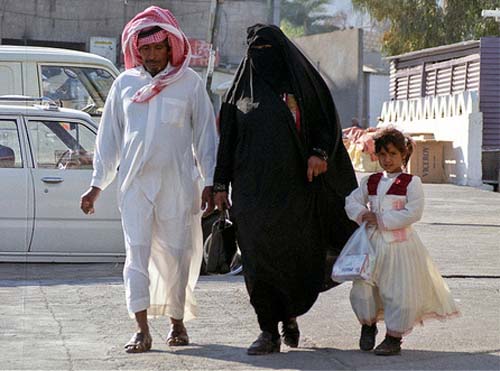
- The UAE, or United Arab Emirates, is a religious country with its own traditions and climate. This could not but leave an imprint on the traditional clothing of the people. Men wear a white tunic - kandura. Despite the impractical color, an Arab never wears dirty clothes, he changes clothes three or four times a day. The head is decorated with an openwork cap - gafiya, and on top of it a white scarf - ghutrah, secured with a rim - ikal. Traditionally, women's national clothing of the UAE includes colored dresses with long sleeves - kandura, with wide trousers - sirwal. On top is a black cape, embroidered with gold and pearls - abaya. The headdress is shellah - a thin black shawl;
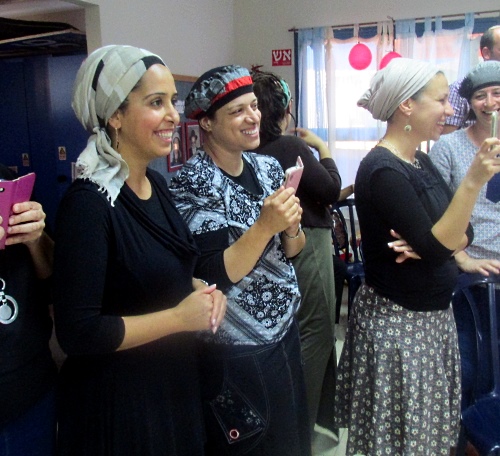
- In Israel, the locals are Jews (Jews), the traditional clothing of Jewish (Jewish) men consists of a simple black frock coat and a cape - tallit katan. This is a rectangular piece of fabric with a cutout in the middle for the head, trimmed at the corners with tassels of eight threads. Jewish women wear colorful dresses, blouses with skirts, and a white apron, which serves as a talisman.
Cubans
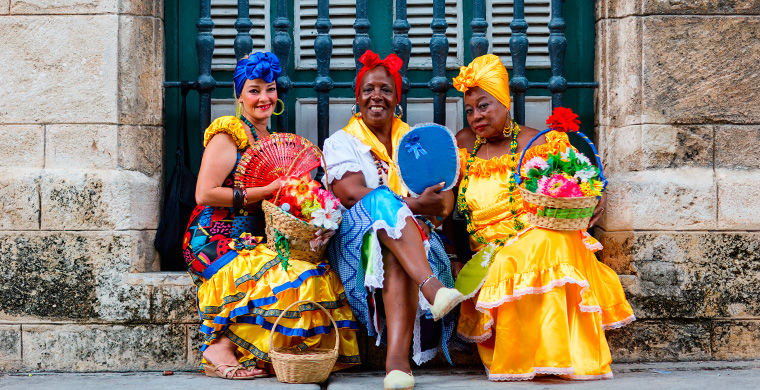
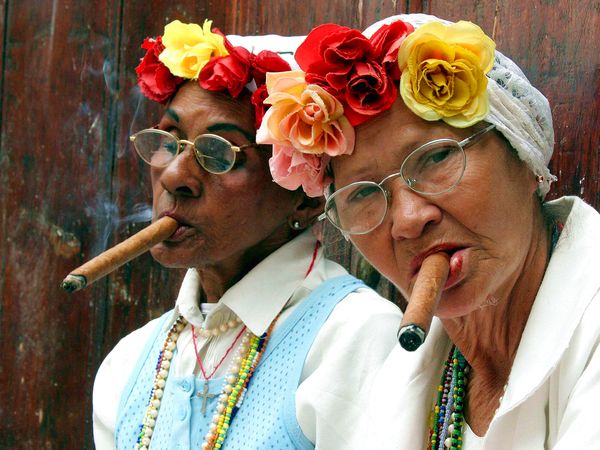
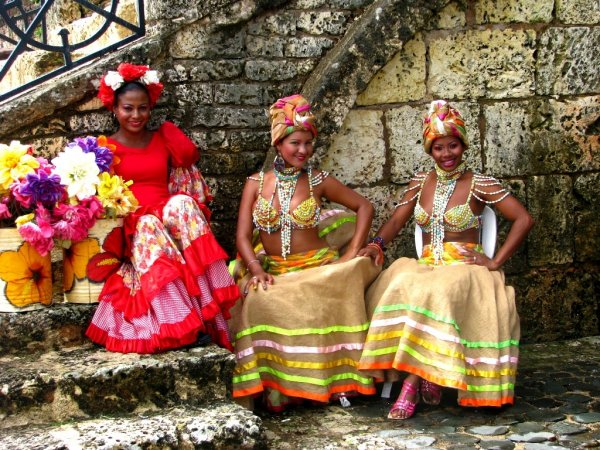
Cuba is often associated with cigars, Che Guevara and Fidel Castro, but it is also an island of freedom, whose inhabitants love to have fun. This moment could not but be reflected in the national costume of the Cuban. The inhabitants of the island call themselves "masquerade dressers", this is not without reason, the clothes are full of bright colors. Men's attire begins with a white shirt - a guayabera, with numerous pockets. According to one version, the style was invented by a cigar lover to always have his favorite pack with him. According to the second, the pockets were sewn on by young guys to put the fruits of the guayaba, and then treat the girls. The guayabera has three folds on the back, and a triangle with buttons on the shoulder, which symbolizes the Cuban flag. Following the same goals, the shirt is often sewn striped in blue-white-red colors. Women in Cuba wear wide, colorful cotton skirts decorated with flounces, and a scarf decorated with a mariposa flower is tied in a bow on their heads. Cubans wear a wide-brimmed straw hat - a sombrero. Coral beads, shell necklaces, porcelain, glass, earrings, bracelets are used as accessories. Clothes in Cuba are made mainly from natural thin fabrics (cotton, linen), this is a necessity associated with the hot climate.
In conclusion, I would like to note that, despite the differences, many nationalities have similar elements in their national clothing. For example, simple cut shirts, harem pants, leather shoes were often present. People sewed themselves from the materials that were available. An important point was the decoration of the costume with threads and ribbons, reflecting the lifestyle of different peoples of the world.
Video
https://www.youtube.com/watch?v=yEKWROncuIk
https://www.youtube.com/watch?v=ZtBlZ6izMMA
Photo