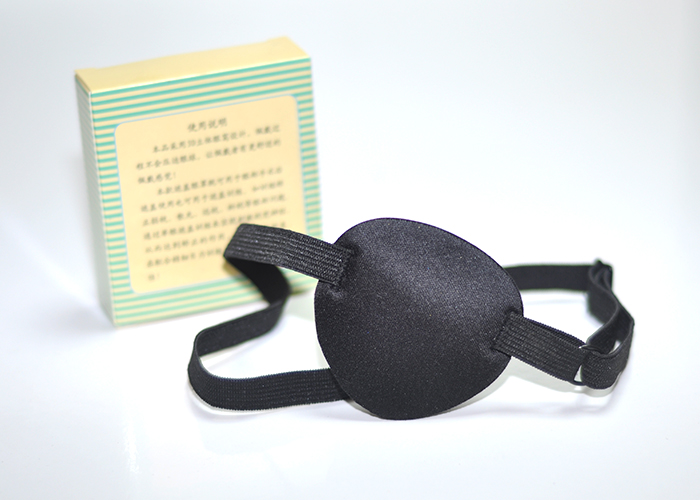
Ophthalmological diseases are treated not only with medications and surgeries, but also by adjusting the functioning of the visual organs. For these purposes, an eye patch is used, and there are several methods for applying and making it. The pharmacy chain sells ready-made products for both single and multiple use. In addition, they can be made with your own hands, without spending much time, money, and effort.
Purpose and contraindications
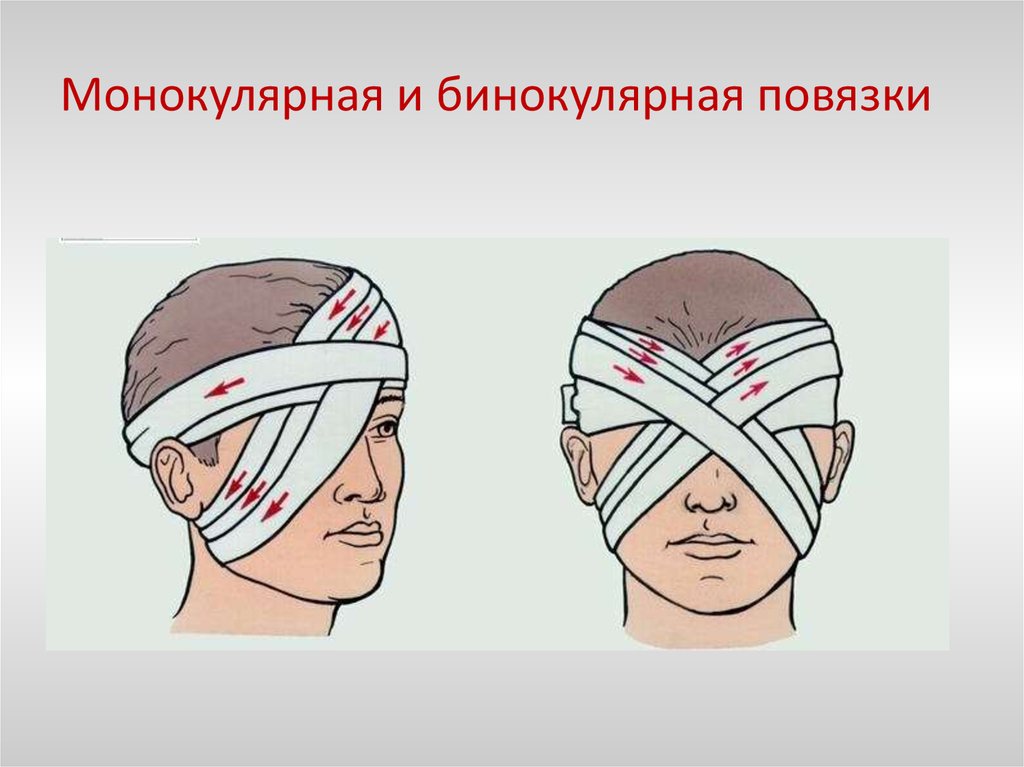
Eye patches can be monocular, applied to one eye, or binocular, which cover both organs of vision. A monocular patch is used to combat strabismus in childhood. It is also indicated for:
- protection from irritating factors;
- preservation of the injured organ during transportation of the victim;
- fixing medicinal lotions or compresses.
The bandage should be used as prescribed by the doctor, following all his recommendations. In some cases, it will not only not improve, but also worsen the situation. In particular, contraindications include:
- infectious and inflammatory process in the visual organs;
- when the dressing prevents the outflow of tear fluid in ulcerative keratitis.
With prolonged use, a local increase in temperature is possible, which leads to active reproduction and spread of infection.
It is necessary to discuss with the doctor how long the bandage should be used. If one patient requires a protective product for several hours a day, then another needs to leave it on all night. During treatment, the following precautions should be observed:
- completely block the view of the affected eye to get the maximum effect from the therapy;
- do not remove the bandage prematurely;
- if the doctor has advised to provide rest for the organ of vision for 2-3 hours a day, then it is better to choose a quiet pastime for wearing (drawing, reading, board games);
- If the dressing is done at home, it must be done with clean hands to avoid infection and further contamination.
Varieties
Depending on their purpose, eye patches are divided into corrective, protective, and strengthening. The first are put on for strabismus in children, when it is necessary to train the weak eye and give it additional stress. To do this, the healthy visual organ is covered daily for several hours. The effectiveness of the treatment depends on compliance with the regimen selected by the ophthalmologist.
Reinforcing bandages are applied to hold the compress soaked in medicine on the eye. Protective devices are used after surgical interventions, as well as for various diseases of the visual organ in order to prevent the penetration of light, dust and other substances that can cause irritation. They are simple, easy to use, cover a small part of the face, and do not require significant material consumption.
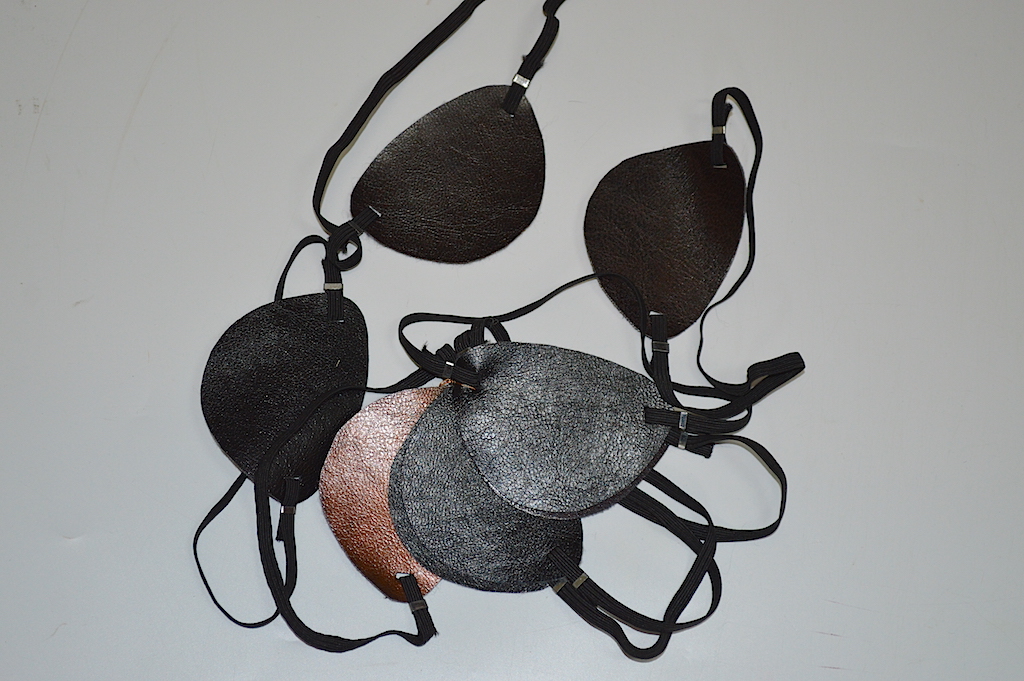
It is important that the protective product is ergonomic, comfortable for the child, and that he does not refuse to use it constantly. This can be a bandage-gauze pad, which is applied to the closed eyelid, fixed with a plaster, special stickers on the frame and eyes - an occluder. Products are made of soft, breathable, hypoallergenic materials.

Simple ways of fixation
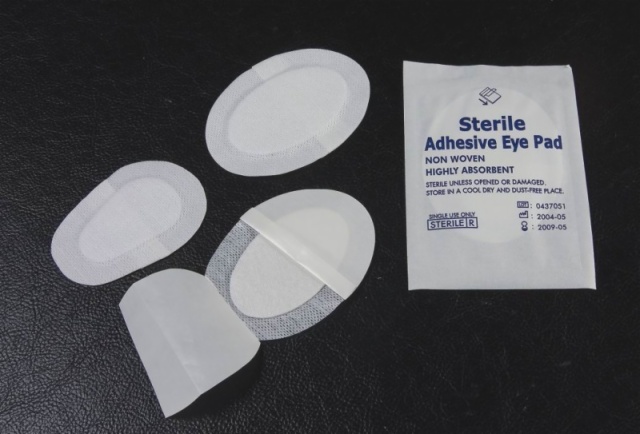
Bandages can be either disposable or reusable. Disposable devices are used in cases where it is necessary to maintain sterility and cleanliness in the problem area. There are several types of their fastening:
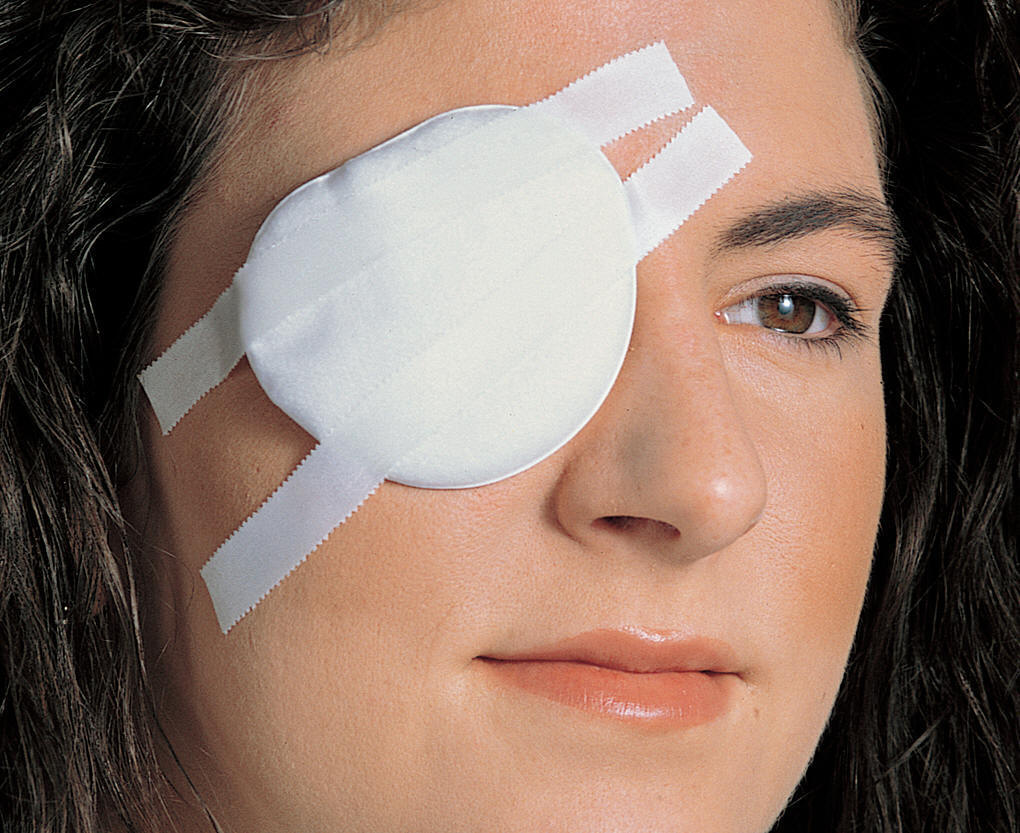
- Adhesive. After applying the gauze pad, the area around the eye is lubricated with medical glue, avoiding the product getting on the eyebrows. A layer of bandage is applied on top, its edges are pressed to the skin. Advantages: cost-effective, minimum discomfort for the patient. Disadvantage: requires a lot of time to apply.
- Adhesive. A gauze pad is diagonally fixed with one or two thin strips of adhesive tape on the forehead and cheek. Advantages: availability of material, ease of use. Disadvantage: does not last long, since the adhesive tape can peel off at any time.
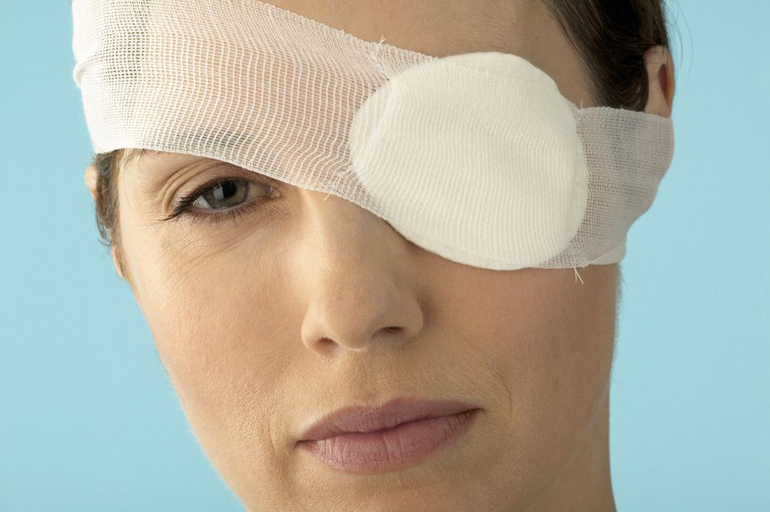
- Bandage. Advantages: the bandage device is easy to remove, can be used several times. It is considered the best option for fixation. Disadvantages: applying the bandage requires skill and compliance with several rules. Bandaging begins with a fixing round. Each turn is carried out by evenly pulling the bandage, trying to securely fix the bandage.
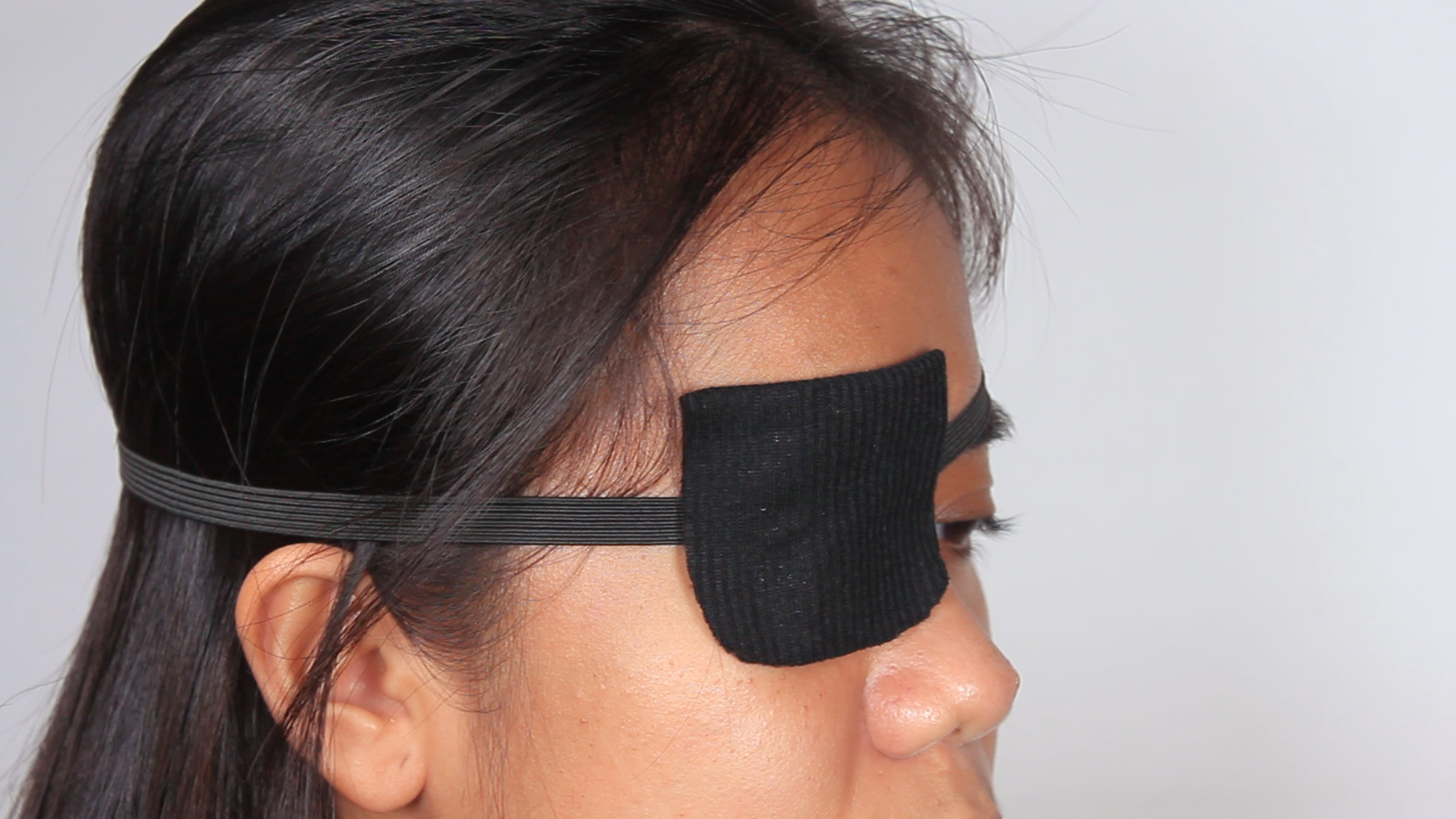
Reusable products are used for amblyopia and strabismus. These can be occluders on a suction cup or elastic band, made of silicone or plastic. Advantages: easy to put on, do not require time for application. Disadvantages: if this is a pharmacy option, then it is expensive, does not hold well, often slips off.
How to make it yourself
If you only need to protect one eye, you can make a so-called pad. It has the shape of an oval or rectangle, the size of which corresponds to the eye socket. To make an eye patch at home from a bandage or gauze, you need to use a soft, hygroscopic, fat-free material. Algorithm of actions:
- cut out gauze for a small napkin (20 x 25 cm);
- fold it in the middle so that the edges touch;
- fold the gauze folded lengthwise across the width;
- fold it in half several times;
- Place the resulting product on the eye under a bandage.
The manipulation should be carried out on a clean surface with hands washed with soap. At the same time, make sure that there are no threads on the prepared gauze napkin that can get into the eye or irritate the skin.
Many people are interested in how to make a cotton-gauze eye patch at home. To do this, you will need a piece of sterile gauze or bandage and absorbent cotton wool. The algorithm of actions is as follows:
- lay out the gauze;
- put a 1 cm thick layer of cotton wool into it;
- cover with a second piece of bandage;
- cut the resulting pillow into pieces;
- apply the finished product to the problem eye;
- cut a strip of bandage 50 cm long;
- pass it over the eyelid so that the ends are behind the ear;
- tie up.
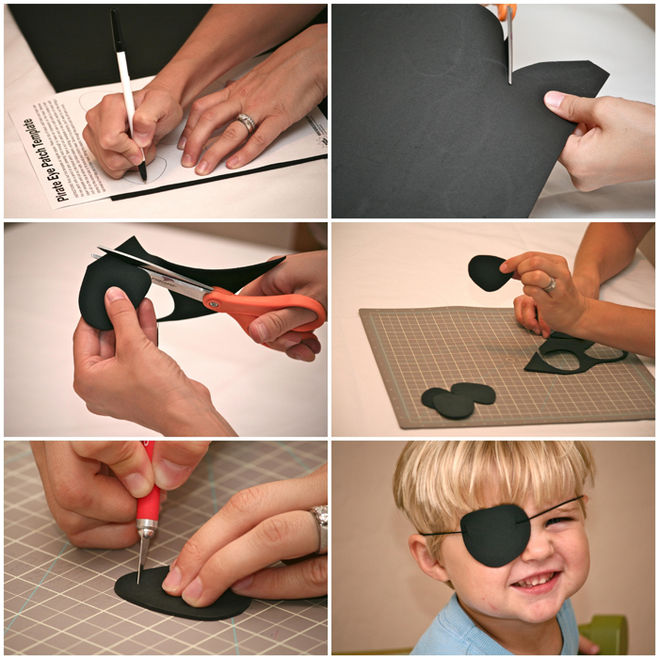
If necessary, you can make a blindfold with an elastic band. For this you will need thick dark cardboard, fabric, a regular elastic band, scissors, office glue, glasses. Algorithm of actions:
- place the frame on the cardboard and trace around it, giving the lines a clear, finished shape;
- make a template by cutting it out along the outline;
- cut the workpiece from the center down, which will ensure comfort when blinking;
- cut out two identical pieces from fabric and glue them with the wrong side to the cardboard;
- the cut area should also be glued to a depth of 3-4 mm;
- When the product is dry, make small holes on the sides and then thread the elastic through them.
How to apply a gauze bandage correctly
When applying a monocular bandage-gauze dressing, it should be taken into account that the left eye is bandaged clockwise, and the right eye is bandaged counterclockwise. The patient should be in a comfortable position for him, but so that the bandaged part is accessible from all sides. The following actions are performed:
- the beginning of the bandage strip is taken in the left hand, and the roll in the right hand;
- apply a bandage to the forehead;
- make a fixing tour around the head and the back of the head;
- lower the gauze from the back of the head under the ear through the cheek upward, covering the damaged area;
- make a securing turn around the frontal area and the back of the head;
- alternate turns on the organ of vision and around the head;
- fix the bandage on the other side of the sore eye.
To ensure that the protection lasts as long as possible, the roll of bandage is turned over after each round. However, it should not tighten the head or forehead too much. A tightly applied bandage can cause discomfort and even headaches.