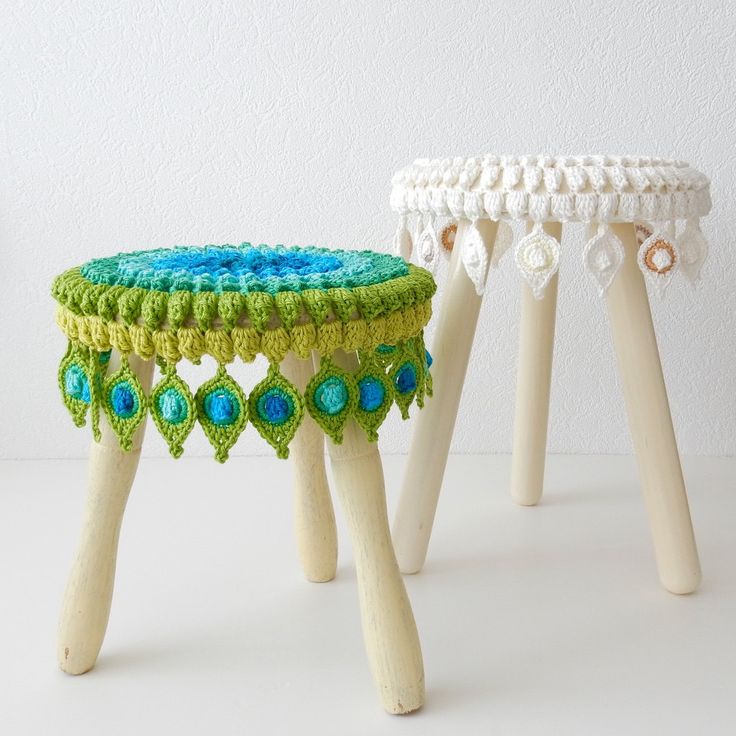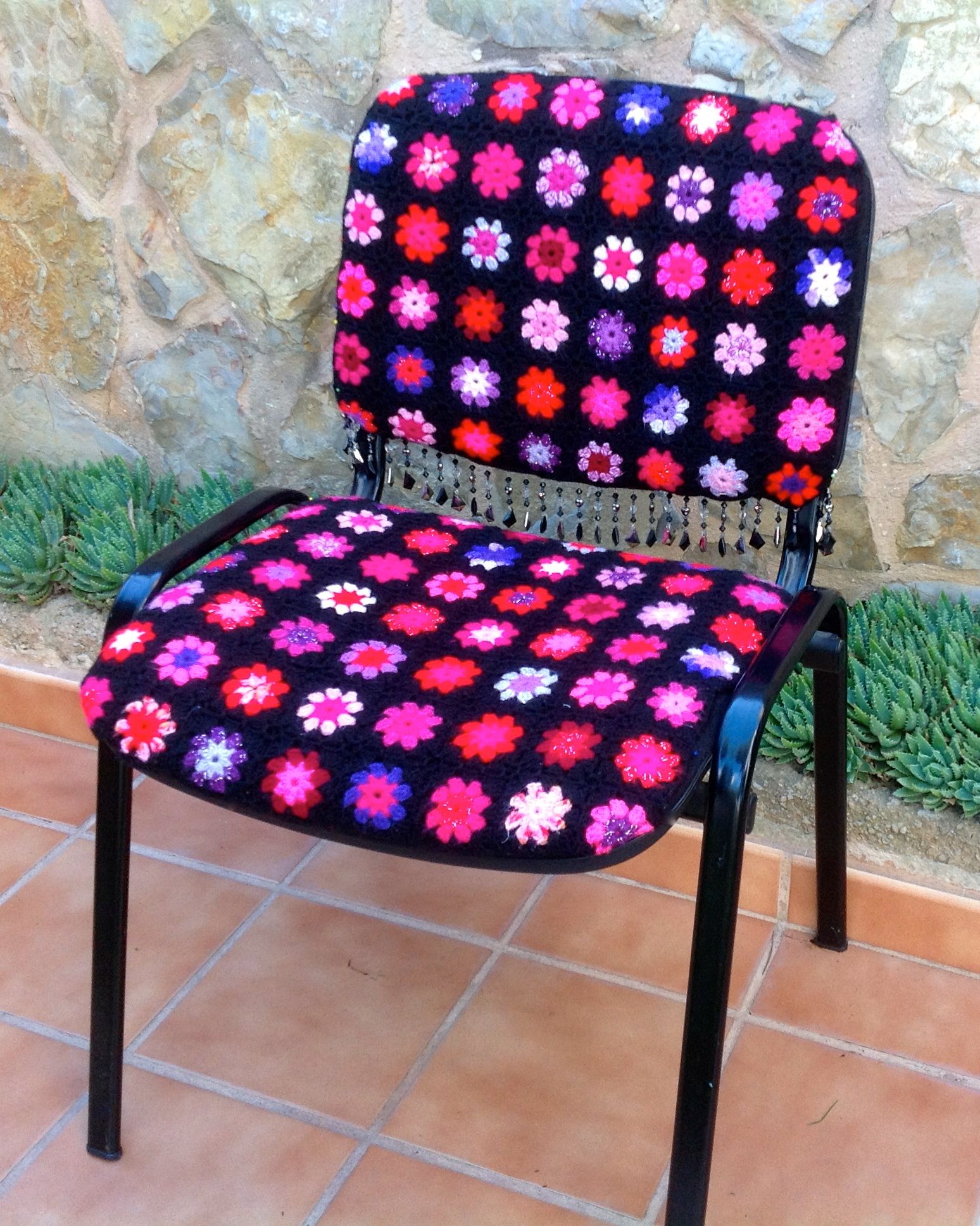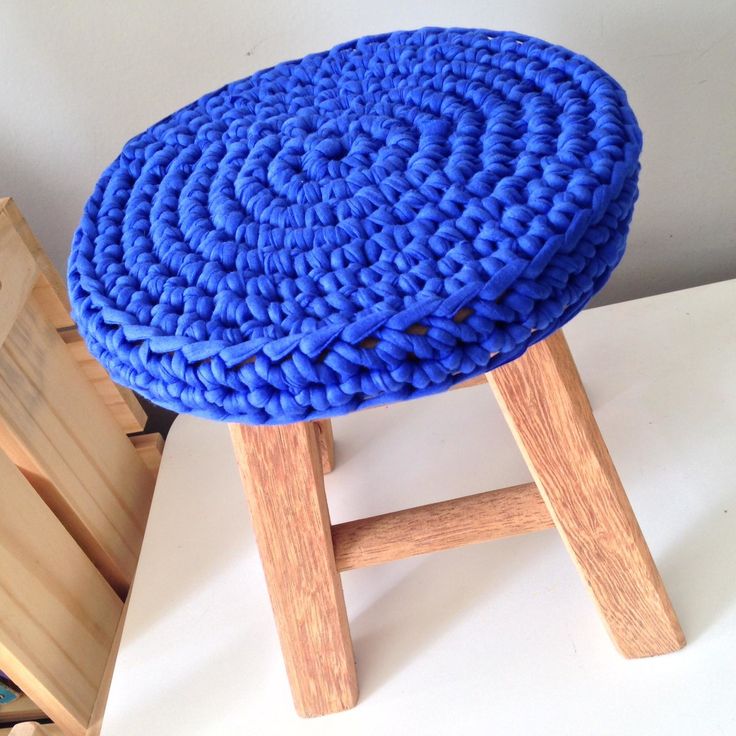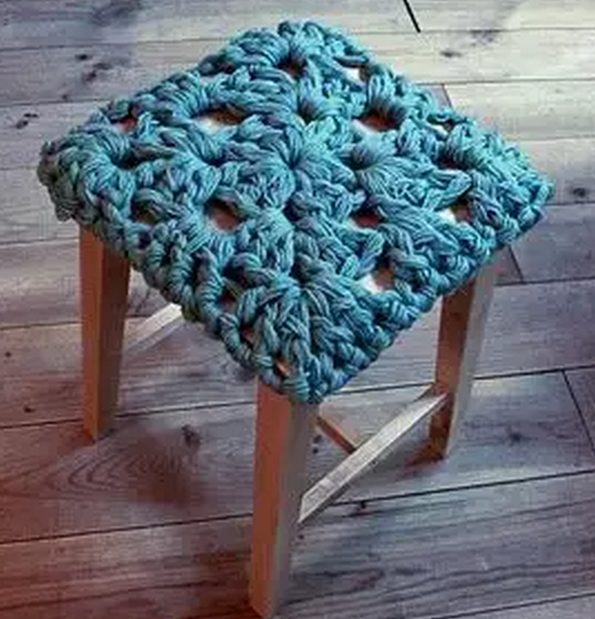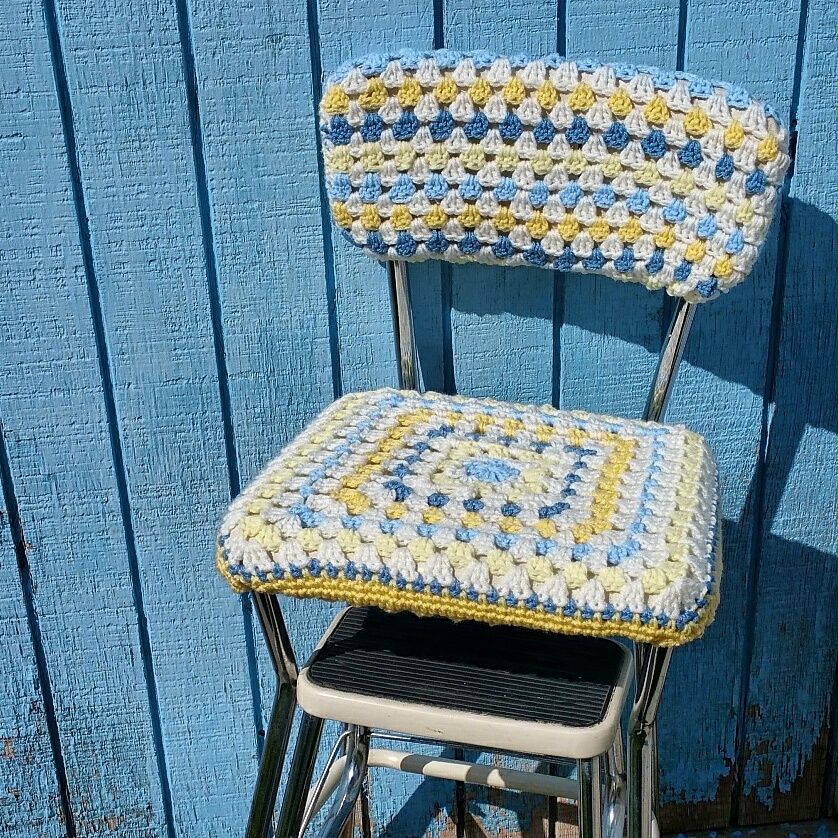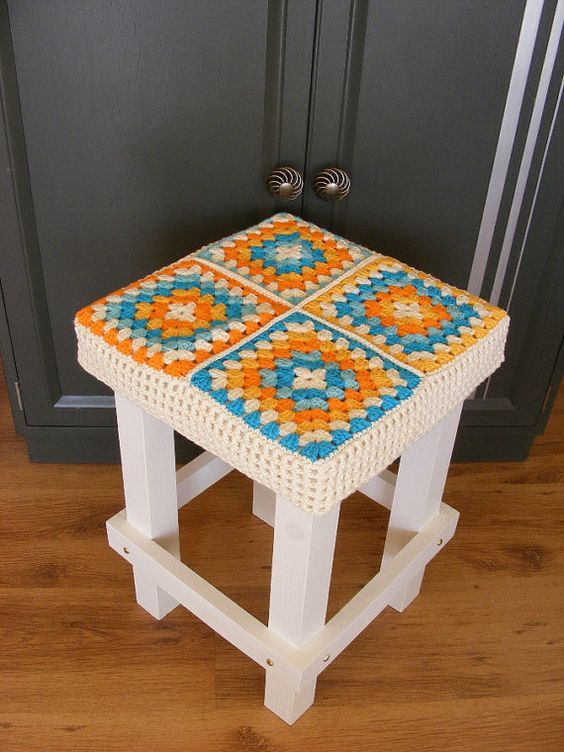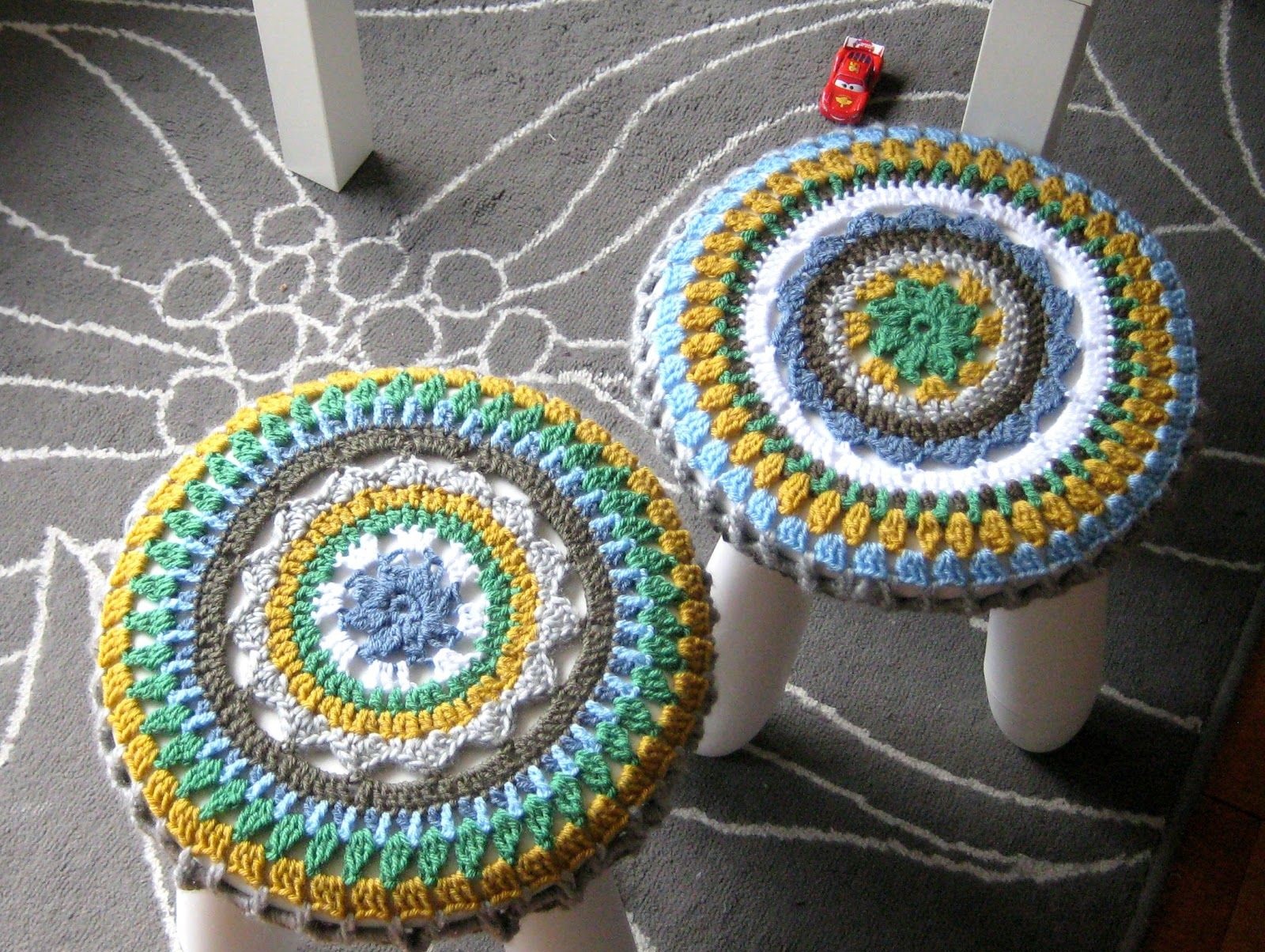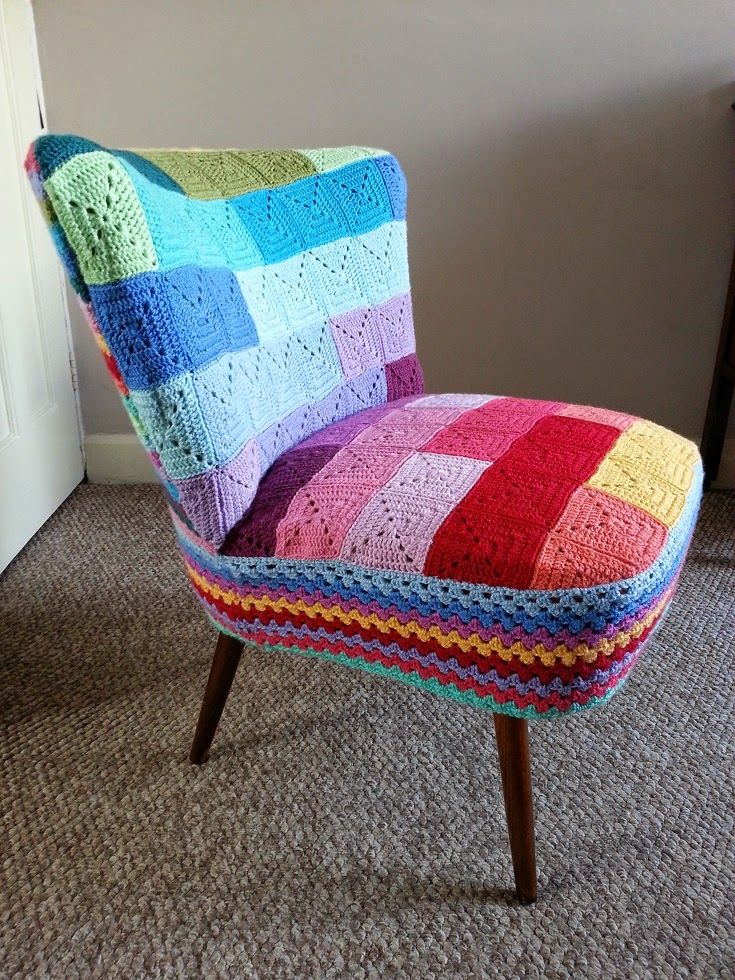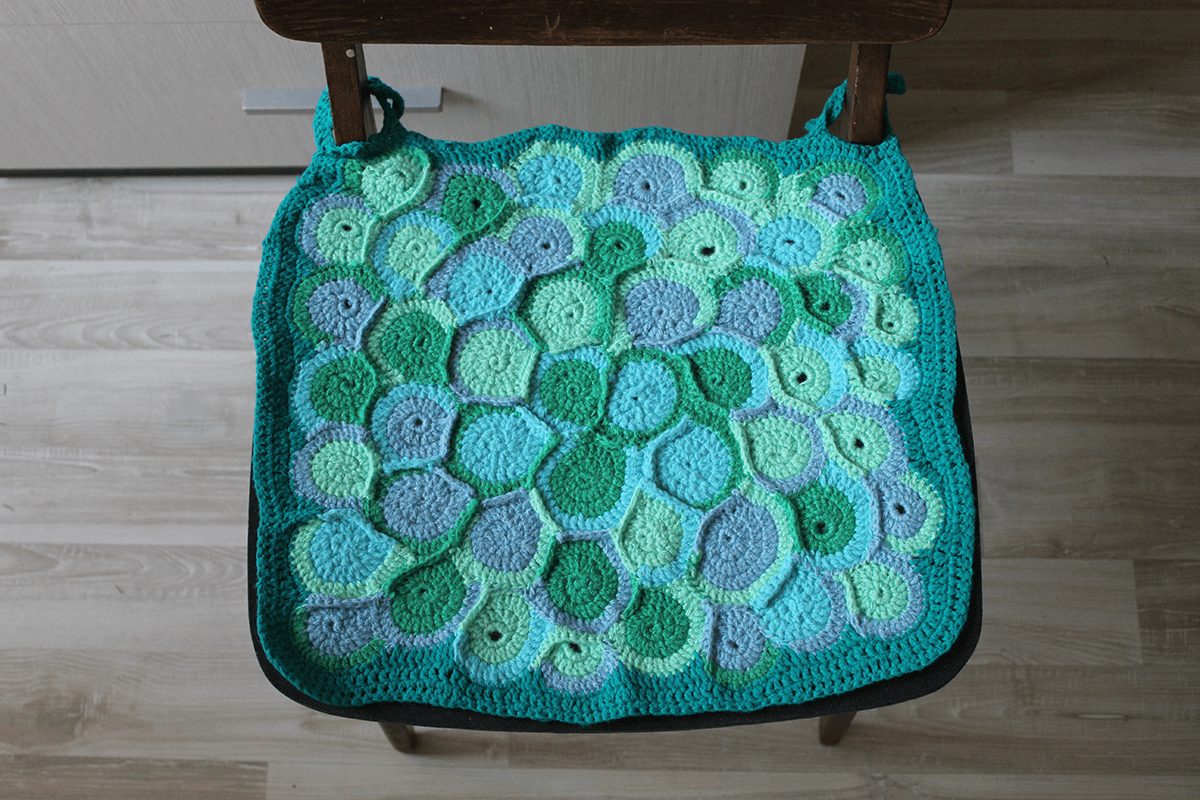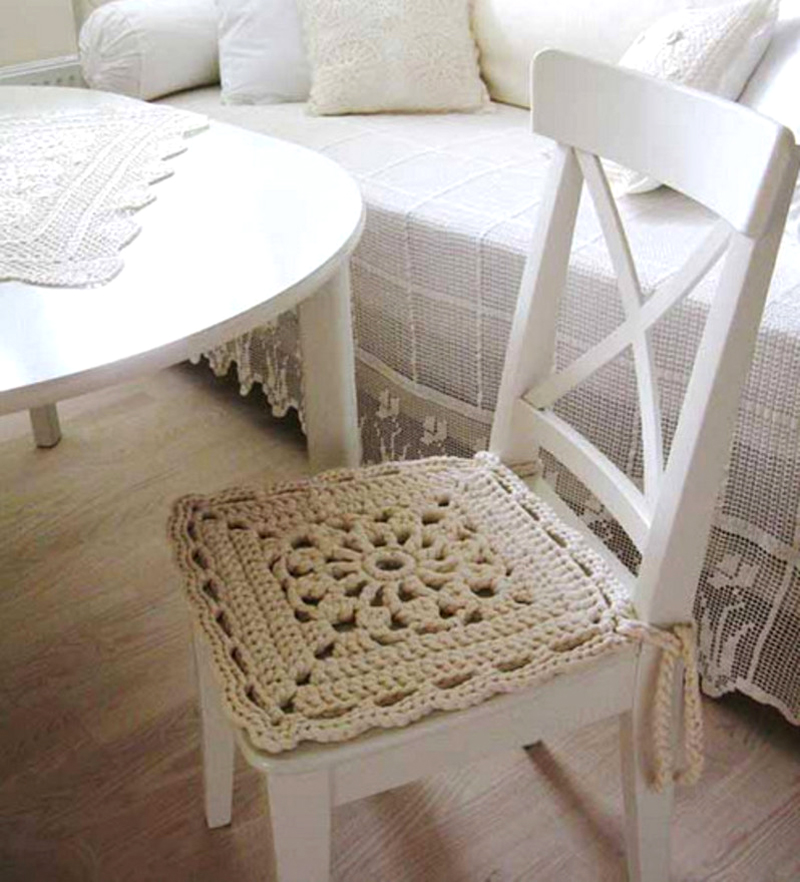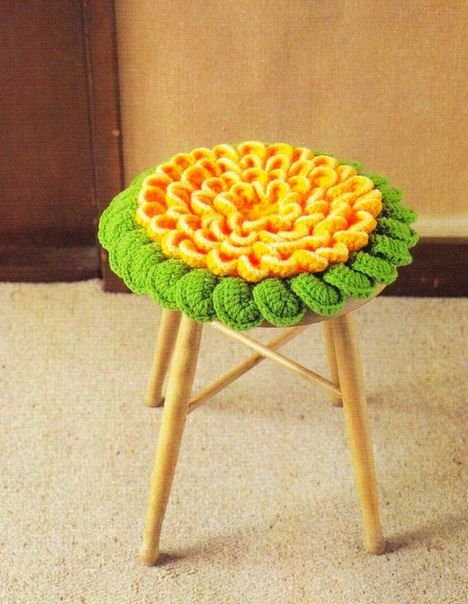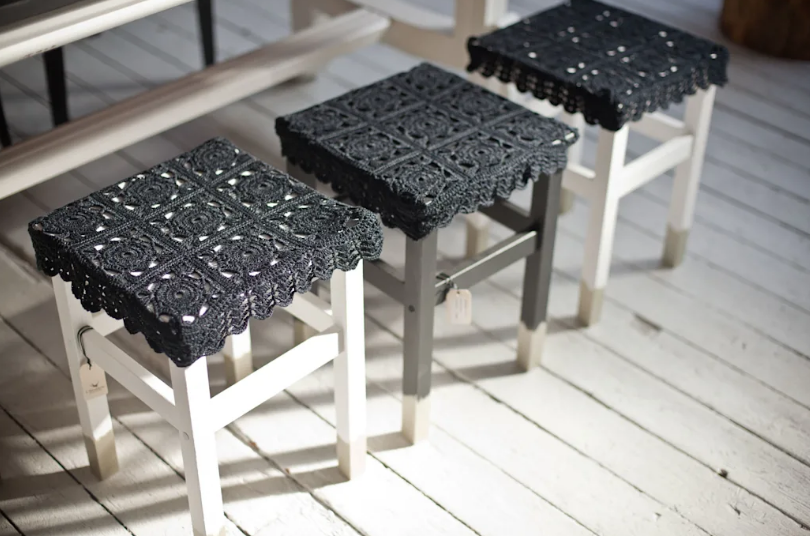
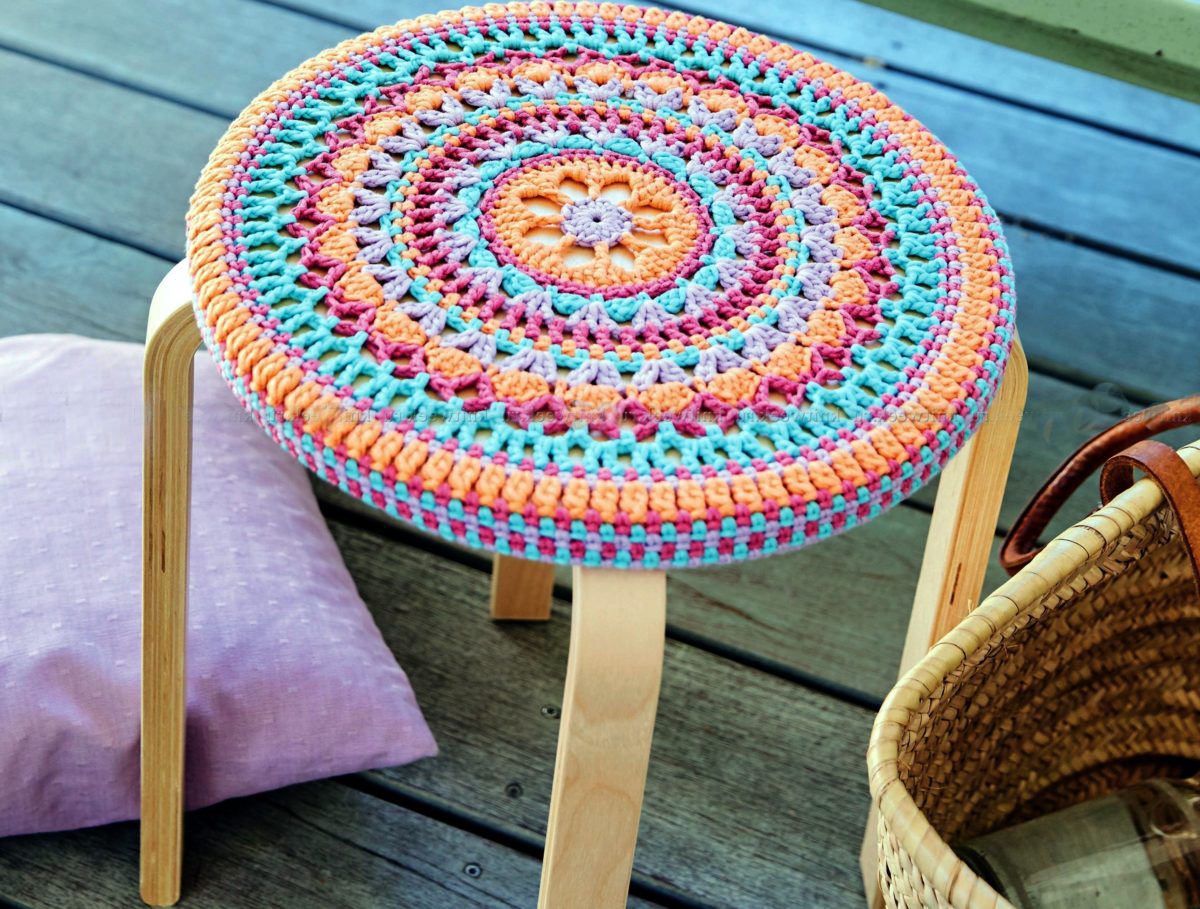
Creating unique things for the interior is a fascinating activity that can bring not only the joy of creation, but also profit. For experienced craftswomen, crocheting chair and stool covers is not difficult. Beginners just need to master the basics of this type of needlework and follow detailed step-by-step instructions and diagrams. By combining colors and types of yarn, you can get a designer accessory that will suit any interior.
Selecting a product model
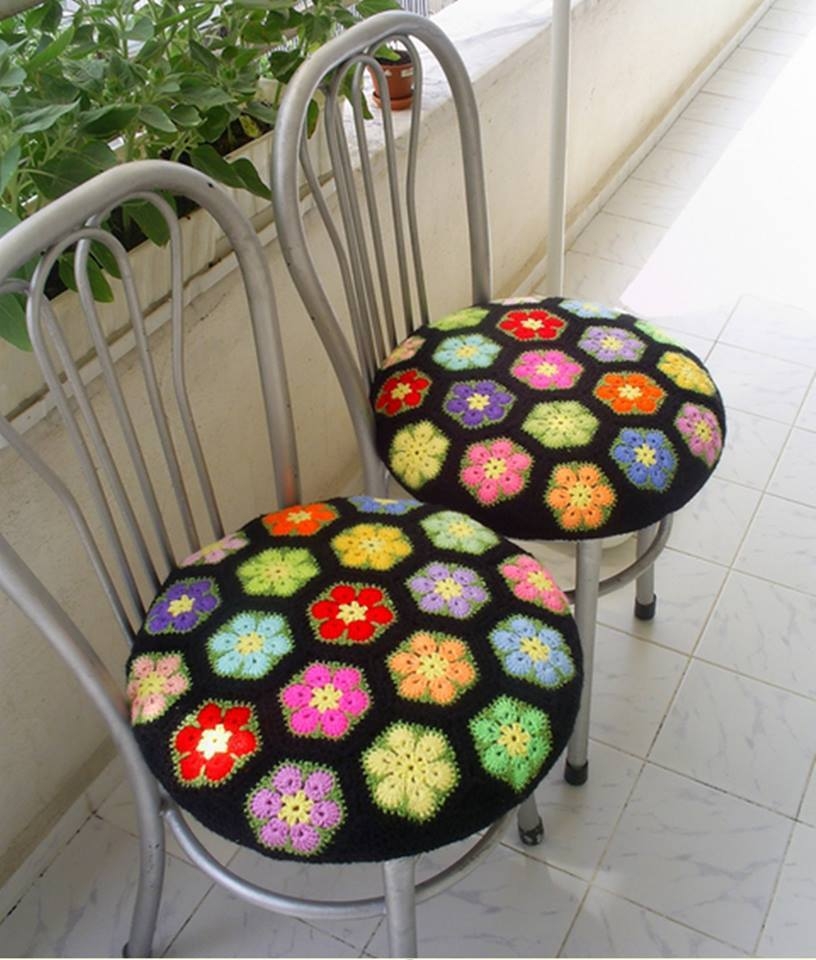
Hand-knitted chair covers do not go unnoticed in the interior. To prevent them from looking tasteless, it is necessary to take into account the overall style of decoration and furnishings. Vintage covers made from leftover yarn or products made using the "granny square" technique will fit well into country and Provence interiors. If the room is decorated in a modern style, models of capes made of thick yarn will do. They can have neutral white, beige, gray, powder shades, or can act as bright accents in red, yellow, blue. This option will be appropriate in the styles of Scandi, eclecticism, eco-style, loft.
A stool or chair cover usually performs several functions, primarily decorative. A fashionable detail made with your own hands enlivens the space and lifts the mood. With the help of a new cover, you can refresh old furniture and hide the defects that have formed on its surface over time. Hard, cold seats become more comfortable when knitted chair covers appear on them. Covers made in the same style make kitchen furniture uniform. This is especially true if the stools or chairs are different.
The most commonly used models of capes are:
- one-piece (made from a single piece that covers the back and seat);
- separate (consisting of two separate parts);
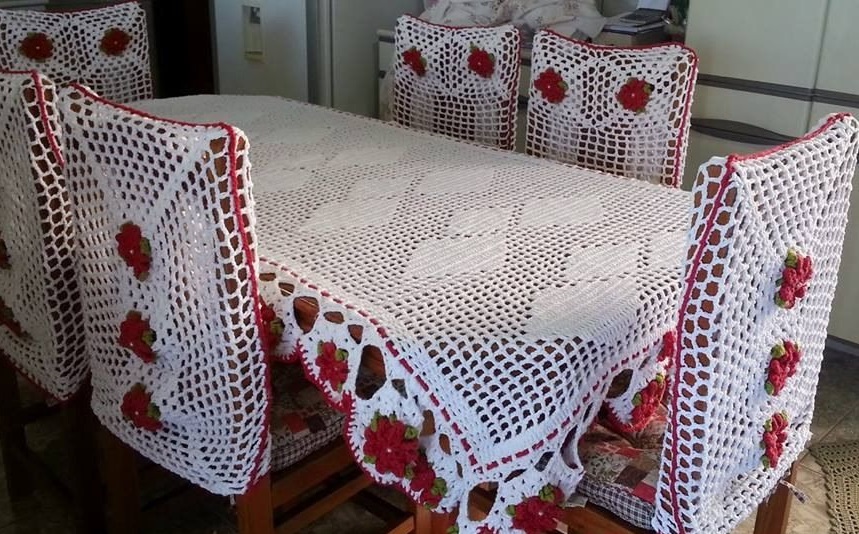
- back covers (festive design option, usually matches the tablecloth);
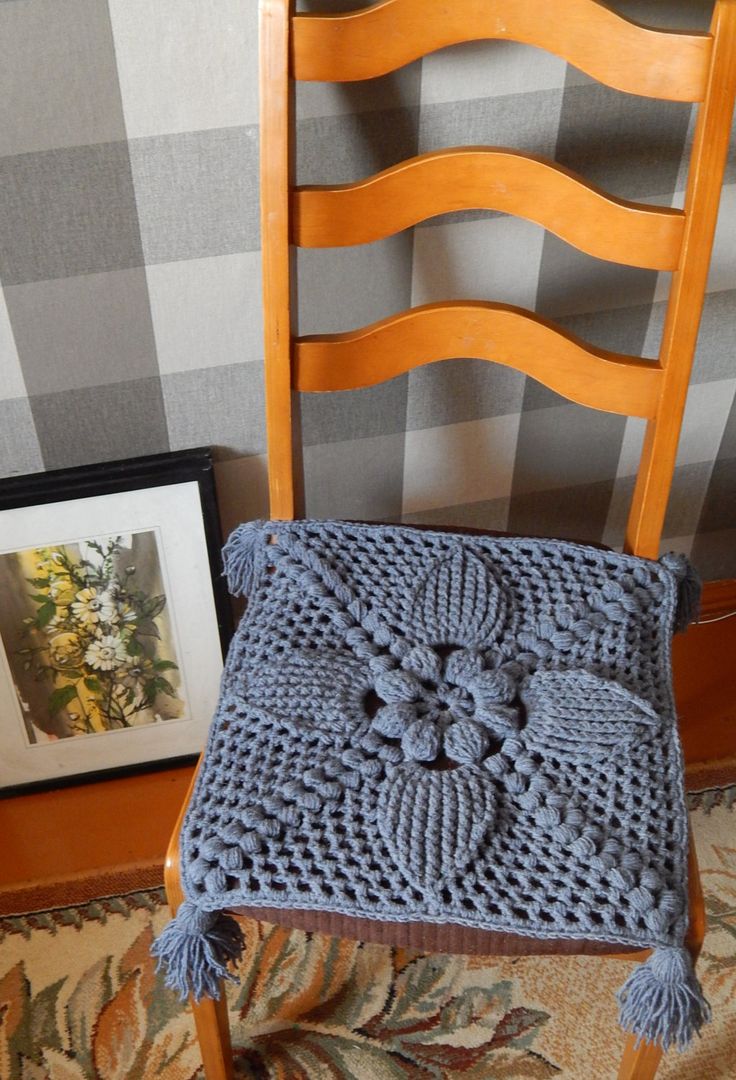
- seat covers (looks like a flat cushion covering a horizontal surface).
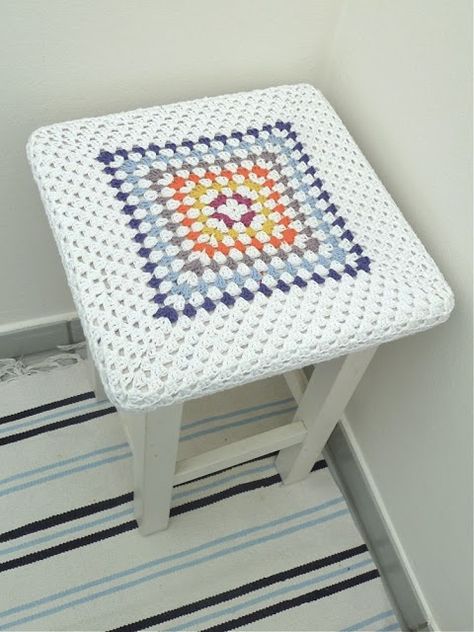
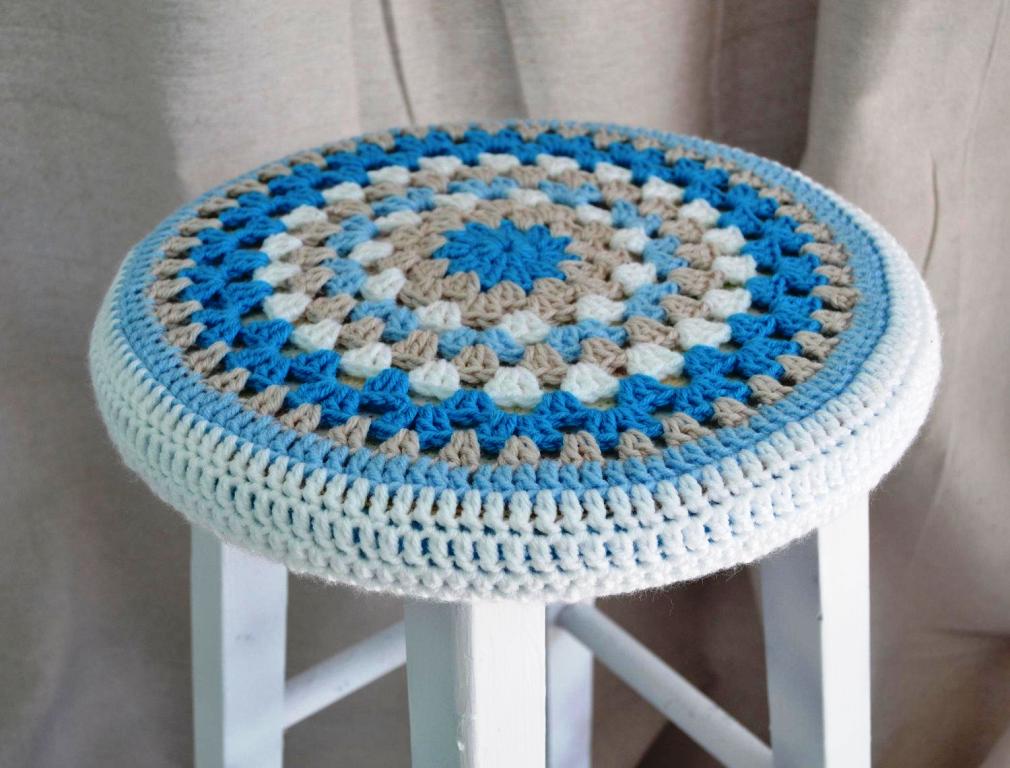
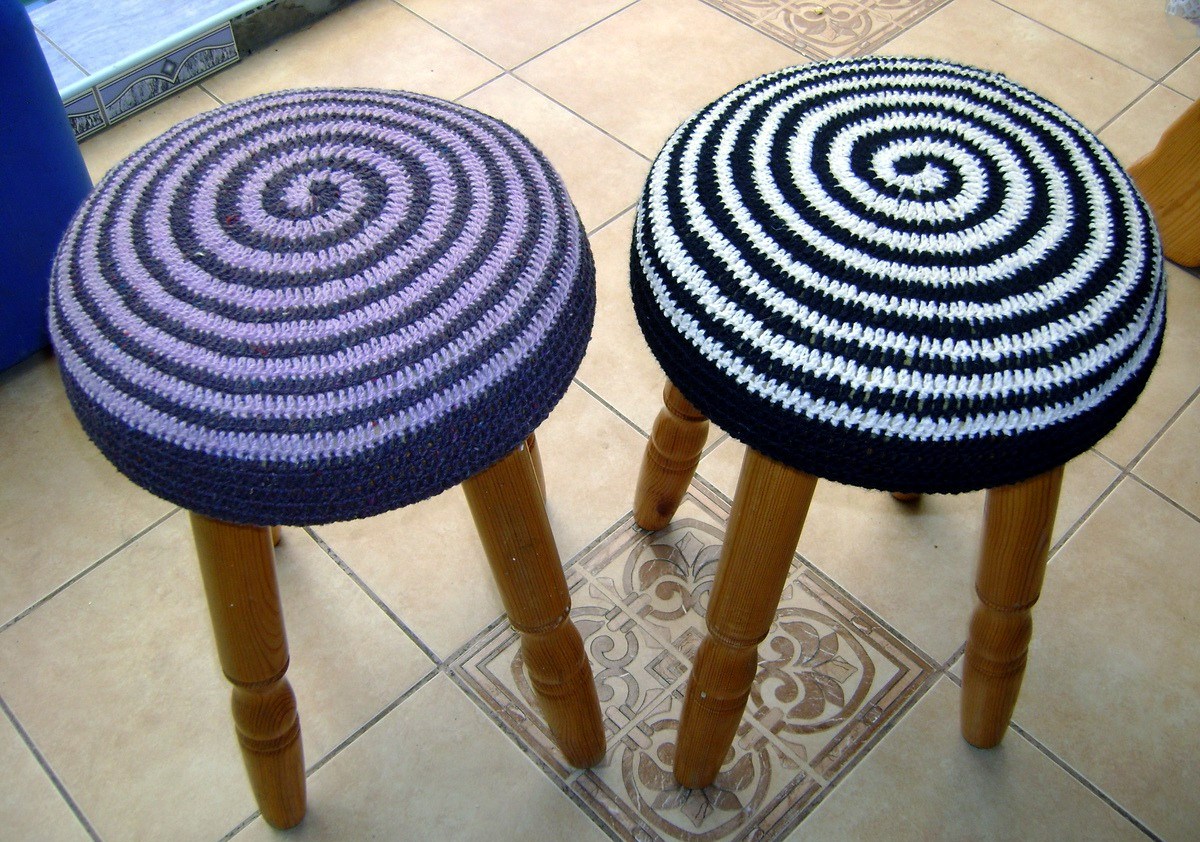
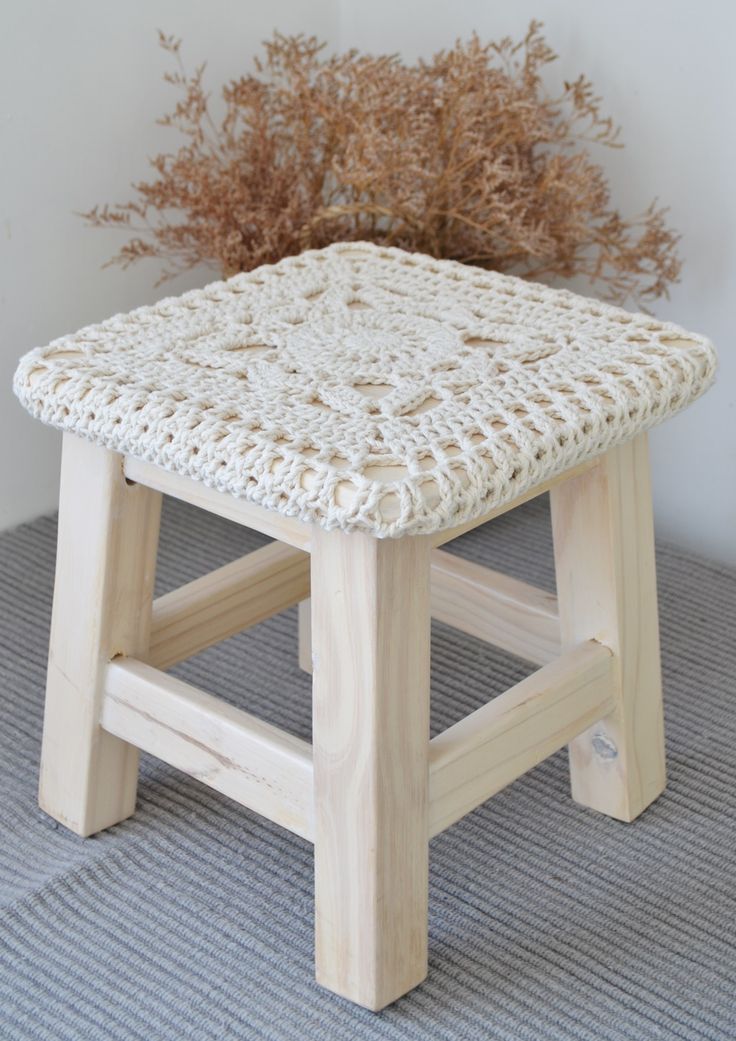
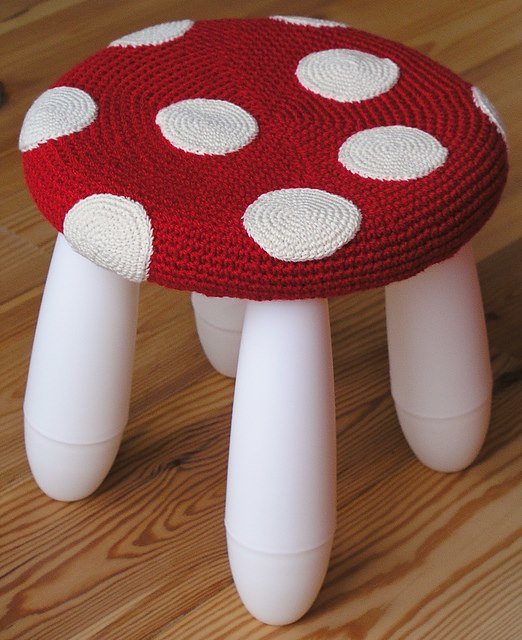
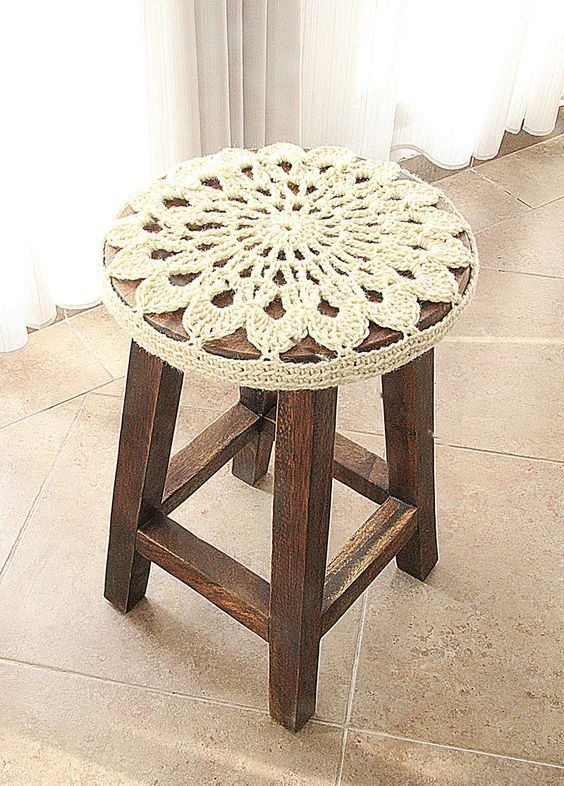
Crochet stool covers belong to the last category. They repeat the shape of the seat, are divided into round and square. Often made with sides.
The covers are attached to furniture in various ways. It is convenient to use for this:
- ties or velcro;
- rubber band;
- a cord threaded along the edge;
- tapering edge of a cape.
All models are knitted according to specific furniture sizes, so before you start working, you need to take measurements from the chair or stool. Crochet instructions with patterns can be adjusted by adding or subtracting rows to the desired size.
Materials and tools used
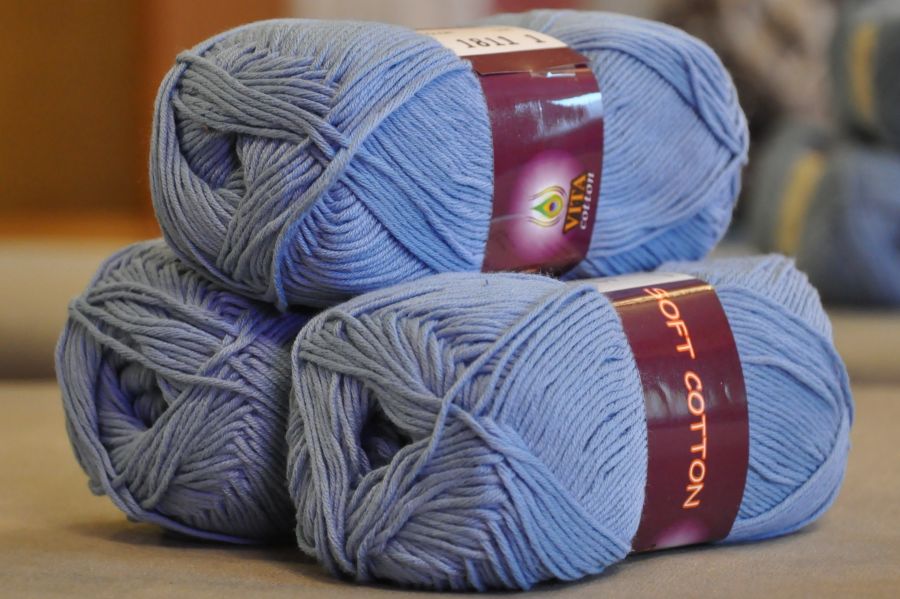
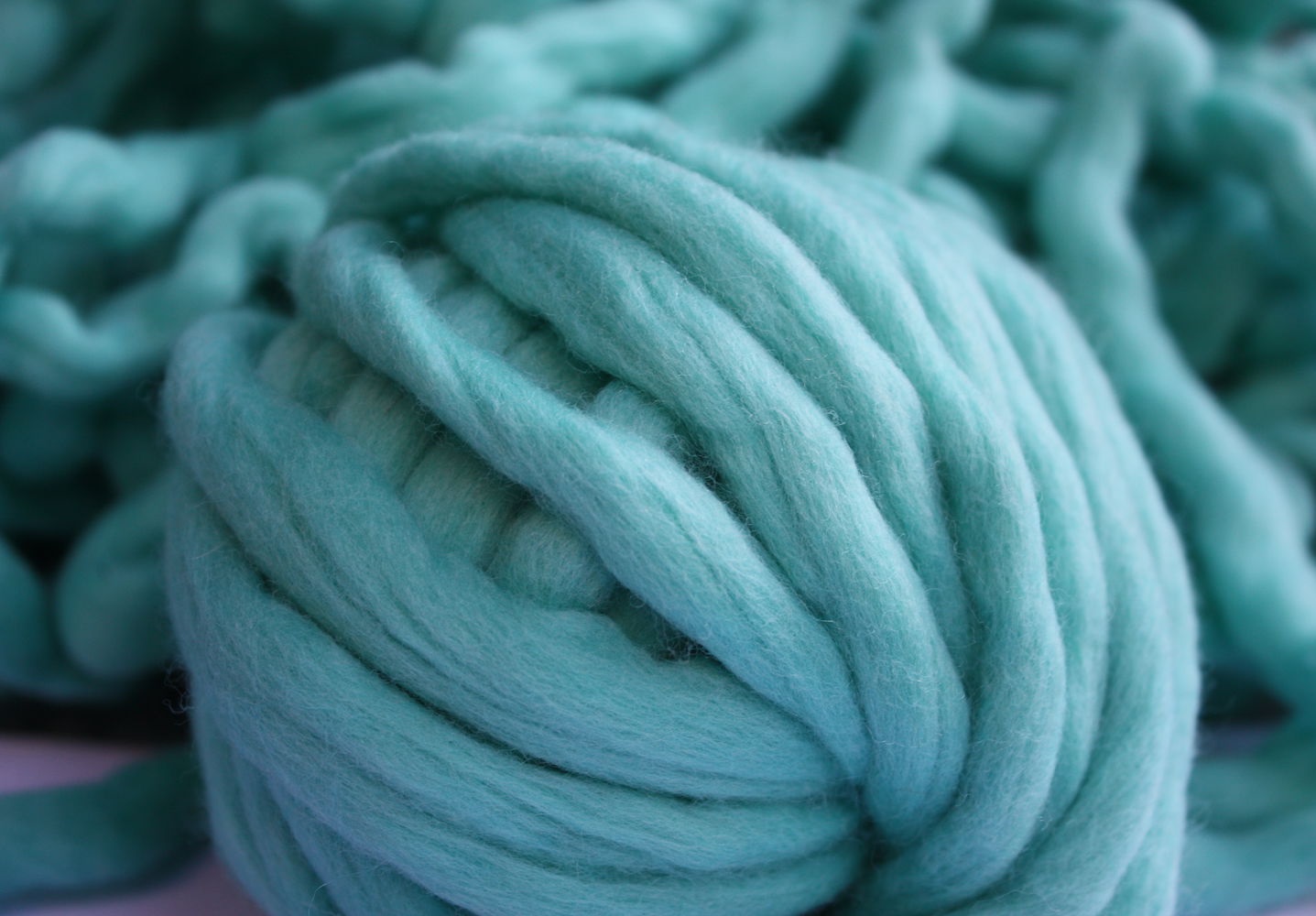
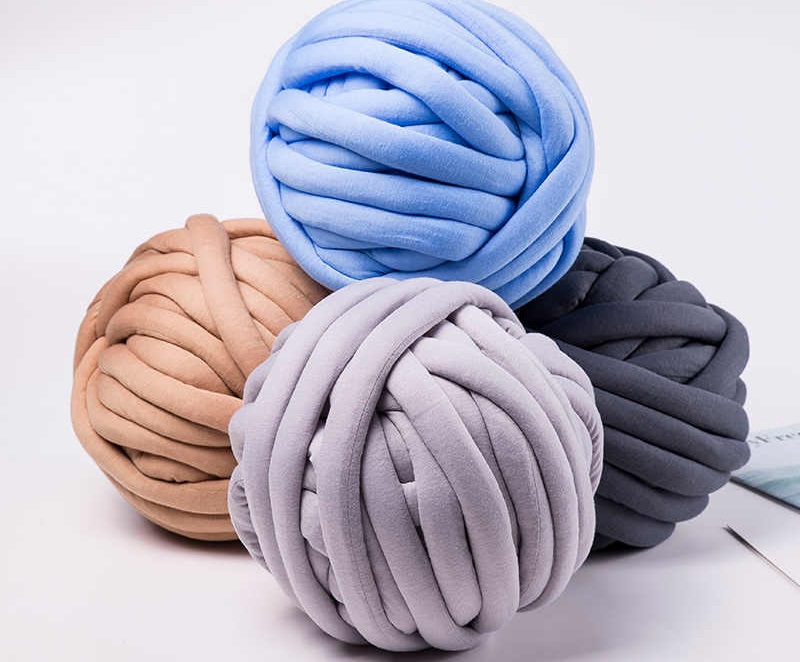
Unlike clothing, furniture covers require rigidity, so the best option for them is thick twisted yarn. These products are notable for the fact that almost any type of thread can be used for them. If they are thin, they are simply folded several times. In addition, such yarn can be used to knit delicate openwork capes for the backs of chairs.
It is important to remember that some types of material shrink. This primarily concerns natural fibers - cotton, wool. When working with them, you need to pre-wet and dry the yarn, or add a few centimeters to the measurements for shrinkage.
Synthetic covers, on the contrary, tend to stretch over time. They do not need a reserve, it is better to provide the ability to tighten or reduce the product if necessary. You can knit capes from fashionable knitted yarn, and you get beautiful textured products that do not require decoration.
A knitted or synthetic cover can be sewn to a fabric base to prevent it from deforming.
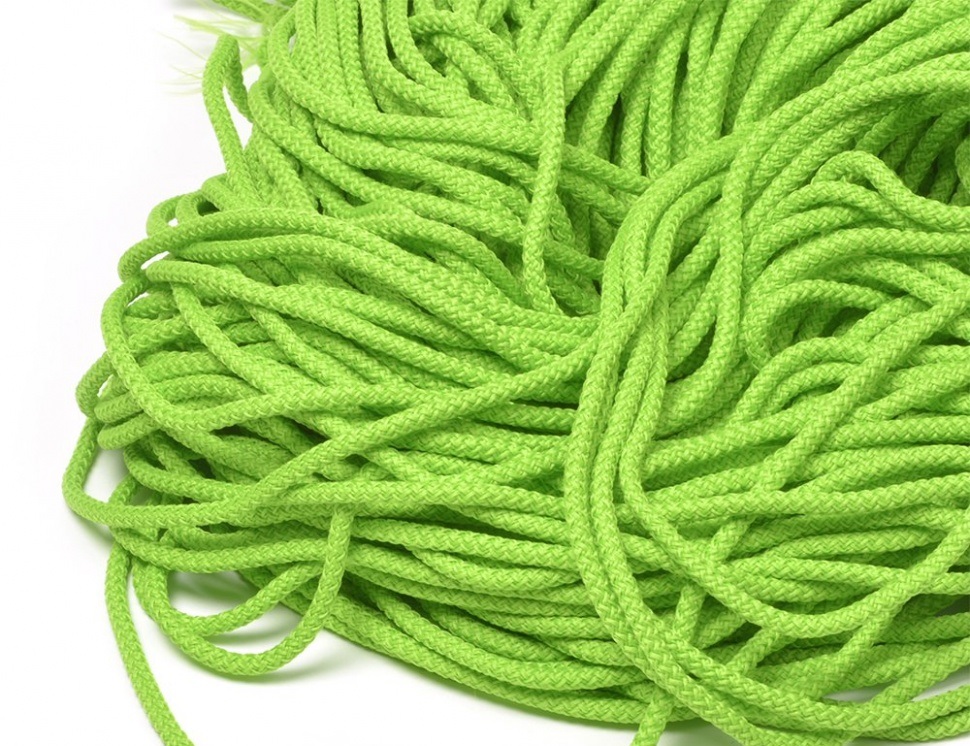
Stool covers made from round polyester cord are practical and do not lose their shape. Some knitters use yarn made from polyethylene bags for such items. They protect the surface well, but are not very comfortable to the touch.
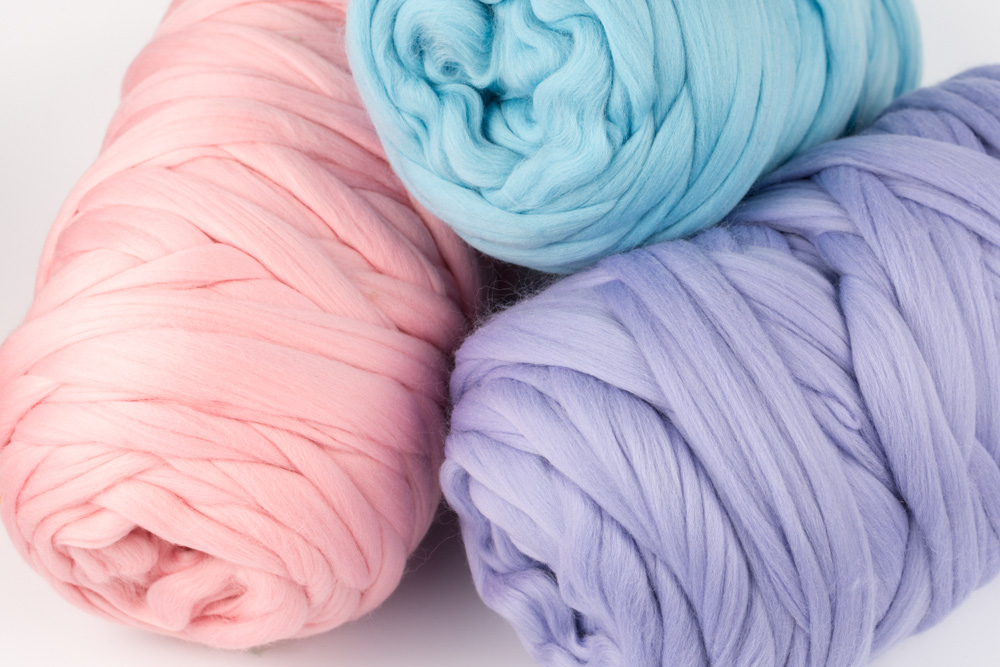
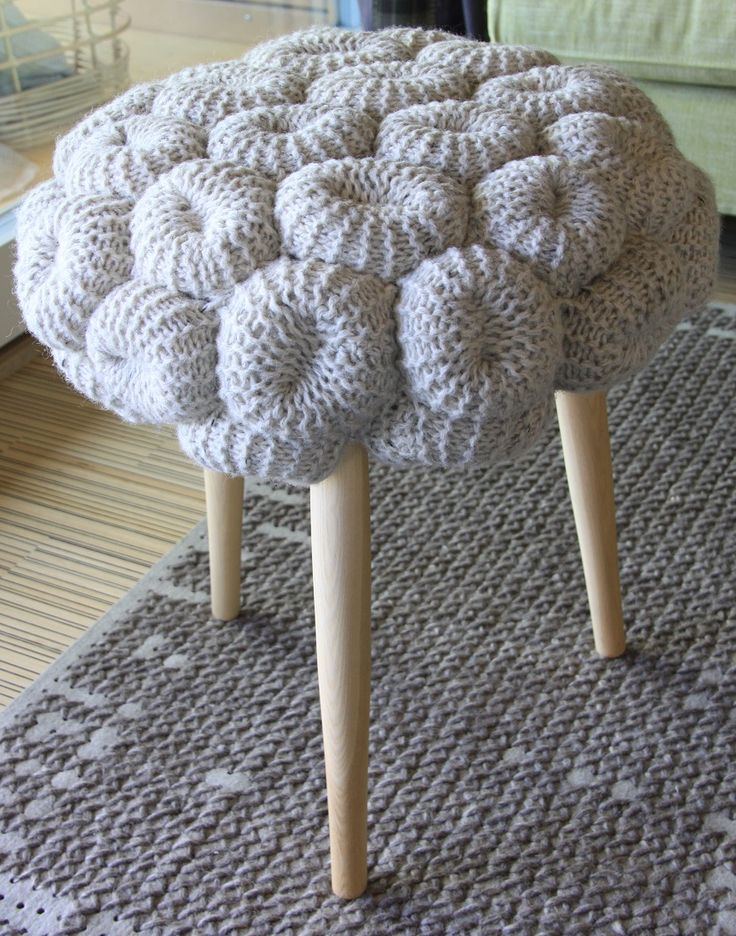
Products made from voluminous merino wool look impressive, but are not very practical. They can become pilled when sitting on them, and it is easy to snag such fabric. Various yarn scraps are often used to crochet chair and stool covers. With a skillful combination of colors, such things turn out bright and beautiful.
All types of yarn should be of the same thickness. If thick and thin threads are used for work, the latter should be used in 2 or more folds.
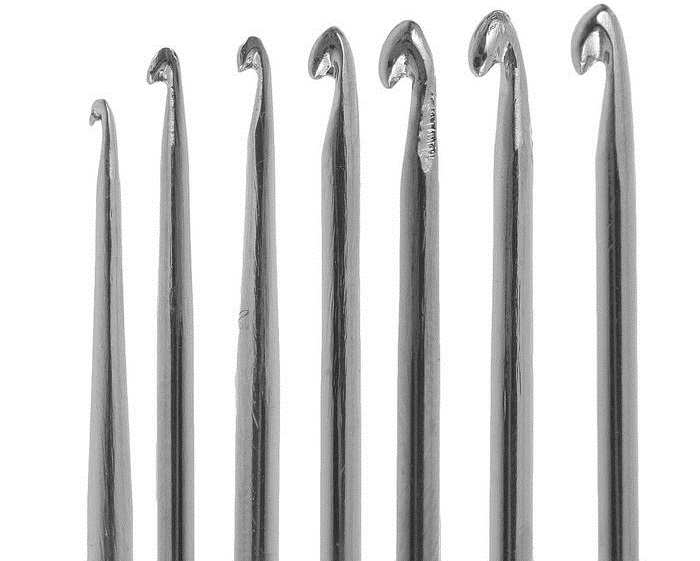
The hook for the covers should match the diameter of the thread. Usually, a tool of at least number 3 is used. When choosing the hook material, it is better to choose steel. Due to the high density of knitting, plastic and wooden tools can break, and aluminum ones can bend.
Knitting algorithm depending on the model
Making capes is a simple and interesting process. Using detailed diagrams and descriptions, you can update your interior, while simultaneously mastering crochet for beginners. Abbreviations:
- VP – air loop;
- ССН – double crochet;
- SC – single crochet;
- PS – lush column;
- CT – regular column.
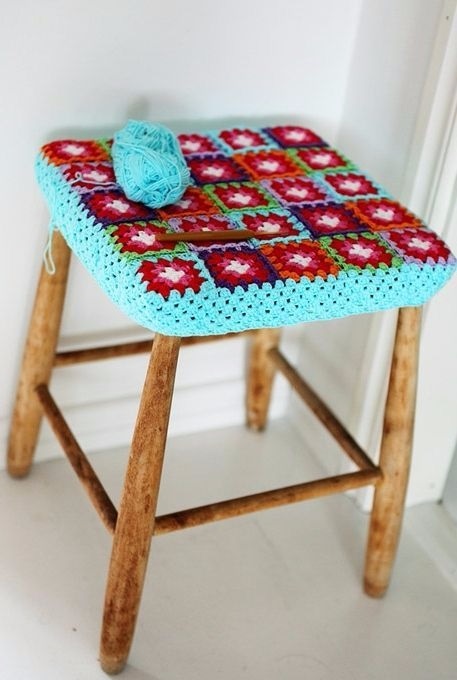
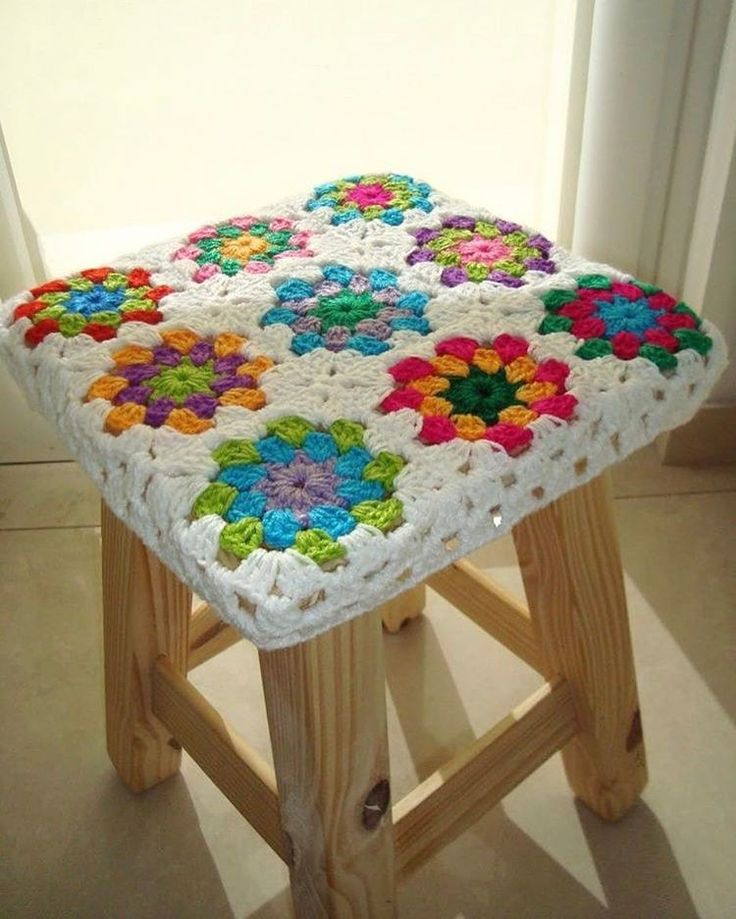
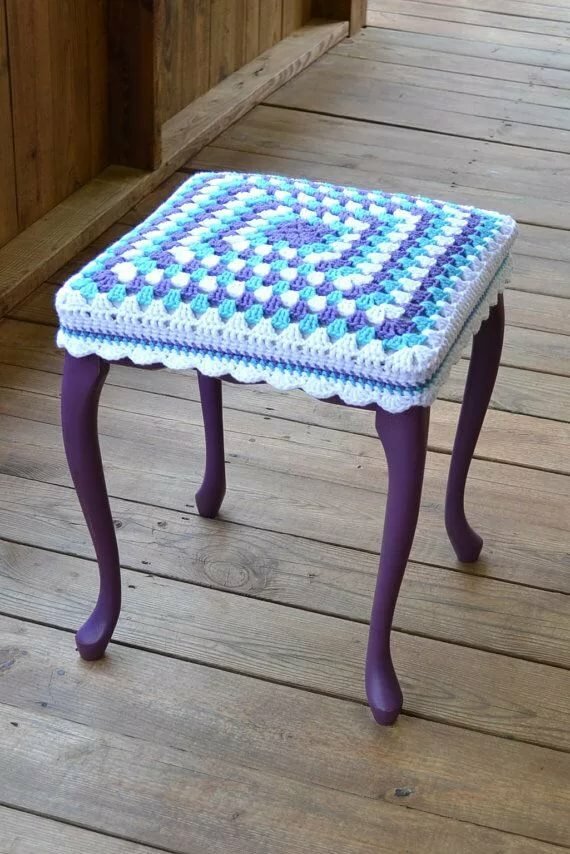
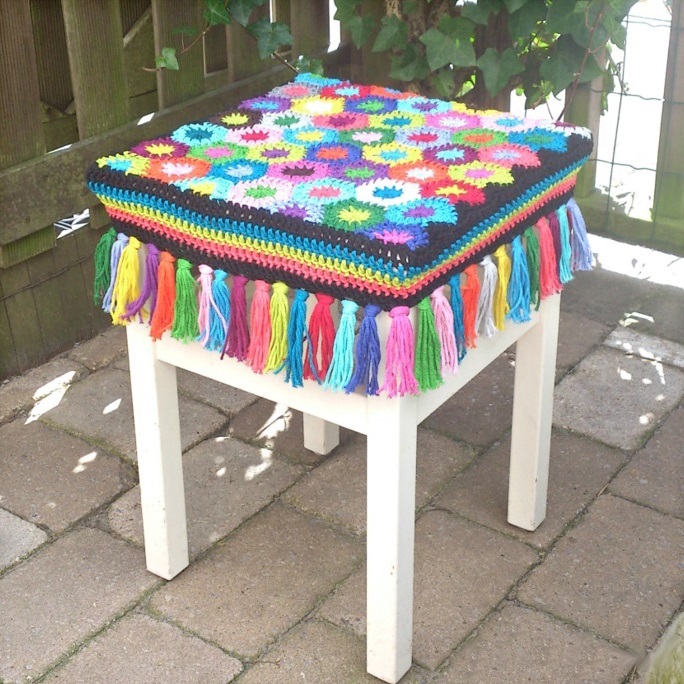
Square patchwork
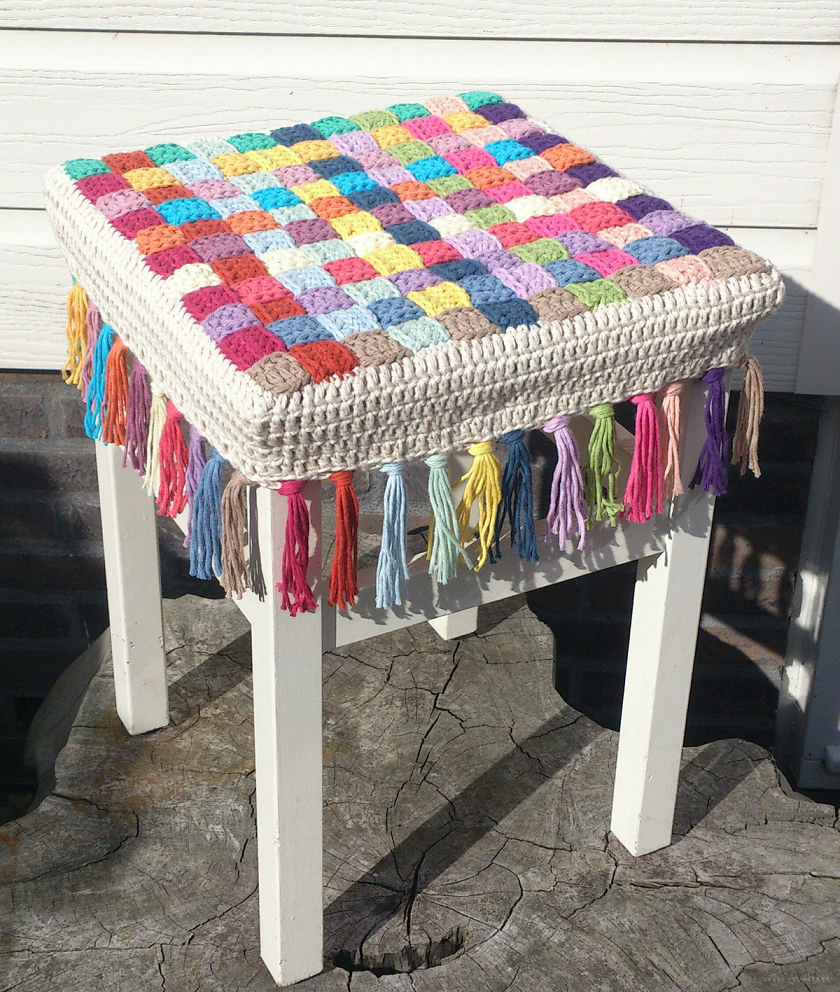
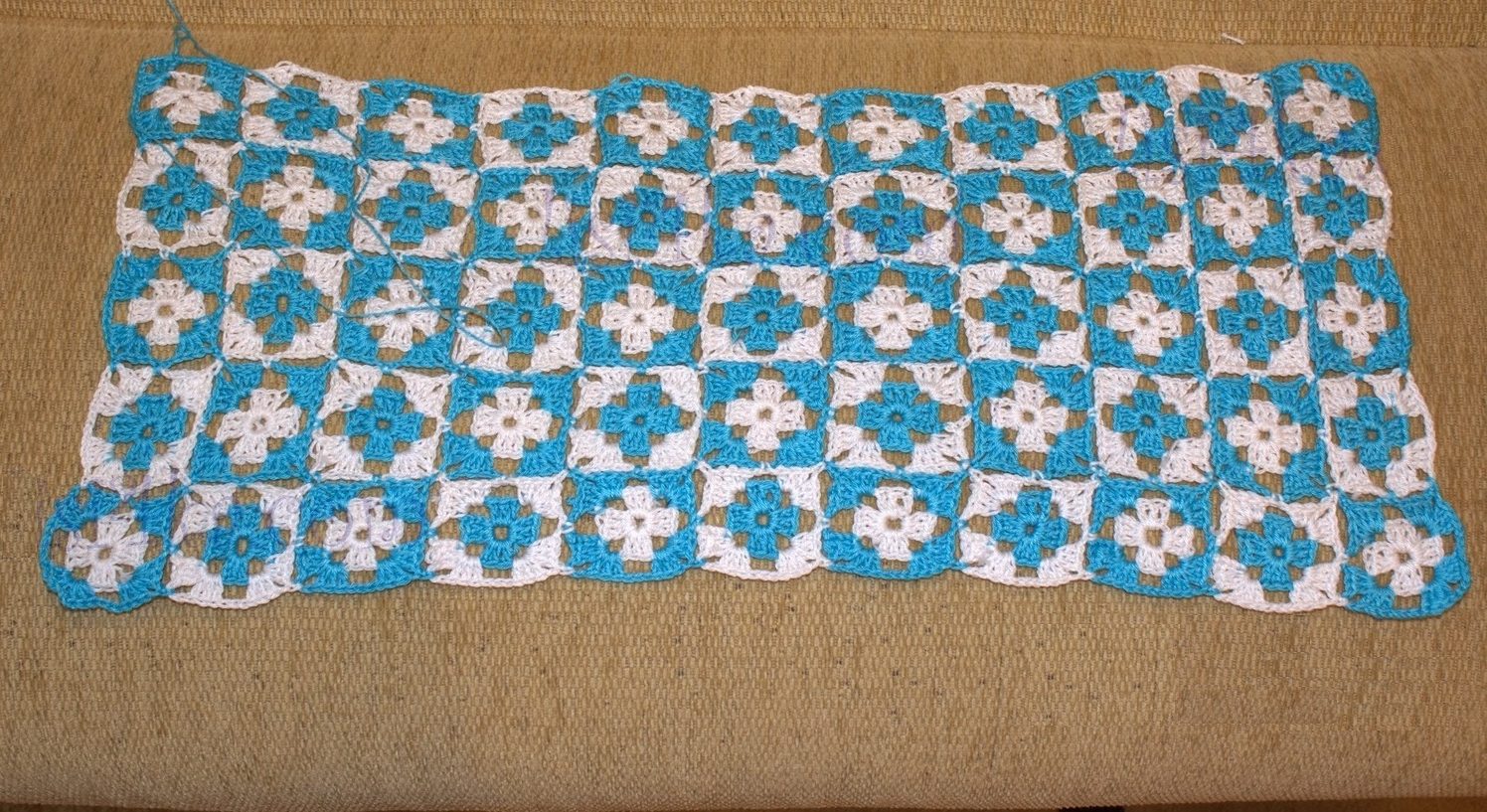
This chair cover consists of 25 small square motifs, connected together in the process of knitting. The number may vary depending on the size of the seat. For the cover, you need to take yarn of two colors. The motifs are staggered, so half of them are knitted with a light center and dark edging, and the others - vice versa. Stages of work:
- Knitting begins with a ring of 6 VP.
- It consists of 4 bundles of 3 CCH, between which there are arches of 3 VP.
- In the corner arched holes, 3 CCH, 3 VP, 3 CCH are knitted. Between these groups there is an arch of 3 VP.
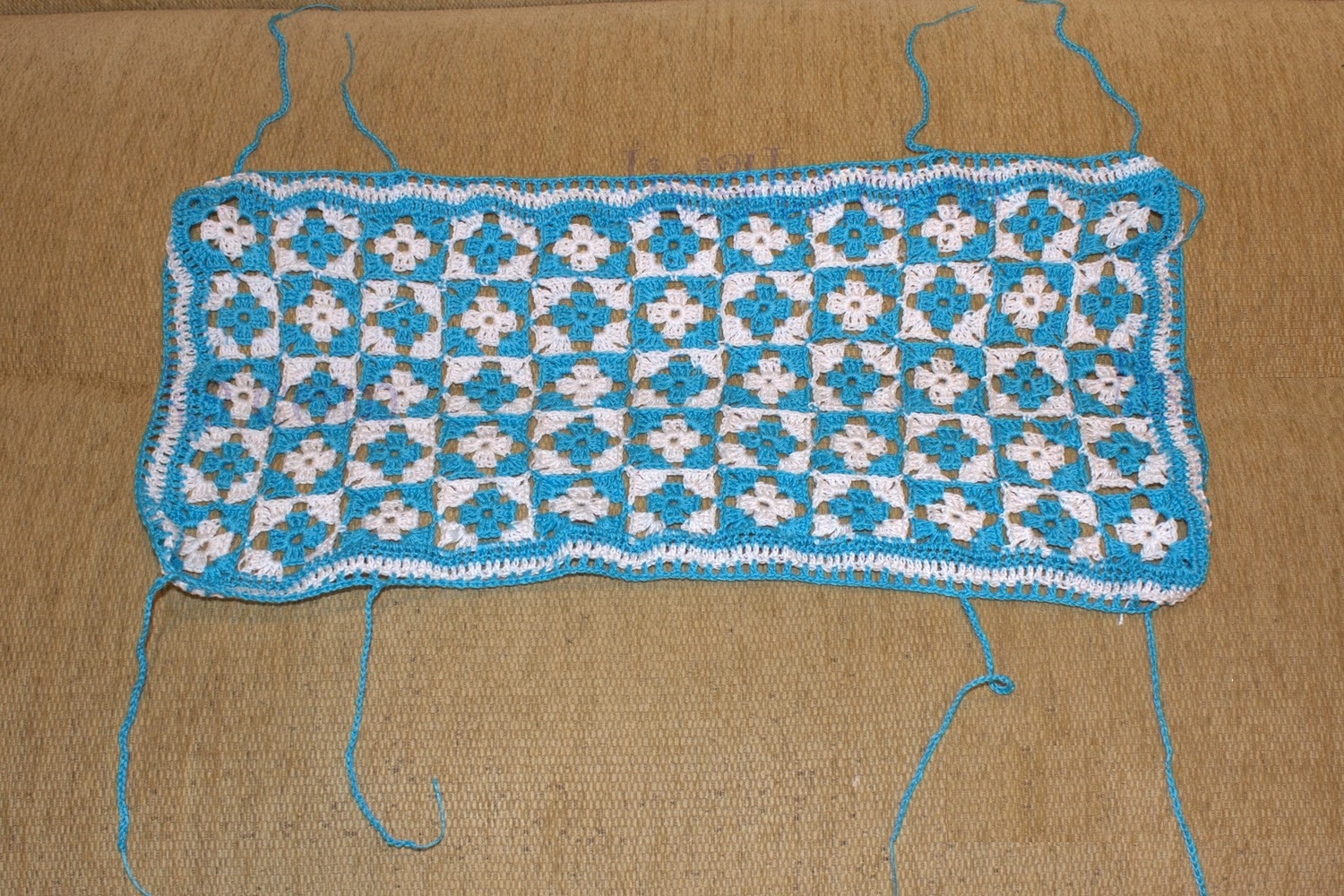
Having knitted one square motif, you can accurately calculate their number for the stool. After the chessboard is ready, it needs to be knitted:
- first row of binding - DC of one color;
- the second one is a CCH of a different color;
- third row - alternating CCH and 1 VP.
The edges of the cover are attached with strings to fix it to the stool. Velcro can also be used. The choice depends on the knitter's preferences.
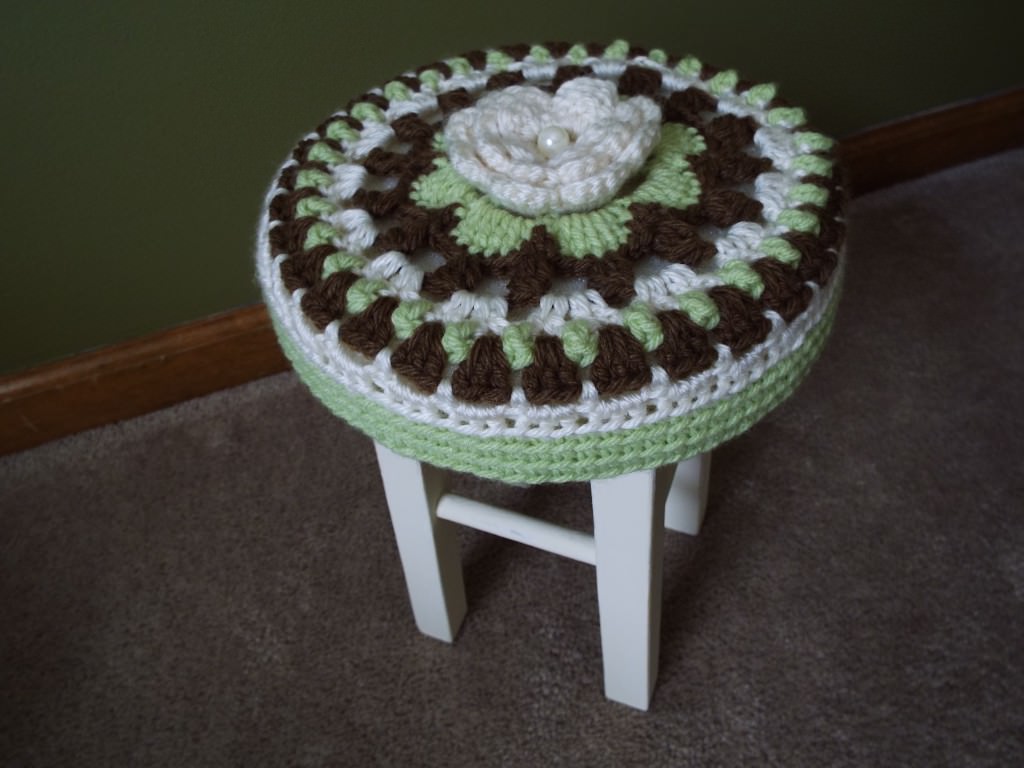
Round with sides
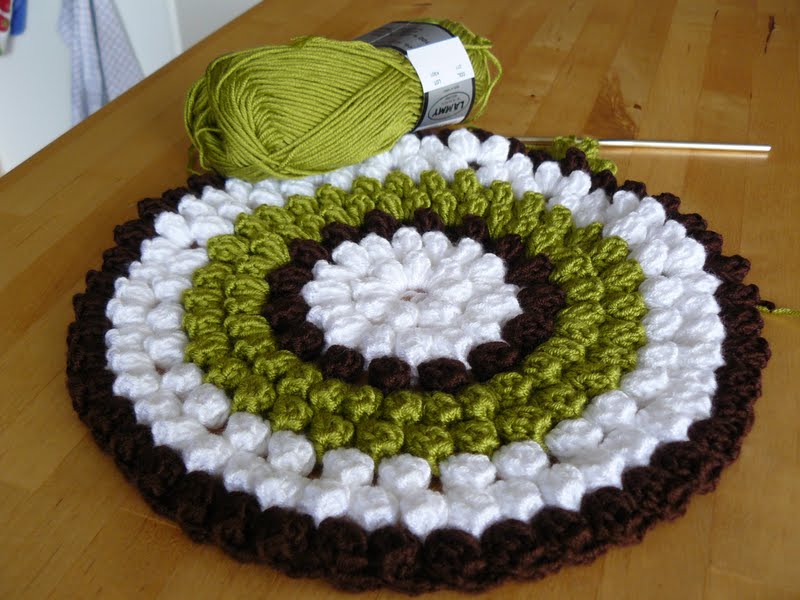
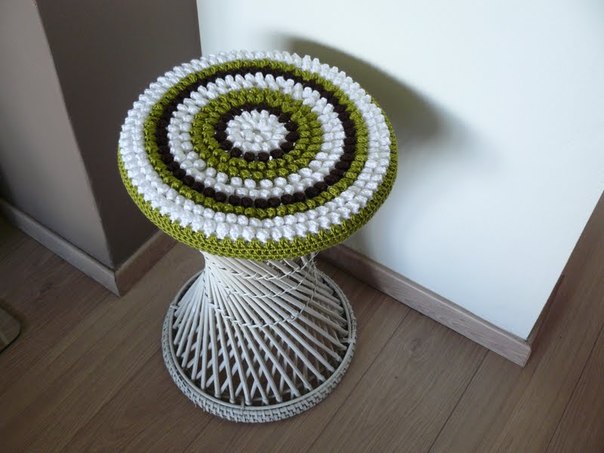
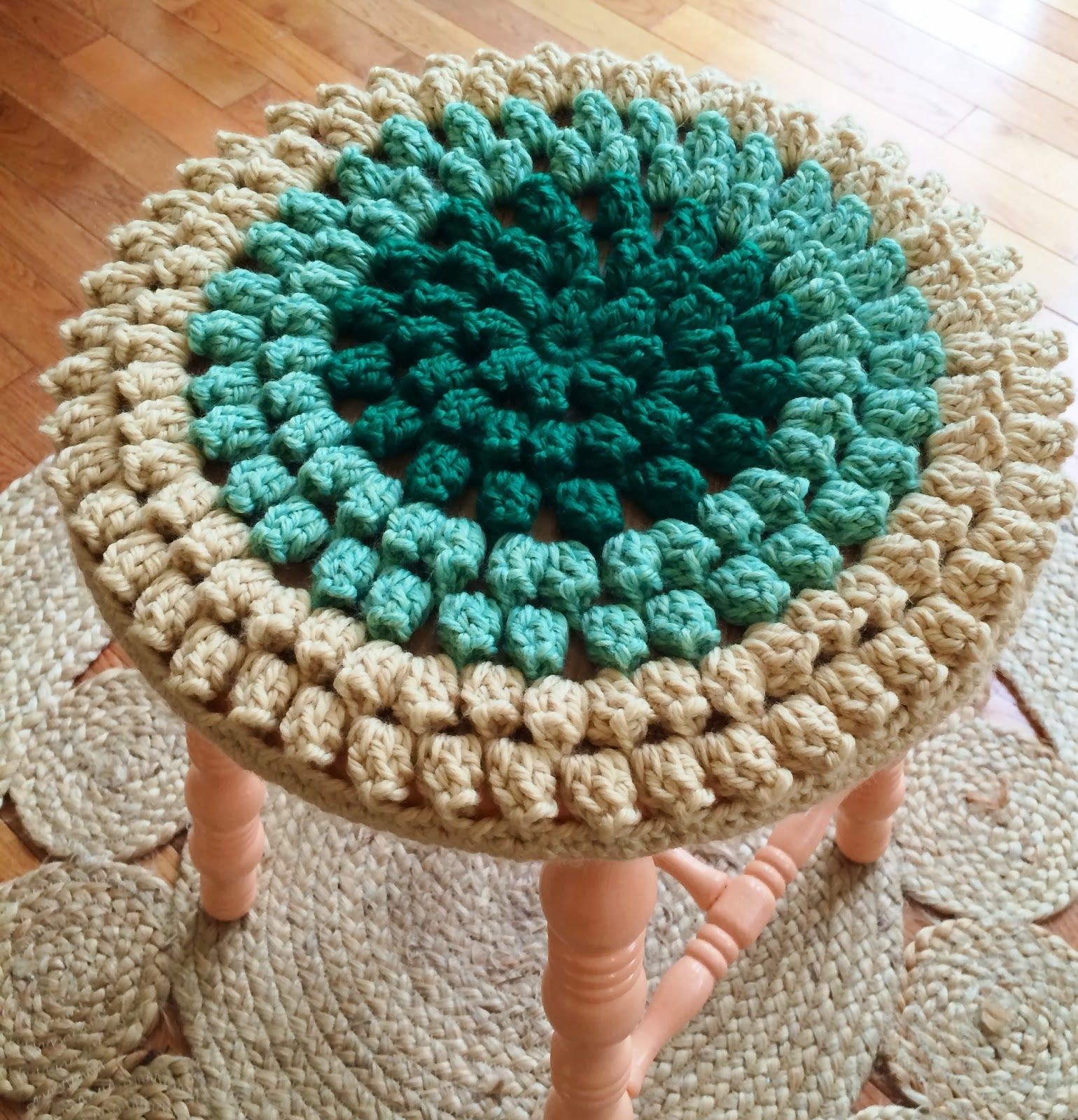
The cover for a round stool, made with a “popcorn” pattern, is soft due to the many “bumps” on the surface. For this you will need threads of three colors: white, black, green (or any other). The number of rows is determined as you go along and depends on the diameter of the stool, the density of the knitting and the thickness of the yarn. The alternation of colors can be done as follows: 2 rows - white, then 1 - black, 2 - green, 2 - white, 1 - black.
Knitting stages:
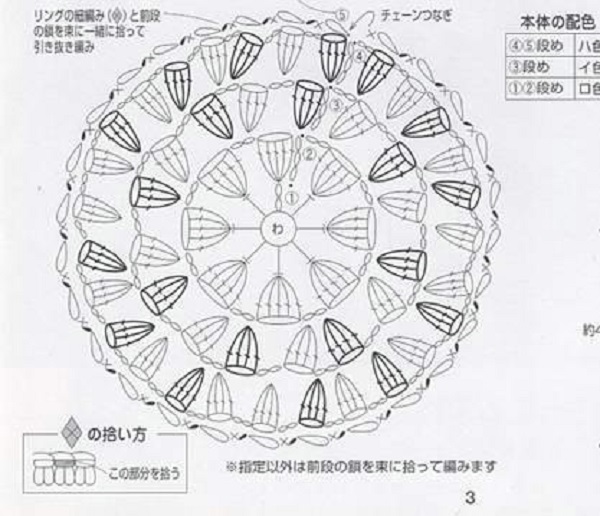
- To start working, you need to make a ring of 5 VP.
- Next, 2 lifting VPs are made and 7 more sc are knitted into the ring.
- Then 1 SP is knitted over each SC. It is formed by 5 SC, created on one base loop and united by a common loop from above. An arch of 2 VP is made between the groups.
- In the next row, 2 PS are knitted into each arch of 2 VP - 5 VP are collected, a yarn is made, the hook is inserted into the VP of the base and a long loop is pulled out. Between all groups of columns, 2 VP are knitted.
- All other rows are done similarly until the circle reaches the diameter of the seat. After that, you can start forming the side. To do this, sc is knitted into each PS, and 2 sc into each arch.
- Next, knit rows of columns until the side reaches a height of 10 cm. A linen elastic is pulled through its edge, which helps to tighten the cover after it is put on the seat. You can make the sides with the same "popcorn" pattern, this will make the round stool look more voluminous and unusual.
Square made of thick yarn
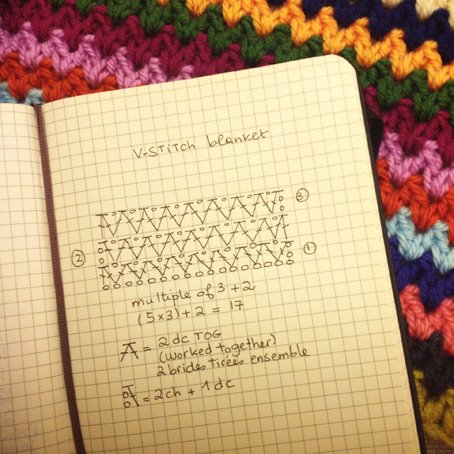
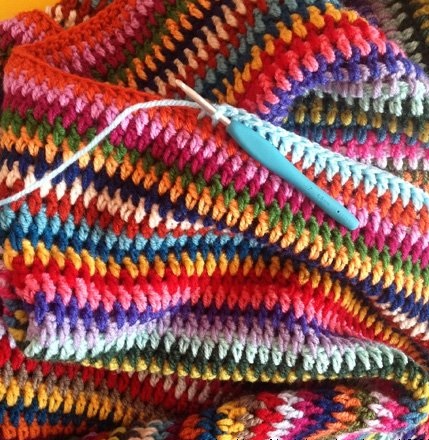
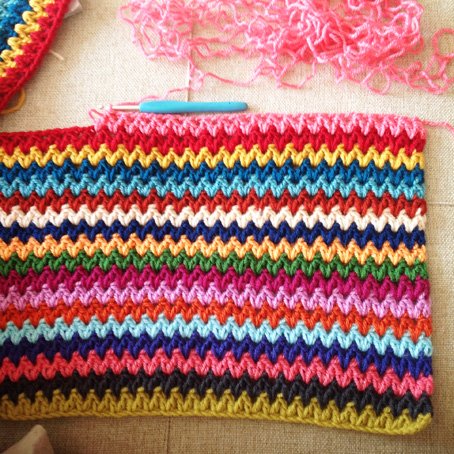
The easiest way to make square or rectangular stool covers is to crochet a piece of fabric of the required size, working from one edge to the other. In this case, the product is unfolded after each row. A square cape made of thick yarn does not require a complex pattern, because such threads themselves look expressive and embossed. You can use simple patterns in the technique of uniform knitting. Master class:
- First, you need to make a chain of VP, which will be equal to the length of the finished product.
- Then make 3 lifting VP and knit a DC into the first loop from the hook.
- After this, create 1 VP and knit together with 2 CCH - from the same loop and from the second from the hook.
- Again 1 VP and again 2DC together. Knit the entire row in this way. The pattern you get resembles a small zigzag.
This canvas will look more interesting if each new row is made in a different color. You can choose contrasting shades, or you can make smooth transitions from light to dark and back.
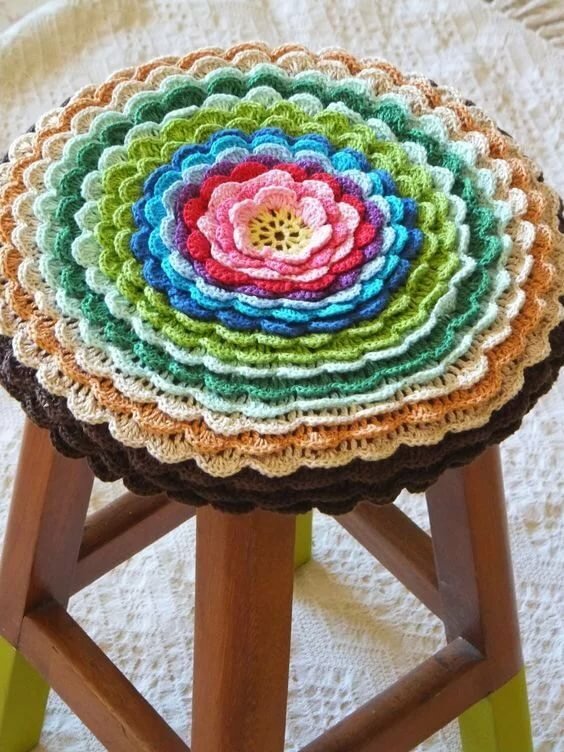
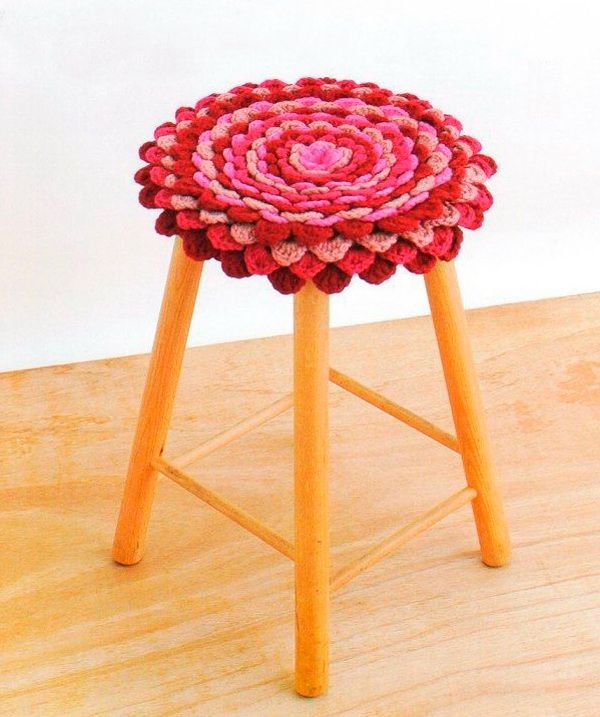
In the form of a flower
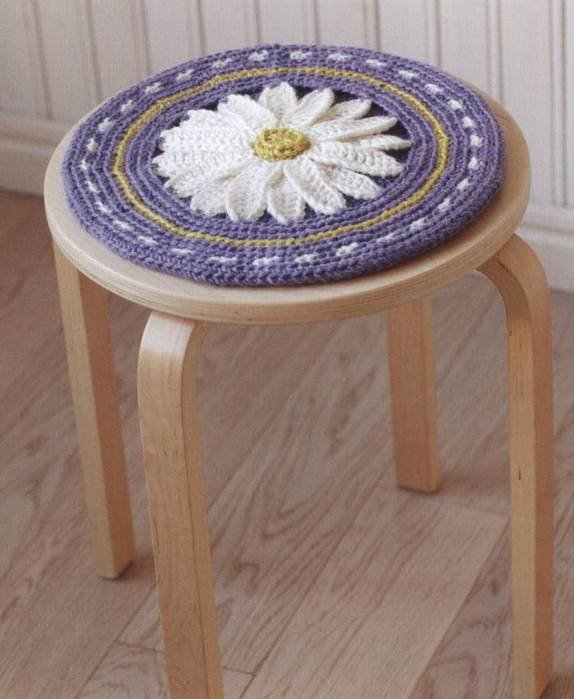
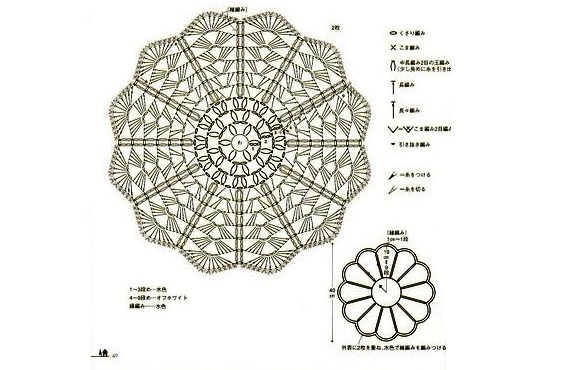
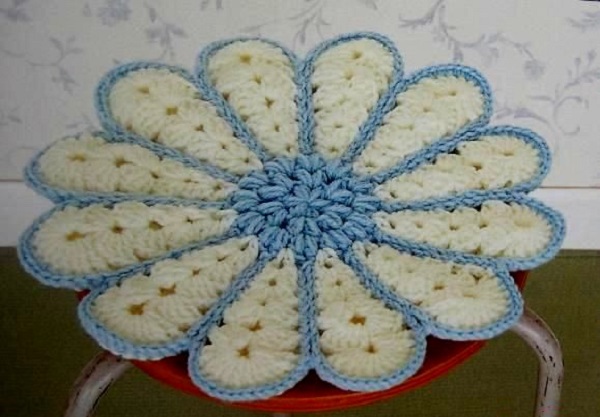
A smart cover resembling a daisy can be knitted from thick threads in two colors. The light version is used for the base, and the dark one is used for the edge binding and the border of the petals. The algorithm of work:
- Knitting starts from the center of the flower. A chain of 5 VP is closed into a ring and tied with 6 PS of 2 ST. Between them, arches of 2 VP are made.
- 12 PS, 2 in each arch. Between them - 2 VP.
- It is knitted similarly to the previous one, but between the PS 1 VP is made.
- Next, 3 VP lift, then 1 VP, 1 CCH in the second arch from the hook, 2 VP, CCH in the same place.
- In each arch of 2 VP, 2 CCH, 2 VP, 2 CCH are knitted. Between these groups - 1 VP.
- In the arches of 2 VP, 3 CCH, 3 VP, 3 CCH are performed. Between the groups - 1 VP.
- In this row the fans look like this: 4 CCH, 3 VP, 4 CCH. Between them - 1 VP.
- Add 1 more DC to each side of the fans.
- In the arches of 3 VP, a fan of 2 CC2N, 6 CCH, 2 CC2N is knitted. Between the fans - 1 VP.
The flower is framed with a contrasting thread. This will make the product look unusual and attractive. Work progress:
- The fans are tied like this: 4 SC, then 4 double columns (2 SC are knitted into each loop of the previous row), 4 SC.
- Having reached the air loop separating the petals from each other, the knitting is turned and 2 arches of 2 VP are made, and then 4 arches of 1 VP towards the center of the flower. This creates a chain of VP along the left edge of the petal.
- Then the knitting is turned again and a symmetrical chain is made along the right edge of the adjacent petal towards the edge. The process is repeated until all parts of the flower are knitted.
A knitted chamomile will fit well into the interior of a child's room. It will bring joy to the child and parents. In addition, such a cover will protect the chairs from external damage.
Back cover
The chair back cover can be made in the same technique as the seat cover, or it can be the only decoration of this piece of furniture. In this case, the options for several items make up a composition with a tablecloth or napkin on the dining furniture. Covers made using the openwork knitting technique from light yarn will be a smart addition to the festive table.
Stages of work:
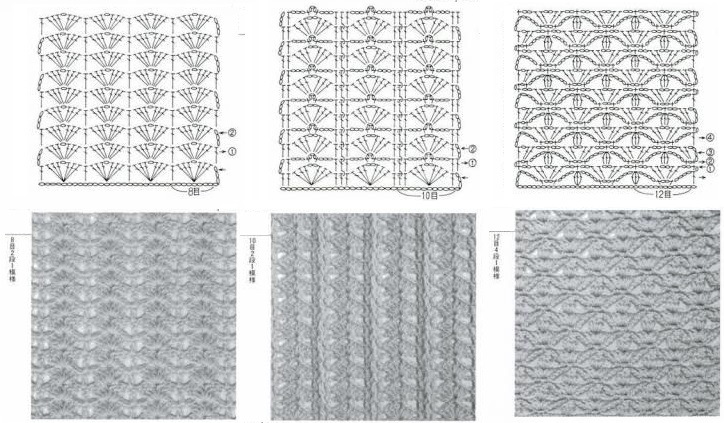
- A chain of VP is collected, the length of which is equal to the width of the piece, the number of loops is a multiple of 8. Each row will begin with 3 VP and end with 1 CCH in the last loop of the previous row.
- After lifting into the fifth loop from the hook, we knit a fan: 3 DC, 1 VP, 3 DC. Then a DC is made into the fifth loop from the hook. This sequence must be continued until the end of the row, all subsequent ones are done similarly.
- Once both pieces are ready, they need to be sewn together along three sides and placed on the back of the chair.
Decorating methods
Ready-made covers for a stool or chair can easily be made even more attractive. To do this, you can use one of the methods of decorating them:
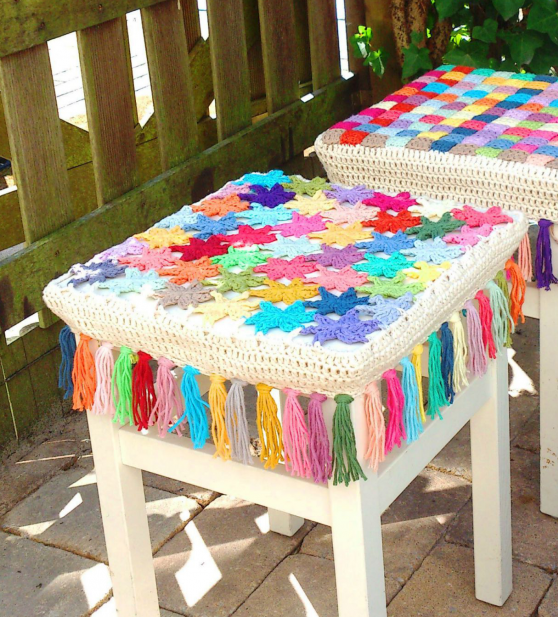
- add lace or fringe around the perimeter;
- attach lush tassels to the corners;
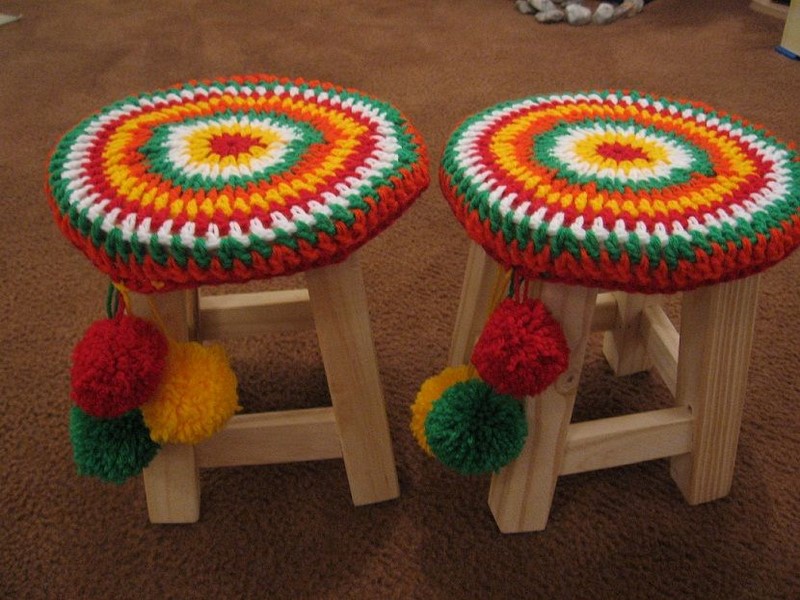
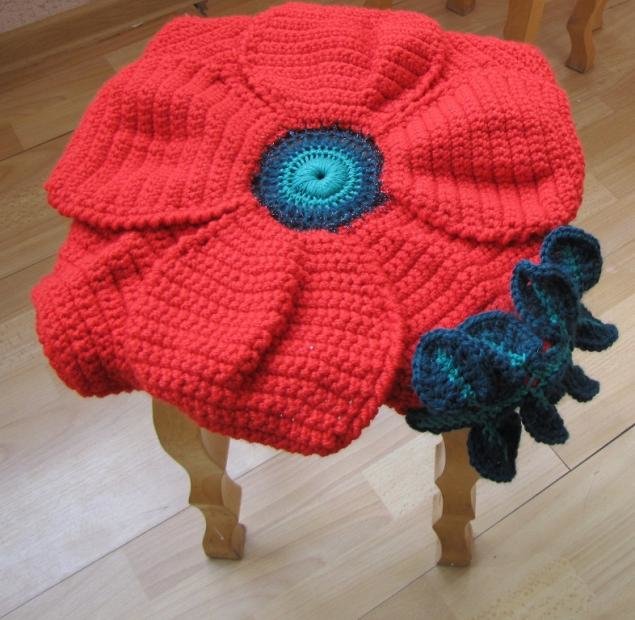
- tie the edge with fancy yarn (for example, pompom or “grass”);
- decorate a plain item with bright embroidery;
- use applique technique;
- sew large flat buttons onto the cover;
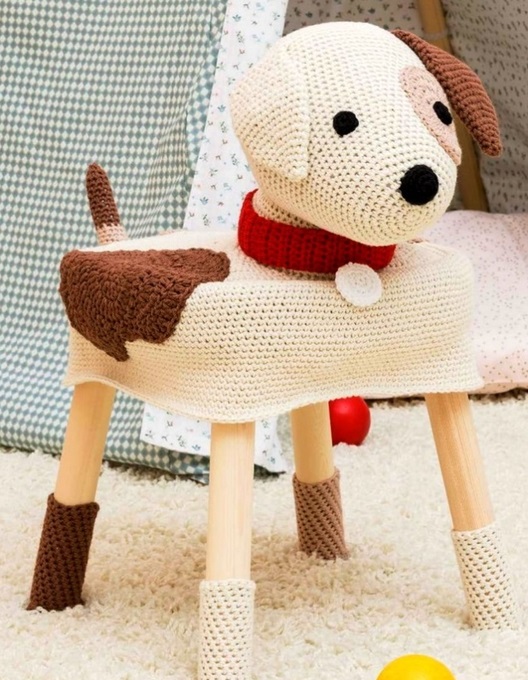
- turn children's capes into animal faces;
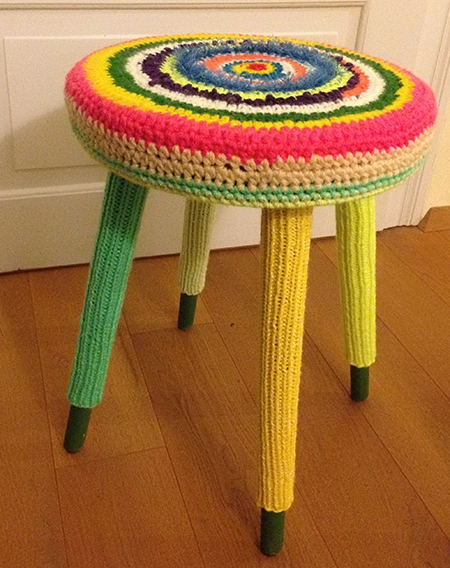
- complete the composition by dressing the chair legs in knitted “socks” or “gaiters”.
When decorating capes, you shouldn't try to use all the ideas at once. The decoration should be in harmony with the cover's color and texture. You don't need to decorate an openwork product with pompoms, or sew an applique onto a colored cape.
Some decorating tips:
- bright details will look good on a plain background;
- fringe and pom-poms are suitable for products made from thick yarn;
- small chair leg covers are best made from the same yarn as the main cover;
- If an item is knitted from several types of yarn, the trim should repeat one of them.
Using simple recommendations, you can create a stylish and cozy item that will suit any interior. Even a beginner knitter can knit a case. It should be remembered that the capes should fit well into the interior of the room.
Video
Photo