One of the fashion trends for several seasons in a row is transformer items. Their practicality and ability to combine different functions attract more and more fans. An example of such an item is a knitted snood, which embodies the properties of a scarf, a warm shawl and a headdress. Fashionistas should definitely find out which models are relevant this season, if necessary, familiarize themselves with their features and manufacturing techniques.
Model selection
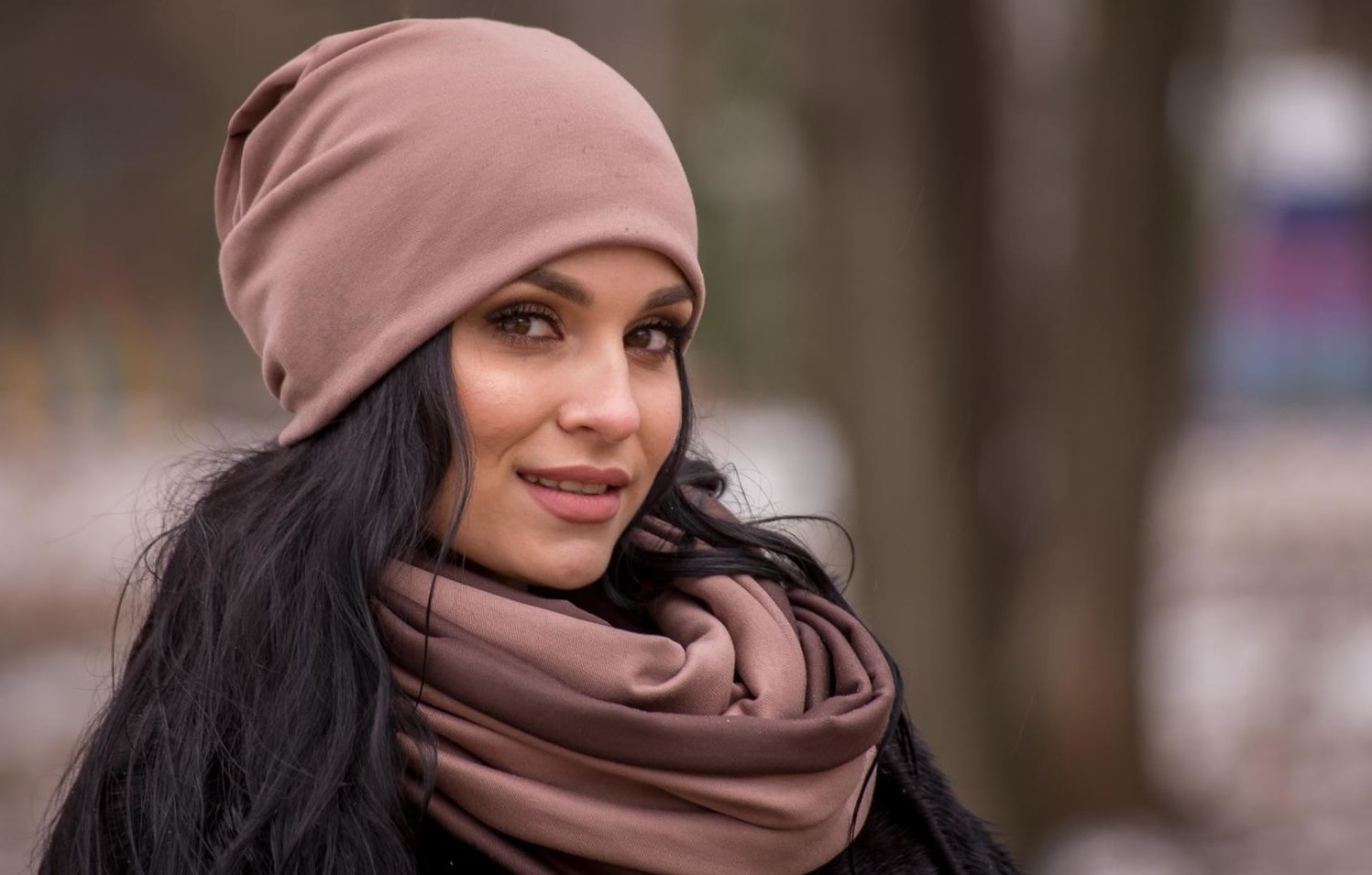
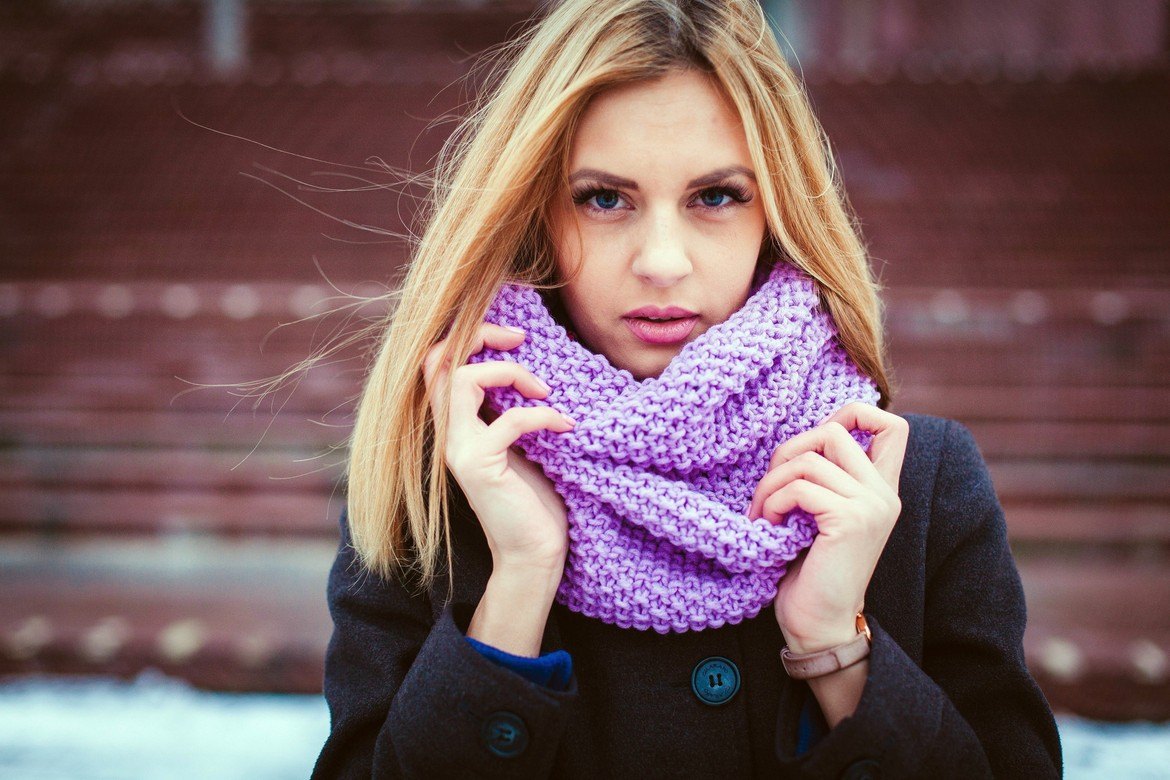
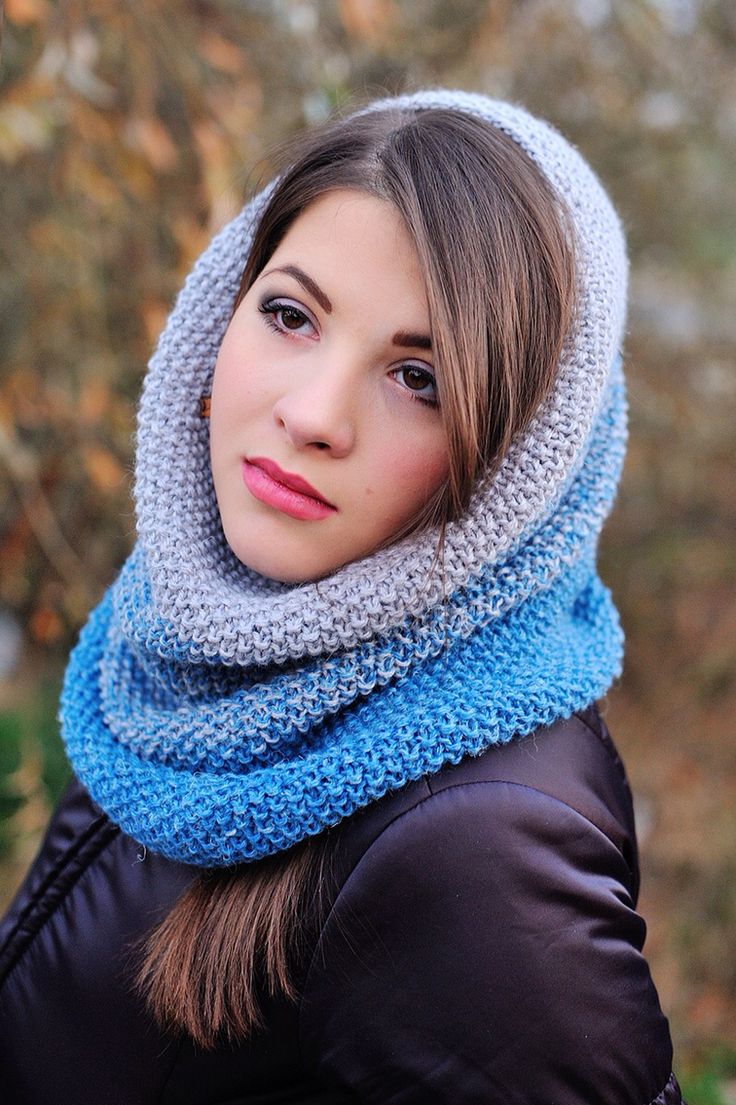
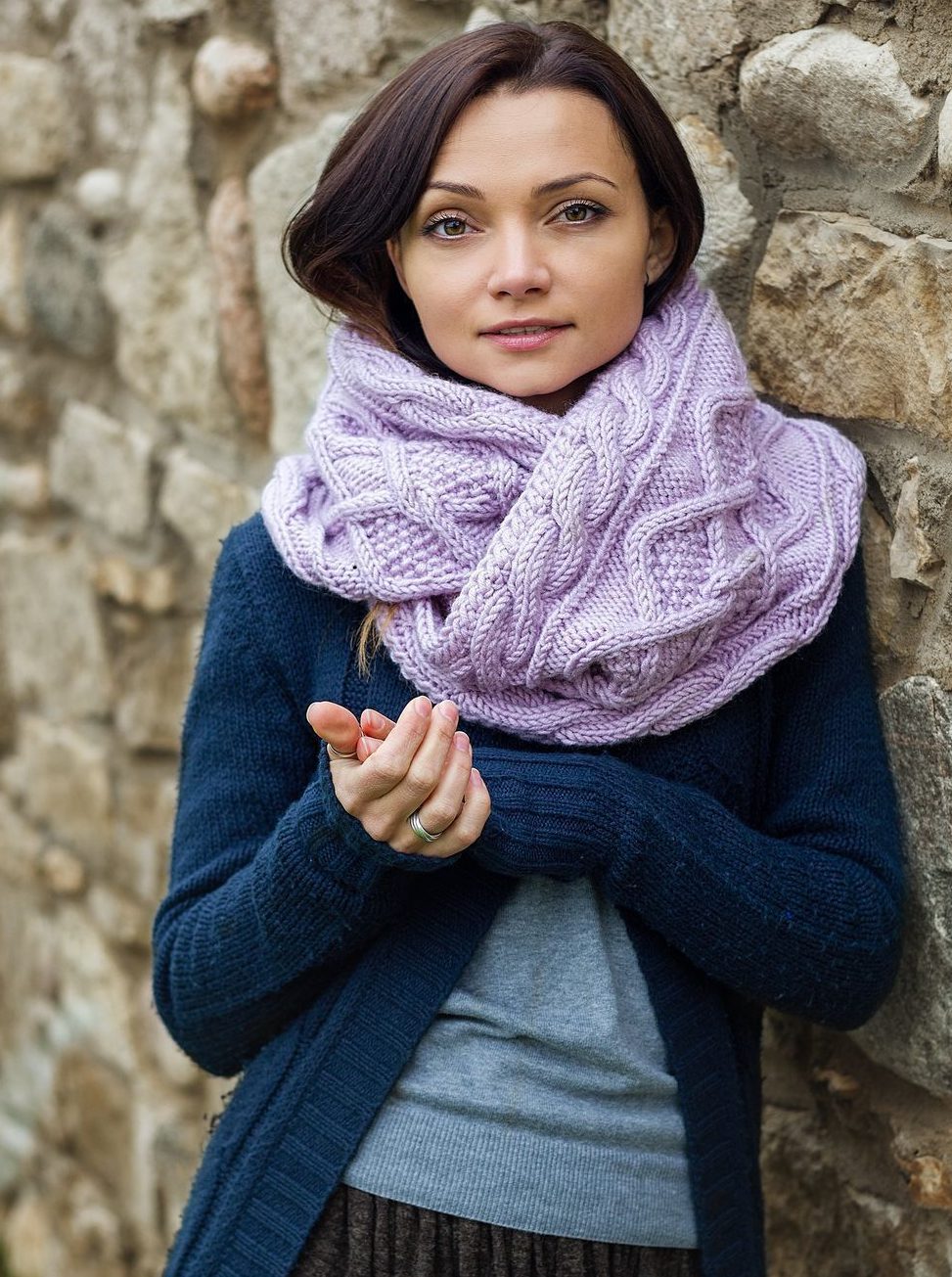
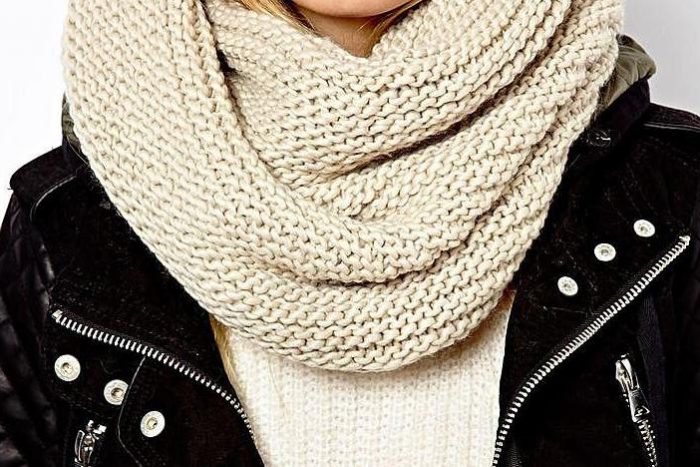
This practical accessory is a closed scarf without any loose ends. It is universal: suitable for women, men, teenagers, children. There are many options for wearing, everything depends on the types of models. They differ in width, length, weaving, and material. The undisputed leader is the knitted snood, made with knitting needles or a crochet hook, light openwork or dense knitting, from thin or thick yarn. The new season pleases with a variety of models:
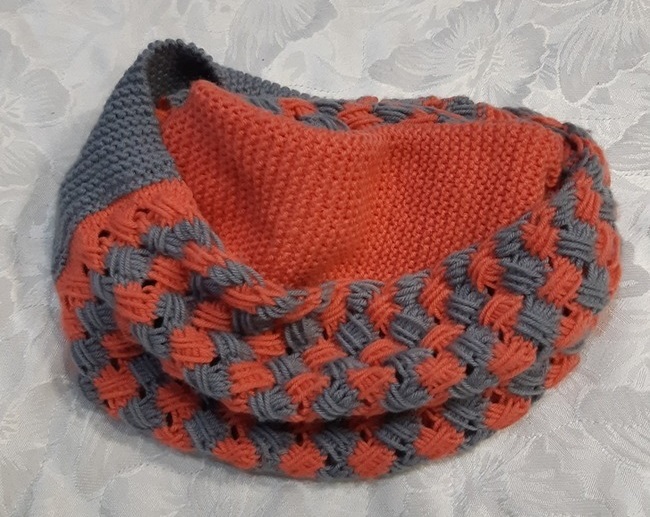
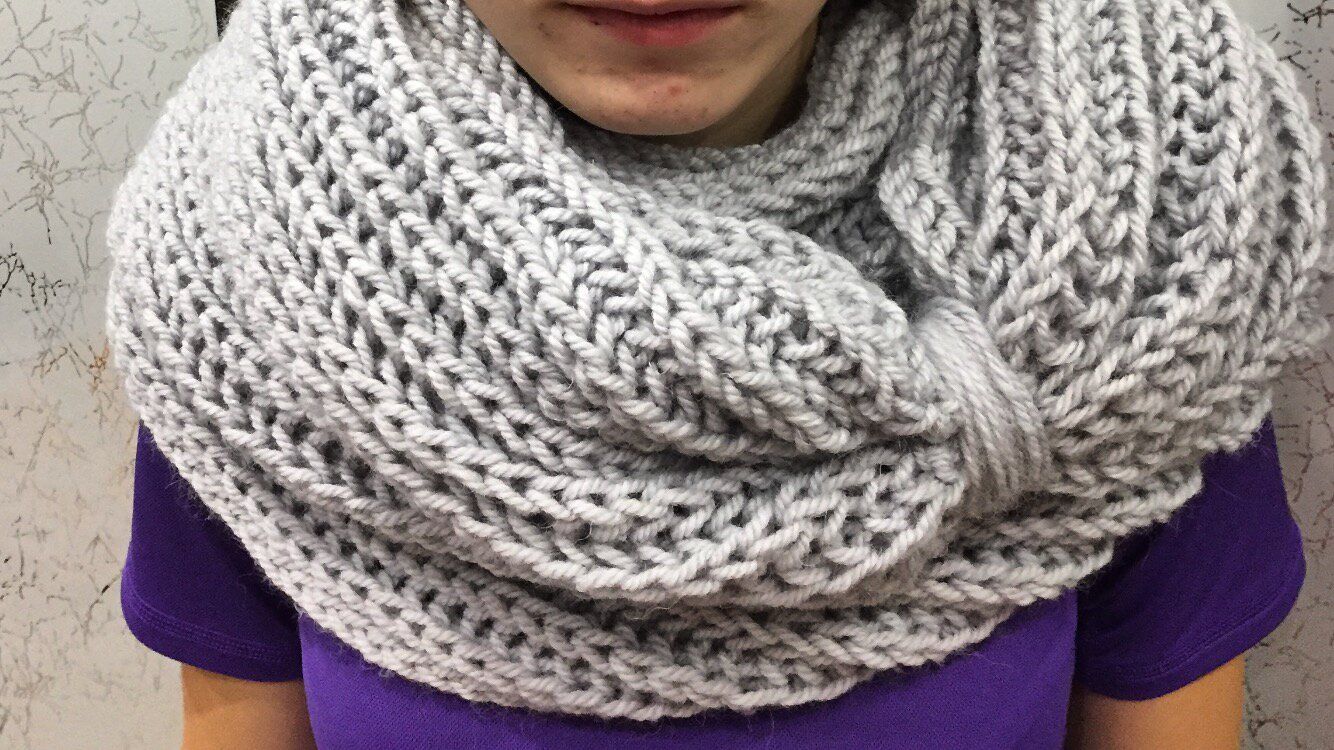
- The tube is a classic option of small length and width, due to which it covers the décolleté area quite tightly and closes the neck. The current knitting techniques this season are: English elastic, two-color brioche with tassels, voluminous cones. The product is complemented by a large button on the side, a zipper as a decorative element.
- A longer snood scarf forms soft folds that fall onto the chest. Popular models are made of cashmere, merino wool with the addition of acrylic in the almond, English voluminous elastic, braids and satin stitch techniques.
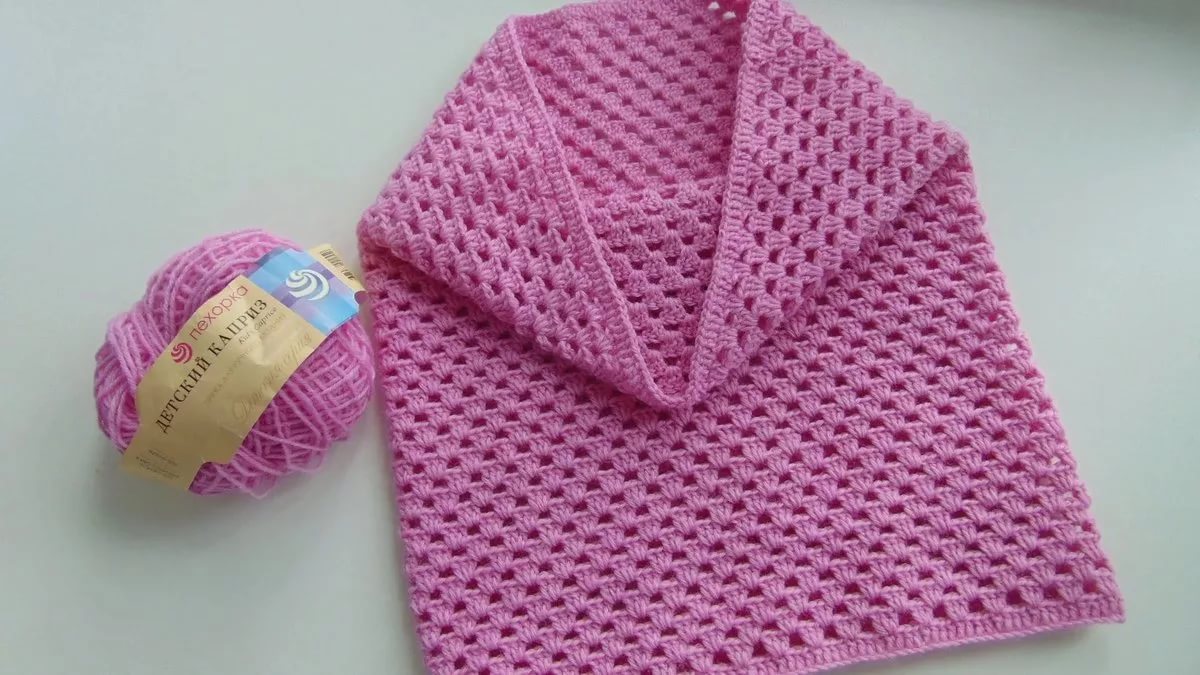
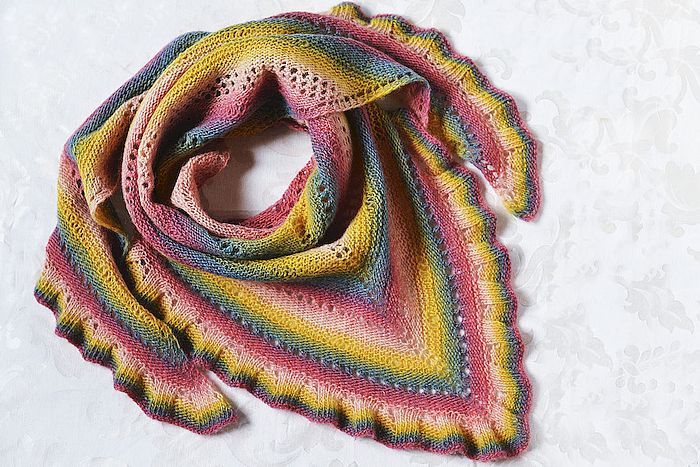
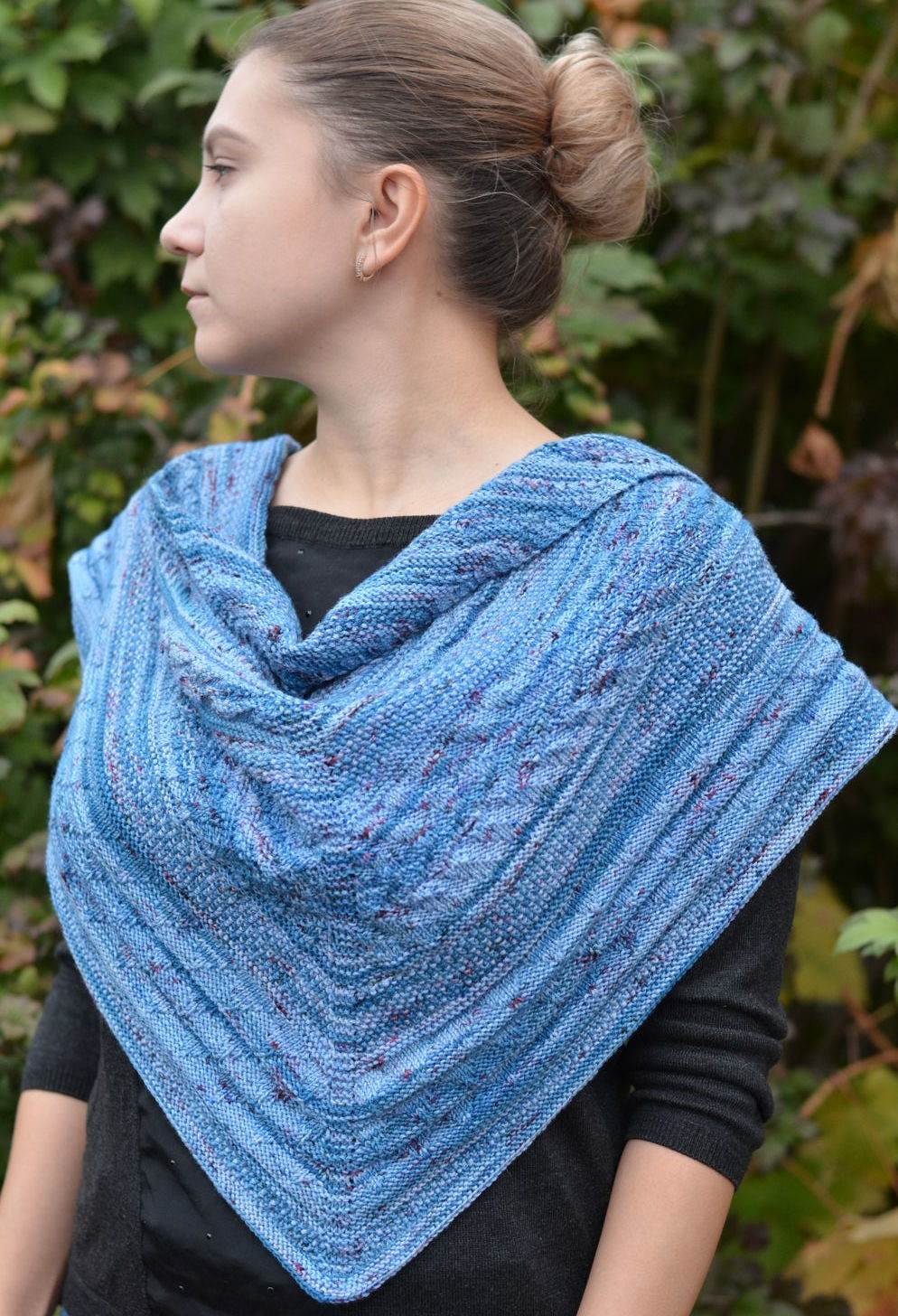
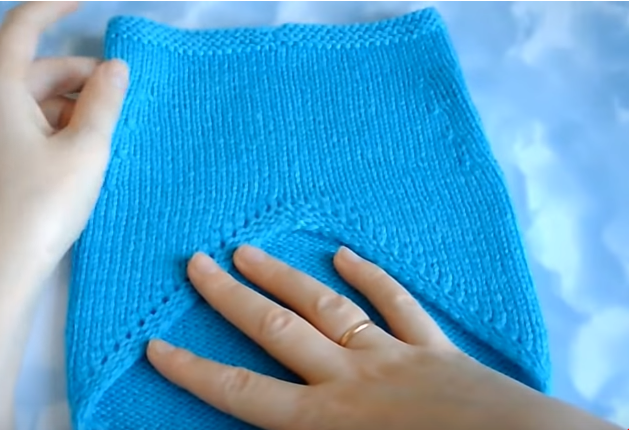
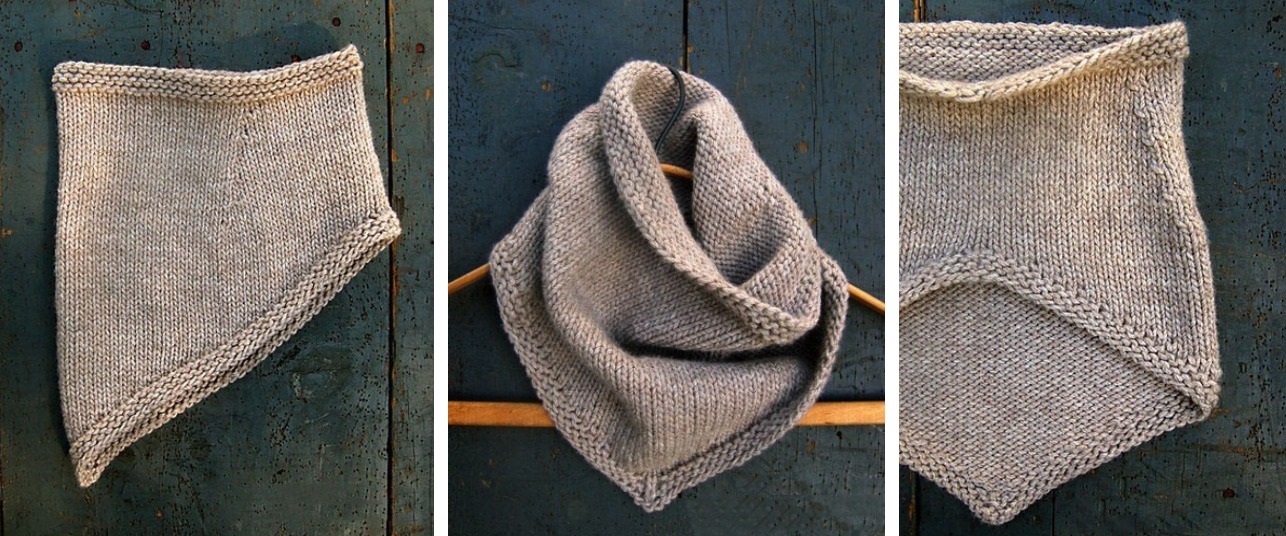
- Baktus is a fashionable novelty, which is a snood with an extension in the front part in the form of a triangle. The most relevant models are openwork knitting from thin yarn, or dense weaving with a combination of purl and front surface. Baktus made of thick threads, connected in bundles, looks no less impressive.
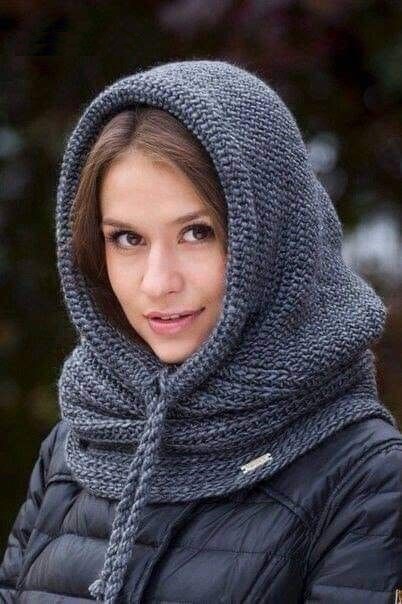
- A variation with a knitted hood a la balaclava is a stylish warm option. This snood is made with knitting needles from mohair, wool, acrylic yarn of medium and small thickness. Popular techniques: squares, zigzag elastic, braids.
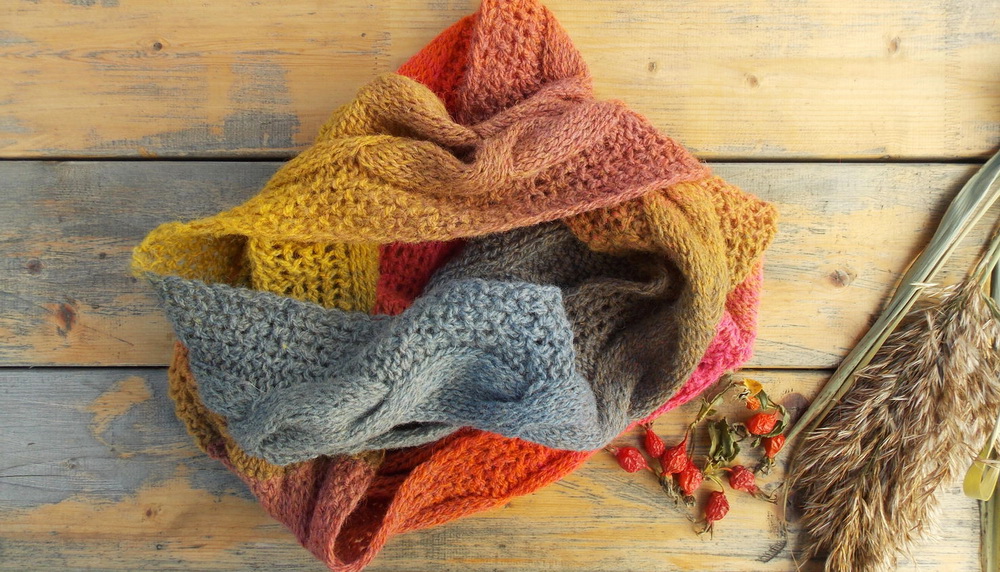
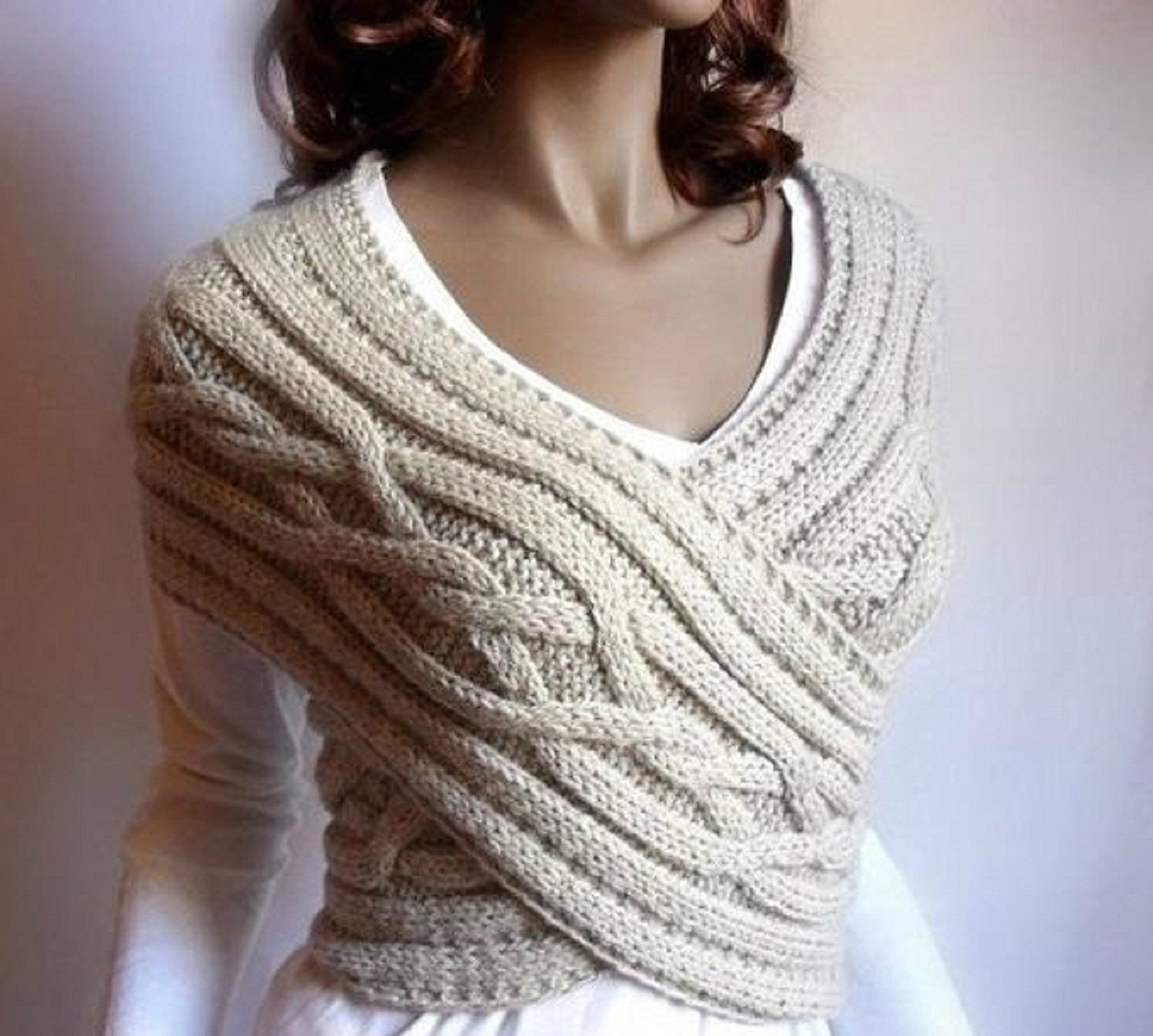
- A transformable snood is another good choice for this year. Incredibly wide, knitted from mohair or merino with silk yarn, this scarf easily turns into a cape, a headdress and even a short dress-skirt that can be worn over thick leggings and a tight long sleeve. The current pattern for this type of snood is a three-color satin stitch.
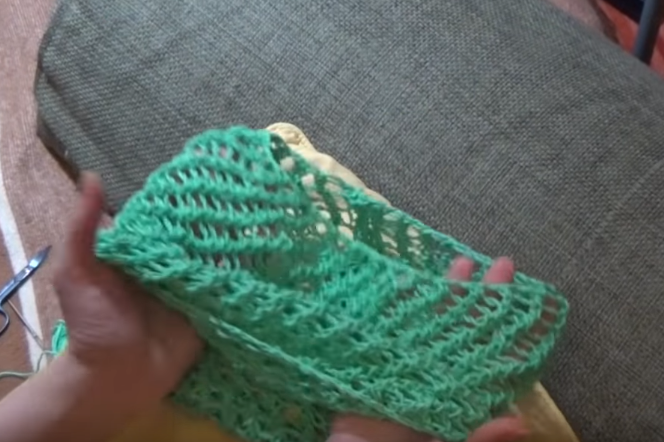
The trendy scarf-snood is in mustard, beige, yellow tones, as well as cold shades of blue, gray, blue. Summer options made of the finest cotton yarn are relevant in turquoise, muted pink, beige-gray colors. Two- and three-color openwork snood looks great.
What yarn to use
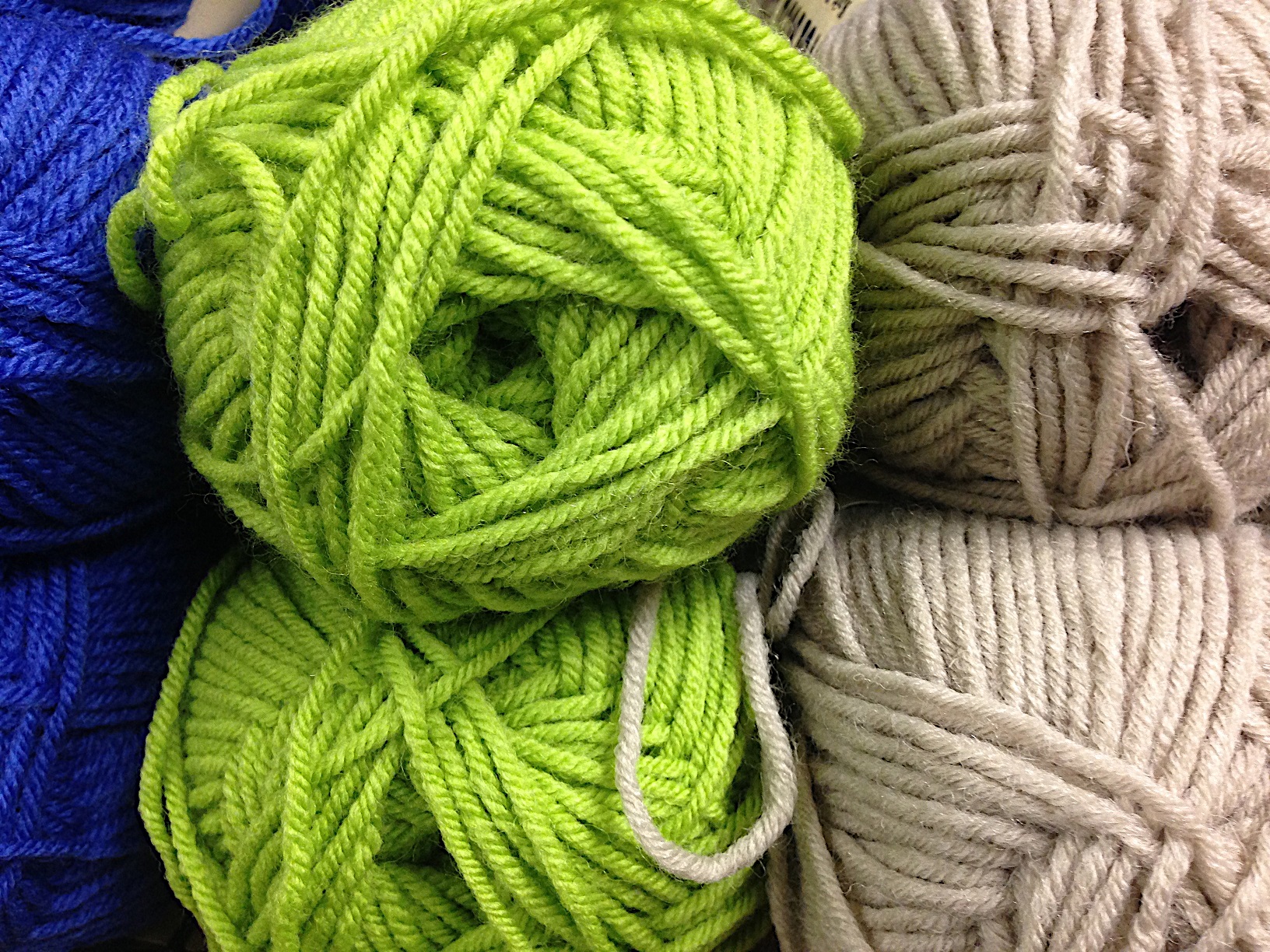
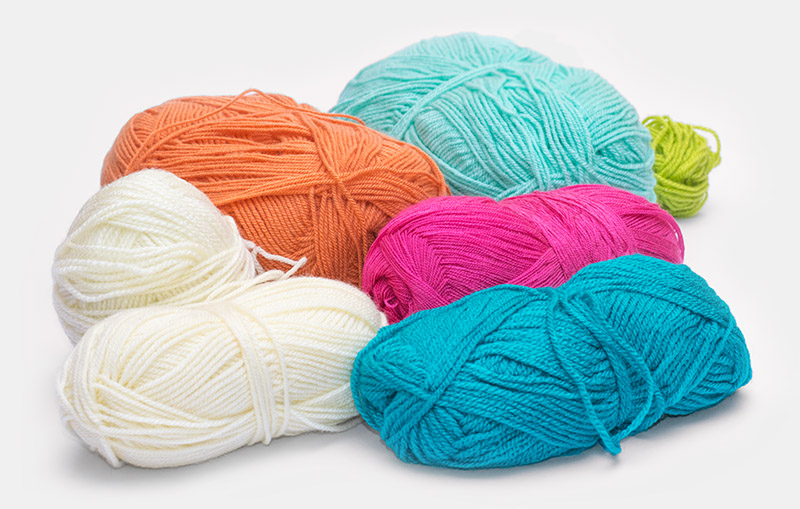
Knitted snoods for cold winters are made from yarn of various origins: animal, vegetable, synthetic. The volume of the product is affected by the thickness of the threads. The quality characteristics of the finished scarf depend on the type of yarn. The most commonly used are:
- Wool. This is a natural material obtained by combing or shearing animals. Products made of sheep and camel wool are widely used; they retain heat well, but are prickly and prone to pilling. Winter hats, scarves, mittens, and knitted snoods are made from such yarn. More expensive, sophisticated options that are free of such disadvantages include angora, alpaca, and mohair for openwork items.
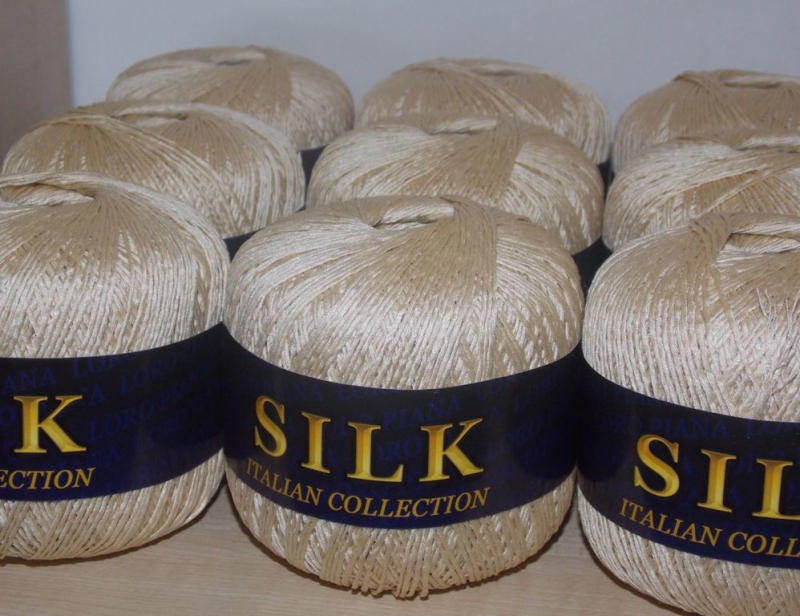
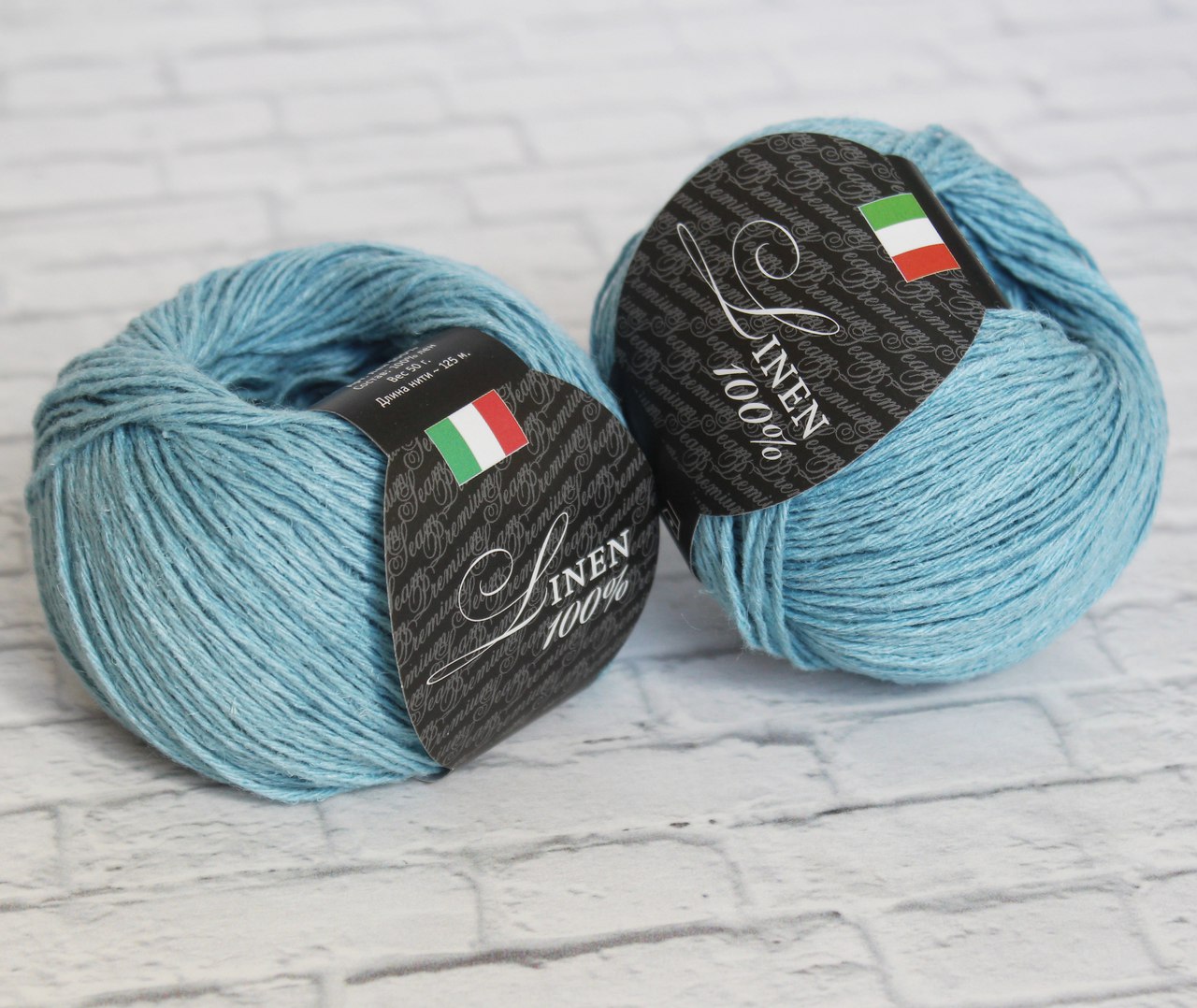
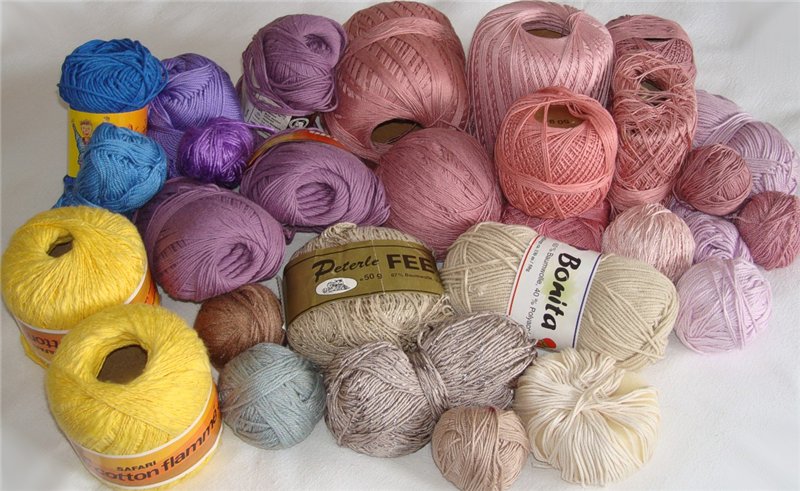
- Plant fibers from which light models are knitted: silk, cotton (regular and mercerized), flax. The yarn is formed by threads of thin diameter, and therefore the products are weightless, ideal for spring-summer weather.
- Synthetic yarn (acrylic, nylon, microfiber), more wear-resistant. In its pure form, it is used for knitting demi-season accessories. The products are durable, practical in care, but inferior in a number of qualities: less warm, not hypoallergenic, electrified.
- Mixed yarn, in which natural wool is supplemented with synthetic, silk, cotton fibers. A good alternative to pure unmixed types: reduces prickliness, increases the strength and practicality of things, it is convenient to work with. The cost of mixed yarn is lower, which makes it more accessible. Most patterns and descriptions of snood with knitting needles suggest the use of this type.
According to the diameter of the fibers, thick, voluminous and thin types with tightly twisted threads are distinguished. An example of the latter is the common chenille. According to the texture, the yarn used is smooth, which is suitable for beginners, and fantasy yarn for experienced knitters. The consumption depends on the pattern, technique and density of knitting, the needles and yarn used. For a snood with a medium density stocking stitch with a size of two turns, 250 g is spent. This is approximately two skeins of yarn. A complex pattern, tight knitting and the size of the product itself increase the consumption.
There are recommendations for work for each type. The larger the volume of fibers, the thicker the needles should be. Knitting is recommended to be loose and loose. When working with lush yarn, markers and additional needles are used.
Necessary tools
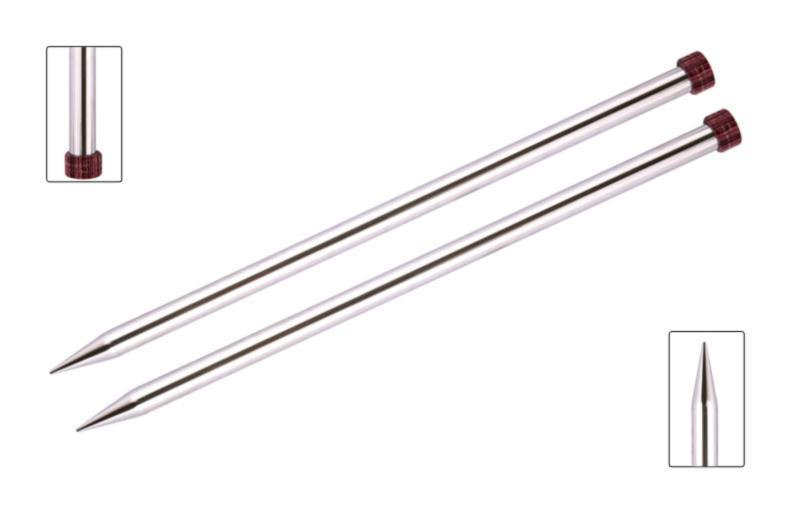
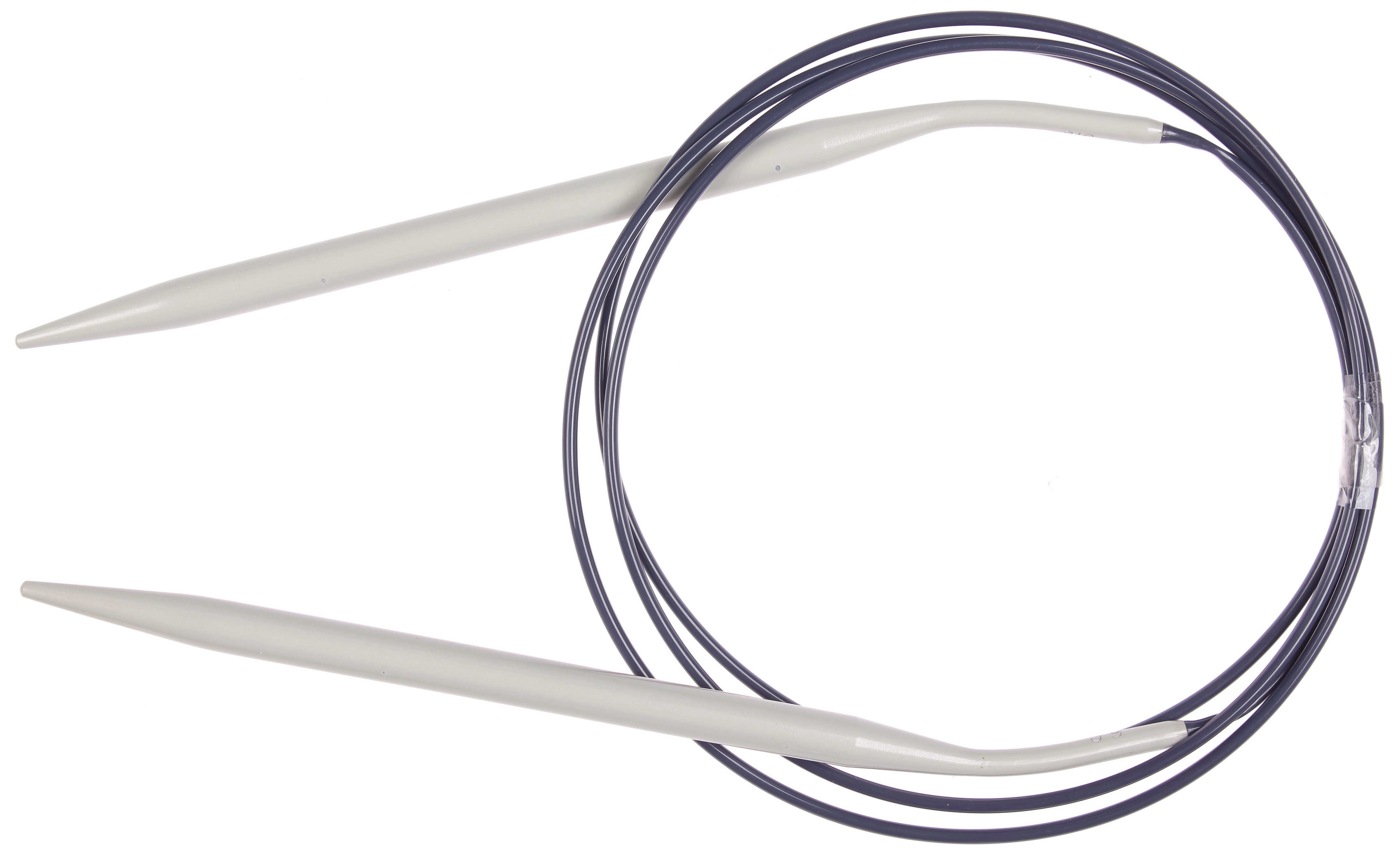
Special knitting needles are used for different knitting techniques. They are made of materials such as wood, aluminum, steel, plastic. Each has its own advantages and disadvantages, but the main properties are the smoothness of the loops and the convenience of the shape for work. The following types of knitting needles are used:
- Regular pairs – they are pointed at one or both ends. Suitable for garter stitching of scarves, hats, snoods with a seam.
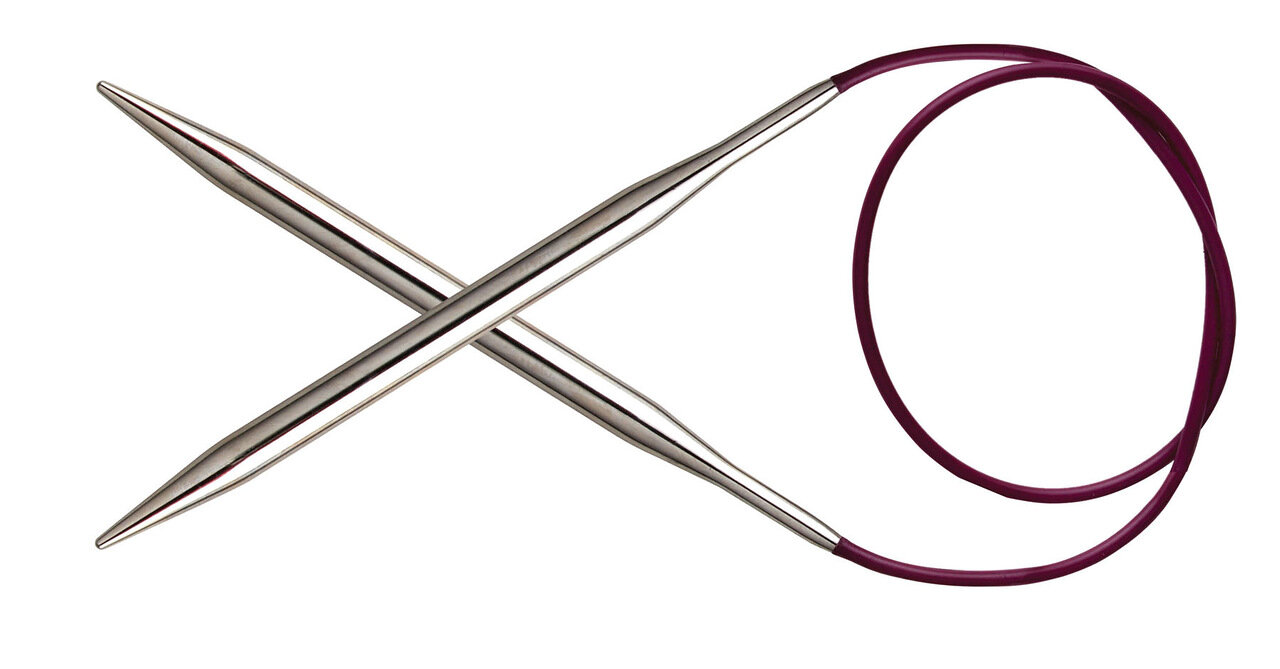
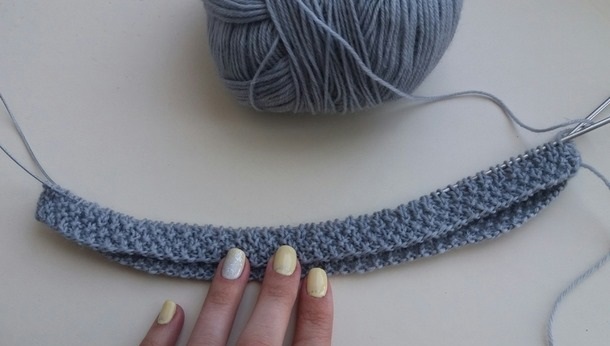
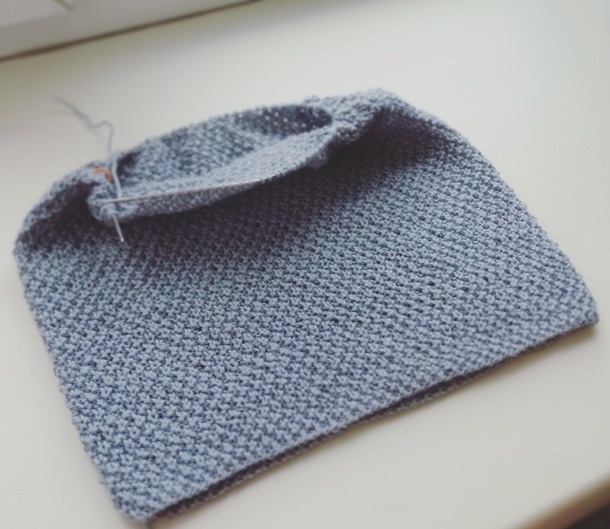
- Circular – short needles connected by a flexible cord. Ideal for knitting necklines, continuous snoods without a seam.
- Flexible needles are a variant of circular needles. They are connected with a cord, but the free part is extended and slightly bent at an angle. They are used for knitting wide scarves.
- Auxiliary types of knitting needles - short, with a curvature in the form of a tubercle in the middle part. Necessary for creating braids for crossing loops.
The knitting needles have their own number, which is selected depending on the thickness of the yarn used. The basic rule is that the diameter of the tool should be 1 mm larger than the thread. On the yarn labeland the parameters of the knitting needles for the work are indicated, but they can also be calculated by doubling the fiber. This will be the desired number.
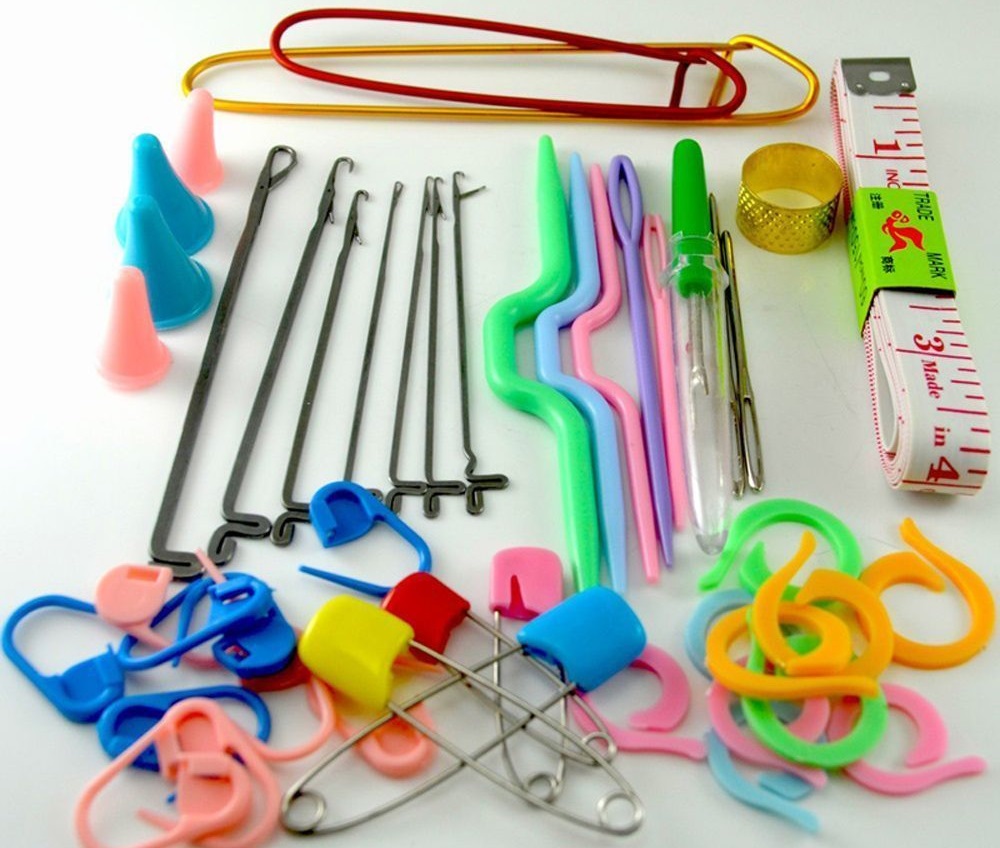
You may need additional tools: paper clips for marking, pins for fixing the sewn elements, hooks for pulling out over-tightened loops, needles for yarn, a tailor's tape measure, scissors.
Techniques and patterns
Knitting with needles in different techniques has its own characteristics. There are patterns that are complex in appearance, but require minimal yarn consumption, and vice versa. Popular techniques:
- Front surface. This is the most basic option. The edges of the product are knitted purlwise (in three rows at the top and bottom). The yarn consumption will be 200 g for a snood 25 x 150 cm. First, loops are cast on, the number of which corresponds to the width of the product, then they are knitted purlwise in three rows, then front surface. The pattern is considered one of the simplest.
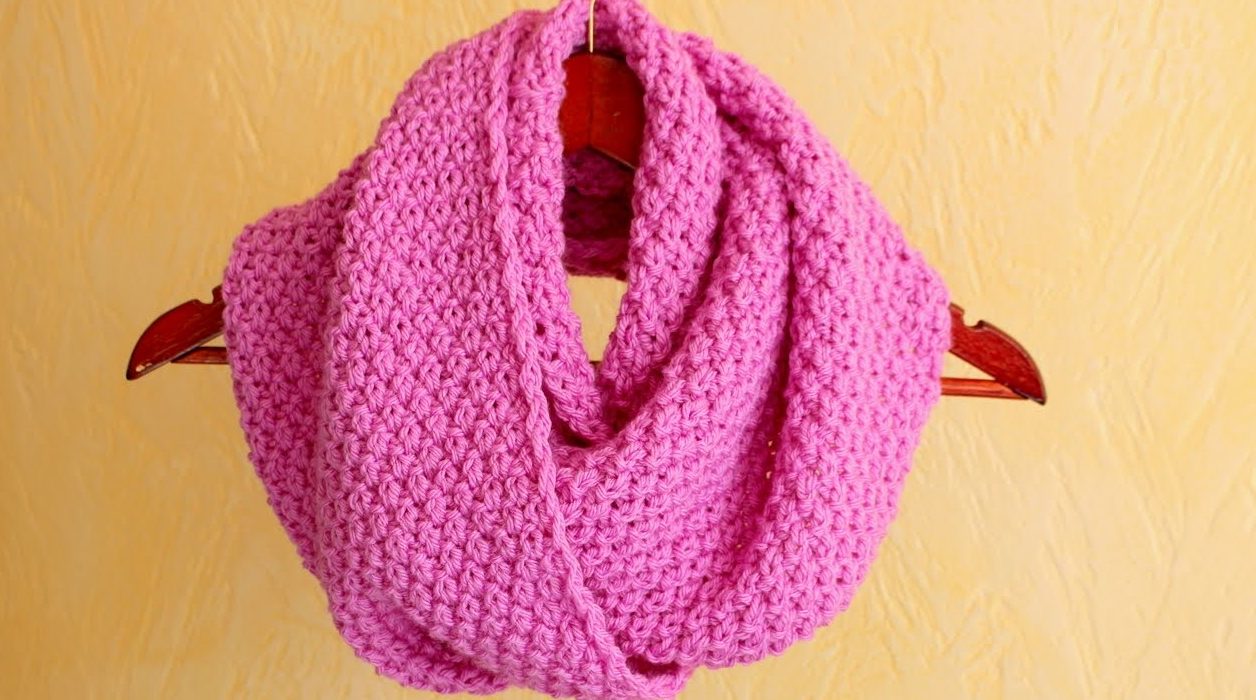
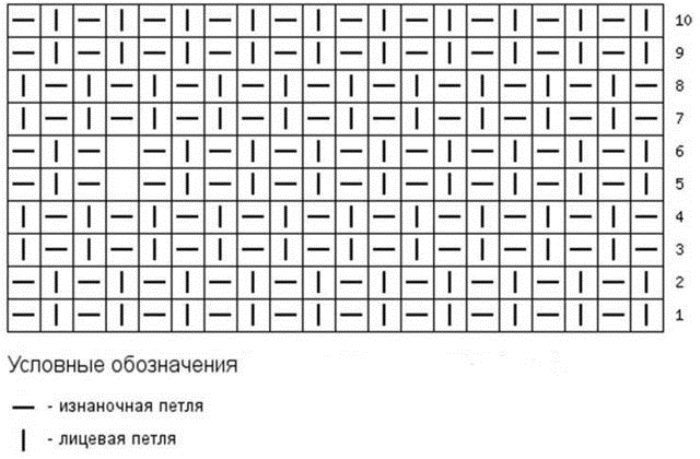
- The "pearl" pattern (aka "rice"). Simple enough even for a beginner needlewoman. One skein of yarn will be needed for a scarf for girls aged 4-6. The product will be 98-99 cm long and 15 cm wide. An adult women's snood measuring 140 x 25 cm will require twice as much yarn. For this size, you need to dial 19 loops. Next, two rows of alternating purl and front loops are knitted, the last row should be finished. The next pair of rows begins with a front loop and ends with a back loop. Knitting of the scarf continues to the desired length. At the final stage, the loops are closed, the snood is sewn.
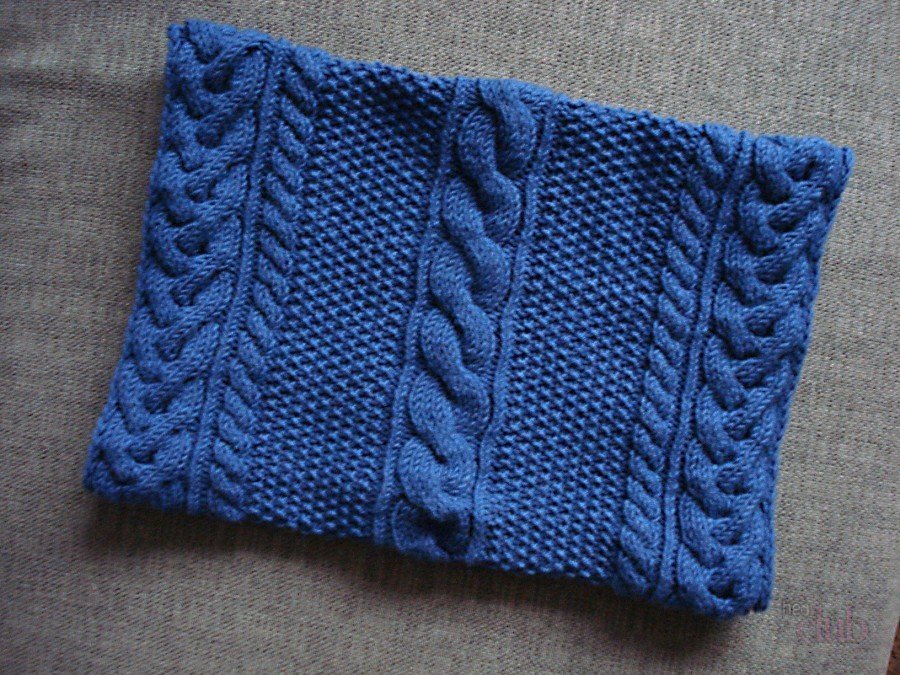
- "Braid". An original pattern for a pipe model. A snood-collar is also relevant in this design. A product 150 cm long for an adult will require at least 300 g of yarn (2 full skeins). The width should be a multiple of 10 cm - this is how much is needed for a single-row pattern. The collected loops are knitted three times with the front side, then 5 times with the back side, then again 3 times with the front side. The pattern is repeated until the desired length is reached, the loops are closed, the ends are sewn. "Braid" has an average level of complexity.
- "Braids". The pattern is not as complicated as it seems at first glance. For a scarf measuring 35 x 75 cm, you will need 200 g of wool yarn with medium-diameter threads and knitting needles of size 4. The cast-on loops (80 pieces) are knitted according to the pattern "three purl to three front" over 200 rows. Every second column of purl loops is crossed with the neighboring ones. A variation of this design is "cords". The difference is two crossed columns instead of three. "Braids" are not difficult to knit, but this requires certain skills.
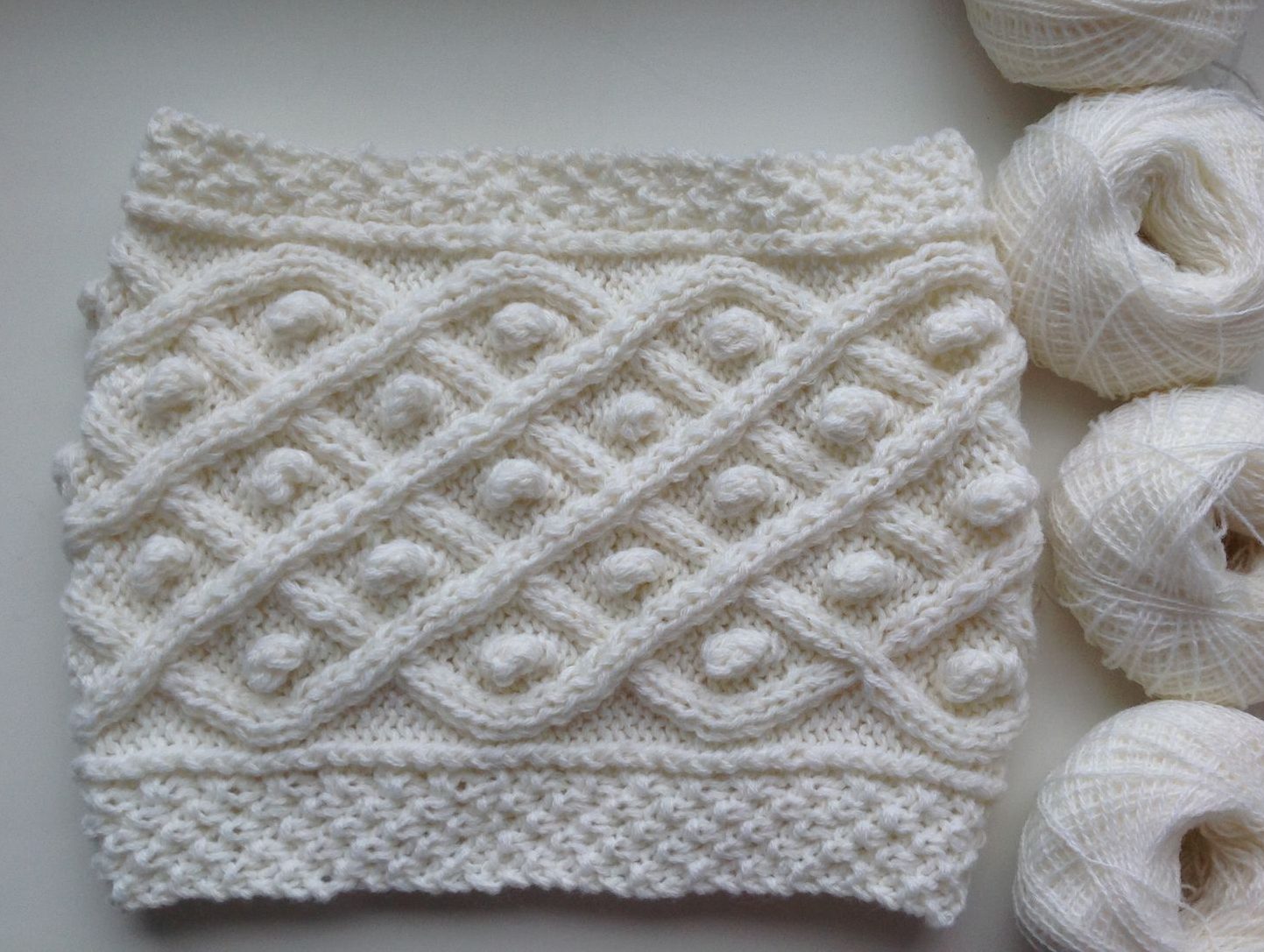
- "Bumps". A spectacular pattern for a hat and snood set. Other things knitted this way also look great. The simplest technique is a round bump. The knitting is airy, loose, it is better to use yarn of medium and small thickness. The consumption at such a density is small: 200 g is spent on a snood two turns long. The pattern is as follows: five yarns are knitted from the loop at once. The right knitting needle is inserted into the loop, the front one is pulled out, then the yarn (the knitting needle is not removed from the loop), inserted into the loop again, the front one is pulled out - and so on in a circle, until a round bump is knitted in turning rows. The pattern is recommended for experienced craftswomen.
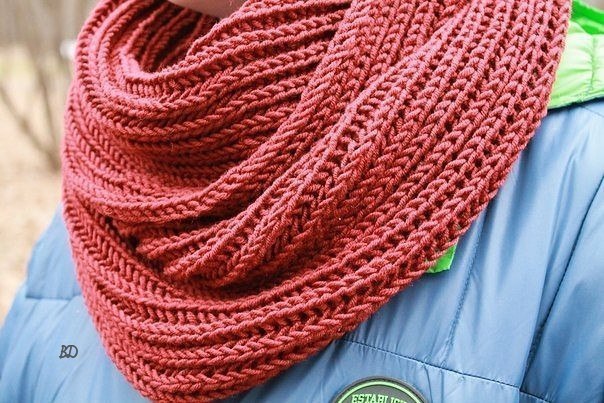
- "Faceted elastic". Characterized by an interesting striped design with pronounced edges. A good alternative to the English version, as it requires less yarn: only 300 g for a product measuring 140 x 32 cm. Suitable for thick yarn: you get a snood of large knitting. It is knitted easier than the English elastic: loops in a multiple of four are collected on a knitting needle, 2 edge loops are added. Then according to the scheme (pattern rapport - 2 rows): 2 LP (front loops) + 1 IZ (purl) - this is the first row, 2 LP + 1 IZ + 1 LP. This pattern has a high level of complexity.
- "Zigzag elastic". Suitable for working with medium-thick yarn. Quite dense knitting assumes significant consumption. Work begins with a set of loops (a multiple of 4) plus an additional loop for symmetry and two edge loops. The rapport is two-row. 1 row: edge + 1 IP + 1 LP, then remove the loop, move the thread back, 1 LP + yarn over, throw the removed loop over the LP, repeat to the desired width and finish with an edge loop. 2 row: all the same, but start with an edge loop + 1 LP, and then in reverse order.
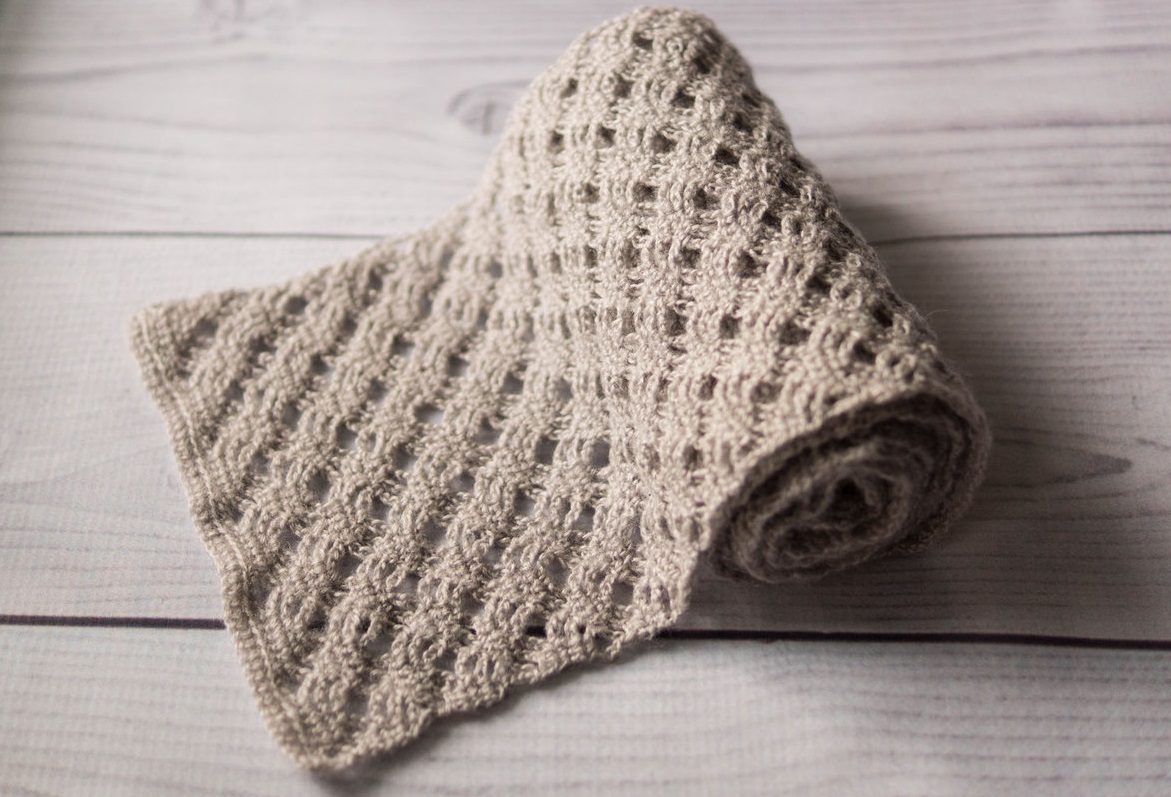
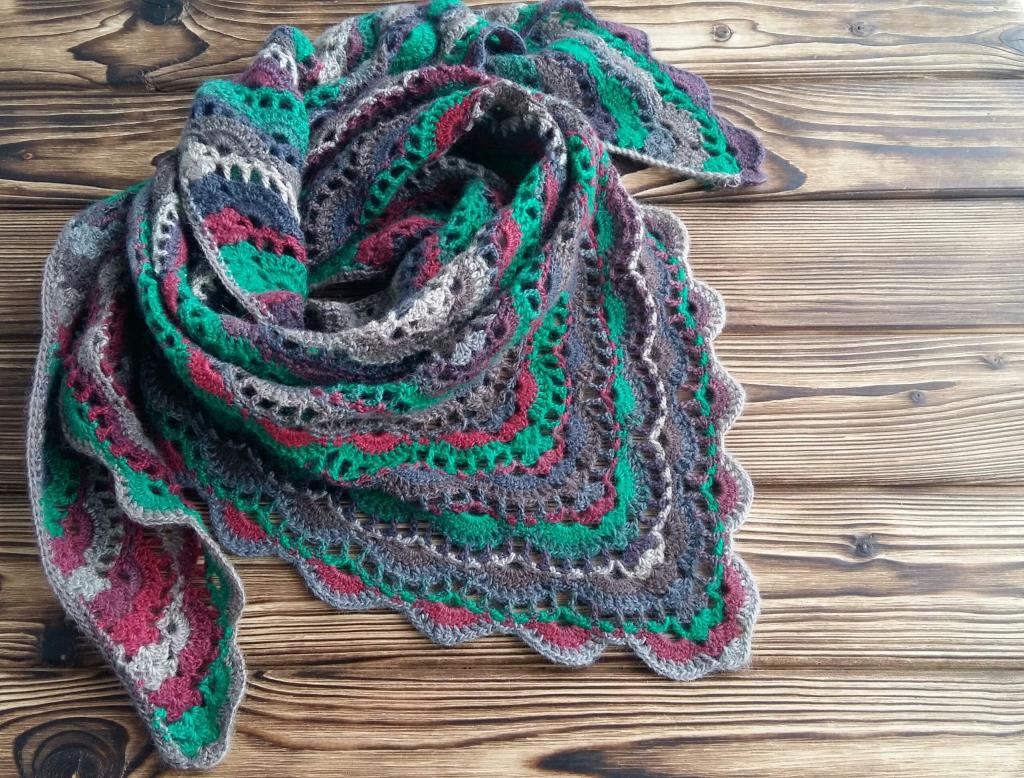
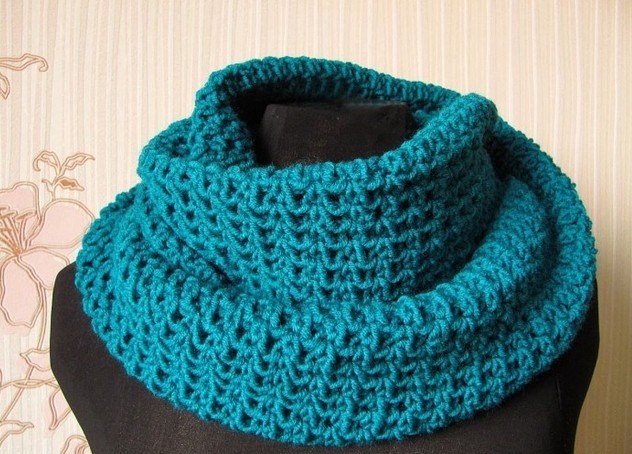
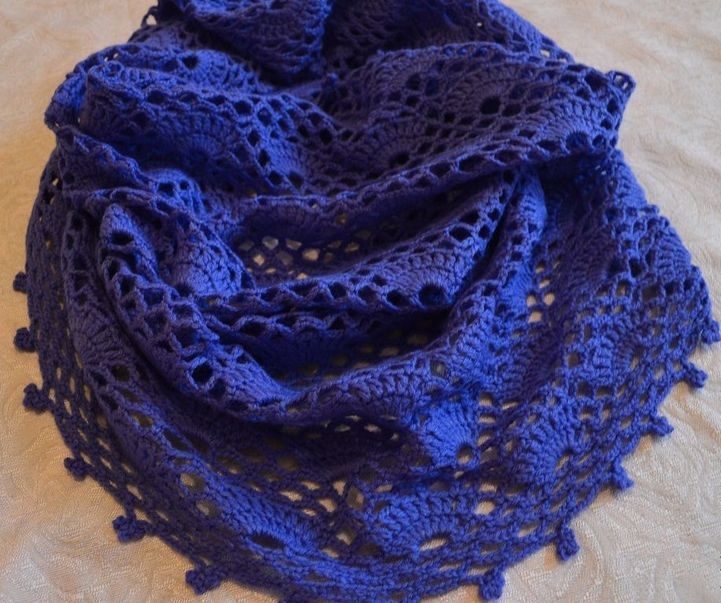
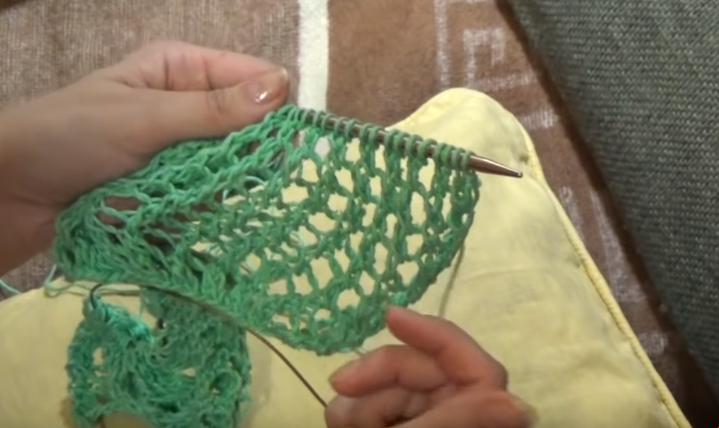
In addition to those listed, many varieties of openwork knitting are relevant in the new season. A pattern of this type is created by adding and alternating yarns and loops that are knitted together. The most popular options are leaves, waves, and diamonds. Snoods are light, airy, and beautiful.
Knitting stages
It is quite easy to knit a snood beautifully using knitting needles. You just need to choose a suitable pattern, style, and calculate the number of loops. To select the best option, you should first familiarize yourself with the step-by-step execution of the most popular models.
Pipe
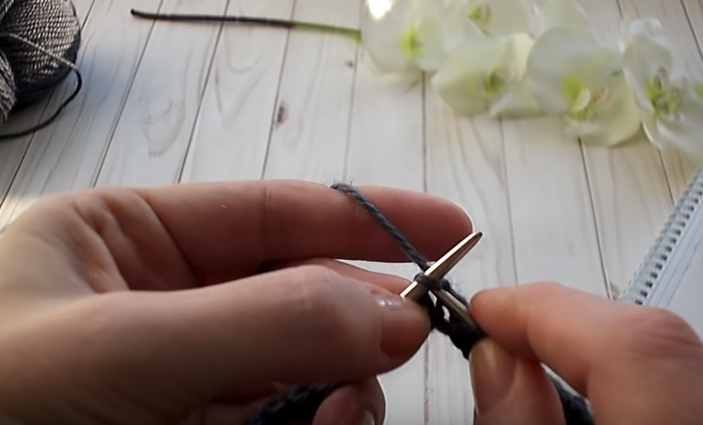
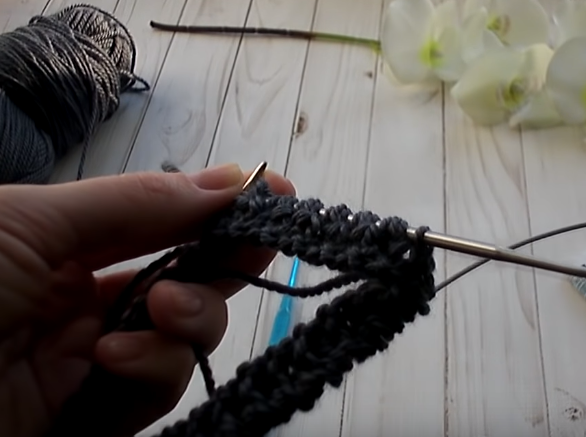
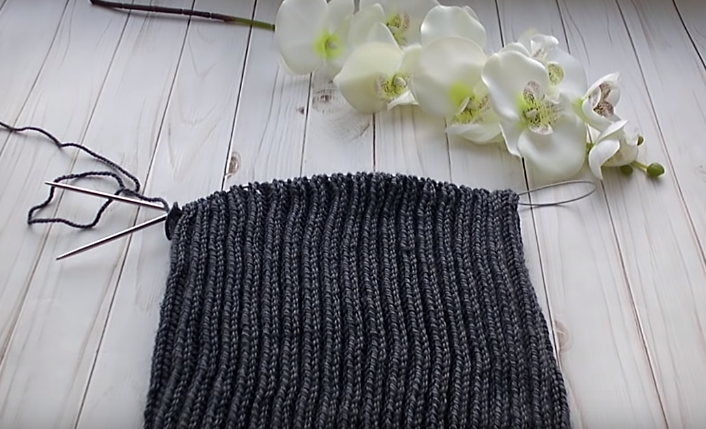
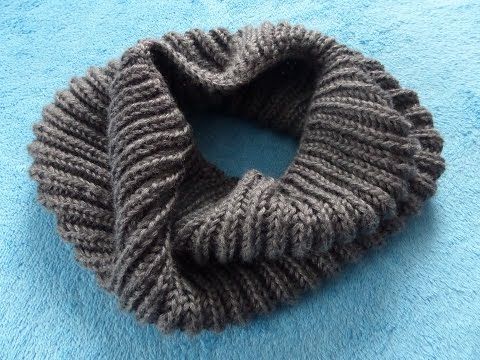
This year's fashion accessory is a snood-pipe in the English elastic technique. A very warm and stylish thing is made from yarn with natural wool. Step-by-step knitting looks like this:
- Prepare materials and tools. For a scarf 50 cm wide and 60 cm long, you will need 300 g of Super excellence print yarn (a blend of 49% wool and 51% acrylic) and 4.5 mm circular knitting needles.
- Cast on twenty stitches. Then use front, back and edge stitches.
- The first row begins with an edge loop, it needs to be removed, knitted with a LP, then remove one loop with a yarn over.
- The second row differs from the first in that the edge stitch is removed, a yarn over is made and knitted with a front loop. Then the loop on the needle with a yarn over on the right is removed and knitted to the end.
- The rows alternate to the desired length.
When knitted with circular needles, the scarf is seamless. The finished snood can be decorated with a large button, or a row of small buttons, a zipper. Another decoration option is a fur trim on the top. With a width of 50 cm, the item serves to protect not only the throat from the cold, but also the back of the head.
Hood
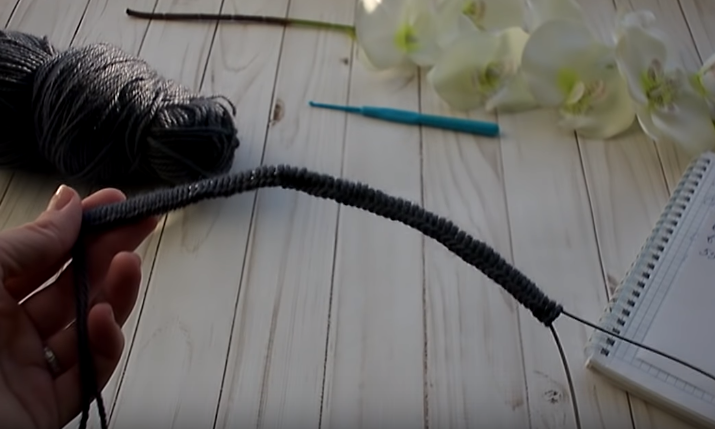
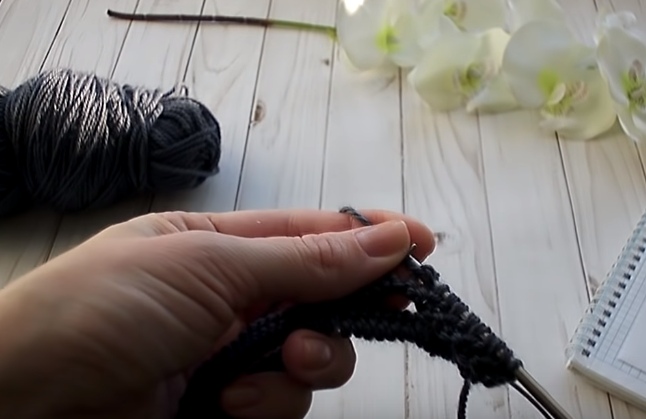
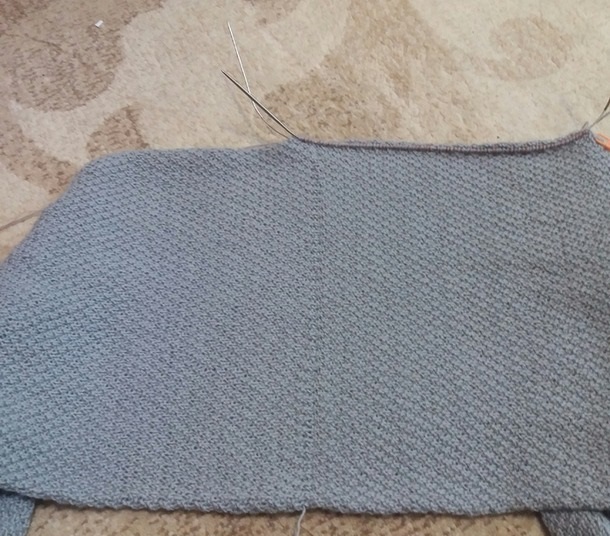
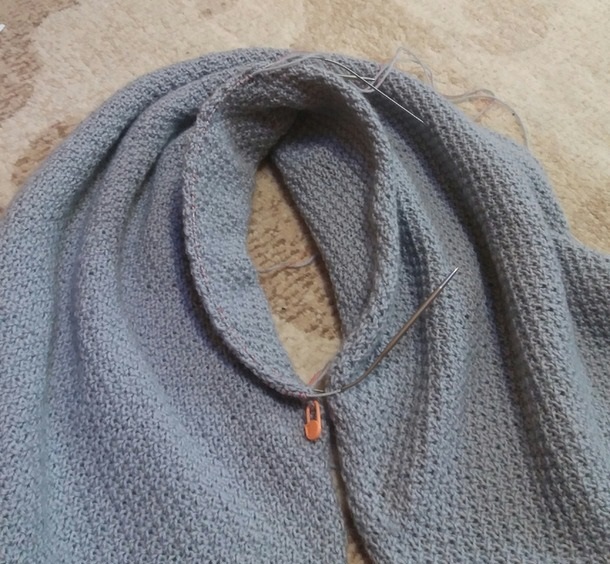
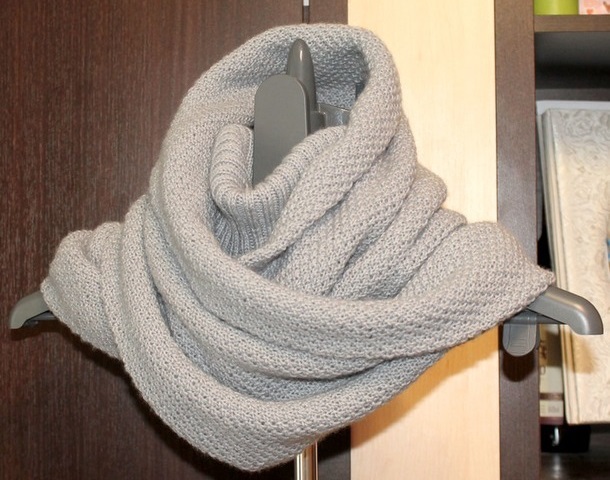
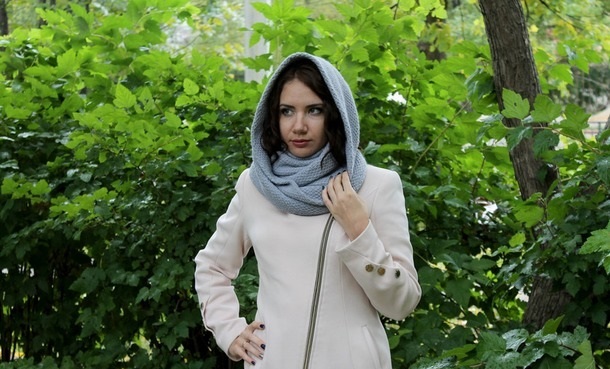
This model is a stylish addition to fashionable cropped jackets, coats, hoodies. It perfectly protects the head, neck, décolleté area from the cold, and with dense knitting - from the wind. It is made either seamlessly on circular knitting needles, or from two elements connected by an invisible longitudinal seam. For a hood measuring 60 x 70 cm (the last figure is the width), you will need 5 balls (100 g / 106 m) of yarn (a mixture of regular wool and alpaca). Circular knitting needles with a diameter of 6.5 are used. Stages of work:
- Knitting is dense: 16 loops + 19 rows per rapport 10 x 10.
- The “knot” technique is used: knit two loops purlwise on the left knitting needle, yarn back (the “yarn at work” technique – TW), then knit two loops through the same ones, remove the knitted loops from the knitting needle on the left.
- The top of the hood is knitted in five rows. Cast on – 90 stitches. First – 1 LP + 1 IP, to the end, fix a marker every 30 stitches. Second and third rows: 1 LP + 1 IP to the end, leaving the last two stitches, then wrap and turn. Fourth and fifth rows – 1 LP + 1 IP to two stitches alternating before the last one. Wrap it, then LP, wrap again and turn the stitch.
- The hood base is knitted in a similar way. The difference is that you need to leave one loop on each side of the second row marker clip. They are knitted by removing the loop, remove the marker, move the removed loop back to the right, then knit 2 loops purlwise. Next, without removing the loops from the knitting needle on the left, place a marker, NZR, knit two loops through them, remove from the knitting needle on the left.
- Make a seam using three rows. First: LP to marker, then slip it, LP to end, knit wrappers with loops. Second row: 1 LP + 1 IP to marker, slip it, "knots" to the second, slip and IP to end. The third is alternating LP and IP to the first clip-marker.
- The back of the hood is knitted in 4 rows. The first is a chain LP to the paper clip, remove it, wrapped loop, turn. The second is to re-slip the paper clip-fixer, 1 LP, knots to the loop before the fixer, 1 LP, re-slip again, wrapped loop and turn. The third is knit to the wrapped one, knit the first with the second, wrap the loop, turn. The fourth is a knit loop, then knots to the wrapped one, knit it with the front with the wrapper, wrap, then turn.
- Knit a collar in 11 rows in the same way. Finish with a rib (alternating LP and IP).
Fur trim and brooches on the base are used as decoration. A twisted cord is a good example of practical decoration. A drawstring is knitted in the upper part of the hood, into which it is threaded, the free ends are fixed with a bow or hang down.
Clamp
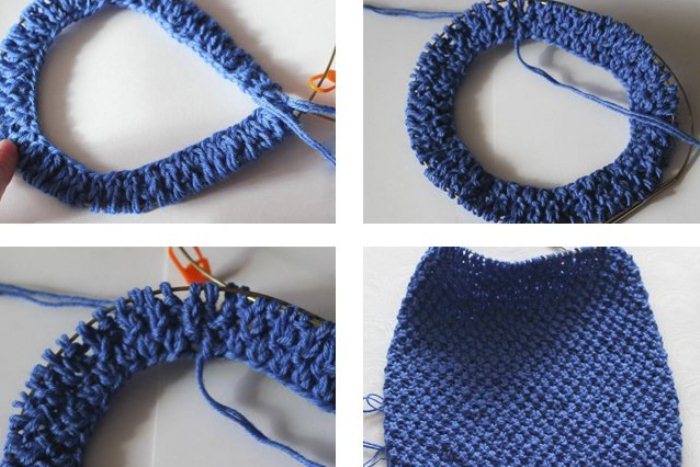
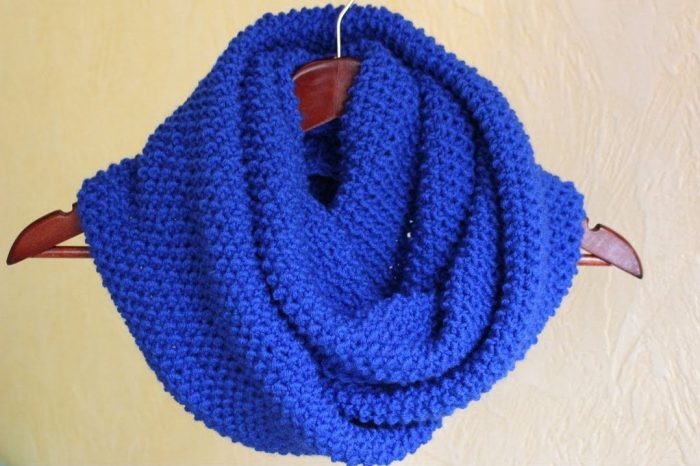
A circular scarf or collar is slightly longer than a pipe, lies freely, beautifully framing the neckline. When knitting a snood on circular knitting needles without a seam, you need to cast on 300 loops to get 100 cm in length. The width is either 30 (narrow without folds) or 50 cm. It remains only to choose the knitting technique. On forums dedicated to needlework, there are patterns for a double-sided pattern for a snood with knitting needles. The simplest is a stocking pattern, you can diversify it by using beautiful melange or fantasy yarn.
The consumption for this knitting method for the specified dimensions of 100 x 50 cm will be 250 g of yarn. The technique is simple: even rows are knitted with purl stitches to the end of the row, odd rows - with knit stitches. This pattern looks a little more interesting:
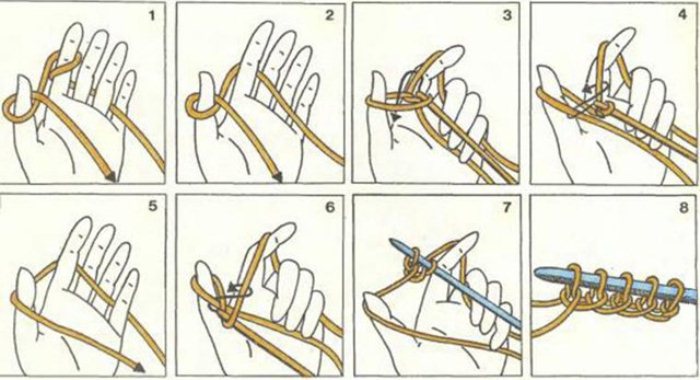
- 1 row – cast on loops in a quantity corresponding to the width (3 loops x 50 = 150 loops);
- Row 2 – knit;
- 3rd row – edge + 1 IP + 3 LP + 1 IP + 3 LP (all odd rows are knitted in this alternation, the final edge rows are knitted, then a turn is made);
- Row 4, like all even rows, begins with the fact that the removed loop (edge) must be knitted with the front one, then according to the pattern 3 IP + 1 LP + 3 IP, turn at the end of the row.
The collar can be decorated with tassels. Even a simple pattern made from textured yarn looks stylish. A braid pattern is often used along the edge.
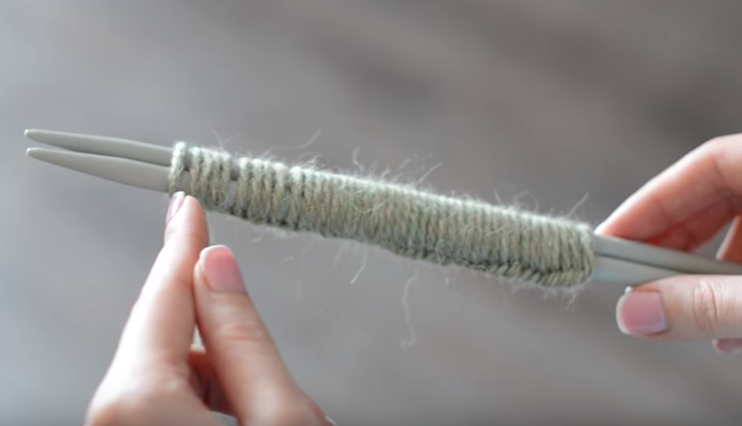
With braids
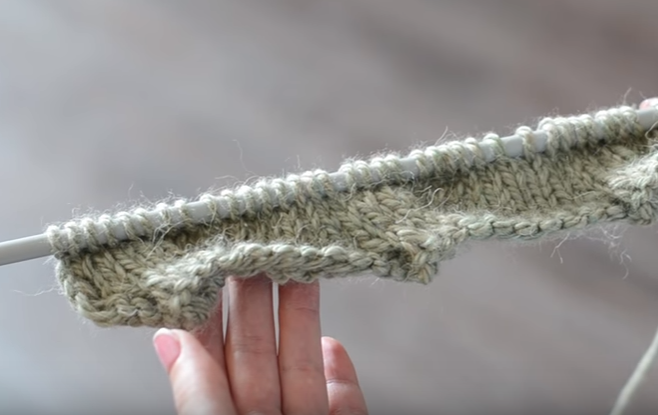
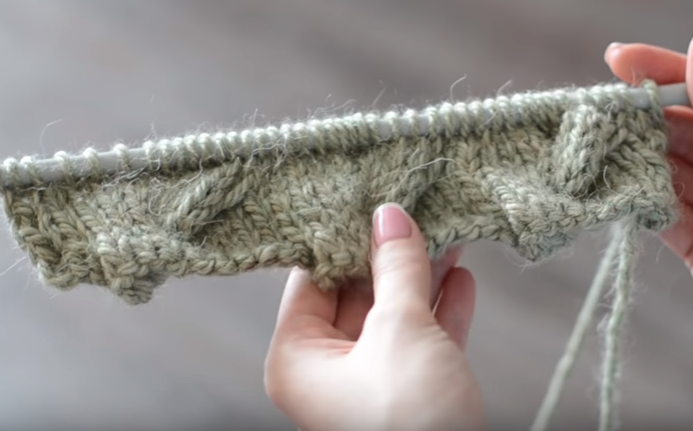
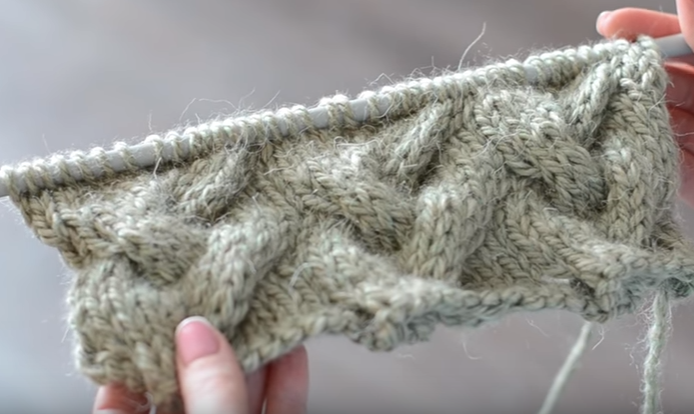
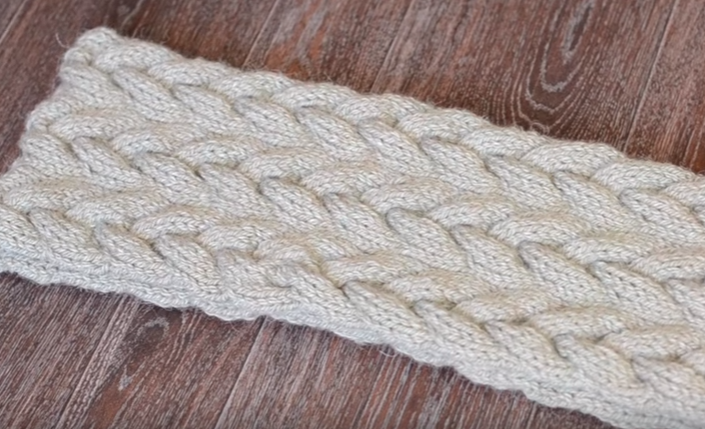
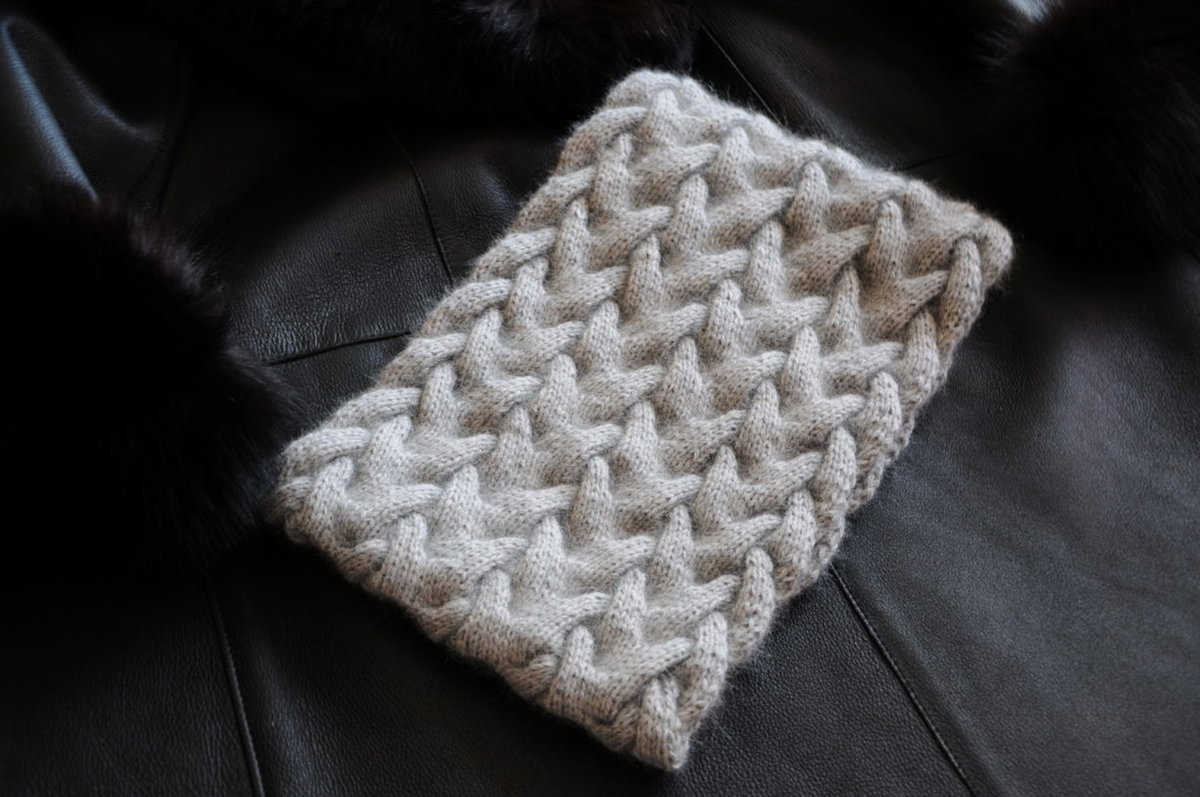
A snood knitted with knitting needles using the braid technique turns out to be quite voluminous when using thick yarn. You can also combine thick and thin threads. This option requires great care: it is easy to mix up the rows. A snood with braids is knitted like this:
- You need to start by casting on 42 stitches on straight needles. Row 1 – 1 LP, grab the first edge stitch, the last one – IP.
- The second row consists of purl stitches. At the end is the edge stitch.
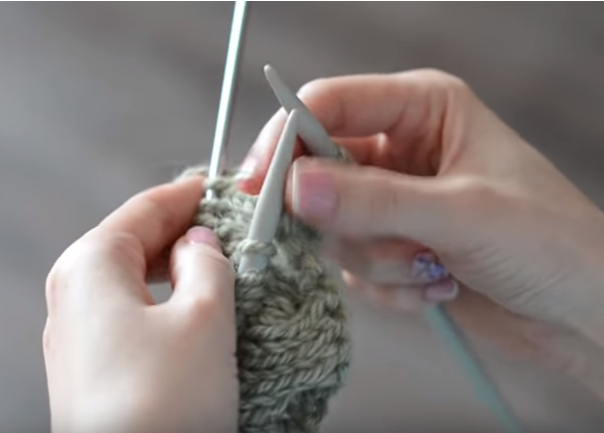
- In the third - remove the edge, knit the front loop on the side of the braid plus 4 LP. Then remove 4 loops, leave in front of the work. Then knit 4 LP, loop with an additional knitting needle, 1 LP between the braids.
- The fourth row is purl stitches, the fifth is knit stitches, the sixth is purl stitches again.
- Row 7: remove edge stitch, knit, transfer 4 stitches to an additional knitting needle, leave behind the work. Next, knit 4 stitches, then knit between the braids. Repeat to the end of the row.
- The eighth row consists of purl stitches.
This instruction will help to knit a vertical fragment of a pattern (rapport). Repeat it to the desired length. Then knit a seam with a needle.
Openwork
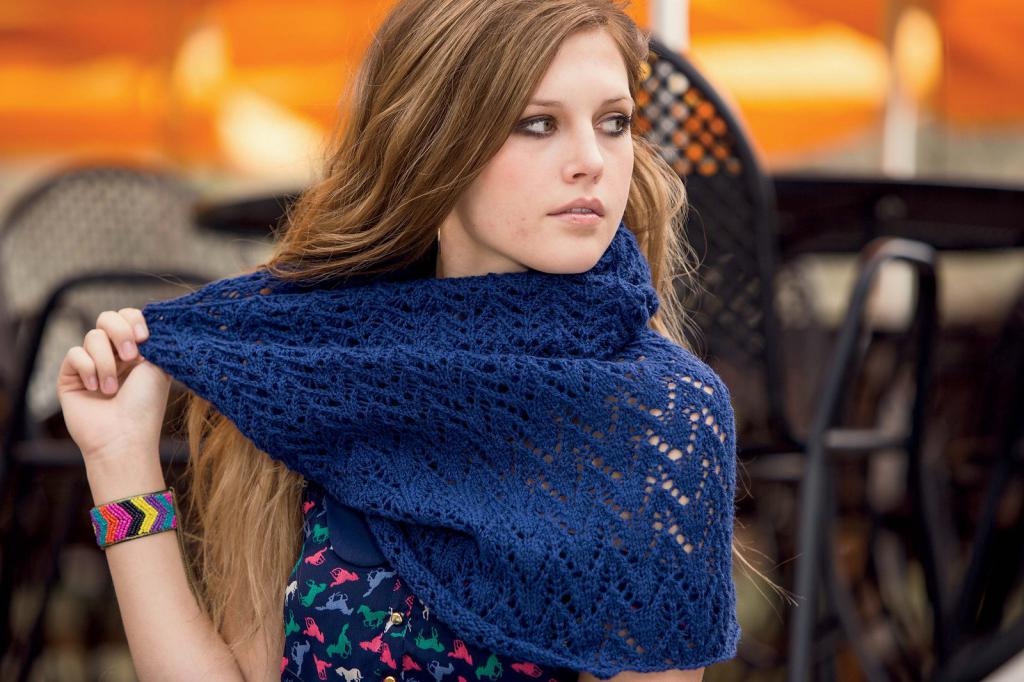
A light openwork snood is a decoration for both winter and spring-summer looks. There are many variations, most are crocheted. However, there are double-sided knitting patterns. Master class on making:
- For an openwork snood 90 x 40 cm, take 100 g of mohair yarn (50 g / 280 m), circular knitting needles (No. 3.5).
- Density: 20 loops per 28 rows for a 10 x 10 cm fragment.
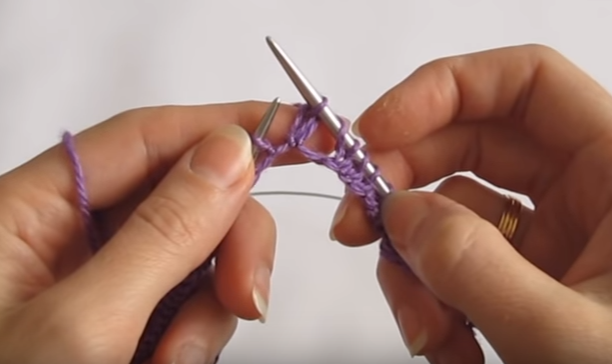
- The first set is equal to one hundred and eighty loops. First make four circles with garter stitch, then one circle with LP, then simultaneously decrease 4 sts (equal to 176 sts) evenly.
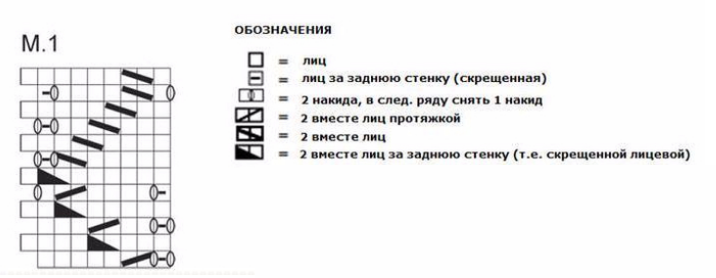
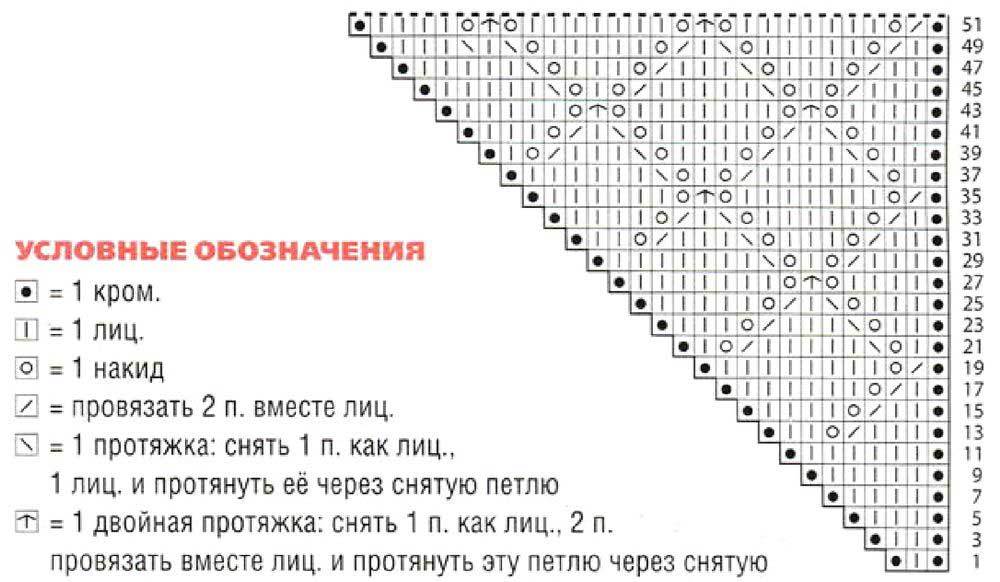
- Follow diagram M1.
This is how a vertical rapport is obtained. You need 9 of these. They are knitted with face loops. Decrease 22 sts evenly, knit four circles in garter stitch, close the loop at the end.
Transformer
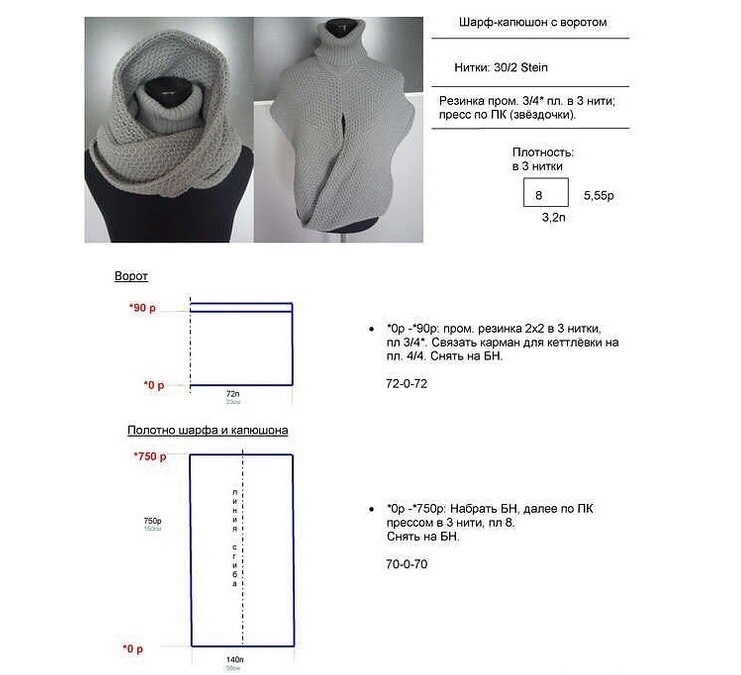
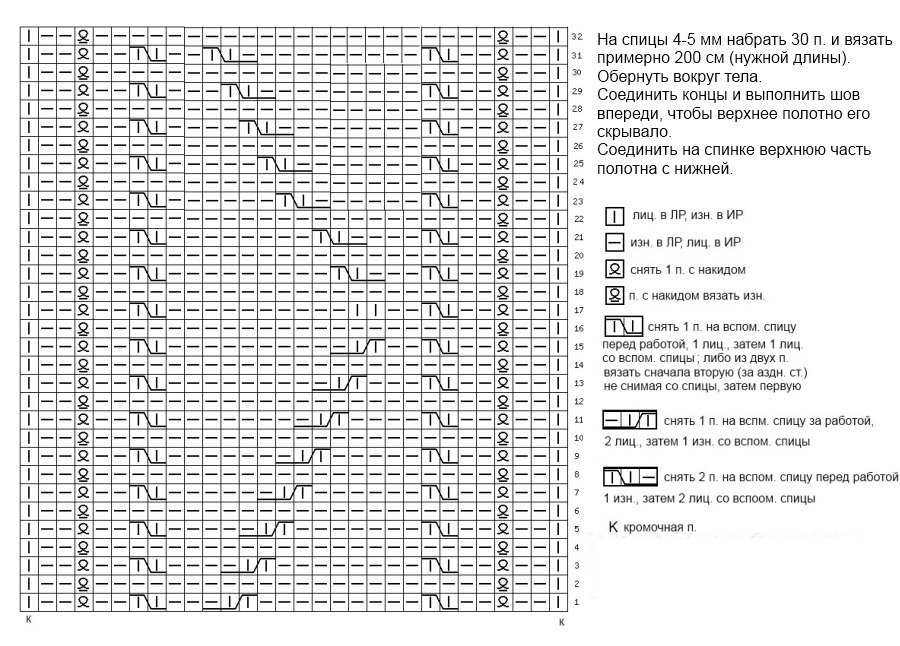
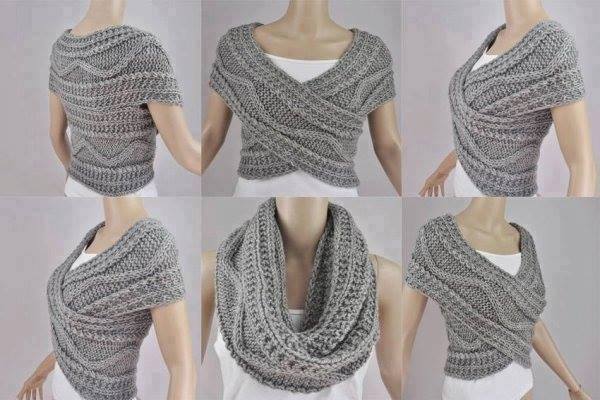
The simplest transformer is an elongated snood, which can be worn as a sleeveless jacket. The length is determined empirically: the model should cover the waist from behind, cross in front, enveloping the shoulders from the back. You can knit a scarf with knitting needles in any pattern: braids, stocking stitch, openwork. You should make a sleeveless transformer in two stages:
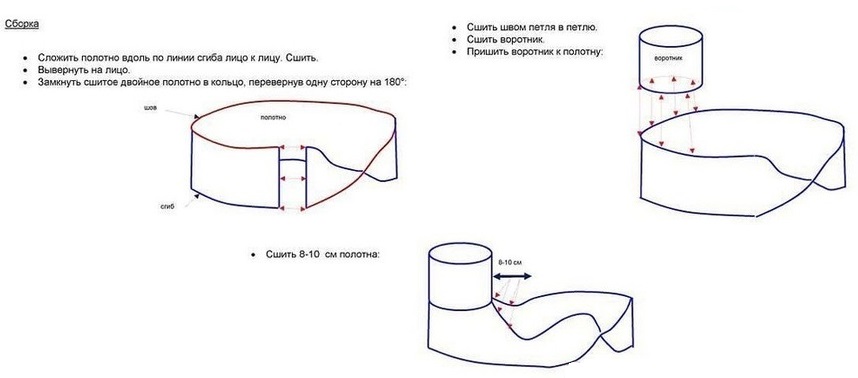
- Knit the fabric using the chosen technique until you get the desired length. Sew the ends together to form a ring.
- Fold the snood into a figure eight, put it on so that the cross is on the chest. Lower and adjust the scarf on the shoulders. Secure with pins and sew the shoulder part and waist.
If desired, it can be worn as a scarf. The decoration is patterned knitting. For cold weather, you should use yarn with natural wool.
The threads should not be thick, otherwise the product will be too thick.
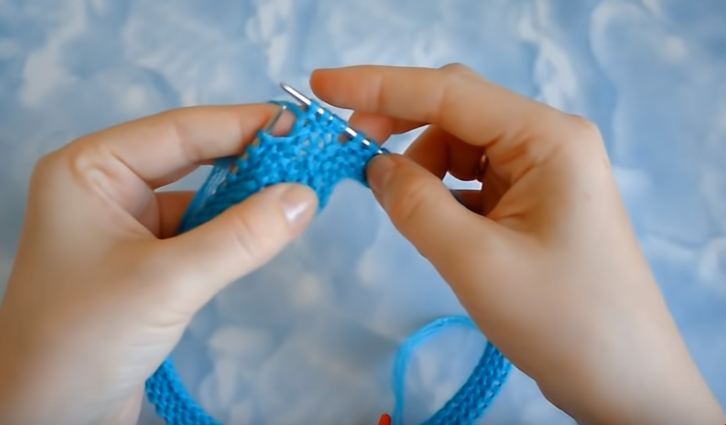
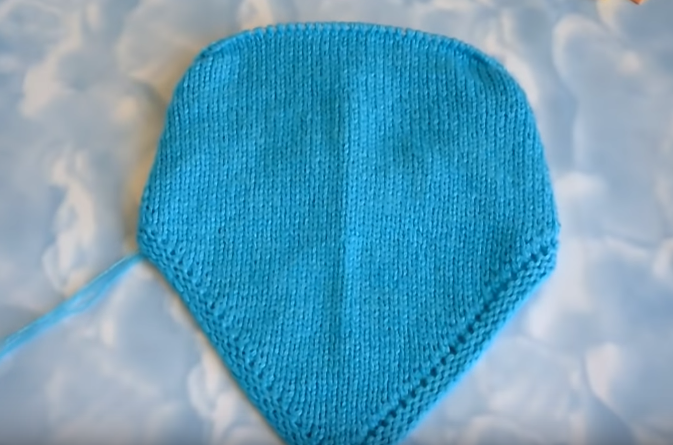
Bactus
This is a type of tube with an elongated triangle at the front. It is knitted in the usual stocking stitch. There are many circular knitting patterns with descriptions on forums. The density is 16 loops per 10 cm. Work stages:
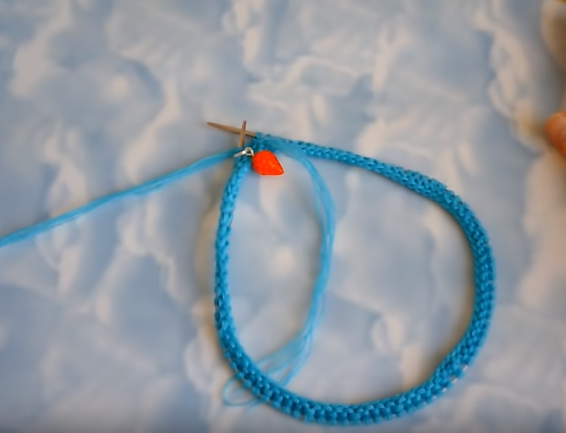
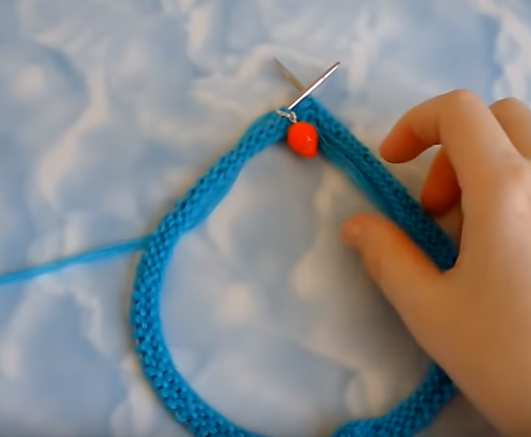
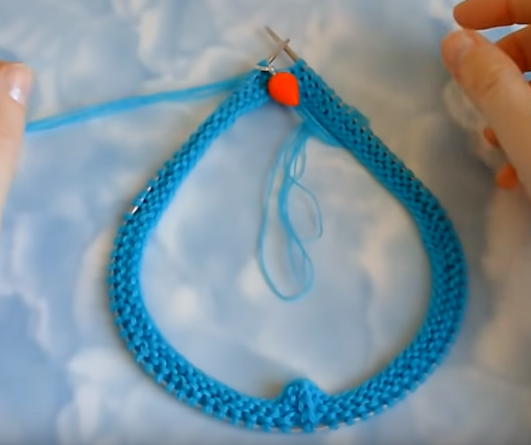
- 89 loops are cast on, closed with a marker. IP are knitted in a circle.
- The next circle after the initial one is the first one. In it, first make 43 LP. Then connect three loops with a front loop, put the central one on top (for brevity, we will designate 3p BL). Then another 43 LP. 87 loops are formed.
- Second round – 42 IP, 3P VL, 42 IP. You will get 85 loops.
- Third – 41 LP, 3 loops VL, 41 LP (83 loops).
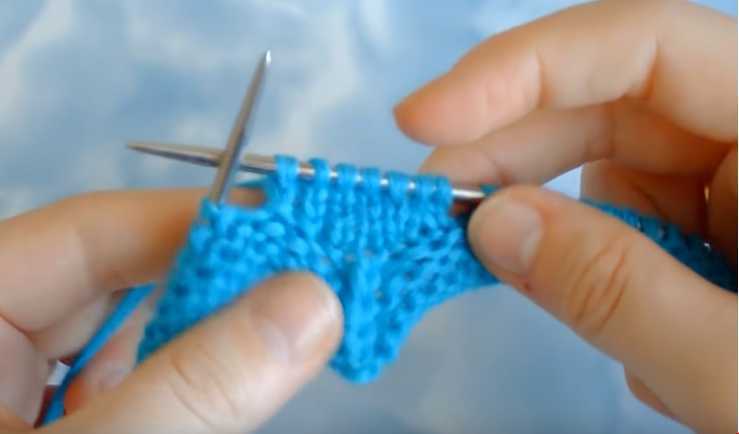
- Fourth – 40 IP, 3 loops VP, 40 IP (81 loops). Next comes stocking stitch with a shortened row in opposite directions.
- Row 5 – 42 LP, then wrap around 43 loops, turn.
- The sixth row is 3 ip, wrap and turn.
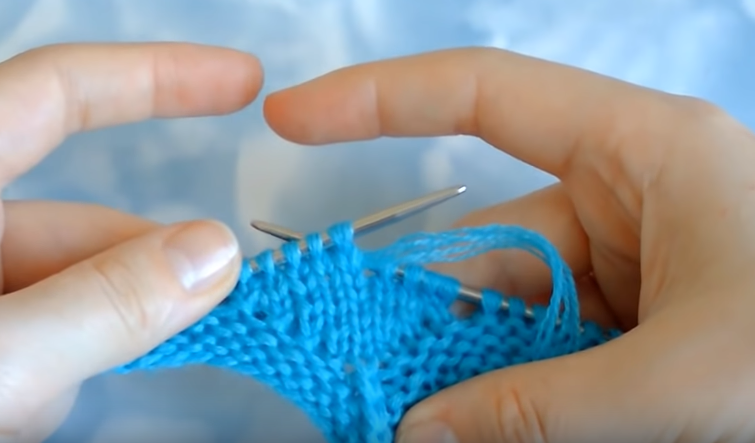
- Row 7 – LP to wrapper thread, knit it plus 1 LP, wrap, then turn.
- Eighth - the same, but with IP. Repeat 7 and 8 circles until three loops remain.
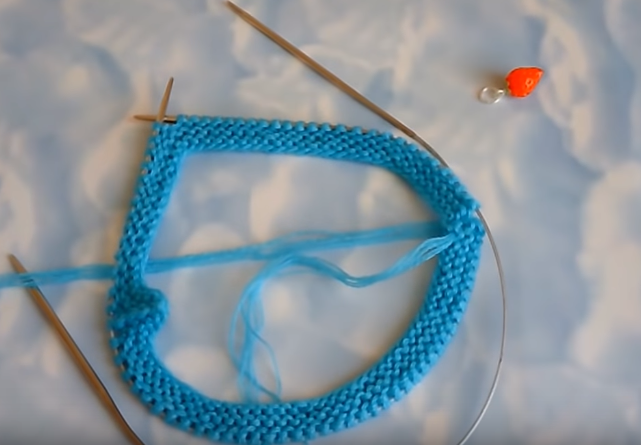
At the end, you need to close the loops with purl stitches. It is better to use thicker knitting needles (number ten). The baktus is decorated with a brooch, buttons, and beads.
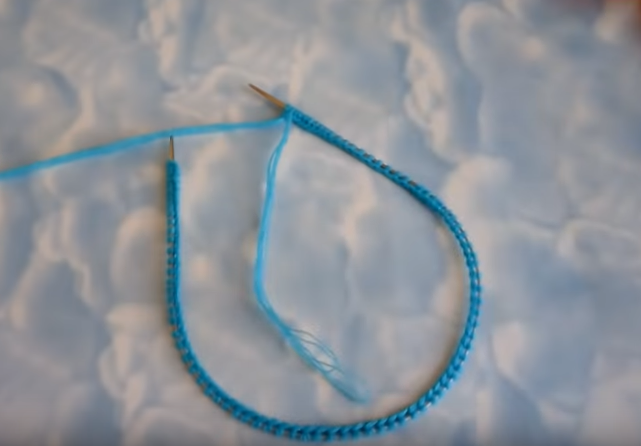
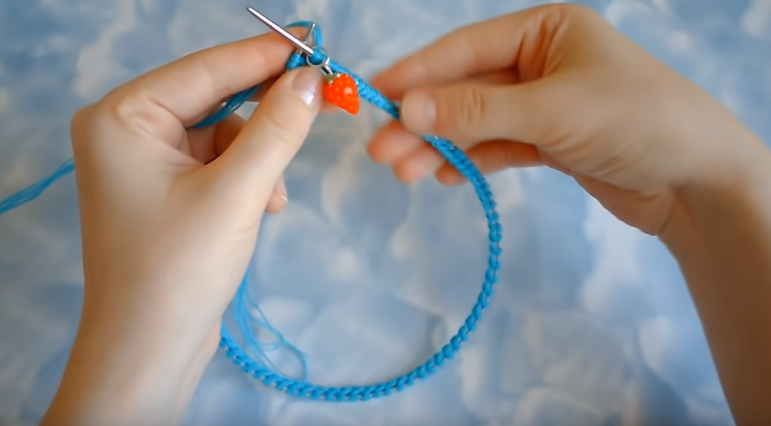
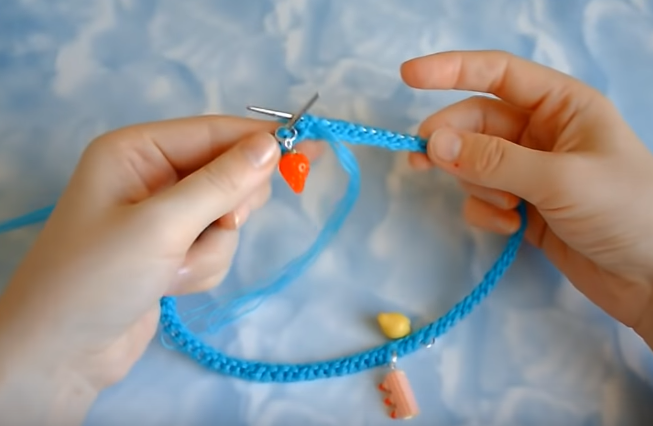
Made from thick yarn
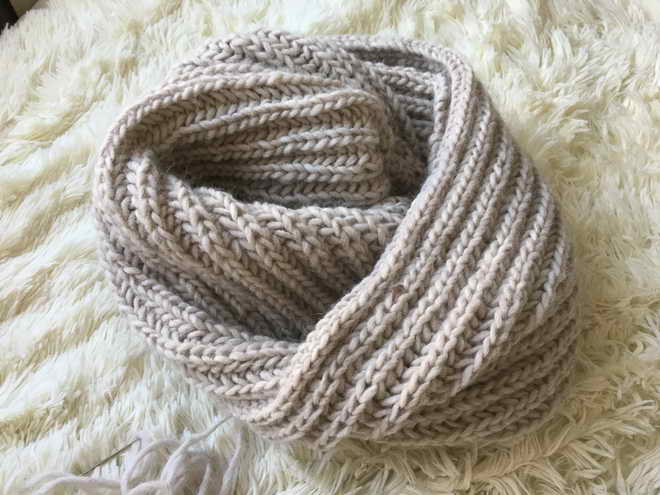
A snood made of thick threads turns out voluminous. The pattern can be simple, the main thing is to use textured types of yarn. By knitting from two-colored fibers, you can get a stylish striped snood. Decorate it with knitted rosettes. For a scarf 65 cm wide and 95 cm long, you will need 200 g of two-color yarn (440 m/200 g), knitting needles with a diameter of 7 mm. Master class:
- Density per 10 cm: 20 rows, 13 loops.
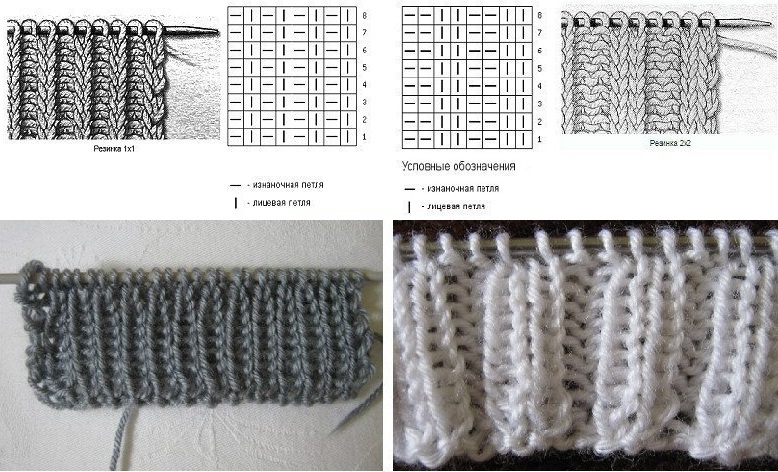
- Two types of knitting are used: stockinette stitch and rib stitch (alternating 2 LP and 2 IP).
- Cast on a starting circle of 120 stitches. Then knit (consists of LP), close after 65 cm.
As a decoration, you can knit a rosette of 66 loops, which is then tied with a thread, giving the desired shape with folds. A bright bead is attached in the middle. Then the finished rosette must be placed on a pin: fix it either with a glue gun or sew it on.
Summer cotton yarn
Summer evenings are treacherous: the sweltering heat during the day can give way to a fresh and cool wind. Salvation is a snood made of cotton threads. It is also a great addition to a top or dress with thin straps. For work you will need knitting needles of small diameter (3.5), as well as yarn made of mercerized cotton or a mixture with viscose and acrylic. A more sophisticated snood for a festive outing can be knitted from silk. Work sequence:
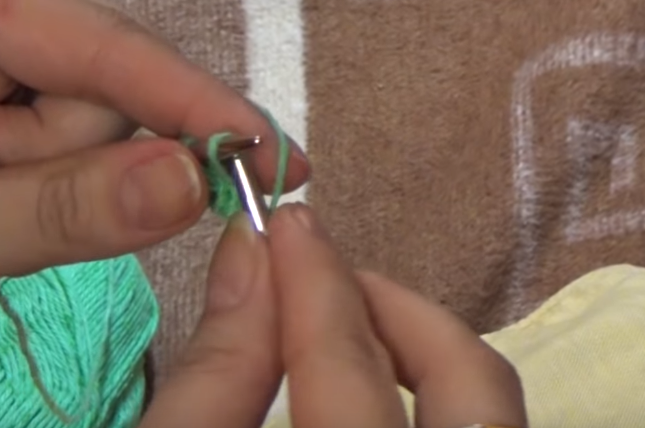
- Loops are collected in accordance with the desired width of the product.
- 60 cm are knitted alternately with front and back stitch.
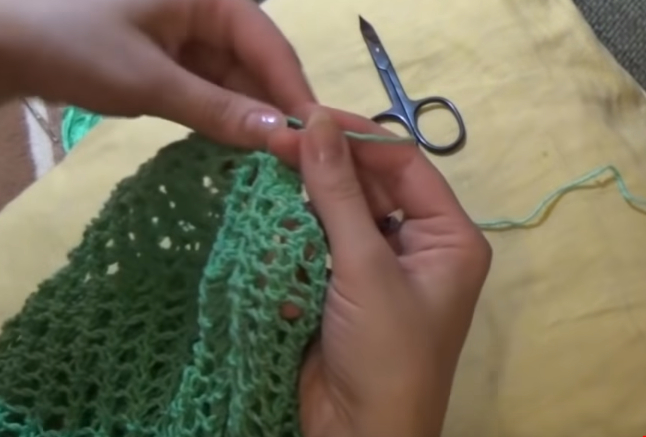
- The loops are closed in any way, and the loose ends are sewn together.
This is the easiest and fastest way to create a summer snood. It will be decorated with bright colors of yarn (turquoise, dusty rose, bright white). Brooches-clasps, beaded flowers, rhinestones are used as additional decor.
By following the instructions, you can create practical, beautiful snoods for all occasions. It is advisable to use ready-made knitting options with patterns from open sources (handicraft portals, magazines). Or you can experiment, limited only by your own imagination. The result will be a multifunctional thing that never goes out of fashion.
Video