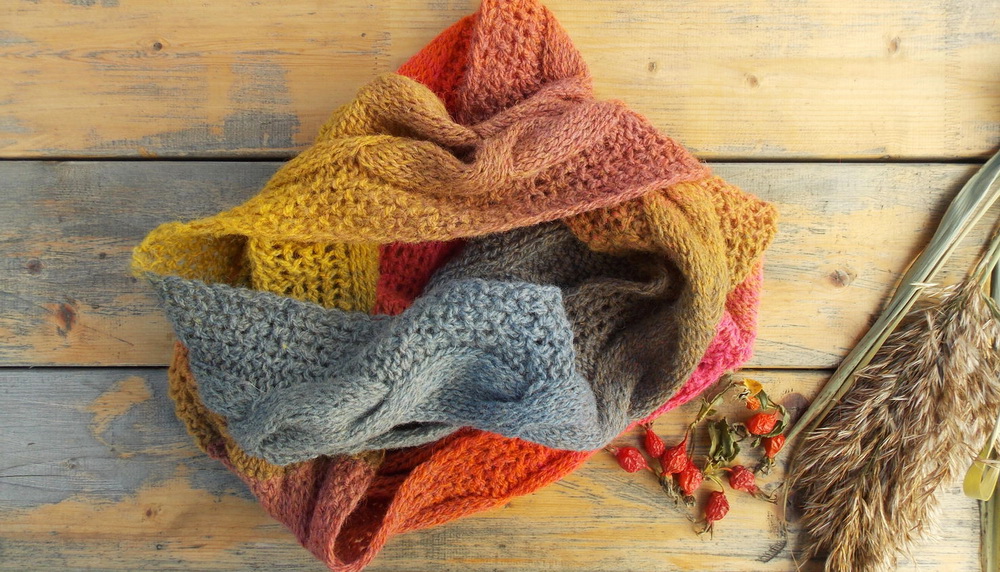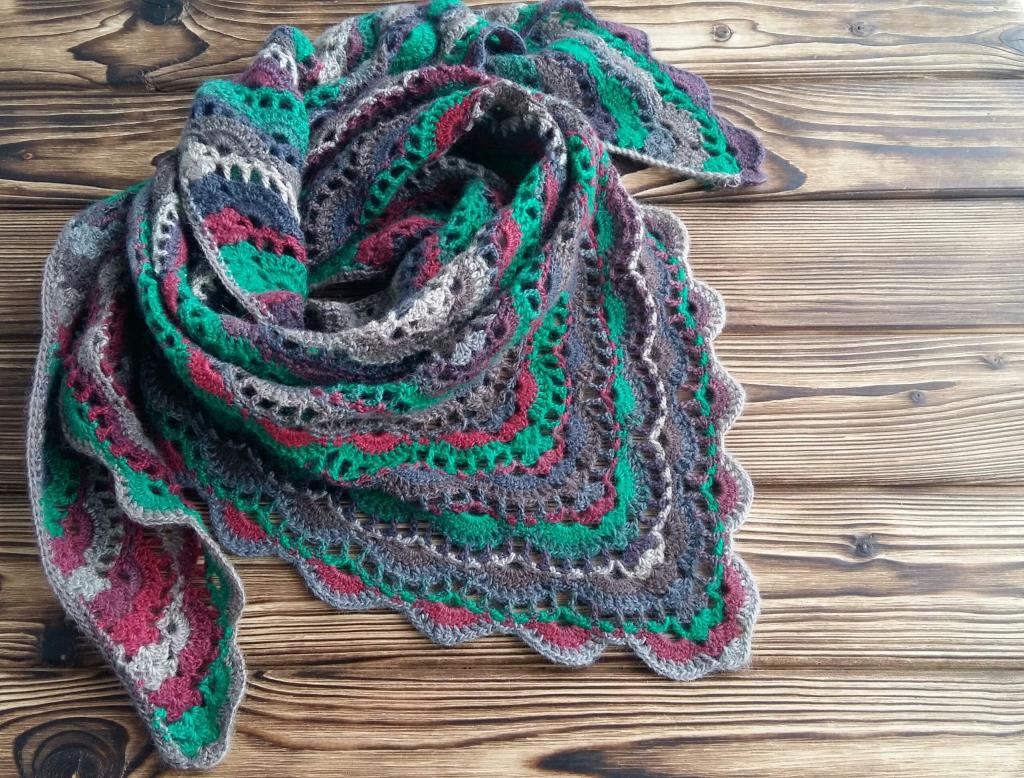
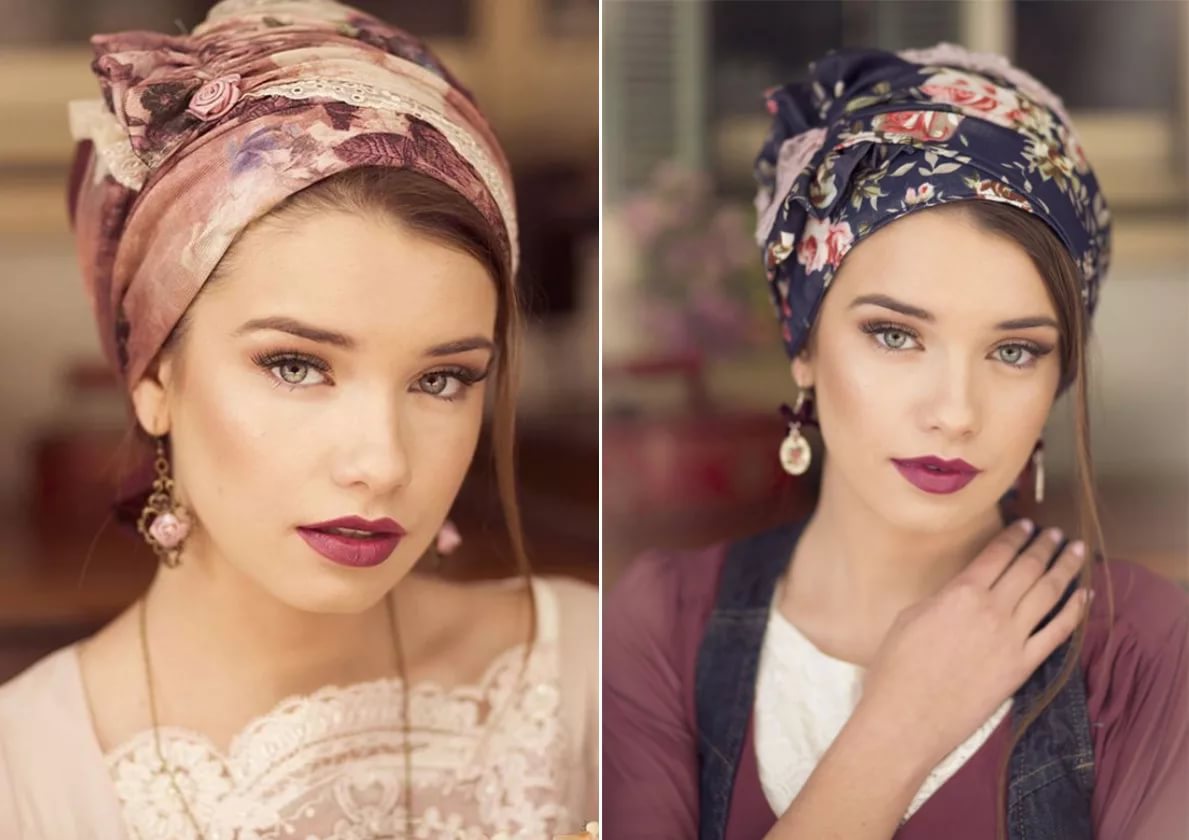
An original scarf is an accessory that helps create a bright, memorable image. Regardless of the weather, it will be appropriate and will emphasize a woman's individuality. However, not everyone knows how to tie a scarf on their head beautifully so that it looks stylish. Today, there are many ways to wear this accessory, so every woman can choose the right one.
Popular ways of tying
Learning how to tie a scarf beautifully on your head is a real art. This wardrobe item has thousands of fans and is always relevant. However, when choosing the material and method of tying, you need to focus on the season and weather.
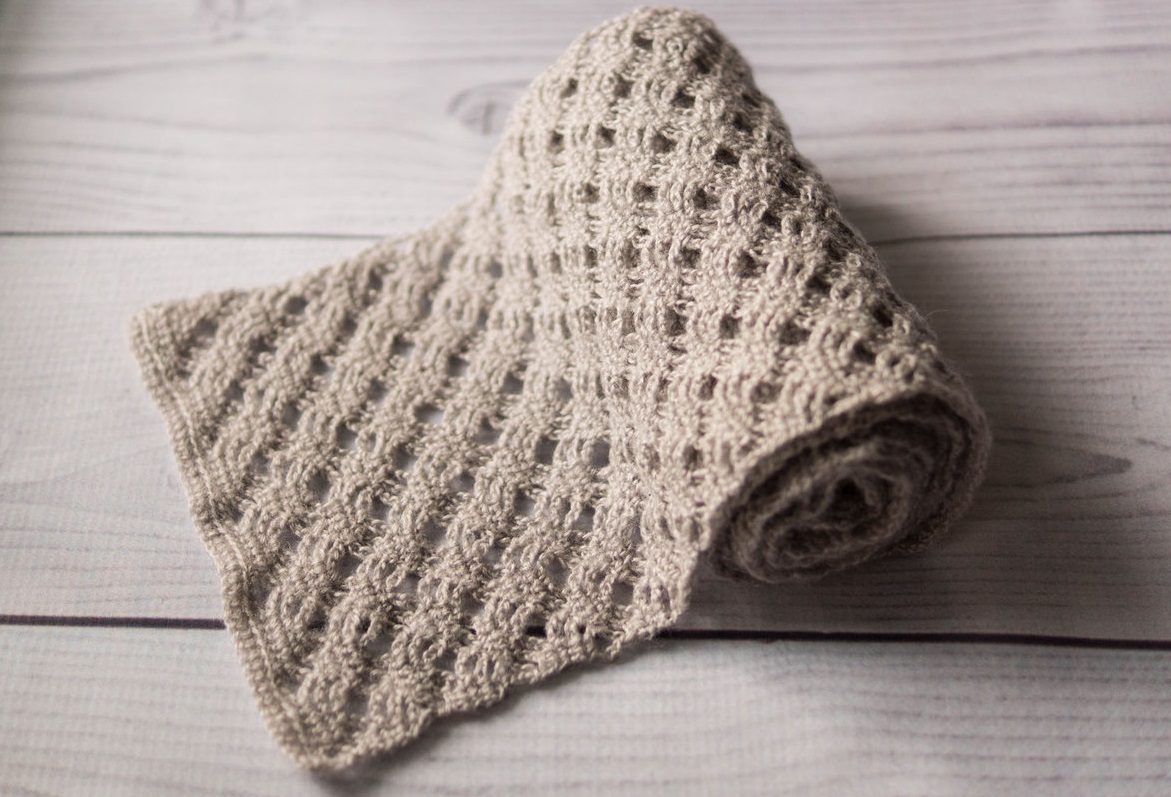
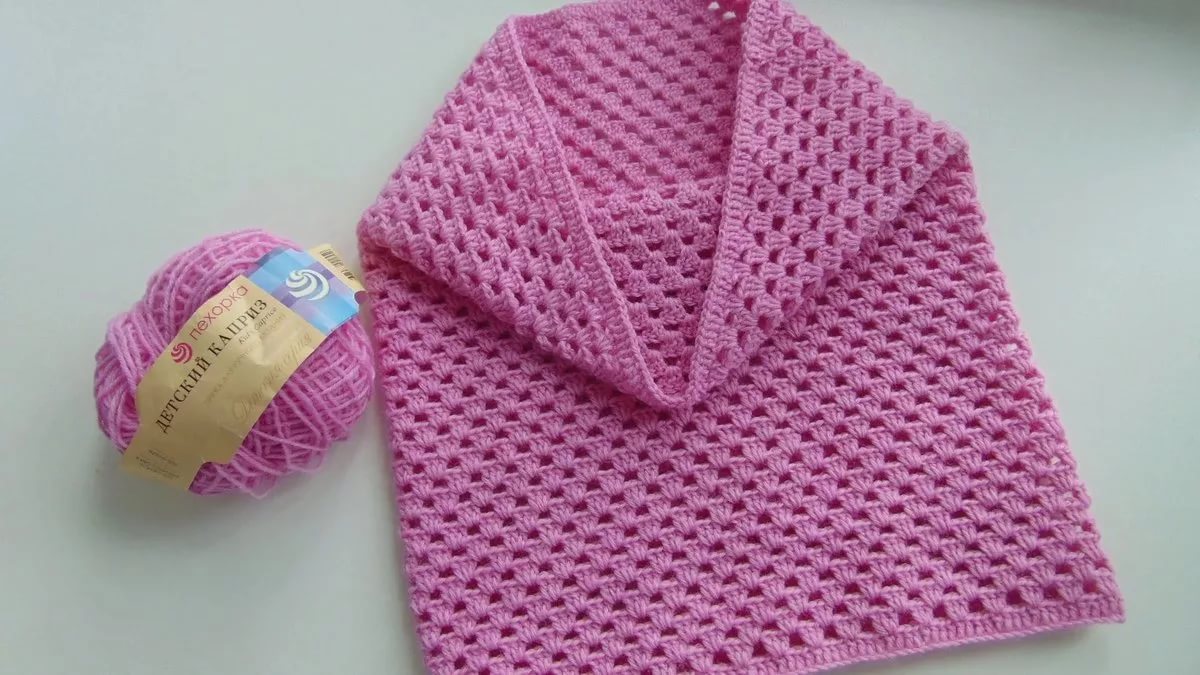
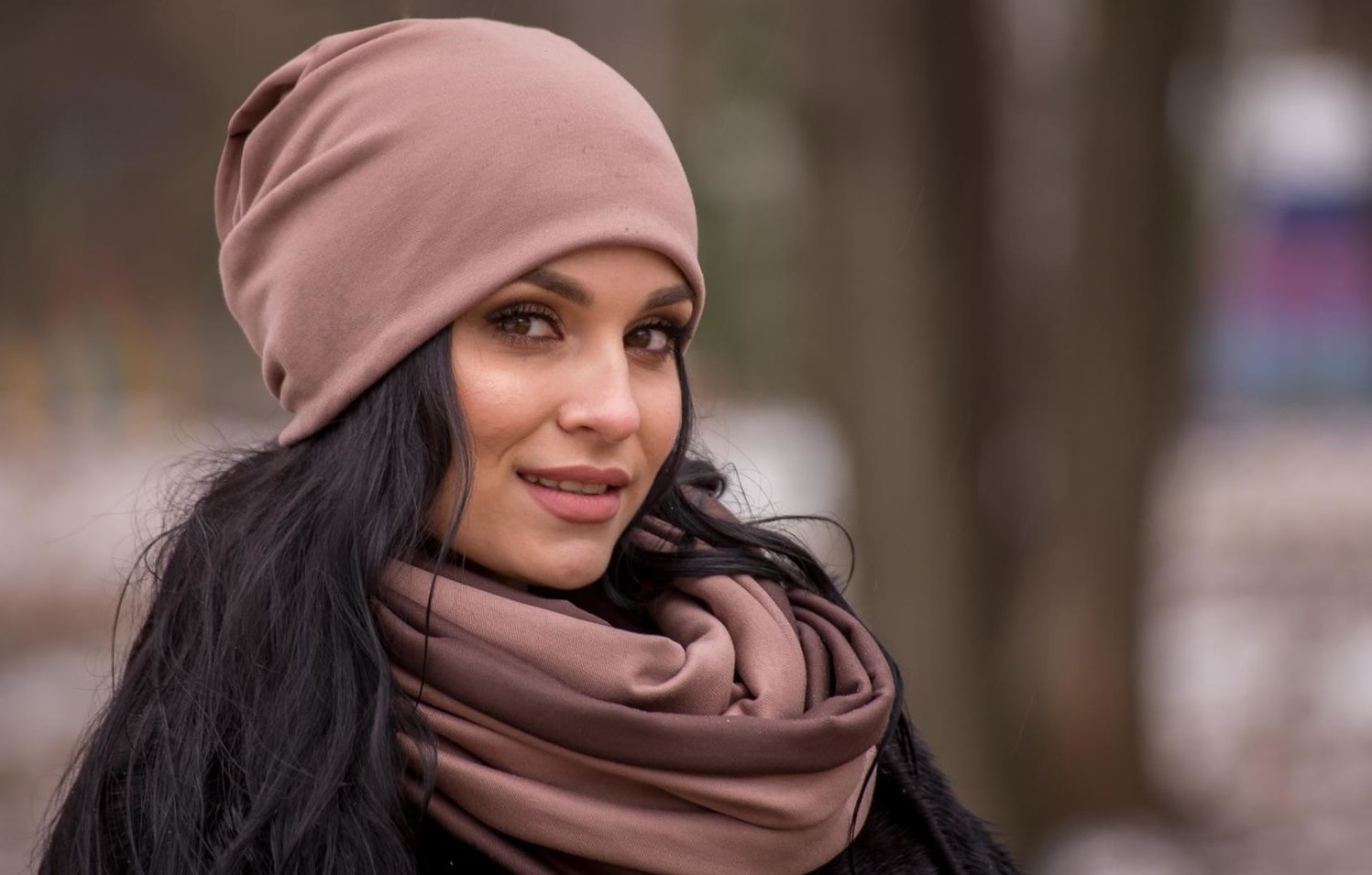
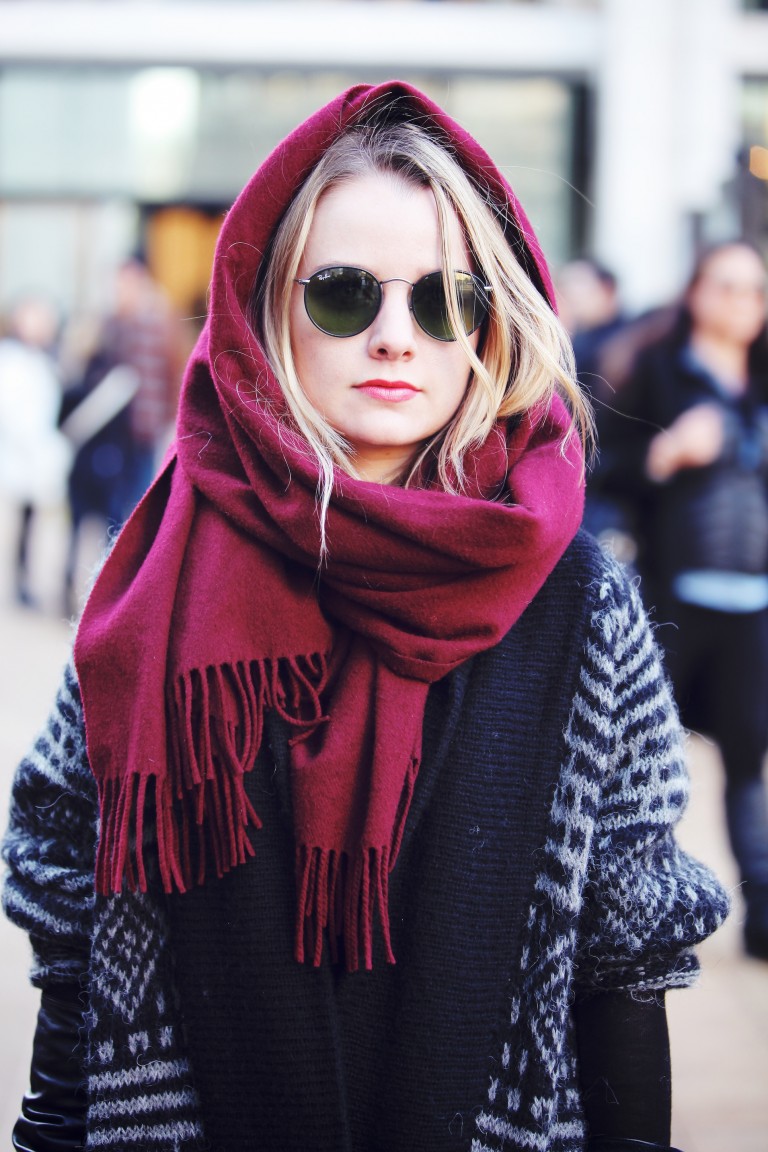
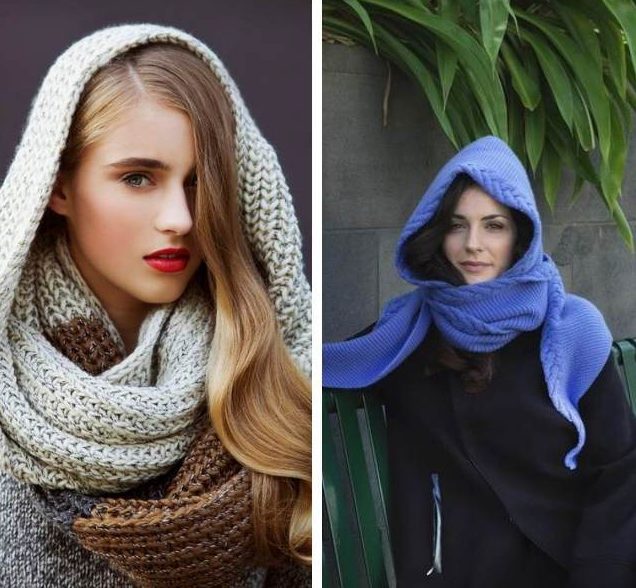
In winter, the traditional way of tying a scarf is appropriate - wrapping a long fluffy product or a large stole around the head and neck. It is also relevant to use a warm wide peasant shawl. It is very convenient in the cold season to wear scarves-collars, which are first wrapped around the neck and then put on like a hood.
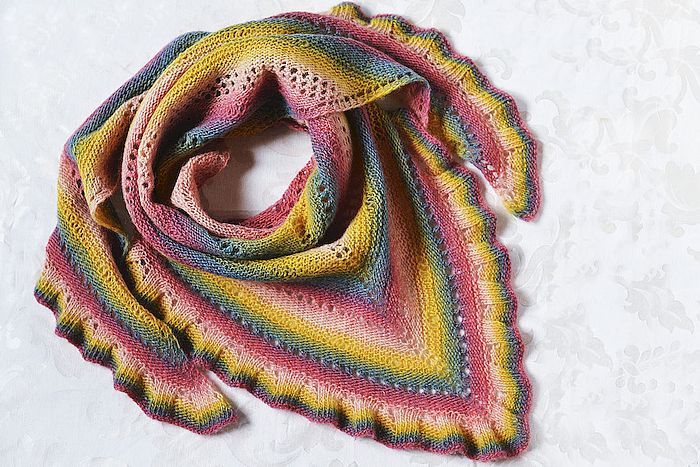
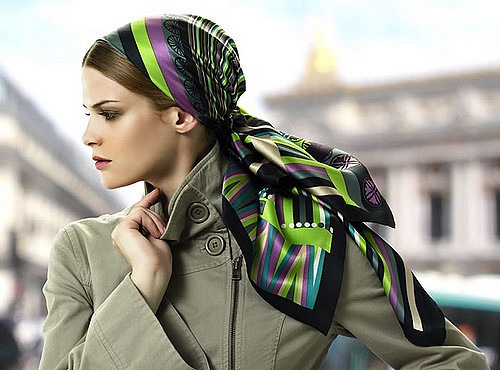
Products made from dense but not too warm fabrics look great in spring and autumn. The shades should be in harmony with the outerwear. A scarf tied in the form of a kerchief, the ends of which are left slightly to the side and pinned with a brooch, goes well with the coat. In addition, in the off-season, you can wrap your head in Hollywood style or make a warm turban.
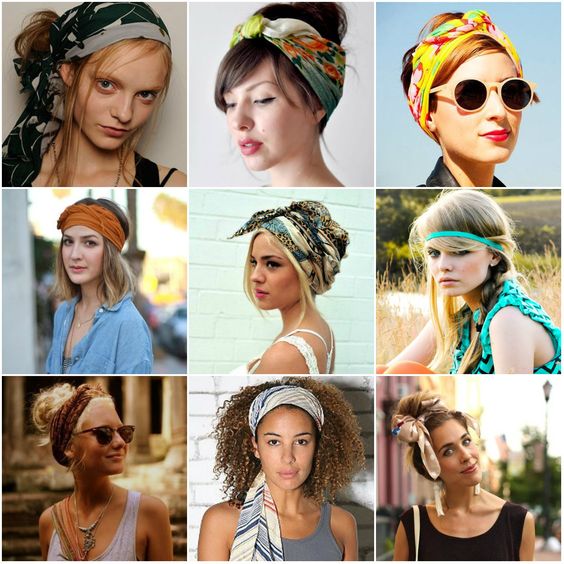
In the middle of summer, you can create bright images with the help of scarves-headbands, turbans, bandanas. The materials should be thin and light. In the heat, both long wide pieces of material (for a turban or turban) and small scarves (for making a headband or bandana) will come in handy. Accessories made of bright fabrics go well with light clothes.
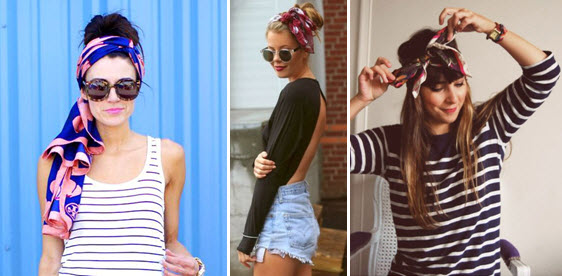
Headband scarves will be a great addition to a dress, leather or denim jacket. They can be colorful or single-color, appropriate at any time of year. But with business suits, it is better to wear a scarf without prints. It is worth choosing subdued colors.
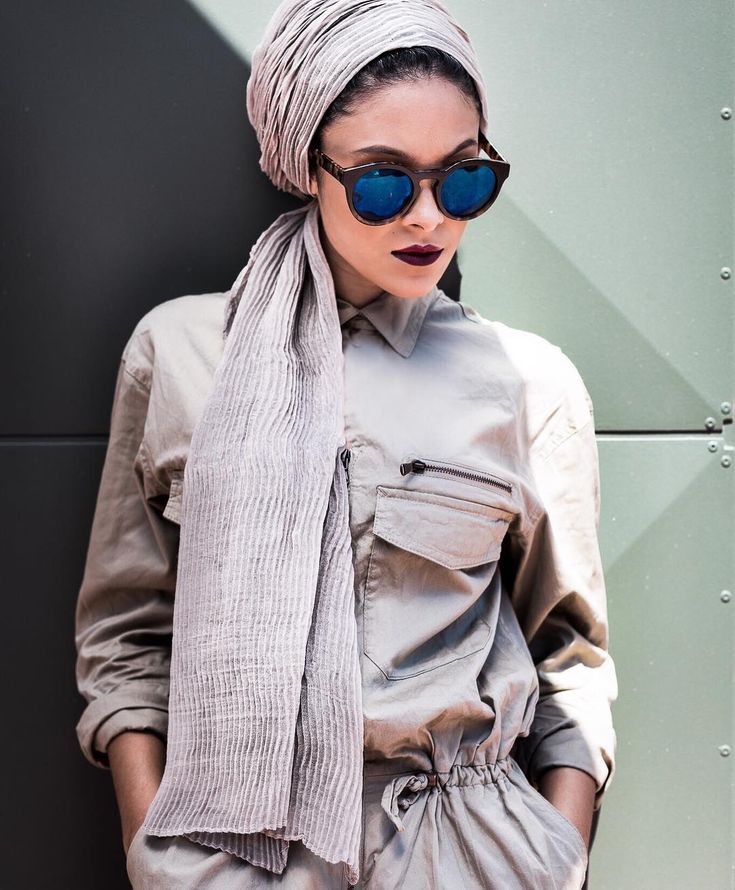
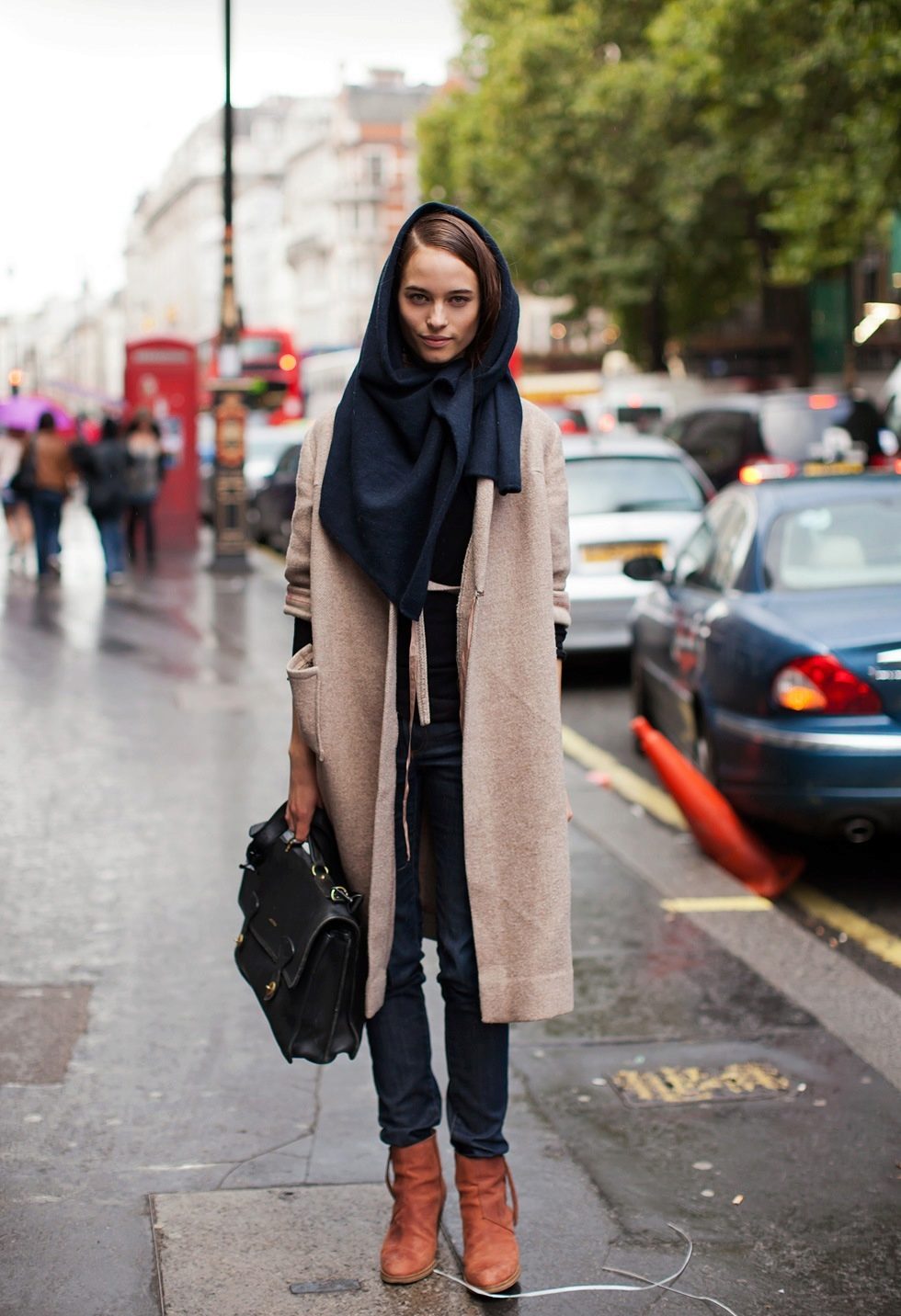
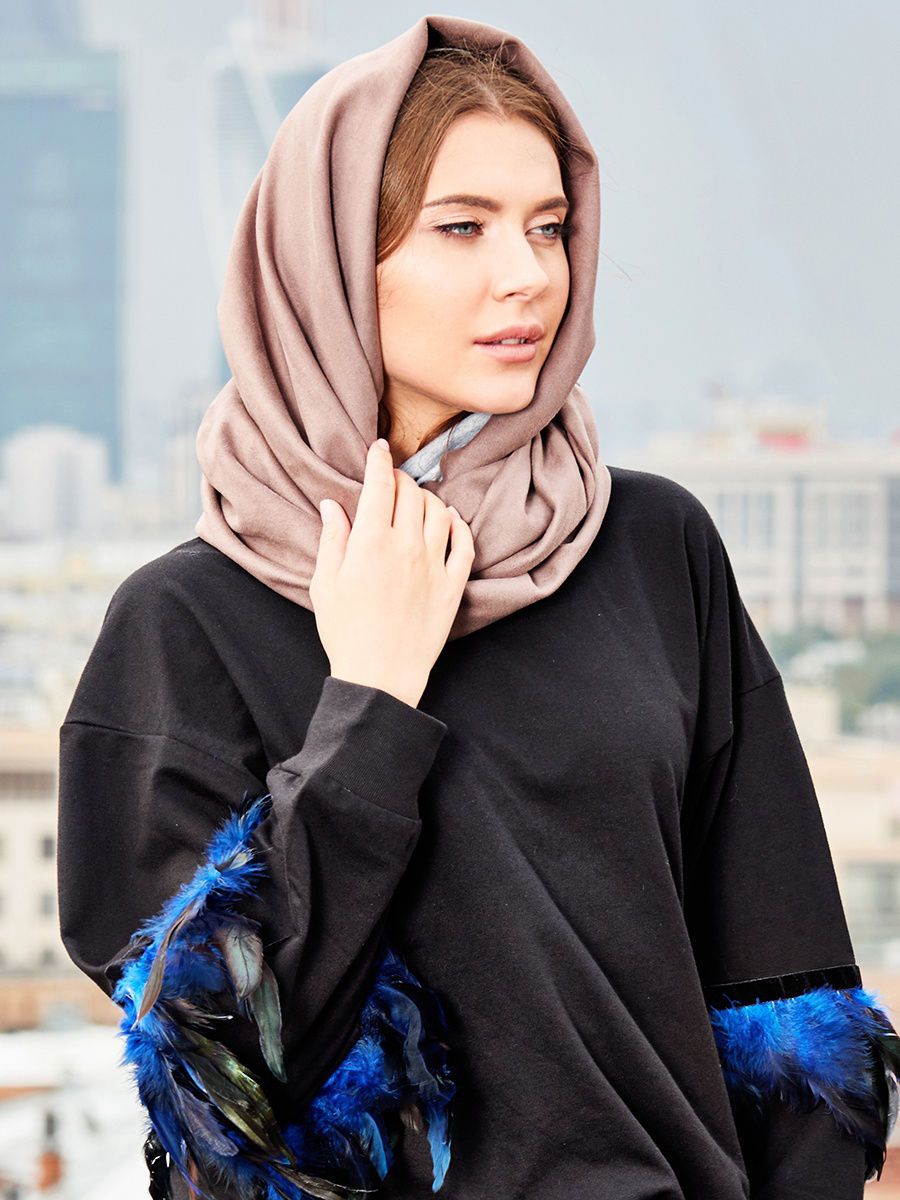
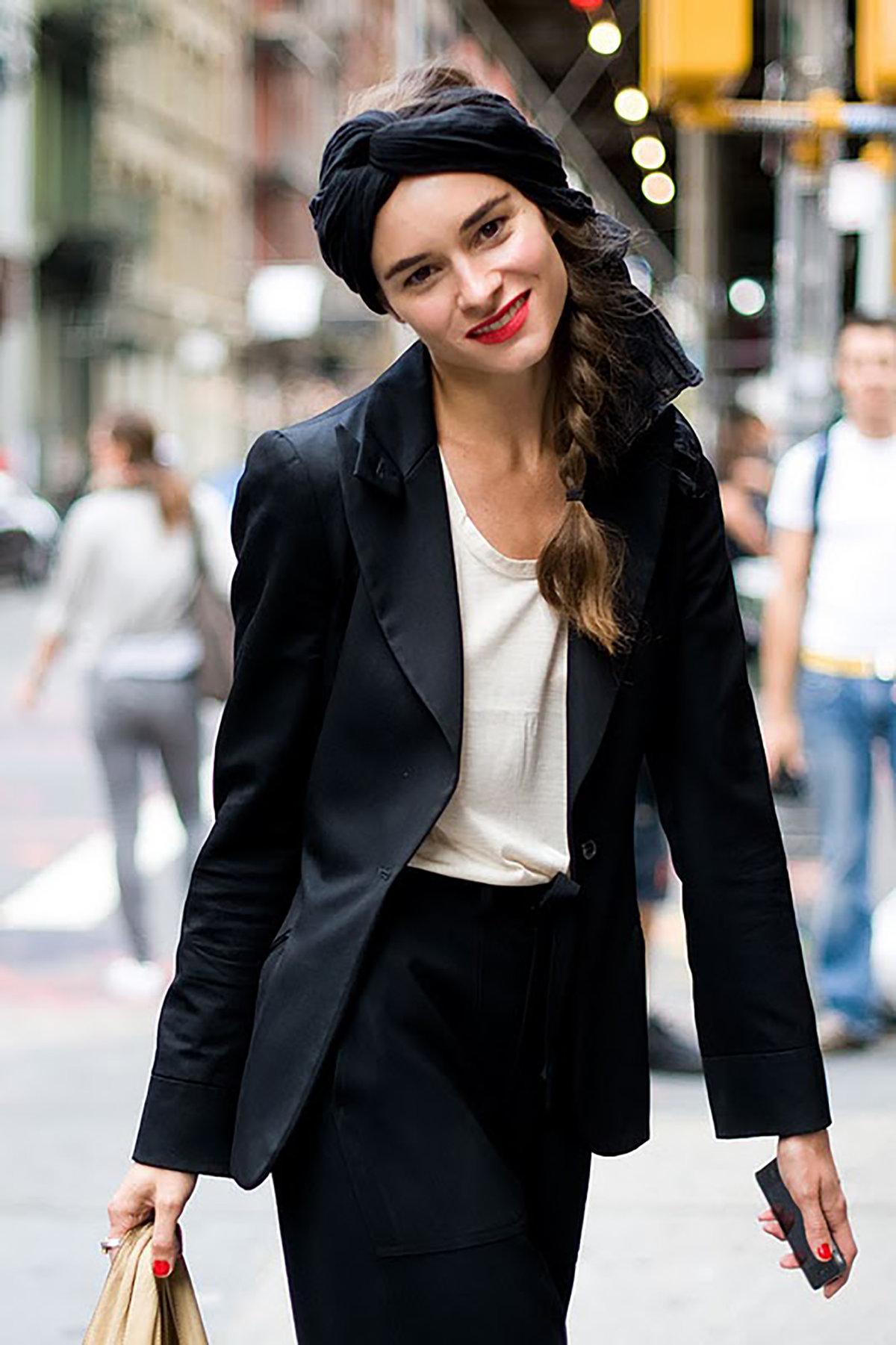
Around the head and neck
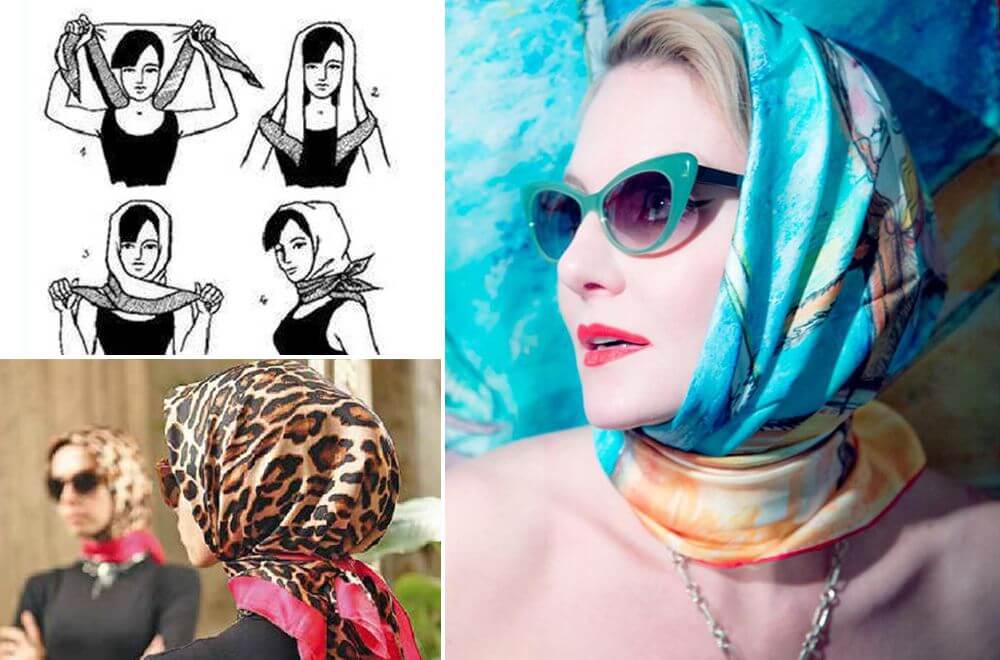
During cold weather, a scarf or shawl tied around the head replaces both a hat and a hood. It helps out when there is a risk of ruining your hairdo with a headdress. There are different tying options, but the most common is the Hollywood one. This beautiful, simple method is perfect for the off-season:
- A kerchief or wide scarf is thrown over the head. The forehead is left open.
- The ends under the chin are crossed and secured with a knot on the side.
- The resulting headdress is lowered to the back of the head.
A variation of the Hollywood method is the peasant method. In this case, the scarf is tied in a similar way. Then the tails are crossed and tied in a knot at the back.

Gypsy style
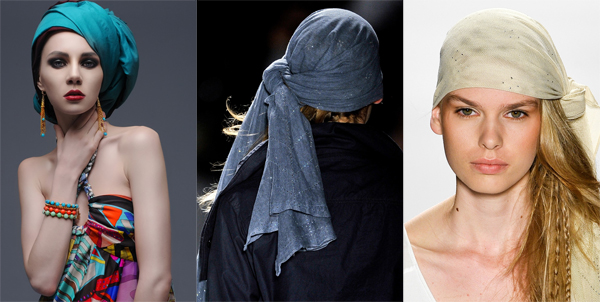
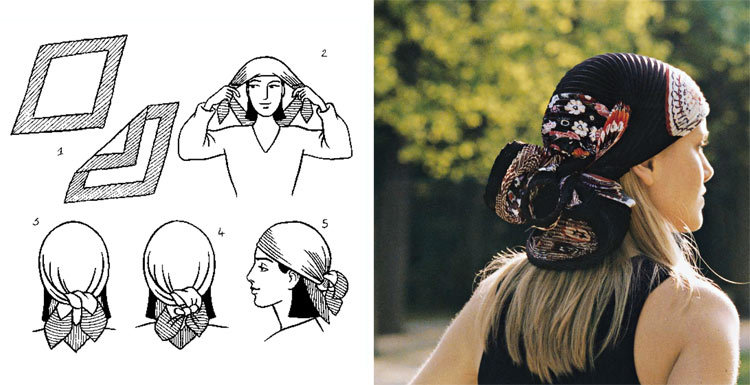
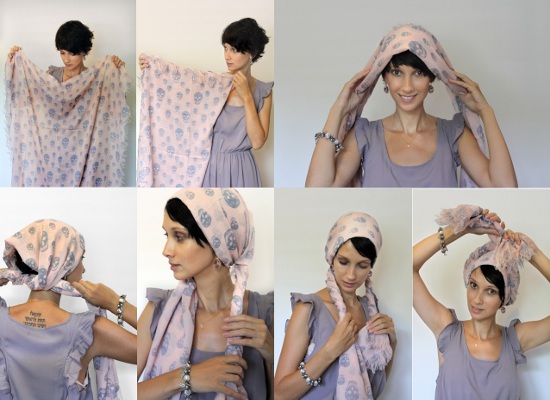
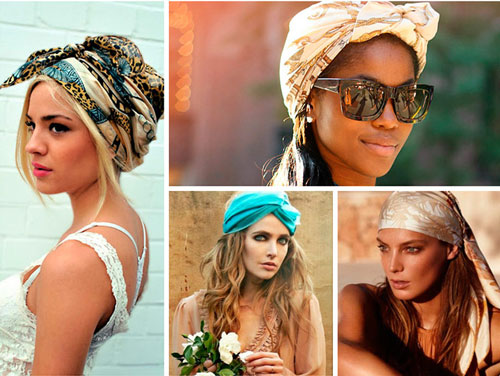
This option is suitable only for the summer period. A scarf tied in this way is distinguished by a knot on the side. The back of the head is usually open. Colorful silk or satin products will do. The algorithm is as follows:
- They fold the material and throw it over their head so that the forehead is covered.
- The ends are tied in a knot on the side.
- The hanging ends are used to form a beautiful flower.
The slippery material will not allow the headdress to stay in one position for long; it will have to be adjusted periodically.
Bandana
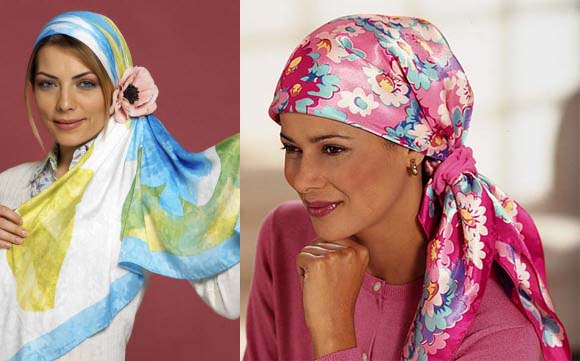
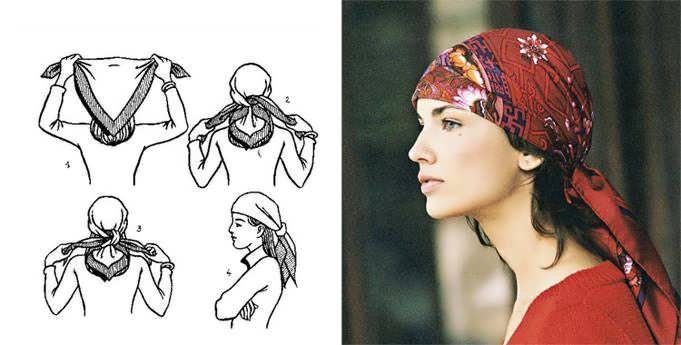
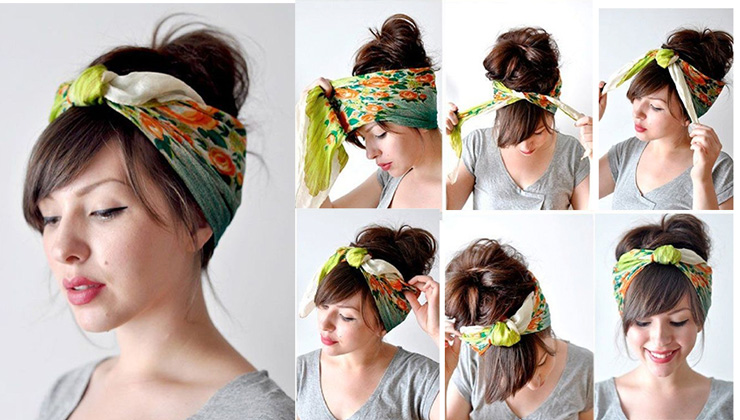
You can make a bandana out of a scarf. It suits athletic young girls very well. It's easy to make:
- First, a small scarf or shawl should be put on your head, placing the base on your forehead.
- Then tie it at the back under your curls.
In the warm season, you can make such a headdress from a light material - cotton or silk, in the cold - from dense fabrics. A more sophisticated option that can be used in the summer: tie the ends on the side in the form of a beautiful rose.
With a bandage
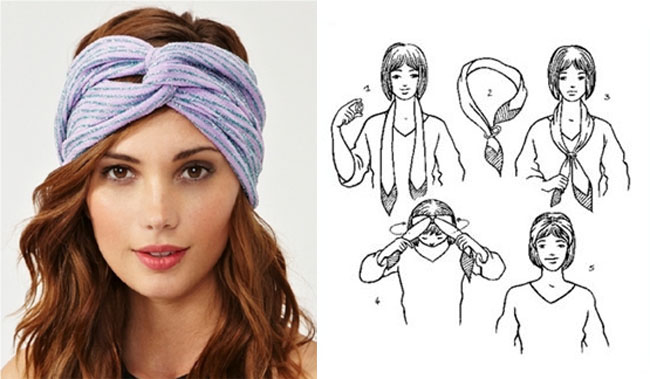
Not everyone knows how to tie a scarf on the head in the form of a bandage. In most cases, this method is relevant for the summer season, although you can use not only thin materials. There are several variations:
- Bow. The material is folded into a thin ribbon, applied to the back of the head and fixed in the front or side in the shape of a bow or rose. The bandage is appropriate both under the hair and on it.
- Bundles. The fabric is twisted into a bun and tied in the form of a thin strip. Such a bandage holds the bangs. It can be plain or bright, standing out against the background of the hair.
- Eight. A scarf or shawl is rolled into a ribbon or twisted into a rope. Wrapped around the head. Crossed in front and tied at the back.
- Wide strip. Looks beautiful if tied at the back under the hair. In this case, it is best to gather the curls into a bun at the back of the head.
- Solokha. A thin strip of fabric is tied in a knot at the front. The ends are left sticking out. It can be worn on the side or in the center of the head. To fix the ends of the scarf in an upright position, a wire can be sewn inside.
Intertwined with hair
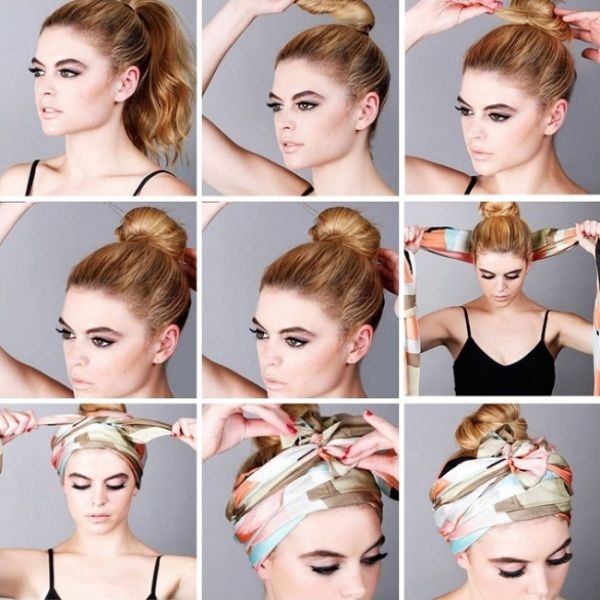
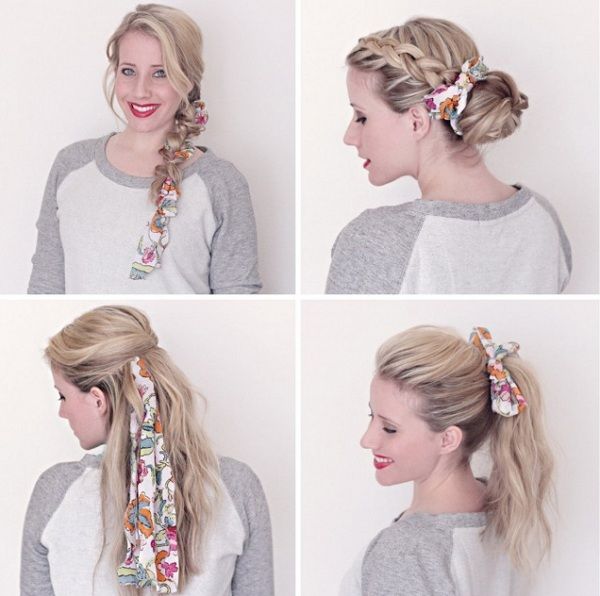
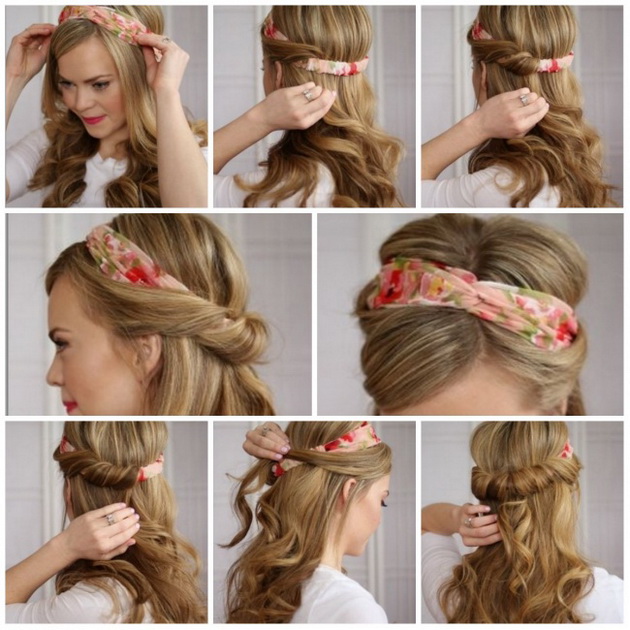
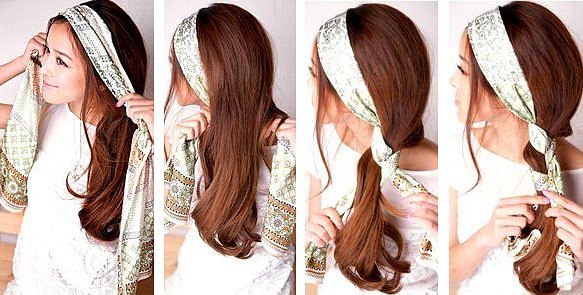
The accessory woven into the hair looks very delicate. It suits girls and young women with long curls. The easiest way to tie a scarf, while decorating your hair, is to wrap it around your ponytail and tie it, leaving the ends free. This hairstyle looks beautiful:
- Part of the hair is gathered into a high ponytail.
- A silk scarf is worn on the head as a bandage.
- The remaining strands are wrapped around it in a random order and pinned with hairpins.
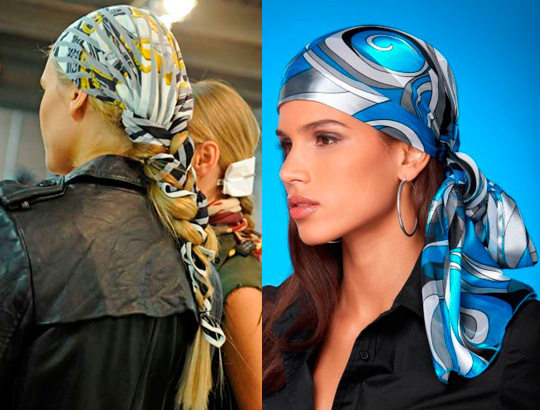
Another interesting option is a braid with a scarf. There are two main ways. In the first, the braiding starts from the base of the braid. In the second, the scarf is tied to the head first, and then the ends hanging down at the back are braided. It will suit girls with long bangs, and is done like this:
- The hair is combed and parted in the middle.
- The scarf is folded lengthwise, its thickness should not exceed 4 cm. Then it is tucked under the curls so that the ends point upwards.
- They begin to braid the braid, only instead of three strands there will be two, since the role of the third will be played by the fabric.
- Braid the hair on both sides, not forgetting to weave in the ends of the scarf.
- The braids are lifted up and pinned at the crown of the head with a hair clip.
How to tie a scarf as a turban
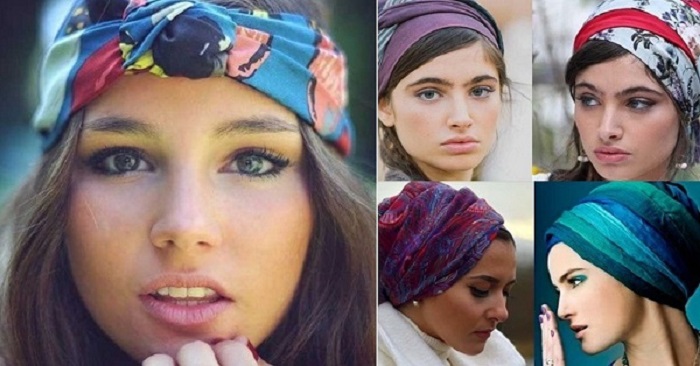
To create a turban, a thin fabric of at least four meters in length is taken. In winter, it is permissible to use warmer material. Such a headdress can be made in different ways.
Elegant traditional
This method of tying a turban can be used at any time of the year. It consists of the following:
- The material is placed on the head, the ends are wrapped around it several times.
- The remaining short tails are fixed to the resulting structure.
- The folds are carefully straightened out and the ends are hidden in the fabric.
Tying a turban beautifully from warm materials is one of the original ways to protect yourself from the cold in autumn. It is important that it matches the color of your outerwear. In summer, you can use light, airy scarves of bright colors to create the look.
Exquisite with twists
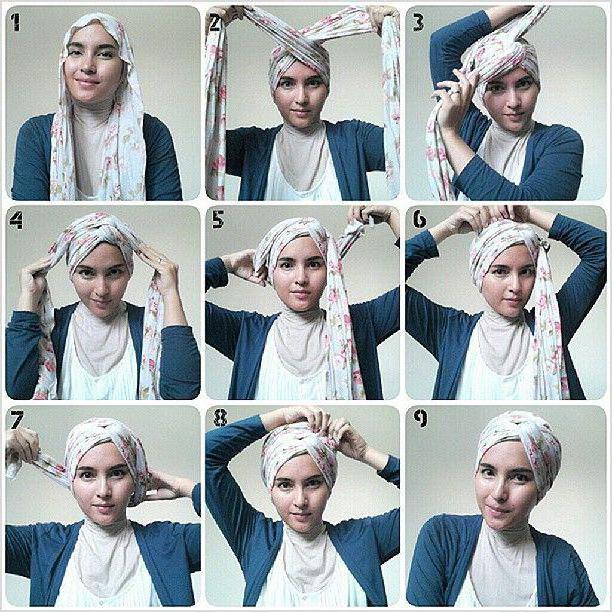
There is a slightly different way of tying scarves in the form of a turban. It is ideal for summer, looks elegant. You need to do it like this:
- The material is folded into a narrow strip. Its middle is applied to the back of the head.
- The ends are brought forward, twisted over the forehead, and brought back again.
- At the back the fabric is crossed over and the ends are brought forward again for a second twist.
- The remaining tails are tied at the back of the head and hidden.
The original twisted turban goes well with long dresses and trouser suits.
How to properly wind a turban
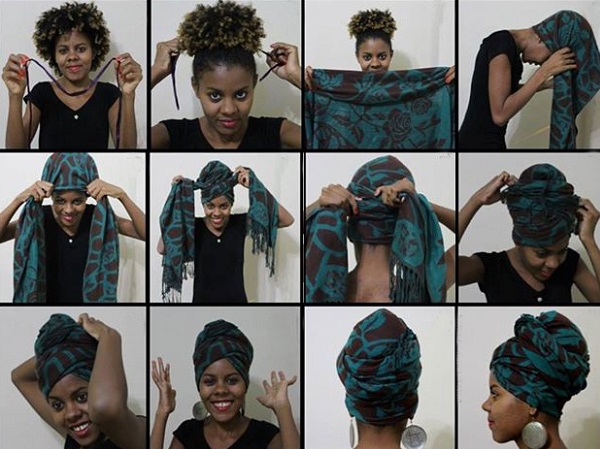
A turban differs from a turban in size – it is somewhat larger and more voluminous. It can be decorated with a brooch or any other decorative element. In summer, it can be made from a regular scarf or shawl. In cold weather, the headdress is made from a soft stole. There can be many options for tying a scarf on the head in the form of a turban, let's consider the simplest ones.
Classical
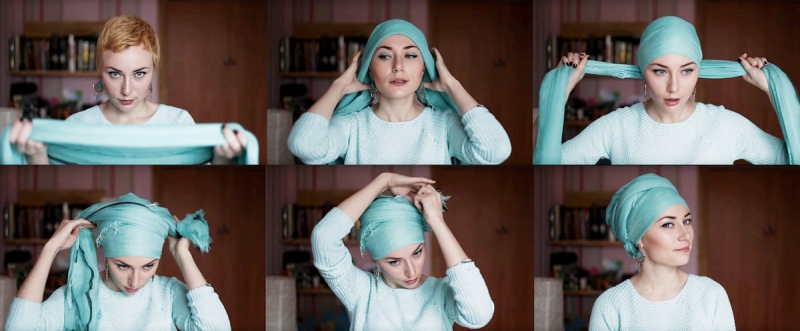
This method is considered basic, so once you have mastered it, you can invent new options yourself. It is best to use it in the summer. The algorithm of actions is as follows:
- The rectangular cloth is folded in half lengthwise, placed on the head, and straightened.
- Both ends are brought back, crossed over each other, slightly twisting the fabric.
- Pull the material tightly at the back of the head, bring the ends forward, where they cross them twice.
- The remaining ends are tied in a knot at the back and hidden in the fabric.
High
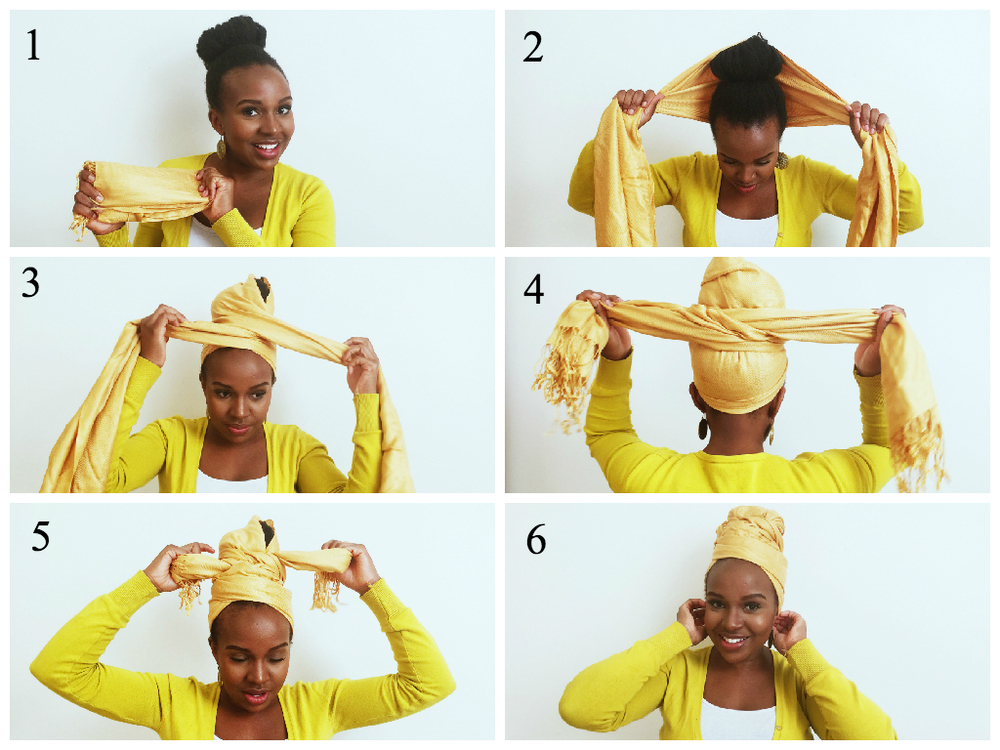
It is somewhat more difficult to tie a scarf on your head in the form of a high turban. To do this, a rectangular stole of a fairly large size is folded in half, its middle is placed on the temple. Then do this:
- The tails are twisted into a tourniquet on the other side of the head.
- Wrap it around your head several times until the turban becomes tight.
- Add height to the headdress by twisting the remaining ends into a bundle.
- The ends are hidden in the fabric.
With harnesses
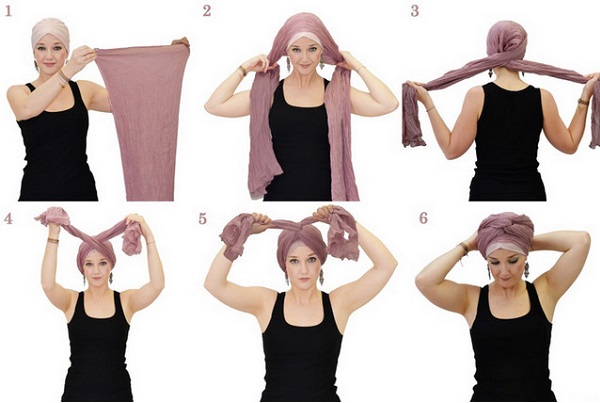
A turban with plaits, tied in Turkish style, looks original. As a rule, middle-aged women love this accessory. It is not difficult to make:
- They throw a scarf over their head like a hood.
- The tails are crossed at the back.
- Pull them forward.
- Cross twice on the forehead.
- We return the ends to the back of the head.
- They tie it in a knot.
A turban with braids is a lifesaver when there is no time to style your hair.
Helpful tips for creating an image
It is not enough to know how to tie a scarf on your head, it is also important to learn how to harmoniously combine it with your wardrobe. In winter, you should give preference to knitted or woven items made of wool, cashmere, mohair and other warm materials. In spring and autumn, scarves made of natural silk and linen are the best choice. In the heat, you should pay attention to accessories made of cotton or viscose - they will not only decorate the owner, but also protect from the sun.
The look can be complemented with various brooches, rhinestones, clips and buttons. They add a twist and allow you to secure your headwear more securely. Additional decorations are only relevant for plain scarves or stoles. In winter, you can use large decorations. Beautiful thin pins or elegant jewelry will suit lighter summer materials.
Video